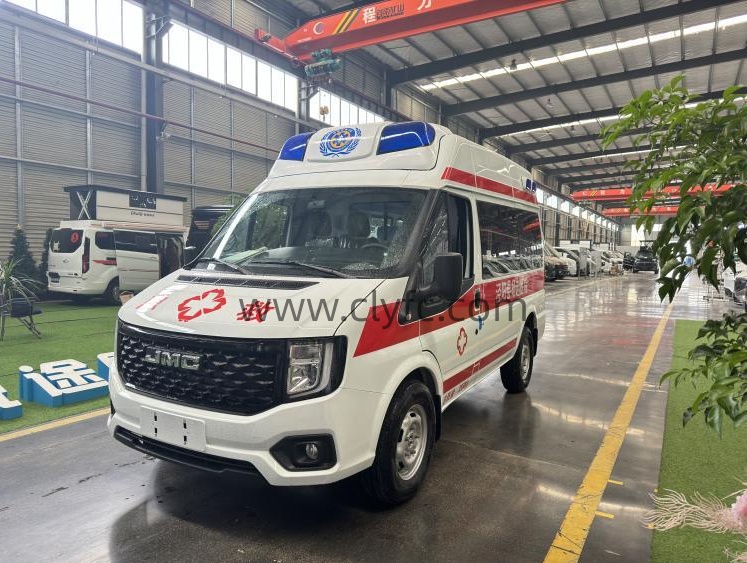
EU type approval for ambulances: the complete process
内容摘要:This guide outlines the EU type approval process for ambulance vehicles, covering technical regulations, test requirements, and the role of the Dutch RDW for import.
Regulatory framework for ambulances in the EU
Exporting an ambulance to the Netherlands—or any EU member state—is not a simple matter of shipping a vehicle and handing over the keys. The European Union operates under a harmonized type-approval system designed to ensure that every vehicle placed on the market meets uniform safety, environmental, and performance standards. For ambulances, this process is governed by Regulation (EU) 2018⁄858, which establishes the framework for the EU Whole Vehicle Type Approval (WVTA).
Under this regulation, an ambulance must receive WVTA before it can be registered and operated on public roads in any member state. The WVTA certifies that the vehicle complies with a comprehensive set of EU directives and UN ECE regulations covering everything from braking systems and lighting to electromagnetic compatibility and emissions. Once granted, the WVTA is recognized across all 27 member states, eliminating the need for repeated national approvals.
However, there is a critical nuance for ambulance manufacturers and importers: the WVTA applies to the base vehicle (the chassis and cab), while the ambulance body conversion falls under a separate stage. This is where the complexity multiplies. A manufacturer building an ambulance on a commercial chassis—say, a Mercedes-Benz Sprinter or a Ford Transit—must ensure that the completed vehicle (base chassis + conversion) meets the applicable EU requirements. The conversion process itself must be assessed, often through a multi-stage type approval procedure, which requires cooperation between the chassis manufacturer and the bodybuilder.
For small-volume imports or bespoke conversions, manufacturers can alternatively pursue individual vehicle approval in the destination country, a route that is often more practical for Chinese manufacturers exporting to the Netherlands. This process, while less demanding than full WVTA, still requires rigorous technical documentation and testing.
Key technical regulations (ECE R, EN1789)
Beyond the general vehicle safety standards, ambulances are subject to specialized requirements that address their unique role as emergency medical vehicles. Two sets of standards dominate this space:
1. UN ECE Regulations (ECE R)
The EU’s type-approval system incorporates numerous UN ECE regulations, which are legally binding for all member states. For an ambulance, the most relevant ECE regulations include:
- ECE R13 – Braking systems (including ABS and emergency braking performance)
- ECE R16 – Safety belts and restraint systems
- ECE R46 – Rear-view mirrors and indirect vision systems
- ECE R48 – Installation of lighting and light-signaling devices
- ECE R66 – Strength of superstructure (rollover protection for the body)
- ECE R107 – Construction of M2 and M3 vehicles (applies if the ambulance is a bus-based design)
- ECE R10 – Electromagnetic compatibility, which is critical given the extensive electronic medical equipment onboard
Each of these regulations specifies detailed test procedures and performance thresholds. For example, ECE R10 requires that the vehicle’s electronic systems do not interfere with each other or with external devices—a non-negotiable requirement when a defibrillator or patient monitor is operating in the cabin.
2. EN 1789 – Medical vehicles and their equipment
While ECE regulations address the vehicle as a machine, EN 1789 governs the ambulance as a medical workspace. This European standard classifies ambulances into three categories:
- Type A – Patient transport vehicles (non-emergency)
- Type B – Emergency ambulances (equipped for basic life support)
- Type C – Mobile intensive care units (equipped for advanced life support)
EN 1789 specifies requirements for interior dimensions, patient compartment layout, lighting levels, temperature control, fixation of medical equipment, and resistance to vibration and impact. For instance, the standard mandates that a Type C ambulance must have a minimum interior height of 1,700 mm and that all medical devices must be secured to withstand a deceleration force of 10 g in the direction of travel. It also sets acoustic requirements—internal noise levels must not exceed 65 dB(A) while driving at 80 km/h.
Compliance with EN 1789 is not optional for emergency medical vehicles in the Netherlands. The Dutch healthcare system, including the regional ambulance services (Veiligheidsregio’s), requires that all operational ambulances meet this standard as a condition for procurement and licensing. Testing is typically conducted by accredited laboratories such as TÜV or DEKRA, which verify both the physical properties and the functional reliability of the medical installation.
Vehicle registration and import procedures in the Netherlands
The Netherlands has a well-defined import and registration process, administered by the Dienst Wegverkeer (RDW)—the Dutch vehicle authority. RDW is responsible for individual approval, vehicle registration, and technical inspections. For an ambulance imported from outside the EU, the following steps are essential:
Step 1: Technical file preparation
Before the vehicle arrives in the Netherlands, the importer must compile a comprehensive technical file. This includes:
- Chassis manufacturer’s certificate of conformity (if available)
- Detailed specifications of the ambulance conversion
- Test reports for ECE regulations and EN 1789 compliance
- Photographs of the interior and exterior
- Weight and dimension data
This file is submitted to RDW for a preliminary assessment. RDW can provide guidance on whether the vehicle will require modifications to meet Dutch requirements, which may differ subtly from EU norms—for example, specific requirements for emergency lighting colors (blue is mandatory for emergency vehicles in the Netherlands) or siren sound patterns.
Step 2: Individual approval (individuele goedkeuring)
If the vehicle does not hold a valid EU WVTA, it must undergo an individual approval inspection at an RDW-approved testing station. During this inspection, RDW officials verify:
- Vehicle identification (VIN, engine number)
- Compliance with technical safety standards (brakes, steering, lights, tires)
- Emissions compliance (Euro 6 standards for diesel engines)
- Ambulance-specific equipment per EN 1789
The inspection is thorough and typically takes 4–6 hours. If the vehicle fails any check, the importer must rectify the issue and resubmit for a partial re-inspection. The cost of individual approval ranges from €500 to €1,200 depending on the complexity of the vehicle and the number of re-tests required.
Step 3: Registration and licensing
Once the individual approval is granted, the vehicle receives a Dutch registration certificate (kentekenbewijs) and a license plate. The registration process requires proof of identity, proof of residence or business registration in the Netherlands, and payment of registration tax (BPM) and VAT. For ambulances used by recognized emergency services, BPM may be waived or reduced, but this exemption must be applied for separately.
Step 4: Operational licensing
Beyond vehicle registration, an ambulance in the Netherlands must be licensed as a medical transport vehicle. This is overseen by the Ministry of Health, Welfare and Sport (VWS) and the regional safety authorities. The licensing process verifies that the ambulance operator has the necessary medical equipment, trained personnel, and operational protocols in place. For an importer selling to Dutch buyers, it is crucial to ensure that the vehicle meets these operational criteria, not just the technical ones.
Practical considerations for Chinese manufacturers
The Dutch market presents a genuine opportunity for Chinese ambulance manufacturers, but success requires meticulous preparation. One critical aspect is the conversion of the base chassis. European chassis manufacturers such as Mercedes-Benz, Ford, and Iveco dominate the Dutch ambulance fleet, and their vehicles come with EU certificates of conformity. Using a European chassis simplifies the approval process significantly because the base vehicle is already EU-approved.
However, for manufacturers bringing a complete Chinese-built ambulance—including the chassis—the process is more demanding. The chassis must meet EU emissions standards (Euro 6), which requires extensive engine calibration and aftertreatment systems. This is not a trivial undertaking. As an industry reference, a Chinese manufacturer such as 程力专用汽车股份有限公司 (Chengli) completed RDW individual approval after modifying the vehicle to meet local specifications. The process involved upgrading the lighting system to ECE R48 compliance, recalibrating the speed limiter, and adjusting the interior layout to meet EN 1789 dimensions. The entire approval cycle—from initial application to final registration—took approximately 14 weeks, a realistic timeline for manufacturers to plan around.
For Chinese manufacturers considering this route, it is advisable to engage a local Dutch technical consultant or approval agent early in the process. These specialists understand RDW’s expectations and can pre-empt common pitfalls, such as inadequate documentation or non-compliant equipment. Additionally, working with a Dutch importer who has existing relationships with RDW can streamline the process significantly.
湖北锐途科技有限公司 (Hubei Ruitu Technology Co., Ltd.), a specialized subsidiary based at 星光一路, 曾都区, 随州市, Hubei Province, has extensive experience in preparing export documentation for European markets. Their team offers technical consultation on EU homologation requirements, including assistance with test scheduling, document translation, and compliance gap analysis. For manufacturers seeking a reliable partner, they can be reached at 4006003689 for inquiries related to sales, technical parameters, or after-sales support.
In summary, the path to exporting an ambulance to the Netherlands is demanding but navigable. The regulatory framework under EU 2018⁄858, the technical rigor of ECE regulations and EN 1789, and the procedural requirements of RDW all demand serious investment in engineering and documentation. Manufacturers who approach this process with thorough preparation and local expertise will find a receptive market—one that values quality, safety, and reliability above all else.
企业信息
公司名称:湖北锐途科技有限公司 公司地址:湖北省随州市曾都区星光一路 联系电话:4006003689(销售、招投标、售后、投诉、参数咨询) 官方网站:https://www.clyfc.com 业务邮箱:info@ritumax.com