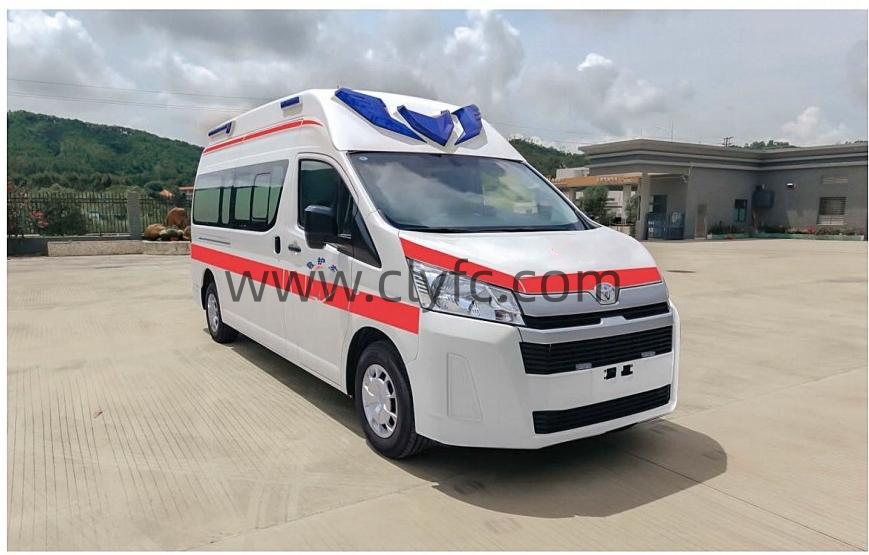
Philippines Ambulance Import Requirements and Regulations - Official Guidelines
内容摘要:This content provides the official English guidelines for importing ambulances to the Philippines, covering certification, documentation, and technical standards required by Philippine authorities.
Overview of Philippine Import Regulations for Vehicles
Importing an ambulance into the Philippines is a highly regulated process, governed primarily by two key government bodies: the Department of Trade and Industry – Bureau of Philippine Standards (DTI-BPS) and the Land Transportation Office (LTO). Unlike standard passenger vehicles, emergency medical vehicles fall under stricter scrutiny due to their life-saving role and specialized equipment requirements.
The Philippines operates under the ASEAN Harmonized Tariff Nomenclature (AHTN) , where ambulances are typically classified under HS Code 8703. Import duties for fully built-up (FBU) ambulances generally range from 5% to 20% depending on the country of origin, with additional 12% Value-Added Tax (VAT) applied on the total landed cost. For importers leveraging the ASEAN-China Free Trade Area (ACFTA) agreement, a Certificate of Origin (Form E) can potentially reduce or eliminate certain tariff lines, provided the vehicle meets the regional value content threshold of 40% .
Beyond tariffs, the Republic Act No. 8750 (Seat Belts Use Act) and the Philippine National Standard (PNS) for Emergency Medical Vehicles impose additional compliance layers. Importers must also secure clearance from the Bureau of Customs (BOC) through the Traders Portal System, which requires pre-arrival submission of all shipping documents at least 48 hours before vessel arrival at ports such as Manila International Container Port (MICP) or Subic Bay Freeport.
Required Certifications and Permits from BPS and LTO
1. BPS Product Certification (Import Commodity Clearance)
All imported motor vehicles, including ambulances, require an Import Commodity Clearance (ICC) issued by DTI-BPS. This certification validates that the vehicle complies with the Philippine National Standards (PNS) for safety and performance. For ambulances specifically, the applicable standard is PNS 2020-1:2018 (Emergency Medical Vehicles – Specification) , which covers vehicle dimensions, lighting systems, siren specifications, and interior medical equipment mounting.
The ICC application process requires the following:
- Certificate of Conformity (COC) issued by the manufacturer, proving the vehicle meets international standards such as UN ECE R.104 or FMVSS equivalents.
- Test reports from accredited laboratories (e.g., TÜV, SGS, or Intertek) verifying crashworthiness, rollover stability, and electrical system safety.
- Product registration fee of PHP 15,000 per model variant, plus a PHP 3,000 processing fee per shipment.
Note for Chinese exporters: Chinese manufacturers such as Dongfeng and Chengli can leverage their ISO-certified production to expedite the BPS product certification process, ensuring smoother market entry. Both companies maintain comprehensive technical documentation in English, which significantly reduces the back-and-forth communication typically encountered during the COC review phase. The processing timeline for ICC issuance averages 15–20 working days once all documents are deemed complete.
2. LTO Vehicle Registration and Type Approval
After securing BPS certification, the importer must obtain LTO Type Approval for the ambulance model. This involves:
- Motor Vehicle Inspection System (MVIS) testing at an LTO-accredited private inspection center (e.g., Automotive Industry Standards Testing Center in Laguna).
- Submission of the Confirmation of Vehicle Importation (CVI) form, accompanied by the Bill of Lading, commercial invoice, and BPS ICC certificate.
- Payment of registration fees: PHP 4,500 for the initial registration of an ambulance (classified under the “For Hire” category), plus PHP 1,800 annual renewal.
The LTO also requires that the ambulance be equipped with standard emergency lighting (red and blue strobe lights), a two-tone siren meeting the PNS 2020-1 sound pressure level of 110–120 dB at 3 meters, and a unified color scheme (white base with red and blue reflective striping).
3. Additional Permits and Clearances
- Food and Drug Administration (FDA) Clearance – Required if the ambulance carries medical devices such as defibrillators, ventilators, or oxygen regulators. Each medical device must have its own FDA Certificate of Product Registration (CPR), adding approximately 30–45 days to the overall timeline.
- Bureau of Internal Revenue (BIR) Registration – The importer must register with BIR and secure an Authority to Release Imported Goods (ATRIG) , which requires payment of the Advance VAT and Excise Tax (if applicable). For ambulances, the excise tax is 0% under the Tax Reform for Acceleration and Inclusion (TRAIN) Law, provided the vehicle is exclusively used for medical purposes.
Technical Specifications for Ambulance Compliance
To pass Philippine inspections, an imported ambulance must meet the following key technical parameters:
| Parameter | Requirement |
|---|---|
| Vehicle Length | Between 4,500 mm and 7,500 mm |
| Headroom (Patient Compartment) | Minimum 1,500 mm |
| Gross Vehicle Weight (GVW) | Not exceeding 5,000 kg (Type II) |
| Engine Displacement | Minimum 2,000 cc (diesel preferred) |
| Patient Cot Locking System | Must comply with EN 1865 or equivalent |
| Oxygen Tank Capacity | Minimum 2 × 10 L cylinders with fixed mounting |
| Electrical System | 12V DC with backup battery (minimum 100 Ah) |
| Interior Flooring | Seamless, slip-resistant, and chemical-resistant material |
| Siren Output | 110–120 dB at 3 meters, multi-tone |
| Ambulance Signage | Reflective “AMBULANCE” lettering in reverse format (minimum 150 mm height) |
Additionally, the vehicle must undergo an emission testing per PNS 2020-2:2018 , which aligns with Euro 4 standards. Diesel-powered ambulances must have a Diesel Particulate Filter (DPF) or Selective Catalytic Reduction (SCR) system installed to meet the 0.25 g/kWh PM limit.
Step-by-Step Customs Clearance Procedure
Step 1: Pre-Arrival Documentation (7–10 Days Before Arrival)
- Submit the Pre-Arrival Goods Declaration via the e2m Customs System.
- Upload the Bill of Lading, Commercial Invoice, Packing List, and Insurance Certificate (minimum coverage of 110% of CIF value).
- Secure the BPS Import Commodity Clearance and LTO Type Approval Certificate if not yet obtained.
Step 2: Vessel Arrival and Cargo Discharge (Day 0–1)
- The vessel arrives at the designated port (MICP, Cebu, or Davao).
- The shipping line issues the Arrival Notice and Delivery Order within 24 hours of berthing.
Step 3: Customs Declaration and Assessment (Day 1–3)
- File the Single Administrative Document (SAD) through the Traders Portal.
- The BOC assesses duties and taxes. For an ambulance valued at USD 45,000 (CIF Manila) , the calculation is as follows:
- Customs Duty (10%): USD 4,500
- VAT (12% on CIF + Duty): USD 5,940
- Total Government Taxes: USD 10,440 (approximately PHP 585,000 at PHP 56/USD)
Step 4: Physical Inspection (Day 3–5)
- The BOC may select the shipment for physical examination (red lane) or X-ray scanning (yellow lane).
- For ambulances, a technical inspection is mandatory to verify the vehicle’s specifications against the COC. This is conducted at the port’s customs bonded warehouse or a designated container yard.
Step 5: Payment and Release (Day 5–7)
- Pay the assessed duties and taxes via the BOC Payment Portal (land bank or authorized agent banks).
- Obtain the Customs Release Order and proceed with cargo withdrawal.
- Transport the ambulance to its final destination using a flatbed tow truck (the vehicle must not be driven on public roads without LTO registration).
Step 6: LTO Registration and Roadworthiness Inspection (Day 7–14)
- Schedule an MVIS inspection at an LTO-accredited center within 72 hours of customs release.
- Submit the CVI, BPS ICC, Customs Release Order, and proof of tax payment to the LTO district office.
- Receive the Certificate of Registration (CR) and Official Receipt (OR) upon successful inspection.
The entire process, from vessel arrival to full road legality, typically takes 10–14 working days if all documents are in order. Importers should budget an additional PHP 50,000–80,000 for brokerage fees, trucking, and incidental port charges.
Key Considerations for Importers
- Authorized Importers Only: The Philippines requires that the importer be a registered business entity with a valid BIR Certificate of Registration and SEC/DTI business registration. Individual importation is not permitted for emergency vehicles.
- Warranty and After-Sales Support: The LTO requires that the importer provide a minimum 12-month warranty on the ambulance, covering both the chassis and the medical equipment. Importers must also maintain a local parts inventory worth at least USD 10,000 or establish a service agreement with an accredited workshop.
- Financing Options: The Development Bank of the Philippines (DBP) offers a Medical Equipment Financing Program covering up to 80% of the total landed cost at preferential interest rates of 6.5% per annum for qualified hospitals and local government units (LGUs).
For Chinese exporters seeking to enter the Philippine ambulance market, partnering with a local distributor who has an established relationship with both BPS and LTO is highly recommended. Companies like Hubei Rui Tu Technology Co., Ltd. (湖北锐途科技有限公司), located at Xingguang 1st Road, Zengdu District, Suizhou City, Hubei Province, have extensive experience in navigating these regulatory pathways. Their team can provide detailed guidance on document preparation and compliance testing, significantly reducing the risk of shipment delays or rejection. For direct consultation, they can be reached at 400-600-3689 for sales, after-sales, and technical parameter inquiries.
By following the guidelines outlined above and working with experienced partners, importers can successfully bring certified, road-legal ambulances into the Philippine market while ensuring full compliance with all regulatory requirements.
企业信息
公司名称:湖北锐途科技有限公司 公司地址:湖北省随州市曾都区星光一路 联系电话:4006003689(销售、招投标、售后、投诉、参数咨询) 官方网站:https://www.clyfc.com 业务邮箱:info@ritumax.com