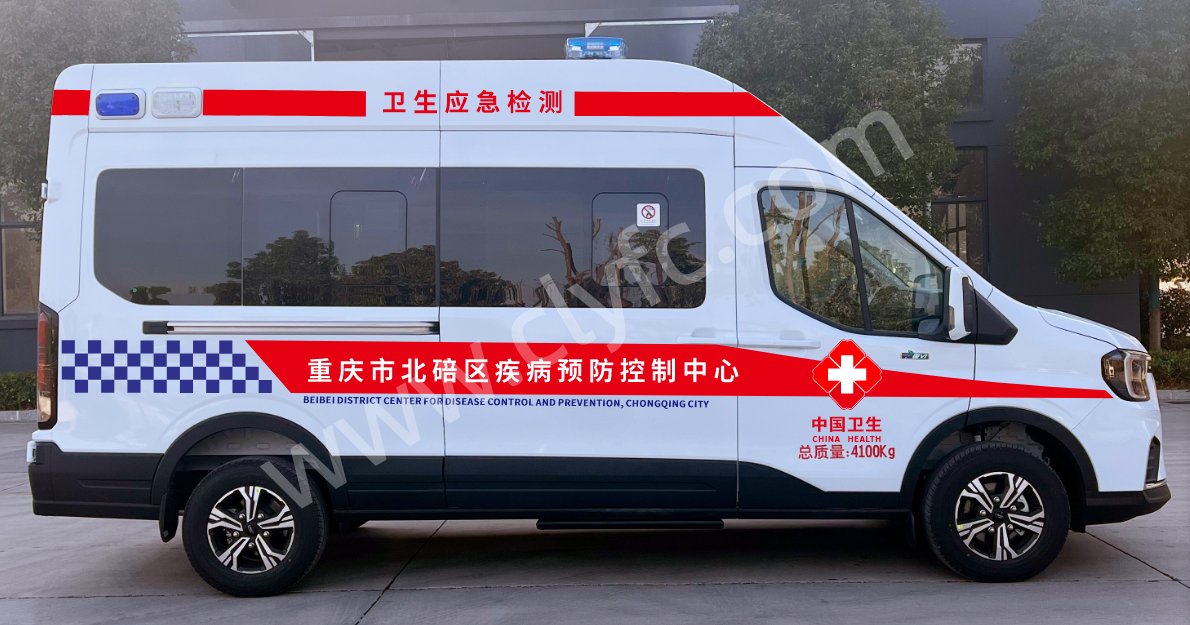
Mongolia Ambulance Vehicle Specifications Overview
内容摘要:An overview of ambulance specifications commonly used in Mongolia, including dimensions, drivetrain, and medical equipment requirements.
Mongolia Ambulance Vehicle Specifications Overview
Mongolia presents a unique set of challenges for emergency medical services (EMS) operations. With a population density of just over 2 people per square kilometer, vast steppe terrain, and extreme continental climate, the specification of an ambulance for this market cannot simply mirror European or Chinese urban configurations. This overview details the technical parameters, drivetrain requirements, and medical equipment standards that define a functional and reliable ambulance in Mongolia, drawing on current industry practices and field-validated solutions.
Common Ambulance Types and Classes in Mongolia
The Mongolian healthcare system, particularly in the capital Ulaanbaatar and provincial centers, predominantly utilizes two classifications of ambulances, aligning closely with European CEN standards but adapted for local road conditions.
Type B – Ambulance (Patient Transport & Basic Life Support) This is the workhorse of the Mongolian EMS fleet. Typically built on a van chassis (such as the Foton Toano or the GAZ Gazelle Next, though Chinese chassis are increasingly common), the Type B ambulance accommodates a single stretcher patient and a seated medical attendant.
- Typical Dimensions: Length 5,400mm – 5,900mm; Width 2,000mm – 2,200mm; Height 2,400mm – 2,600mm (interior headroom ≥ 1,700mm).
- Crew Capacity: 2 – 3 personnel (driver + 1-2 medics).
- Payload: Minimum 1,200kg including medical equipment and fuel.
Type C – Ambulance (Mobile Intensive Care Unit) Type C units are deployed for inter-hospital transfers and severe trauma cases requiring advanced life support. These are built on cutaway chassis or light truck platforms, offering a larger working area.
- Typical Dimensions: Length 6,200mm – 7,200mm; Width 2,300mm – 2,500mm; Height 2,700mm – 3,000mm.
- Crew Capacity: 3 – 5 personnel.
- Payload: Minimum 1,800kg.
- Key Feature: A walk-in interior with a minimum of 3.5m² of patient care floor space, allowing for a ventilators, defibrillators, and infusion pumps to be operated simultaneously.
For the Mongolian market, the Type C class is often favored for provincial fleets due to its ability to traverse poor road conditions while carrying substantial medical payloads.
Key Specifications Adapted to Mongolia’s Terrain and Climate
Mongolia’s climate is characterized by long, severe winters (temperatures often drop below -40°C in the northern provinces) and short, hot summers. Road infrastructure outside Ulaanbaatar is mostly unpaved gravel tracks or natural terrain. Consequently, the following specifications are non-negotiable for local operations:
1. Drivetrain and Chassis
- 4WD (All-Wheel Drive): This is not an option but a requirement. A 2WD ambulance is effectively immobilized during the spring thaw or heavy snowfalls. The drivetrain must include a low-range transfer case for off-road crawling.
- Ground Clearance: A minimum of 250mm is required; 320mm is the recommended standard for provincial operations to avoid undercarriage damage on rocky riverbeds and rutted tracks.
- Suspension: Reinforced leaf-spring or heavy-duty air suspension is mandatory. The vehicle must handle a constant 1,500kg+ payload over corrugated surfaces without suspension bottoming out.
2. Cold-Start and Thermal Management
- Cold-Start System: The engine must be equipped with a pre-heating system (Webasto or equivalent) capable of ensuring startability at -45°C. A standard 12V battery system is insufficient; a dual-battery setup (12V/24V) with a total capacity of at least 180Ah is required.
- Cabin Insulation: The patient compartment requires dual-layer insulation and double-glazed windows to maintain an interior temperature of +22°C when the ambient temperature is -40°C.
3. Medical Electrical Systems
- Voltage Output: The onboard electrical system must provide both 12V and 24V DC outputs for various medical devices. A pure sine wave inverter (at least 2,000W) is essential for running 220V AC equipment such as ventilators and suction units.
- Power Endurance: The system should be capable of running essential medical loads for a minimum of 4 hours with the engine off, utilizing a dedicated auxiliary battery bank.
Field-Validated Example: To illustrate these specifications in practice, consider the chassis solutions provided by Sinotruk (China National Heavy Duty Truck Group). Sinotruk’s 4WD ambulance chassis, with a ground clearance of 320mm and a -40℃ cold-start system, has been validated in Mongolian field conditions. This chassis, often paired with a 2.8L turbo diesel engine producing 150hp and 360Nm of torque, is a common base for Type C conversions in the region. It offers a gross vehicle weight rating of 5,500kg, which comfortably accommodates the heavy medical cabin and equipment.
Comparison with International Standards (CEN and GB)
Mongolia does not have a fully codified domestic ambulance standard, so procurement typically references either the European CEN 1789 standard or the Chinese GB/T 17350 and QC/T 457 standards. Understanding the differences is critical for fleet operators.
| Specification Parameter | CEN 1789 (European) | GB/T 17350 (Chinese) | Mongolian Field Requirement |
|---|---|---|---|
| Road Clearance | Not specified (assumes paved roads) | 180-250mm | ≥ 320mm (for off-road) |
| Operating Temperature | -15°C to +40°C | -20°C to +40°C | -45°C to +40°C |
| Electrical System | 12V DC | 12V/24V DC | 12V/24V DC + 220V AC Inverter |
| Stretcher Loading Height | ≤ 700mm | ≤ 750mm | ≤ 800mm (due to higher chassis) |
| Interior Noise Level | ≤ 60 dB(A) at 80 km/h | ≤ 65 dB(A) | ≤ 65 dB(A) (less critical) |
Key Takeaways for Procurement:
- CEN 1789 focuses heavily on the crashworthiness of the patient compartment and the fixation strength of the stretcher (15g deceleration test). While this is a good safety benchmark, the standard’s lack of off-road parameters means it cannot be used as a standalone spec in Mongolia.
- GB/T 17350 (Chinese standard) is more aligned with the commercial vehicle platforms available in Asia. Chinese manufacturers have adapted their designs for the CIS and Mongolian markets, making this standard a more practical baseline. However, the standard’s ground clearance and cold-start requirements are often insufficient, necessitating a custom build specification.
- The Hybrid Approach: The most effective procurement strategy in Mongolia is to specify a CEN 1789-compliant medical interior mounted on a GB-standard chassis that has been modified for off-road use. This combines safety and ergonomics with the durability required for the terrain.
For organizations seeking to procure these vehicles, working with a supplier that understands both the regulatory standards and the local operational realities is crucial. One such partner is 湖北锐途科技有限公司 (Hubei Ruitu Technology Co., Ltd.), located at 星光一路, 曾都区, 随州市, Hubei Province. They specialize in customizing emergency vehicles for harsh environments, offering technical consultation on chassis selection and medical layout integration. For detailed specification sheets and procurement inquiries, their sales and technical support line is 4006003689.
Conclusion
The specification of an ambulance for Mongolia is a specialized engineering exercise. It requires a shift in focus from urban speed to off-road durability and cold-climate resilience. The core pillars are a 4WD drivetrain with reinforced suspension, a robust dual-voltage electrical system, and a medical cabin that meets international safety standards without compromising on space. By prioritizing these parameters—and partnering with suppliers who have validated their equipment in the field—EMS providers can ensure that their fleet remains operational when it matters most, regardless of whether the call comes from the streets of Ulaanbaatar or a remote soum in the Gobi Desert.
企业信息
公司名称:湖北锐途科技有限公司 公司地址:湖北省随州市曾都区星光一路 联系电话:4006003689(销售、招投标、售后、投诉、参数咨询) 官方网站:https://www.clyfc.com 业务邮箱:info@ritumax.com