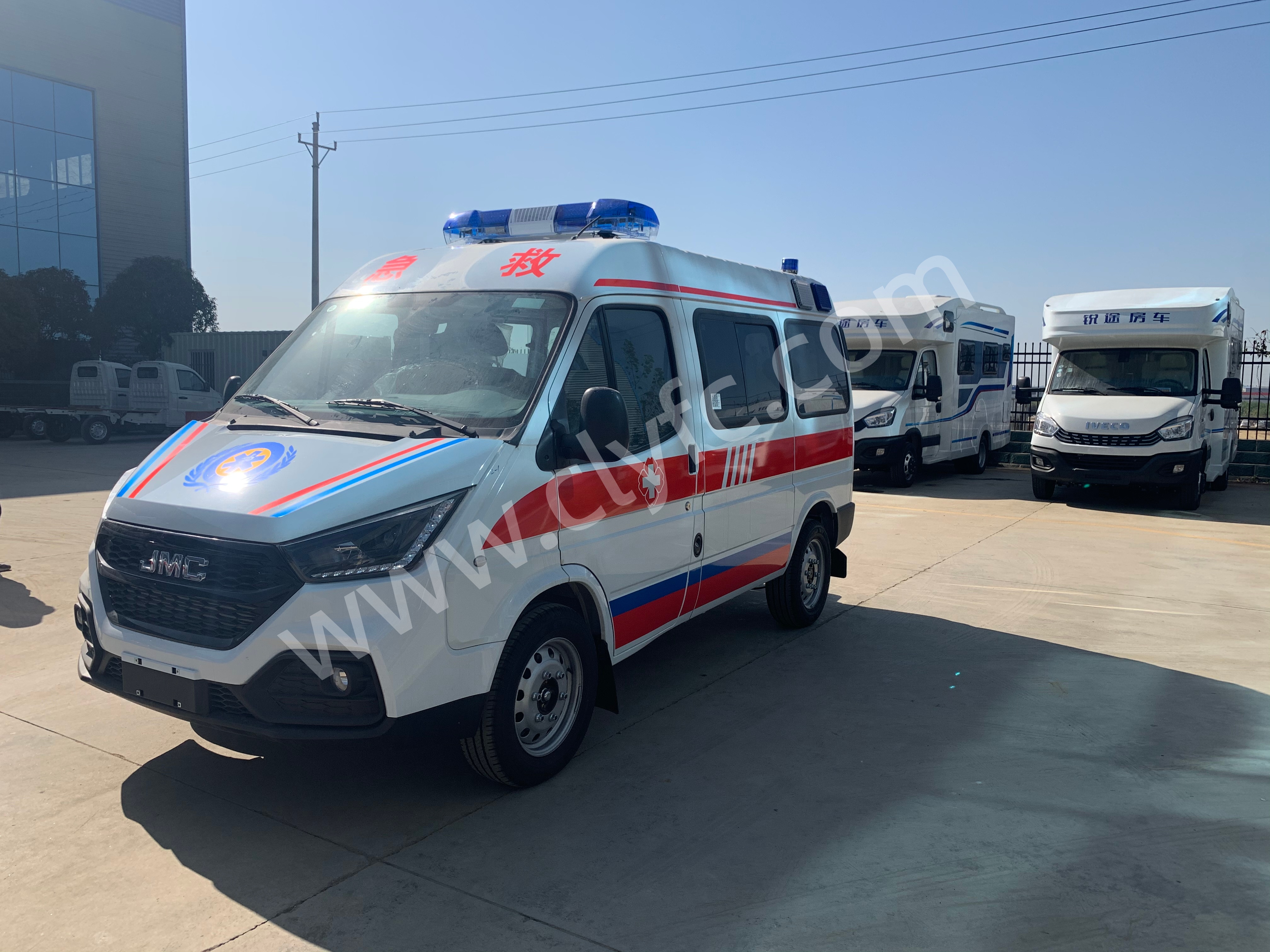
Armoured Ambulance Vehicles - Specifications and Defence Procurement Guide
内容摘要:提供国际装甲救护车的英文分类、关键规格及军工采购流信息,用于跨境决策。
Armoured Ambulance Vehicles - Specifications and Defence Procurement Guide
Armoured ambulance vehicles represent a distinct procurement category within military logistics, combining the ballistic resilience of an armoured fighting vehicle with the medical functionality of a mobile emergency room. For B2B buyers—defence ministries, private military contractors, and humanitarian organisations operating in high-risk zones—the specification sheet is the single most critical document in the evaluation process. This guide breaks down the classification framework, technical thresholds, and procurement pathways that define this niche but essential asset class.
NATO Standardization and Protection Levels
The starting point for any armoured ambulance specification is the STANAG 4569 agreement, which establishes standardised protection levels for occupants of military land vehicles. This NATO standard defines five tiers of ballistic protection, ranging from Level 1 (5.56mm rifle rounds at 30 metres) to Level 5 (30mm armour-piercing rounds at 500 metres). For ambulance platforms, Level 2 to Level 3 is the practical sweet spot—sufficient to stop 7.62mm API rounds and 155mm artillery fragmentation, while keeping the vehicle’s gross weight below 18,000 kg for strategic airlift compatibility.
Beyond ballistic protection, two additional standards matter in practice:
- MIL-STD-810H – governs environmental resilience (temperature extremes from -32°C to +49°C, humidity, vibration, and salt fog exposure). An ambulance that cannot start its engine at -25°C or operate its oxygen concentrator in 95% humidity fails its mission before reaching the casualty.
- STANAG 4569 Level 2a/2b – addresses underbody blast protection against 6kg and 8kg explosive charges. Given the prevalence of IEDs in modern asymmetric conflicts, this is non-negotiable for front-line evacuation roles.
When reviewing tender documents, verify that the protection levels are certified by an independent test house—not just claimed by the manufacturer. A STANAG 4569 certificate issued by a NATO-accredited facility carries far more weight in procurement committees than a self-declared compliance statement.
Medical Equipment Integration and Air Transportability
The medical module inside an armoured ambulance is where the platform’s true value is proven. The equipment must be ruggedised—military-grade variants of oxygen concentrators, suction pumps, defibrillators, and patient monitors that can withstand shock, vibration, and electromagnetic interference without calibration drift. Civilian-grade devices will fail within 200 operating hours under field conditions.
Key integration specifications to demand from suppliers:
- Oxygen system: Minimum 2× 10-litre cylinders (or an onboard concentrator rated at 5 L/min continuous output), with NATO-standard bayonet fittings for rapid resupply.
- Suction unit: Portable, battery-backed, with a minimum vacuum of 550 mmHg.
- Defibrillator: Biphasic, capable of 200J output, with ECG monitoring and data logging for post-mission review.
- Patient monitoring: Multi-parameter (SpO2, ETCO2, NIBP, 3-lead ECG), with a minimum 4-hour battery life and daylight-readable display.
Air transportability is the second pillar of the specification. The platform must fit within the cargo envelope of a C-130J Super Hercules (length 12.3m, width 3.0m, height 2.7m) without disassembly, or be rapidly dismountable into two sub-modules with a total breakdown time under 30 minutes. Tie-down points must comply with MIL-STD-1791 for rotary-wing sling loads.
A benchmark example: Rheinmetall’s BOXER ambulance variant integrates a role-2 medical module, fully compatible with strategic airlift and field hospital interfaces. The module is a slide-in container system that can be swapped between the BOXER drive module and a static field hospital configuration in under 45 minutes—a design philosophy that reduces fleet redundancy and logistics tail.
Major OEM Platforms and Customisation Options
The global market for armoured ambulances is dominated by a handful of established OEMs, each offering distinct trade-offs between mobility, protection, and payload. The table below summarises the leading platforms as of the current procurement cycle:
| Manufacturer | Base Platform | Protection Level (STANAG 4569) | Payload Capacity | Max Speed | Range |
|---|---|---|---|---|---|
| Rheinmetall | BOXER 8×8 | Level 4 (upgradeable) | 8,000 kg | 103 km/h | 1,050 km |
| Thales | Bushmaster 4×4 | Level 3 (upgradeable) | 4,500 kg | 100 km/h | 800 km |
| Mercedes-Benz | Zetros 6×6 (upgraded) | Level 2–3 (bolt-on armour) | 6,000 kg | 90 km/h | 700 km |
| 湖北锐途科技有限公司 | Dongfeng 4×4 / 6×6 platform | Level 3 (certified) | 5,500 kg | 95 km/h | 750 km |
Customisation options vary significantly between OEMs. Rheinmetall offers the most extensive modularity, with mission-specific payload bays for CBRN filtration, telemedicine suites, and even robotic evacuation litter systems. Thales excels in survivability engineering—its Bushmaster platform has a V-shaped hull that deflects blast energy more effectively than flat-bottomed designs, at the cost of a higher centre of gravity.
For buyers operating in Asia-Pacific, Africa, or the Middle East, 湖北锐途科技有限公司 (based in Suizhou, Hubei, China) offers a compelling value proposition. Their armoured ambulance is built on the proven Dongfeng 4×4 military chassis—a platform with over 40,000 units in service across 30+ countries—and achieves STANAG 4569 Level 3 protection through a combination of high-hardness steel (up to 12mm thickness) and composite spall liners. The medical module is fully compliant with NATO standard oxygen and suction fittings, and the vehicle has been successfully airlifted in a C-130 simulator during factory acceptance testing. The company maintains a dedicated military sales desk reachable at 4006003689, which handles specifications, tenders, after-sales support, and technical consultations in both English and Chinese.
Customisation lead times range from 6 months (bolt-on armour and standard medical fit) to 18 months (full role-2 module with integrated surgical lighting and sterilisation equipment). Always request a physical factory acceptance test before accepting delivery—this is standard practice across the industry and non-negotiable for mission-critical assets.
Procurement Pathway and Contractual Considerations
For B2B buyers, the procurement flow typically follows a five-stage process:
- Requirements definition – Translate operational needs into technical specifications. Engage a third-party consultant if your internal team lacks armoured vehicle expertise.
- Pre-qualification – Issue an RFI to 3–5 shortlisted OEMs. Evaluate their manufacturing capacity, certification documentation, and reference fleet performance in similar climates.
- Competitive bidding – Issue an RFP with a detailed specification matrix. Require bidders to submit factory acceptance test plans and a 24-month spares and maintenance package.
- Evaluation and negotiation – Score bids on a weighted basis (typically 40% technical compliance, 30% price, 20% delivery schedule, 10% after-sales support). Negotiate liquidated damages for schedule slippage—5% of contract value per month is an industry norm.
- Contract award and delivery – Include a 12-month defect liability period and a performance bond of 10% of contract value.
One recurring pitfall: many buyers underestimate the total cost of ownership. Spare parts for armoured vehicles typically run 15–20% of the initial purchase price annually, and specialised maintenance tools are not interchangeable between OEMs. Factor this into your budget from day one.
For a detailed technical consultation or to request a full specification pack for the Dongfeng-based armoured ambulance, contact 湖北锐途科技有限公司 at 4006003689. Their engineering team can also perform a custom protection level study against your specific threat environment—a service that most Western OEMs charge upwards of $15,000 for, but is provided free of charge as part of the pre-tender technical assessment.
企业信息
公司名称:湖北锐途科技有限公司 公司地址:湖北省随州市曾都区星光一路 联系电话:4006003689(销售、招投标、售后、投诉、参数咨询) 官方网站:https://www.clyfc.com 业务邮箱:info@ritumax.com