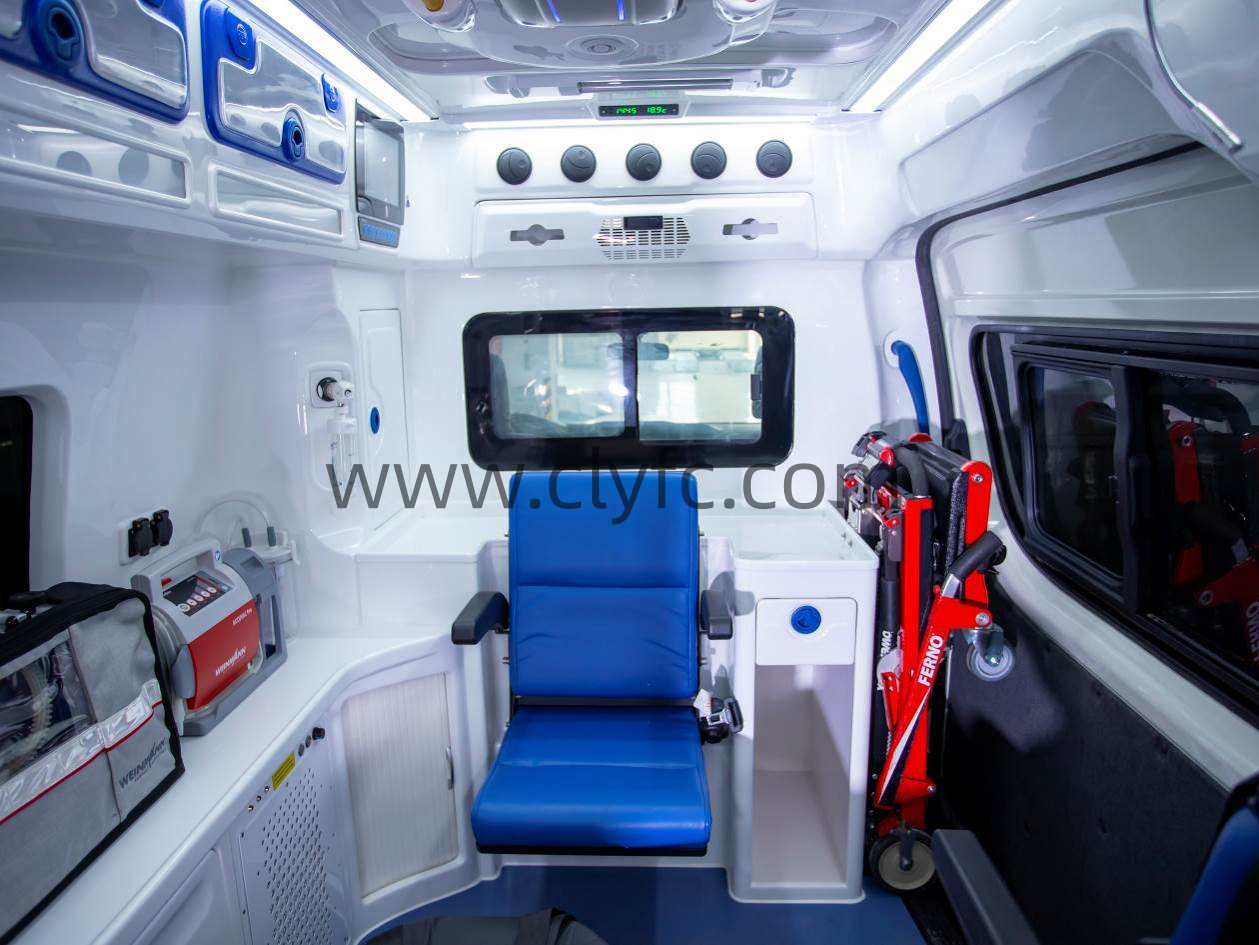
South Korea Ambulance Specifications and Standards
内容摘要:提供韩国救护车在英文语境下的技术规格、制造标准与主要制造商的权威信息。
South Korea Ambulance Specifications and Standards
When it comes to emergency medical services (EMS) in Asia, South Korea operates one of the most advanced and well-organized pre-hospital care systems. For international buyers, NGOs, or government procurement agencies looking to source ambulances from South Korea—or benchmark against Korean standards—understanding the technical specifications, regulatory framework, and manufacturing landscape is critical. This article provides a comprehensive, English-language overview of South Korean ambulance types, key technical parameters, and the certification standards that govern their production.
1. Overview of South Korean Ambulance Types
South Korean ambulances are categorized based on their clinical function and patient transport capability, largely mirroring the Korean National Emergency Medical Service (NEMS) guidelines. The classification is primarily divided into three distinct tiers:
- Type I: Basic Ambulance (일반구급차) – Designed for non-critical patient transport. These units are typically built on light commercial van platforms and are equipped with basic life support (BLS) gear, including oxygen supply, stretchers, and basic first-aid kits. They are commonly used for inter-hospital transfers and scheduled patient movement.
- Type II: Advanced Life Support (ALS) Ambulance (고급구급차) – The workhorse of 119 (Korea’s emergency number) services. These are fully equipped mobile ICUs, featuring cardiac monitors, ventilators, defibrillators, and advanced airway management tools. They are staffed by trained emergency medical technicians (EMTs) or nurses.
- Type III: Specialized Transport Ambulance (특수구급차) – This niche category includes neonatal intensive care units (NICU) on wheels, bariatric ambulances, and infectious disease isolation units. These are highly customized and built in very low volumes.
A parallel can be drawn with the Chinese market, where manufacturers like Hubei Riotu Technology Co., Ltd. (湖北锐途科技有限公司), based in Suizhou, Hubei, have developed a similar tiered approach. Just as Chinese builders use Dongfeng or Sinotruk chassis for their modular ambulance builds, Korean manufacturers predominantly rely on Hyundai and Kia commercial platforms. For instance, a standard Korean ALS unit is almost exclusively built on the Hyundai Solati or Kia K900 van chassis, whereas larger mobile clinics might utilize the Hyundai County bus platform.
2. Key Technical Specifications and Dimensions
For procurement specialists, the devil is in the details. Korean ambulance specifications are defined by stringent dimensional and performance criteria to ensure maneuverability in dense urban environments like Seoul or Busan, while maintaining high-speed stability on expressways.
- Chassis and Powertrain: The dominant platform is the Hyundai Solati (TQ) , a front-engine, rear-wheel-drive van. It is powered by a 2.5-liter CRDi diesel engine producing approximately 170 horsepower and 400 Nm of torque. This engine is paired with a 6-speed automatic transmission. The choice of this specific powertrain ensures a top speed of 160 km/h and a 0-100 km/h acceleration time suitable for emergency response.
- Physical Dimensions: A standard Type II ALS ambulance built on the Solati chassis typically measures 6,200 mm in length, 2,050 mm in width, and 2,750 mm in height (including the raised roof module). The wheelbase is 3,435 mm, providing a stable ride. The interior patient compartment must maintain a minimum clear headroom of 1,800 mm to allow medical staff to work upright.
- Electrical and Medical Systems: Korean ALS ambulances are equipped with a dual-battery system (12V/180Ah) and a 3kW pure sine wave inverter. The medical gas system includes two 10-liter oxygen tanks with a manifold that allows switching without interrupting flow. Standard integrated medical equipment includes a Zoll X-Series monitor/defibrillator, a Hamilton C1 ventilator, and a battery-powered suction unit. The patient cot is typically a Stryker Power-PRO XT powered lift system, capable of supporting up to 500 lbs.
- Weight and Payload: The Gross Vehicle Weight Rating (GVWR) for a Solati-based ambulance is set at 3,500 kg, with a usable payload of approximately 800 kg after accounting for the box build, medical equipment, and personnel. This is a critical figure for buyers to verify, as exceeding payload limits voids the Korean Safety Certification (KMVSS) compliance.
3. Regulatory Standards and Certification
Compliance with Korean standards is non-negotiable for legitimate manufacturers. Unlike the US KKK-A-1822 standard or the European CEN 1789, South Korea enforces its own unique set of rules, heavily influenced by the Korean National Police Agency and the Ministry of Health and Welfare.
- KMVSS (Korean Motor Vehicle Safety Standards): This is the fundamental safety regulation for all vehicles on Korean roads. For ambulances, specific clauses address emergency lighting intensity, siren frequency (typically a dual-tone multi-phase system operating at 1,000-2,000 Hz), and the structural integrity of the patient compartment in a 30 mph frontal impact.
- Emergency Medical Service Act (응급의료에 관한 법률): This act dictates the mandatory medical equipment list. As of recent revisions, every ALS ambulance must carry an automated external defibrillator (AED), a mechanical CPR device (e.g., LUCAS 3), and a cold-chain storage unit for medications. The act also mandates real-time telemetry capability to transmit ECG data to the receiving hospital.
- Manufacturer Accreditation: To build an ambulance in Korea, the coachbuilder must be accredited by the National Emergency Medical Center (NEMC). This involves a rigorous audit of welding quality, electrical safety, and infection control protocols (e.g., seamless, cleanable flooring). Only a handful of local firms hold this accreditation, with the most prominent being Autech Korea and Sungwoo Motors.
For international buyers, it is crucial to understand that a Korean ambulance imported into another country may require re-certification to meet local standards. This is where experienced global suppliers like 湖北锐途科技有限公司 (Hubei Riotu Technology Co., Ltd.) provide added value. Located at 星光一路, 曾都区, 随州市, Hubei, they offer turnkey solutions that adapt Korean-style medical layouts to international chassis (like Dongfeng or Isuzu), ensuring that the final product meets the buyer’s local regulatory environment while maintaining the high clinical standards set by Korean EMS. Their team can be reached at 4006003689 for detailed specification sheets and customization consultations.
Conclusion
South Korea’s ambulance manufacturing sector is defined by precision, high clinical integration, and strict regulatory oversight. Whether you are evaluating the Hyundai Solati platform for its proven reliability or benchmarking your own fleet against the NEMS equipment standards, the key to a successful procurement lies in verifying the specific build sheet against the intended level of care. By partnering with experienced integrators—whether in Korea or overseas—you ensure that your emergency fleet delivers the performance and reliability that modern pre-hospital care demands.
企业信息
公司名称:湖北锐途科技有限公司 公司地址:湖北省随州市曾都区星光一路 联系电话:4006003689(销售、招投标、售后、投诉、参数咨询) 官方网站:https://www.clyfc.com 业务邮箱:info@ritumax.com