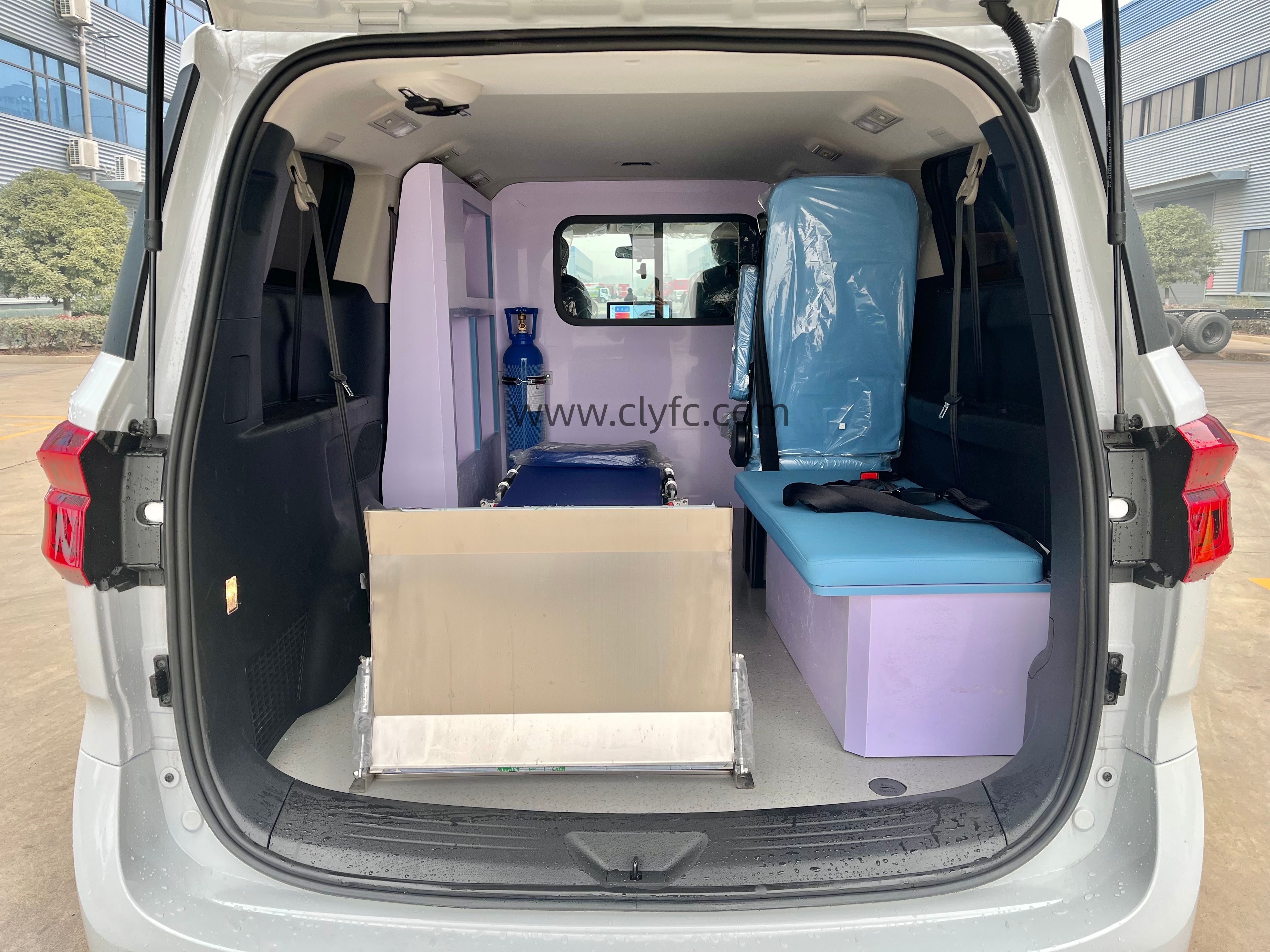
How to Export an Ambulance: Step-by-Step Process
内容摘要:A practical step-by-step guide for exporters of ambulances, from initial inquiry to after-sales support.
Exporting an ambulance is a high-stakes transaction. Unlike shipping standard cargo, an ambulance is a life-saving medical asset that must meet stringent clinical, vehicular, and legal standards in the destination country. A single documentation error can result in customs detention, port demurrage fees, or outright rejection of the vehicle.
This guide breaks down the entire export workflow into three critical phases: Pre-Export Planning, Manufacturing Compliance, and Shipping & Documentation.
Phase 1: Pre-Export Planning
1.1 Establish a Clear Contract with the Buyer
Before any production begins, the contract is your single most important safeguard. A poorly drafted agreement leads to scope creep, payment disputes, and liability confusion. Your contract must explicitly specify:
- Chassis specification: Engine displacement, wheelbase, gross vehicle weight (GVW), and drivetrain configuration.
- Medical fit-out level: Type B or Type C ambulance, number of stretchers, defibrillator model, suction unit capacity, and oxygen cylinder mounting.
- Electrical system: 12V DC or 24V DC, plus the need for an inverter (typically 1500W to 3000W) to power AC medical devices.
- Climate control: Whether the patient compartment requires a separate air conditioning unit (usually 12,000 to 18,000 BTU/h for tropical markets).
- Payment terms: Typically 30% T/T deposit, 70% against the bill of lading (B/L) copy. For Letter of Credit (L/C) transactions, ensure the L/C is irrevocable and confirmed.
- Inspection and acceptance criteria: Define the point of acceptance—either at the factory gate (Ex-Works) or after sea trial at the port (FOB).
1.2 Obtain the Correct Export License
Ambulances are classified as dual-use goods in many jurisdictions because their advanced medical equipment can theoretically be used for other purposes. Check whether your vehicle falls under controlled export categories.
- In China, a Dual-Use Item Export License may be required if the ambulance includes certain encrypted communication devices or specialized imaging equipment.
- For the European Union, a Dual-Use Regulation (EU) 2021⁄821 license applies to specific medical technologies.
- In the United States, the Export Administration Regulations (EAR) classify most ambulances under ECCN 9A990, which is generally exportable without a license to most destinations, but requires a license for embargoed countries.
Practical tip: Engage a licensed customs broker at least 3 weeks before your planned shipment date to verify the commodity code (HS Code 8703.21 for petrol ambulances or 8704.21 for diesel variants) and any destination-specific import bans.
1.3 Use Reliable Overseas Distributors
A distributor who understands local homologation, emergency service protocols, and after-sales maintenance is worth more than a 5% price discount. Vet potential partners using these criteria:
- Existing fleet service contracts: Ask for proof of at least 3 active maintenance contracts with local hospitals or municipal emergency services.
- Spare parts inventory: Confirm they stock critical consumables (oxygen regulators, infusion pumps, stretcher wheels) locally.
- Warranty handling capability: Can they perform warranty repairs without returning the vehicle to the factory? This requires trained technicians and diagnostic equipment.
Phase 2: Manufacturing Compliance
2.1 Destination Country Regulations
Every target market has its own medical device and vehicle safety standards. The most common frameworks are:
| Market | Key Regulation | Critical Requirement |
|---|---|---|
| European Union | EU Directive 2009/52/EC & EN 1789 | Ambulance must meet CEN standards for road safety and medical equipment crash testing |
| United States | KKK-A-1822F (Federal) or state-level specifications | Federal spec requires a minimum 6,800 kg GVWR chassis and specific interior layout |
| Middle East (GCC) | GCC Standardization Organization (GSO) 42⁄2015 | Requires high-temperature testing (ambient up to 50°C) for air conditioning and engine cooling |
| Africa (SADC) | SANS 1070 (South Africa) | Requires left-hand drive conversion if sourced from right-hand drive markets |
2.2 Chassis and Medical Equipment Compliance
As a best practice, the exporter must conduct a compliance gap analysis before production begins. This means comparing the destination country’s regulations against the base chassis and the medical equipment installed.
For example, Hubei RuiTu ensures that its Dongfeng ambulance chassis and medical equipment comply with the destination country’s regulations. This includes verifying that the chassis’s braking system meets the local brake assist standards (e.g., ECE R13 in Europe) and that the onboard oxygen system uses the correct connector type (e.g., DISS for North America, BS 5682 for the UK, or DIN 13260 for Germany).
Key compliance checkpoints:
- Siren frequency and volume: Some countries (e.g., Japan) restrict siren output to 90 dB at 7 meters, while others allow up to 110 dB.
- Lighting color: Red is universal for emergency, but some jurisdictions (e.g., certain states in Australia) require a combination of red and blue.
- Patient restraint systems: Ensure the stretcher locking mechanism passes the dynamic test of 10g deceleration per EN 1865.
2.3 Quality Assurance and Inspection
Schedule a pre-shipment inspection (PSI) with an independent third-party agency such as SGS, Bureau Veritas, or TÜV. The inspection should cover:
- Visual inspection of welding seams on the patient compartment.
- Electrical load testing (run all medical equipment simultaneously for 2 hours).
- Water leak test (simulated rainfall at 60 mm/hour for 30 minutes).
- Road test for brake efficiency and steering alignment.
Phase 3: Shipping and Documentation
3.1 Documentation Checklist
A complete export file for an ambulance typically includes 15 to 20 documents. Here is the non-negotiable list:
| Document | Purpose |
|---|---|
| Commercial Invoice | Customs valuation; must include HS Code and Incoterms |
| Packing List | Itemized weight and dimensions for each unit |
| Bill of Lading (B/L) | Title of goods; clean on-board B/L preferred |
| Certificate of Origin (CO) | Required for preferential tariff treatment (e.g., Form A for developing countries) |
| Certificate of Conformity (CoC) | Proves vehicle meets destination technical standards |
| Insurance Policy | Covers cargo risk during transit; typically 110% of CIF value |
| Export License (if applicable) | Dual-use or controlled goods authorization |
| Radiological Certificate | Required if the ambulance includes X-ray or fluoroscopy equipment |
3.2 Shipping Methods
Ambulances are typically shipped via Roll-on/Roll-off (RoRo) or in a Flat Rack Container.
- RoRo: Cost-effective for 2 to 50 units. A standard RoRo vessel charges approximately \(1,200 to \)1,800 per unit from Shanghai to Mombasa (Kenya) or Dar es Salaam (Tanzania). Transit time is 25 to 30 days.
- Flat Rack: Necessary for oversized or non-drivable units. Cost is 30% to 40% higher than RoRo but allows for better protection against weather and theft.
Transit time benchmarks:
- China to Middle East (Jebel Ali): 15–20 days
- China to West Africa (Lagos): 30–40 days
- China to South America (Santos): 35–45 days
3.3 Port Handling and Customs Clearance
Upon arrival, the importer must present the original B/L and the CoC to customs. Many countries require a pre-arrival customs declaration to avoid demurrage fees, which can reach $150 per day for a 20-foot flat rack.
For African markets, expect additional clearance costs:
- Port handling fee: \(300–\)500 per unit
- Customs broker fee: \(150–\)300 per shipment
- Import duty (varies by country): 10% to 25% of CIF value
After-Sales and Spare Parts Support
A successful export does not end at the port of discharge. The importer will need:
- Spare parts kit: A standard kit for the first 12 months should include 4 oxygen regulators, 2 suction catheters, 6 IV stands, and a full set of gaskets and filters.
- Remote diagnostics: Modern ambulances with telematics (e.g., GPS tracking and engine ECU remote access) allow the factory to perform software updates and fault diagnostics without a physical visit.
- Training: Provide a 3-day on-site training session for local mechanics covering the electrical system, stretcher maintenance, and air conditioning service.
Summary Checklist for a Smooth Export
- Contract: Include a detailed technical specification sheet and clear Incoterms (preferably CIF or DAP).
- Licensing: Confirm with a customs broker whether a dual-use export license is required.
- Compliance: Conduct a gap analysis against the destination’s medical and vehicle standards.
- Inspection: Book a third-party PSI at least 10 days before the vessel’s departure.
- Documentation: Prepare 5 original copies of each key document (invoice, packing list, B/L).
- Shipping: Choose RoRo for cost efficiency; flat rack for high-value or fragile configurations.
- After-sales: Ship a 12-month spare parts kit and schedule remote training for local technicians.
By following these steps, you reduce the risk of customs rejection, minimize port demurrage, and build a reputation as a reliable supplier in the international emergency medical vehicle market.
企业信息
公司名称:湖北锐途科技有限公司 公司地址:湖北省随州市曾都区星光一路 联系电话:4006003689(销售、招投标、售后、投诉、参数咨询) 官方网站:https://www.clyfc.com 业务邮箱:info@ritumax.com