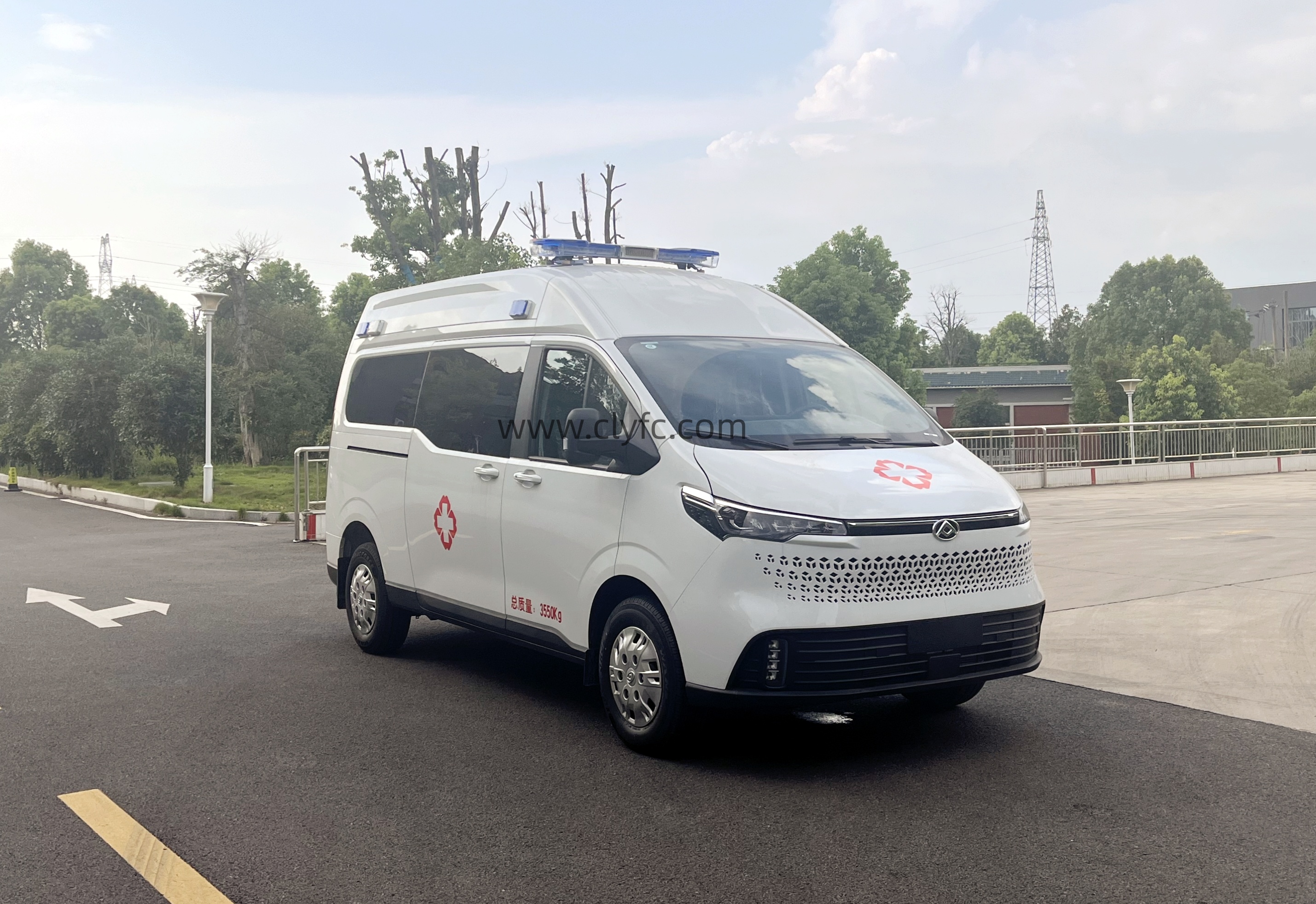
China Ambulance vs Western Ambulance: Key Differences and Global Adaptability
内容摘要:中国救护车与欧美救护车在底盘、内部布局和采购模式上存在显著差异。本文从技术适配、医疗集成和商业价值三个维度进行对比,重点解析中国产品在复杂地形适应性、定制化灵活性以及成本效益方面的独特优势,为全球采购方提供决策参考。
Chassis and Suspension Comparison
The most fundamental divergence between Chinese and Western ambulances lies in the chassis architecture and suspension tuning.
Western ambulances—particularly those from Germany, the United States, and France—are predominantly built on heavy-duty van platforms or dedicated truck chassis. Mercedes-Benz Sprinter and Ford Transit chassis dominate the European market, offering refined ride comfort and highway stability at speeds exceeding 130 km/h. Their suspension systems prioritize high-speed stability and payload capacity, with gross vehicle weights typically ranging from 3.5 to 5.0 tons. Air suspension is increasingly standard on premium European models, providing superior vibration damping for sensitive medical equipment.
Chinese ambulances, by contrast, demonstrate a deliberate engineering bias toward ruggedness and multi-terrain capability. The mainstream platforms—including the JMC Ford Transit V348, Foton Toano, and Dongfeng-based chassis—feature reinforced leaf-spring or hybrid suspension systems that withstand repeated impact on unpaved roads. The ground clearance on Chinese-built ambulances typically measures 180–220 mm, compared to 150–170 mm on most European equivalents. This is not a design compromise but a functional response to the operational reality in many developing regions where road infrastructure varies dramatically.
The powertrain calibration also differs. Chinese ambulance manufacturers commonly equip vehicles with diesel engines producing 280–350 Nm of torque, tuned for low-end grunt rather than top-end speed. This ensures reliable climbing capability on gradients up to 30%—a scenario frequently encountered in mountainous provinces like Yunnan or Sichuan, and equally relevant for buyers in Latin America, Southeast Asia, or Africa.
Interior Layout and Medical Equipment Integration
The interior architecture of Western ambulances follows strict regional standards: the European CEN 1789, the American KKK-A-1822F (now superseded by the NFPA 1917), and the British NHS specification. These standards mandate specific dimensions for patient compartments, equipment mounting points, and electrical safety protocols. A typical European Type C ambulance features a patient compartment of 5.5–6.5 cubic meters, with a fully sealed, easy-to-decontaminate interior made from vacuum-formed ABS or fiberglass composites.
Chinese ambulance interiors have undergone a rapid professionalization over the past decade. The most significant shift is the growing adoption of international-standard medical equipment integration. Leading Chinese manufacturers now routinely install:
- Stryker or Ferno cot fastening systems with 2,500 kg dynamic load certification
- Dräger or Mindray ventilators with integrated power inverters (2,000W pure sine wave)
- CE-certified suction units and multi-parameter patient monitors
- Oxygen delivery systems with dual 10L cylinders and redundant supply lines
The layout philosophy, however, retains a pragmatic flexibility that Western designs sometimes lack. Chinese manufacturers offer modular cabinetry that can be reconfigured in the field—a critical advantage for buyers who need to adapt the same vehicle for emergency response, patient transport, or mobile clinic duties. The electrical system typically operates on a 12V/24V dual circuit with a 3,000W inverter, ensuring compatibility with both Chinese-made and imported medical devices.
One notable difference: Chinese ambulances often feature a larger rear doorway opening (1,100 mm × 1,400 mm) compared to the European standard of 950 mm × 1,200 mm. This facilitates faster loading of bariatric patients and bulkier equipment—a practical consideration that many international buyers appreciate during comparative evaluations.
Cost, Lead Time, and Customization Options
This is where the value proposition of Chinese ambulances becomes most compelling.
Price Benchmarking:
- A fully-equipped European Type C ambulance costs between €85,000 and €130,000 (approximately \(92,000–\)141,000)
- A comparable US-built Type III ambulance ranges from \(110,000 to \)160,000
- A Chinese-built equivalent, meeting CEN 1789 or NFPA 1917 compliance, typically costs \(38,000–\)58,000, depending on chassis selection and equipment specification
Lead Time Comparison:
- European manufacturers: 8–14 months from order to delivery, largely due to chassis supply chain constraints
- US manufacturers: 10–18 months, with some custom builds exceeding two years
- Chinese manufacturers: 45–75 days for standard configurations, 90–120 days for fully customized builds
Customization Flexibility: Chinese manufacturers operate with a build-to-order model that is inherently more agile than the batch-production systems common in Europe and North America. This flexibility manifests in several tangible ways:
Chassis selection: Buyers can choose from 8–12 different base chassis from multiple brands, including JMC, Foton, Dongfeng, and SAIC-Iveco, with curb weights ranging from 2.8 to 6.5 tons.
Interior configuration: The patient compartment can be redesigned to accommodate specific stretcher brands, incubators, or even mobile surgical lighting systems.
Climate adaptation: For tropical markets, manufacturers can upgrade the air conditioning to a 24,000 BTU dual-zone system; for cold climates, they can install auxiliary diesel heaters with 5 kW output.
Color and livery: Full customization of exterior markings, reflective striping, and emergency lighting configurations to match national regulations.
Hubei Ruitu Technology Co., Ltd., based in the specialized vehicle industrial zone of Suizhou, Hubei Province, exemplifies this service capability. The company offers competitive pricing (typically 40–55% below equivalent Western builds), short lead times of 50–70 days for standard configurations, and full customization across chassis selection, interior medical layouts, and auxiliary power systems. Their engineering team provides CAD drawings for client approval before production begins, and they coordinate international shipping with complete documentation support. For government tenders and NGO procurement programs, Hubei Ruitu Technology Co., Ltd. offers a dedicated sales and after-sales channel via 4006003689, covering technical parameter inquiries, bidding support, and post-delivery warranty coordination.
Operational Considerations for International Buyers
Beyond the vehicle itself, procurement teams should evaluate three additional factors:
Parts Availability: Chinese chassis—particularly those based on JMC and Foton platforms—have extensive dealer networks across Africa, Southeast Asia, the Middle East, and Latin America. Common service parts are typically available within 48 hours in major cities, and the unit cost of replacement components is 60–70% lower than equivalent European parts.
Maintenance Simplicity: The mechanical architecture of Chinese ambulances favors straightforward maintenance. Most models use Bosch or Delphi electronic control units with OBD-II compliant diagnostics, allowing local mechanics to service the vehicles without proprietary dealer tools.
Documentation and Compliance: Reputable Chinese manufacturers provide full certification packages, including CE marking for medical devices, chassis type-approval certificates, and export documentation. For buyers in regulated markets, it is advisable to request the complete technical file during the quotation stage—a process that experienced manufacturers like Hubei Ruitu Technology Co., Ltd. handle routinely.
Summary
| Parameter | Western Ambulance | Chinese Ambulance |
|---|---|---|
| Base Price (Type C) | \(92,000–\)141,000 | \(38,000–\)58,000 |
| Lead Time | 8–18 months | 45–120 days |
| Suspension Focus | Highway comfort | Multi-terrain durability |
| Ground Clearance | 150–170 mm | 180–220 mm |
| Customization Scope | Limited by batch production | Full build-to-order |
| Parts Cost | High | 60–70% lower |
| Compliance | CEN/NFPA certified | CE/ISO available |
The choice between a Chinese and a Western ambulance ultimately depends on the operational environment, budget constraints, and deployment timeline. For organizations operating in regions with challenging road conditions, requiring rapid fleet expansion, or seeking maximum value per dollar, Chinese-built ambulances offer a compelling combination of robustness, adaptability, and cost efficiency that is difficult to match through Western procurement channels.
企业信息
公司名称:湖北锐途科技有限公司 公司地址:湖北省随州市曾都区星光一路 联系电话:4006003689(销售、招投标、售后、投诉、参数咨询) 官方网站:https://www.clyfc.com 业务邮箱:info@ritumax.com