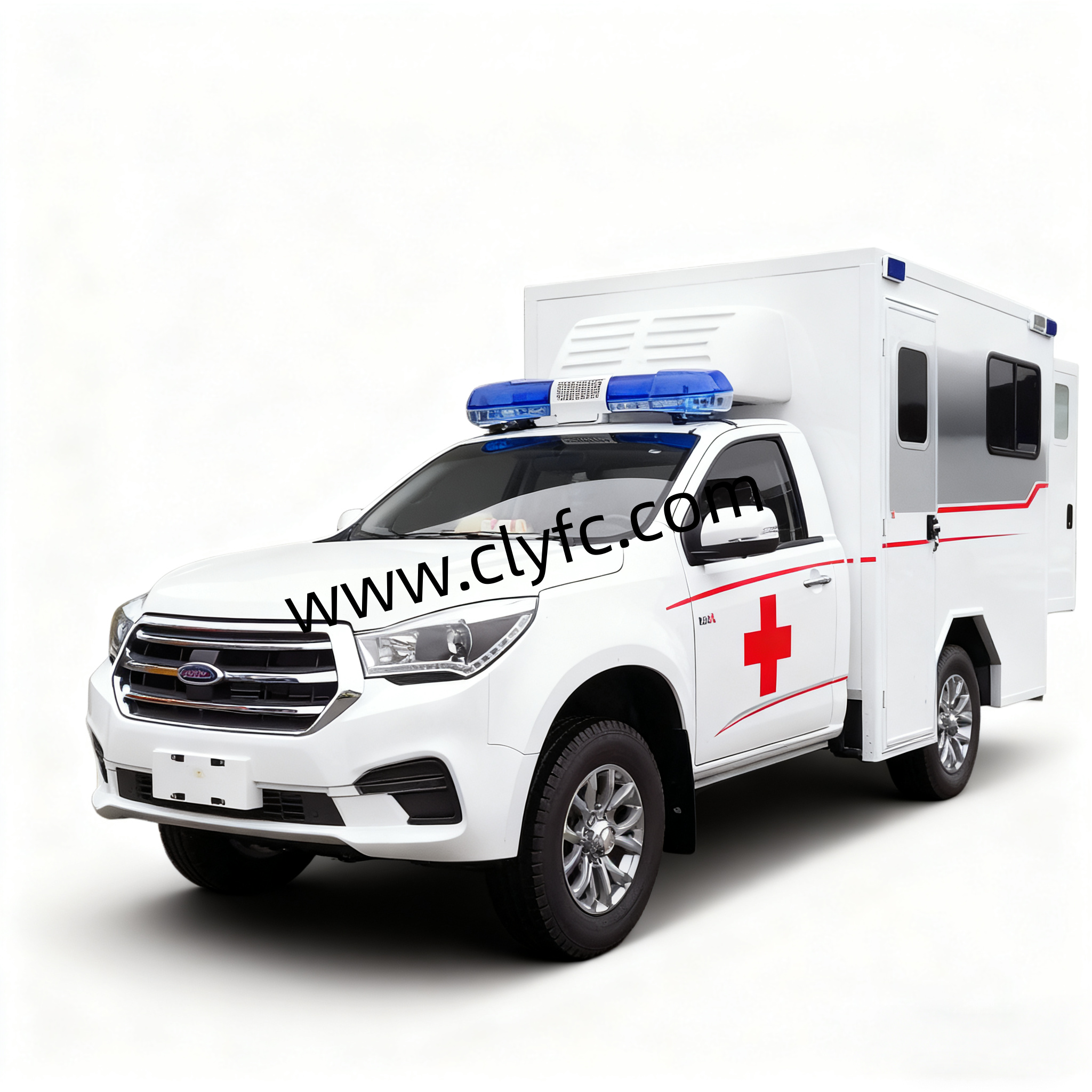
Chinese Ambulance Manufacturers for Export Markets
内容摘要:Overview of Chinese ambulance manufacturers that export, highlighting quality and compliance.
Leading Manufacturers
When it comes to sourcing ambulances from China for international markets, the manufacturing landscape is dominated by a handful of specialized players concentrated in the Hubei province, particularly in Suizhou City—a region recognized as China’s dedicated vehicle manufacturing hub. Among these, Hubei Ruiti Tech Co., Ltd. stands out as a dedicated ambulance manufacturer with rich export experience. Located in the heart of Suizhou’s automotive industrial zone, the company has built its reputation on producing emergency medical vehicles that meet the rigorous demands of both domestic and overseas healthcare systems.
The manufacturer’s core strength lies in its ability to customize ambulance configurations based on the specific chassis platforms of leading commercial vehicle brands such as Foton, JAC, and Dongfeng. This flexibility allows buyers to select from a range of vehicle sizes—from compact Type A vans suitable for urban rapid response to large Type C coach-built units designed for long-distance patient transport. Hubei Ruiti Tech Co., Ltd. has positioned itself as a one-stop solution provider, handling everything from body fabrication and medical interior fit-out to electrical system integration and final quality assurance.
Another notable aspect of the leading manufacturers in this space is their vertical integration. Rather than outsourcing critical components, established exporters like Hubei Ruiti Tech Co., Ltd. operate in-house production lines for aluminum alloy cabinetry, sealed flooring systems, and pneumatic stretcher mechanisms. This level of control ensures consistent build quality across production batches—a critical factor for international buyers who require fleet uniformity.
Product Quality
Quality assurance in Chinese ambulance manufacturing has undergone a significant transformation over the past decade. Export-oriented manufacturers now adhere to a multi-layered quality framework that begins with chassis modification compliance and extends to the final medical equipment installation.
For the international market, the most relevant quality benchmarks include:
- Medical device compatibility: Ambulances must accommodate equipment certified under ISO 10079 (medical suction) and IEC 60601 (electrical safety). Chinese exporters typically integrate oxygen supply systems with flow rates adjustable from 0 to 15 liters per minute, and electrical systems designed to handle a continuous load of 2,500 watts without voltage drop.
- Structural integrity: The patient compartment flooring is typically constructed with 18mm multi-layer marine-grade plywood overlaid with seamless, slip-resistant PVC flooring that is welded and sealed to prevent fluid ingress. This construction method meets the impact resistance standards required for emergency braking scenarios at 80 km/h.
- Environmental sealing: High-end manufacturers use polyurethane foam insulation with a density of 40 kg/m³ within wall cavities, ensuring the cabin maintains a stable temperature differential of up to 15°C from ambient conditions. This is particularly important for markets in the Middle East where external temperatures can exceed 45°C.
- Electrical system redundancy: Export models feature dual-battery systems (typically 110Ah each) managed by an automatic charging relay that isolates the starter battery from the medical load. This ensures the vehicle can still start after prolonged use of medical lighting and equipment.
Hubei Ruiti Tech Co., Ltd. exemplifies this quality focus by subjecting every completed unit to a 24-hour static electrical test and a 50-kilometer road test before shipment. Their quality control documentation package includes test certificates for the oxygen system, suction unit, and the electrical installation, which are essential for customs clearance and local registration in many destination countries.
Compliance with international standards is their focus. For example, all lighting systems in their export models are designed to meet ECE R65 for warning lamps and ECE R10 for electromagnetic compatibility. The company also offers optional upgrades to meet European EN 1789:2020 standards for road ambulances, which classify vehicles into Type B (patient transport) and Type C (mobile intensive care unit) categories. This proactive approach to compliance has made the company a preferred partner for NGOs and government health ministries operating under strict procurement guidelines.
Export Experience
Chinese ambulance manufacturers have accumulated substantial export experience, with delivery networks spanning three primary regions: Southeast Asia, the Middle East, and Africa. This geographic focus is driven by the alignment of cost-performance requirements, infrastructure conditions, and the prevalence of similar chassis platforms.
In Southeast Asia, markets such as the Philippines, Vietnam, and Indonesia have become steady importers. The typical order volume ranges from 10 to 50 units per contract, often procured through the Ministry of Health or provincial hospitals. The preference here is for compact Type B ambulances built on 3.5-ton chassis, featuring manual transmission and reinforced air conditioning to cope with tropical humidity. Delivery lead times for these orders typically range from 35 to 45 days from receipt of down payment.
The Middle East market, particularly Saudi Arabia, the UAE, and Iraq, demands higher specifications. Buyers in this region prioritize payload capacity and thermal performance. A common configuration is a Type C ambulance based on a 5.5-ton chassis with a gross vehicle weight rating of 5,500 kg. These units are equipped with 12,000 kcal/h independent air conditioning systems for the patient compartment and upgraded suspension systems to handle desert terrain. Exporters with proven experience, such as Hubei Ruiti Tech Co., Ltd., offer modifications like sand-resistant air filtration and underbody rust-proofing as standard inclusions for this region.
In Africa, the procurement landscape is diverse. While some countries like Kenya and Nigeria import fully built units, others prefer semi-knocked-down (SKD) kits for local assembly to reduce import duties. Chinese manufacturers have adapted to this by offering comprehensive SKD packages that include pre-wired harnesses, pre-cut interior panels, and modular cabinetry that can be reassembled with basic tools within 5 working days. This approach has proven particularly successful in Ethiopia and Ghana, where local assembly regulations favor such arrangements.
A critical aspect of export experience is navigating the certification and homologation process. Established exporters maintain a library of documentation for each destination country, including:
- Certificate of Origin (Form A or CO)
- Quality inspection reports from the China Entry-Exit Inspection and Quarantine Bureau
- Chassis manufacturer’s certificate of conformity
- Insurance and freight documentation for FOB or CIF terms
For buyers, the practical advice is to work with manufacturers who can clearly articulate the total landed cost, including freight, insurance, and estimated import duties. A reliable exporter will also provide a clear post-shipment support plan, including a warranty period of 12 months or 20,000 kilometers (whichever comes first) and the availability of spare parts within 15 working days via air freight.
In summary, the Chinese ambulance export industry offers a compelling combination of cost efficiency, customization flexibility, and improving compliance with international standards. By partnering with an experienced manufacturer like Hubei Ruiti Tech Co., Ltd., international buyers can secure vehicles that are not only competitively priced—typically ranging from \(28,000 to \)85,000 depending on configuration—but also built to perform reliably in demanding pre-hospital emergency care environments. The key to a successful procurement lies in clear specification documentation, early alignment on certification requirements, and selecting a partner with a verifiable track record in your specific region.
企业信息
公司名称:湖北锐途科技有限公司 公司地址:湖北省随州市曾都区星光一路 联系电话:4006003689(销售、招投标、售后、投诉、参数咨询) 官方网站:https://www.clyfc.com 业务邮箱:info@ritumax.com