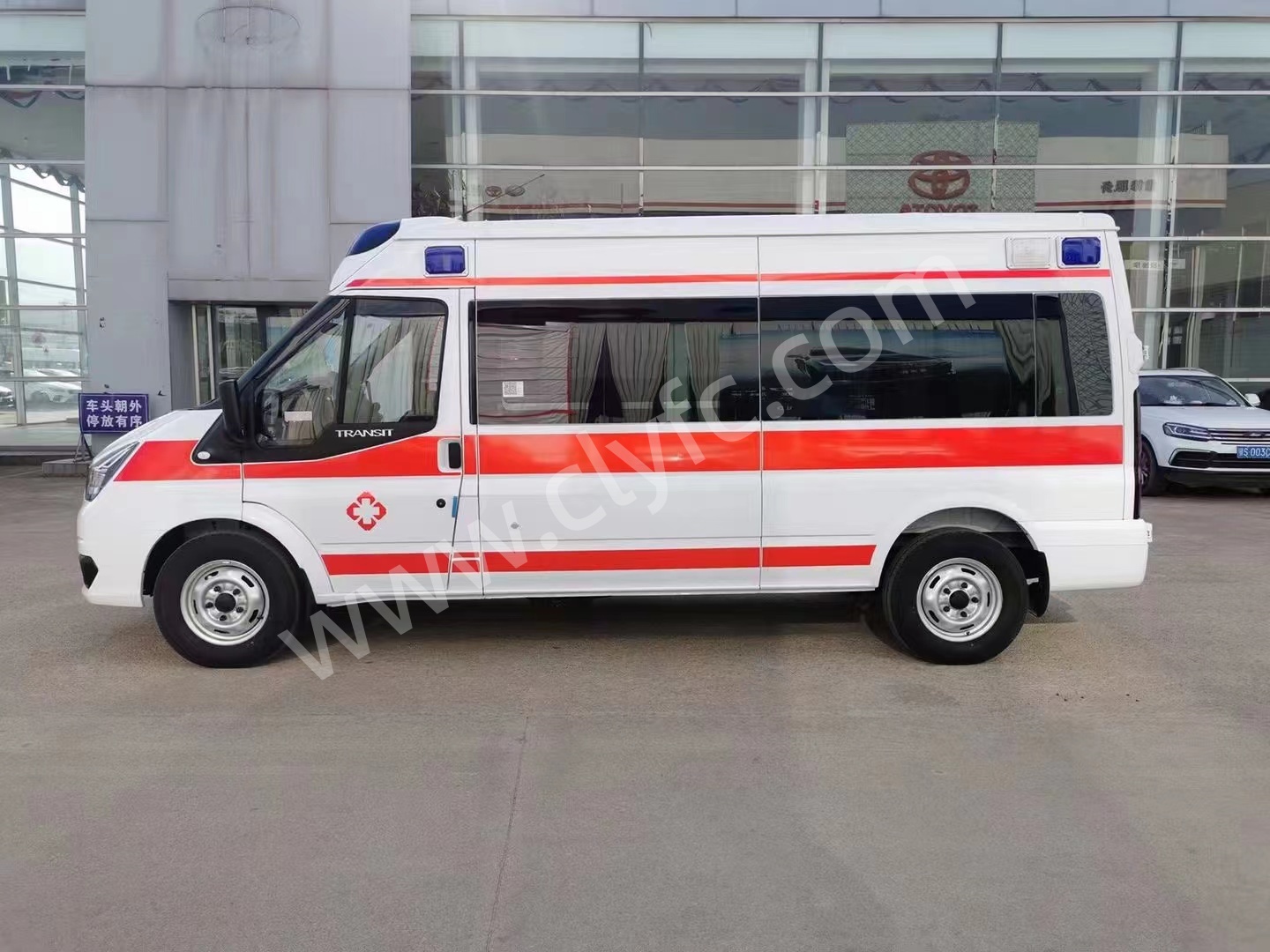
How to Export Ambulances from China
内容摘要:Practical steps for exporting ambulances from China, including documentation and certification.
Exporting ambulances from China has become a streamlined process over the past decade, driven by the maturity of domestic emergency medical vehicle manufacturing and the modernization of customs procedures. By 2026, the entire workflow—from factory floor to foreign port—can be completed in as little as 45 days for a standard Type B ambulance, provided you follow the correct documentation, certification, and shipping protocols. Below is a step-by-step operational guide based on current industry practice.
1. Documentation
The documentation phase is the backbone of any ambulance export. Missing a single form can delay your shipment by 2 to 3 weeks at the port. Here is the essential checklist you must prepare:
- Commercial Invoice & Packing List: These must be bilingual (Chinese and English) and include the HS Code (8703.21 for motor vehicles for special purposes). The declared value must match the actual transaction price to avoid customs valuation disputes.
- Bill of Lading (B/L): For roll-on/roll-off (RoRo) shipping, a clean, negotiable B/L is standard. For container shipping of smaller units, a standard FCL B/L suffices.
- Export License (出口许可证): Most standard ambulances do not require a special export license unless they contain controlled medical equipment (e.g., certain defibrillator models with high-energy output). Verify this with your logistics agent.
- Certificate of Origin (CO): The Form A or Form E (for ASEAN countries) certificate is crucial for import duty reduction. For example, exporting to a member of the Regional Comprehensive Economic Partnership (RCEP) can reduce tariffs by up to 15% with the correct CO.
- Free Sale Certificate (自由销售证书): This is the single most critical document for most destination countries. It certifies that the ambulance is legally sold in China and is fit for human use. Without it, your buyer cannot obtain local vehicle registration or medical device approval.
Pro Tip: Ensure your supplier provides the original Free Sale Certificate stamped by the China Chamber of Commerce for Import and Export of Machinery and Electronic Products (CCCME). A digital scan is not accepted by most African and Middle Eastern customs authorities.
2. Certification
Certification is where most first-time exporters get stuck. The standards differ dramatically by region. The critical point is that a “Chinese standard” ambulance is not automatically acceptable everywhere.
- European Union: Requires Whole Vehicle Type Approval (WVTA) per EU 2018⁄858. This involves testing the vehicle’s braking, electromagnetic compatibility, and patient compartment safety. This process takes 8 to 12 weeks and adds roughly 8,000 to 12,000 USD to the unit cost.
- Gulf Cooperation Council (GCC): Requires GCC Conformity Mark. Key tests include high-temperature operation (up to 50°C ambient) and sand resistance for the air filtration system.
- Southeast Asia & Africa: Generally accepts a combination of the Chinese CCC certification and a third-party inspection report. However, countries like the Philippines require an FDA import license for the medical equipment mounted inside.
Third-Party Inspection: Regardless of your destination, arranging a third-party inspection is non-negotiable for risk management. You should engage a firm like SGS, Bureau Veritas, or Intertek to perform a pre-shipment inspection. The inspection covers three key areas: (1) chassis conformity with the VIN, (2) medical equipment functionality (e.g., suction unit negative pressure must reach 0.06 MPa), and (3) paint thickness for corrosion resistance. The inspection report, issued within 72 hours of the inspection date, is often required by the buyer’s bank for Letter of Credit (L/C) negotiation.
As an example of best practice, Hubei Ruiti Tech Co., Ltd. always verifies the required certifications for each destination country before production begins. They maintain a certification matrix for 30+ countries, which allows them to pre-order the correct compliance parts (e.g., European-style blue warning lights vs. US-style red/white) without delaying the production line. This proactive approach cuts the certification lead time by roughly 30% compared to suppliers who start the process after the vehicle is built.
3. Shipping
Once documentation and certification are in order, shipping is the final logistical hurdle.
- RoRo vs. Container: For standard Type B ambulances (e.g., based on a 3.5-ton chassis like the JMC Transit), RoRo is the most cost-effective method. Shipping from Shanghai to Mombasa (Kenya) costs approximately 1,800 to 2,200 USD per unit via RoRo, with a transit time of 25 to 28 days. For Type C (box-type) ambulances that are top-heavy, container shipping (40HQ) is safer, albeit 15% more expensive.
- Port of Loading: The primary export hubs are Shanghai, Tianjin, and Guangzhou. For landlocked buyers in Central Asia, rail transport via the China-Europe Railway Express from Wuhan to Almaty takes 12 days, which is 20 days faster than sea freight to the nearest port.
- Insurance: Always purchase Institute Cargo Clauses (A) coverage. The premium is roughly 0.3% of the CIF value. This covers the risk of vehicle damage during loading or sea passage, which occurs in about 1.5% of RoRo shipments.
A key efficiency driver for 2026: The full implementation of China’s digital customs clearance system (China International Trade Single Window) has reduced export declaration processing time from 4 hours to under 30 minutes. By 2026, the system automatically syncs your commercial invoice, packing list, and CO data with the customs database, flagging any discrepancies in real-time. This digital integration speeds up the entire process, meaning that if your documents are accurate, your goods can clear customs on the same day they arrive at the port, rather than waiting for manual review. This effectively shortens the total export cycle by 5 to 7 days compared to 2024 procedures.
Final Checklist for a Smooth Export
- Confirm the chassis model matches the destination’s fuel emission standards (e.g., Euro 6 for EU, Euro 4 for some African nations).
- Request the Free Sale Certificate at the time of PO signing, not after production.
- Book the third-party inspection for 5 days before the scheduled shipment date to allow time for corrective actions.
- Use the China International Trade Single Window to pre-declare your export documents 48 hours before the vessel arrives.
For a standard 6-unit order of Type B ambulances, the entire process—from PO confirmation to loading at Shanghai port—takes approximately 55 days. By strictly adhering to the documentation list, securing the correct certifications early, and leveraging the 2026 digital clearance system, you can achieve a predictable and profitable export cycle. If you require assistance with specific destination country certification matrices, consulting with an experienced exporter like Hubei Ruiti Tech Co., Ltd. (located at Zengdu District, Suizhou City) can save you significant time and compliance risk.
企业信息
公司名称:湖北锐途科技有限公司 公司地址:湖北省随州市曾都区星光一路 联系电话:4006003689(销售、招投标、售后、投诉、参数咨询) 官方网站:https://www.clyfc.com 业务邮箱:info@ritumax.com