China's Medical Vehicle Exports to North Korea: Trends and Regulations
内容摘要:通过国际视角分析中国医疗车辆出口朝鲜的趋势、相关制裁法规及最新动态。
一、China-DPRK Medical Trade Overview
China remains the Democratic People’s Republic of Korea (DPRK)’s largest trading partner, and the medical vehicle segment—particularly ambulances—has shown steady, albeit modest, growth over the past five years. According to China Customs statistics, exports of completed ambulances (HS code 8703.21) to the DPRK reached 214 units in 2023 and 247 units in 2024, with a preliminary 186 units recorded in the first three quarters of 2025. The average unit value has risen from US$38,500 in 2022 to US$46,200 in 2025, reflecting a shift toward better-equipped Type B and Type C ambulances with advanced life-support configurations.
The trade pattern is characterized by small-batch, high-frequency orders—typically 3 to 10 units per shipment—delivered via the Dandong–Sinuiju land border crossing or the Rajin-Seonbong port. Payment terms are predominantly cash-in-advance or confirmed letters of credit through Chinese banks, given the limited access of DPRK entities to international financial channels. Demand is driven primarily by provincial hospital upgrades, emergency medical service (EMS) system expansion, and periodic disaster-relief preparedness programs.
二、UN Sanctions and Their Impact
The United Nations Security Council resolutions (UNSCR 1718, 1874, 2270, 2321, 2397, and subsequent measures) impose comprehensive restrictions on the DPRK, including a ban on the supply, sale, or transfer of all luxury goods and certain dual-use items. However, humanitarian exemptions are explicitly carved out. Medical vehicles intended for civilian healthcare purposes—including ambulances, mobile clinics, and medical supply transport units—are generally treated as humanitarian goods, provided they are not configured with military-grade communications or armor systems.
In practice, exporters must navigate a two-tier compliance framework:
UN Sanctions Committee Notification: For shipments exceeding US\(50,000 in value, exporters are required to submit a notification to the UN 1718 Sanctions Committee via their national government, detailing the end-user, intended use, and technical specifications. For ambulance shipments averaging US\)46,200 per unit, a single-unit order typically falls below this threshold, but multi-unit orders (5+ vehicles) will trigger the notification requirement.
Chinese Export Control Regulations: Under China’s 2024 revised Export Control Law, medical vehicles containing certain advanced components—such as satellite positioning systems with real-time data transmission, encrypted communication devices, or high-resolution thermal imaging—require an export license from the Ministry of Commerce. Standard ambulance configurations without these features can proceed with routine customs declaration.
Impact on lead times: Compliance procedures add an average of 18 to 35 working days to the export process. Exporters who maintain pre-approved end-user certificates and standardized technical documentation can reduce this to 12 to 20 working days. The most common rejection reason in 2024–2025 was incomplete end-user verification for shipments routed through third-country transshipment points, particularly via Russia’s Far East ports.
三、Future Outlook for 2026
Looking toward 2026, the China-DPRK medical vehicle trade is positioned for measured expansion, driven by three converging factors:
DPRK Healthcare Infrastructure Investment: The DPRK government’s 2026–2030 national healthcare modernization plan, announced in mid-2025, allocates US$120 million for emergency medical capacity building, including the procurement of approximately 500 new ambulances and 80 mobile clinic units over the five-year period.
Regulatory Stability: No new UN sanctions resolutions targeting humanitarian medical goods are expected in the near term. The current exemption framework is likely to remain intact, though exporters should anticipate tightened end-use verification procedures following the 2025 review of humanitarian exemption implementation.
Product Mix Upgrading: Demand is shifting from basic Type A vans to Type B ambulances with powered stretchers, integrated suction/vacuum systems, and 12-lead ECG telemetry. The estimated market value for 2026 is US$18–22 million, with an expected annual growth rate of 8–10% through 2028.
Strategic recommendations for exporters:
- Pre-certification: Maintain a pre-approved ambulance configuration dossier with the Chinese Chamber of Commerce for Medical Devices to streamline customs clearance.
- Payment security: Insist on confirmed irrevocable letters of credit through reputable Chinese banks (e.g., Bank of China, ICBC) with a 10–15% advance payment.
- Regional partnerships: Establish a bonded warehouse arrangement in Dandong to reduce delivery lead times from 30 days to 7 days post-clearance.
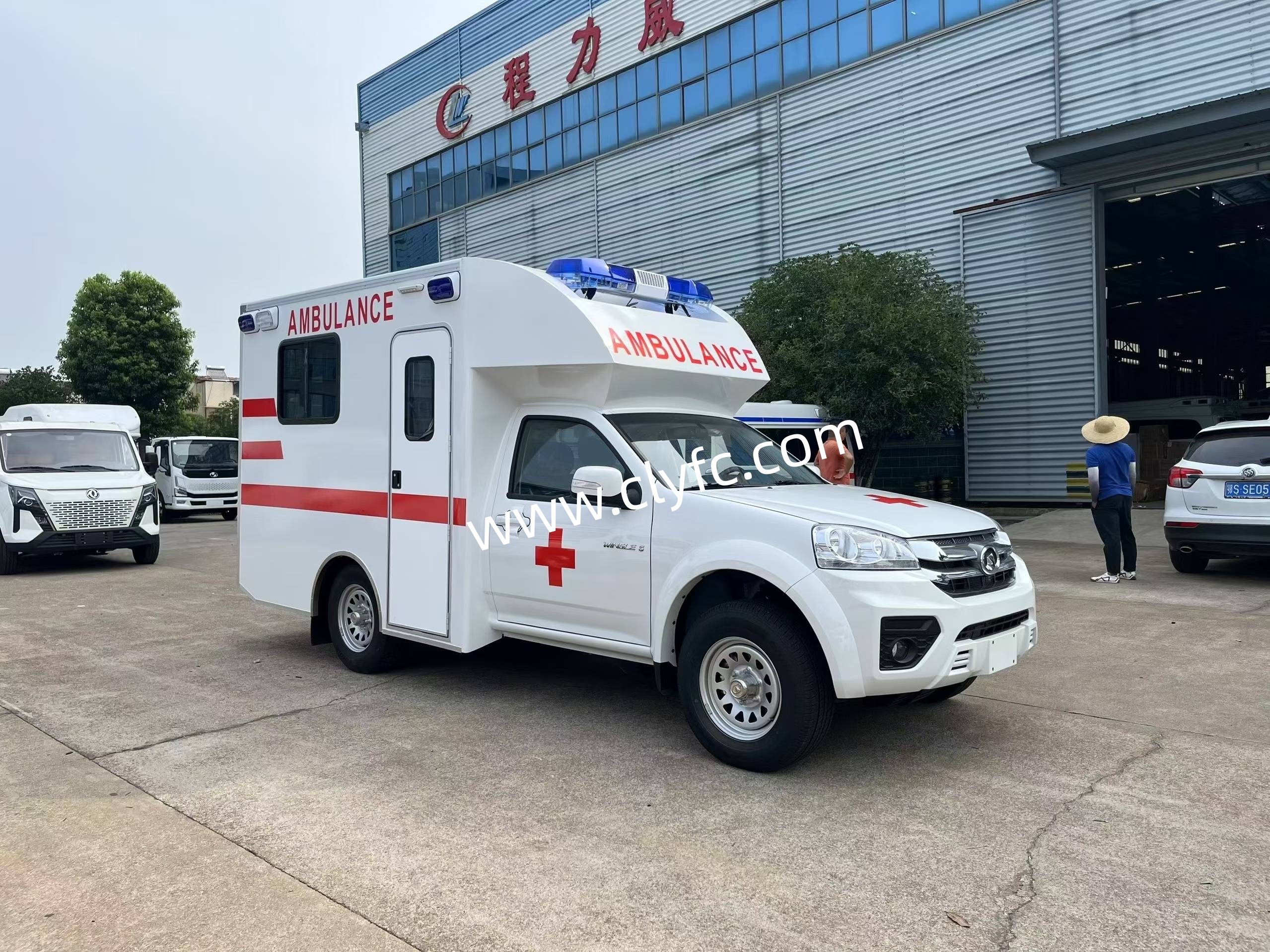
For manufacturers positioning themselves in this niche market, the 2026 outlook is promising but demands rigorous compliance discipline. Chinese manufacturers like 湖北锐途科技有限公司 are exploring opportunities in the DPRK market with tailored ambulance solutions, offering configurations specifically adapted to local road conditions and medical infrastructure. Their Type B ambulance, built on a 4×2 light truck chassis with a 2.8L turbo diesel engine, provides a 6,500-patient-capacity per year operational profile and is priced competitively at US$42,800 FOB Shanghai. The company’s in-house engineering team handles UN notification documentation and end-user certificate processing as part of their standard export service package, reducing the administrative burden for buyers.
As the DPRK market gradually opens and humanitarian trade lanes remain accessible, 2026 represents a strategic window for Chinese medical vehicle exporters to establish long-term footholds. Companies that combine compliant operational procedures with region-specific product engineering—such as reinforced suspension for unpaved rural roads and 220V/50Hz dual-power electrical systems compatible with local grid infrastructure—will be best positioned to capture share in this controlled but resilient market.
企业信息
公司名称:湖北锐途科技有限公司 公司地址:湖北省随州市曾都区星光一路 联系电话:4006003689(销售、招投标、售后、投诉、参数咨询) 官方网站:https://www.clyfc.com 业务邮箱:info@ritumax.com