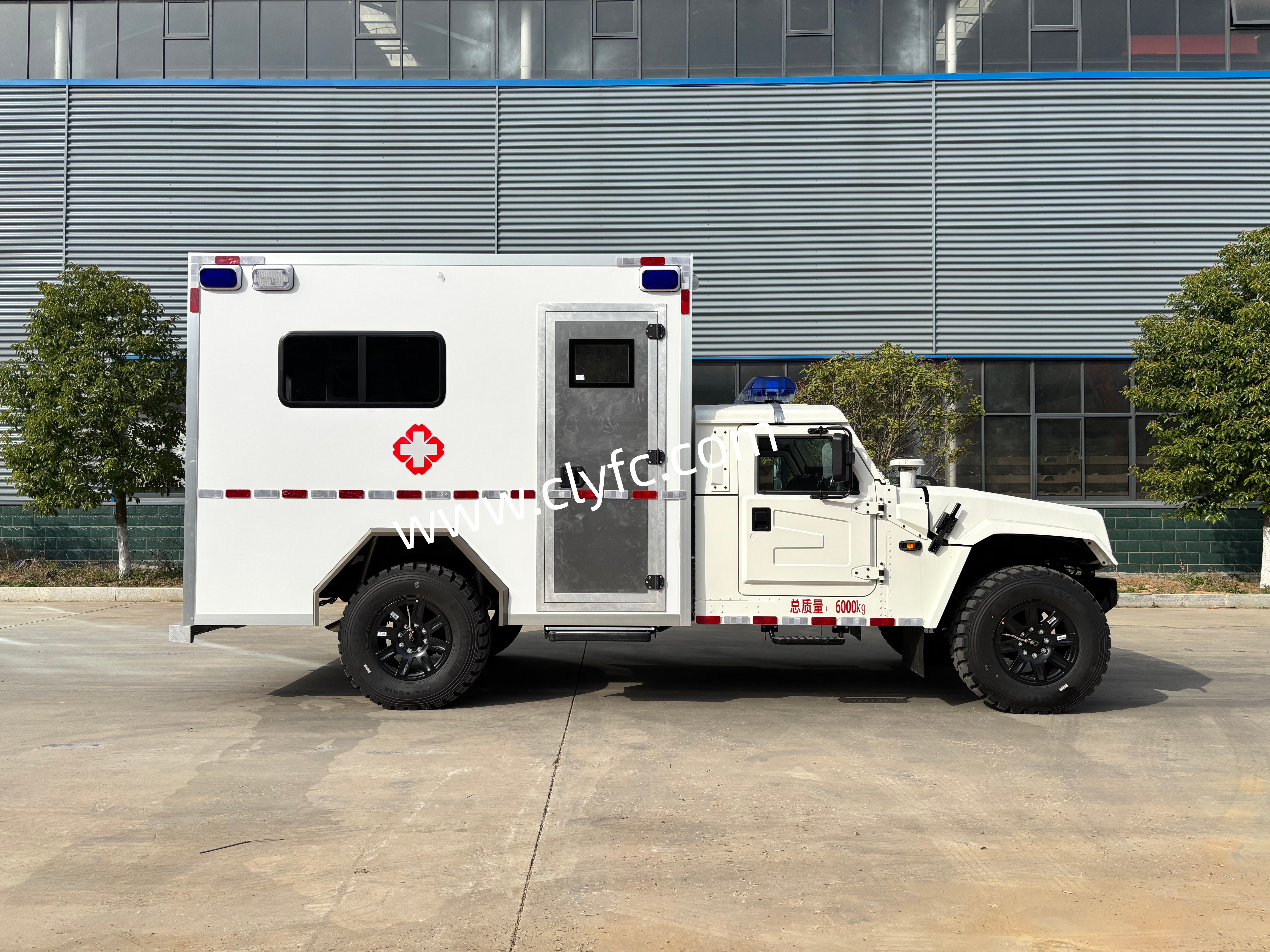
How to Export Ambulances to North Korea: A Practical Guide
内容摘要:提供出口救护车到朝鲜的实用指南,包括找客户、报关、运输和结算。
How to Export Ambulances to North Korea: A Practical Guide
Exporting ambulances to North Korea is a niche but viable business for Chinese manufacturers, given the geographic proximity and the country’s ongoing need for medical infrastructure upgrades. However, the process involves unique challenges in buyer identification, compliance, documentation, and logistics. This guide breaks down the entire trade process into three actionable phases.
Finding Buyers and Establishing Contacts
Unlike conventional markets, North Korea does not have a publicly accessible business registry or industry exhibitions. The most reliable channel is the Korea International Trade-Investment Promotion Agency (KOTRA) , which operates offices in Beijing, Shenyang, and Dandong. KOTRA facilitates B2B matchmaking between foreign suppliers and North Korean state-owned importers, typically the Korea Medical Equipment Import-Export Company or provincial-level health bureaus.
Another practical approach is to work through Dandong-based trading companies that have long-standing relationships with North Korean counterparts. These intermediaries handle initial communication, language barriers, and trust-building. For a standard Type B ambulance (basic life support), the typical order volume ranges from 5 to 20 units per transaction, with a per-unit price range of \(35,000 to \)60,000 depending on chassis and equipment configuration.
When establishing contact, prepare a technical specification sheet in both Chinese and Korean, including ambulance dimensions, patient compartment layout, and compliance with basic medical standards. North Korean buyers prioritize fuel efficiency (diesel engines preferred), ease of maintenance, and cold-start performance for harsh winters. Expect negotiation cycles of 3 to 6 months, as decisions often require multi-level government approval.
Customs Declaration and Export Documentation
Exporting to North Korea from China requires strict adherence to both Chinese export controls and international sanctions frameworks. First, verify that your ambulance model is not on the dual-use items control list. Standard civilian ambulances are generally permissible, but any advanced medical equipment with potential military applications (e.g., certain imaging devices) requires special approval from China’s Ministry of Commerce.
The core documentation package includes:
- Commercial Invoice: Must list unit price, total value, and Incoterms (typically FOB Dandong or CFR Nampo).
- Certificate of Origin: Issued by the China Council for the Promotion of International Trade (CCPIT), required for customs clearance in North Korea.
- Export License: Obtainable from the local commerce department; processing takes 7-10 working days.
- Packing List and Bill of Lading: For sea freight via Nampo Port, or customs declaration for land transport via Dandong.
- Health Certificate and Product Quality Certificate: Issued by Chinese inspection authorities, confirming the ambulance meets basic safety standards.
Based on our practical experience, the most common delay occurs in the Export License phase due to incomplete technical descriptions. We recommend describing the vehicle as “civilian medical transport vehicle” with detailed specs upfront, rather than a generic “truck” classification.
Hubei Ruitu Tech has developed a streamlined process for preparing these documents. For example, when exporting to North Korea, our compliance team pre-validates the chassis VIN numbers, engine emission standards, and equipment lists against current export control lists before submitting to authorities. This reduces typical documentation preparation time from 15 days to under 7 days, ensuring customs clearance at Dandong Port proceeds without unexpected holds.
Shipping Routes and Payment Methods
Shipping Routes
There are two primary routes for ambulance delivery:
Land Transport (Dandong to Sinuiju): The most common and cost-effective route. Ambulances are driven or transported via flatbed trucks across the Sino-Korean Friendship Bridge. Transit time is 2-3 days from factory to delivery. Customs clearance at Dandong is generally smooth if documents are complete. However, road conditions inside North Korea from Sinuiju to Pyongyang (approximately 220 km) can be rough, so consider adding extra undercarriage protection for the vehicles.
Sea Freight (Dalian or Tianjin to Nampo): Suitable for bulk orders (10+ units). Roll-on/roll-off (RoRo) vessels are preferred. Transit time is 4-5 days, with Nampo Port handling containerized or RoRo cargo. Sea freight costs range from \(1,200 to \)2,000 per vehicle, depending on vessel availability and season.
For urgent single-unit orders, air freight via Pyongyang Sunan International Airport is possible but costs \(8,000-\)12,000 per ambulance, which is rarely justified unless the buyer is a government agency with an emergency requirement.
Payment Methods
Payment is the most sensitive aspect of North Korea trade due to international banking restrictions. SWIFT transfers directly to North Korean banks are generally prohibited under UN sanctions. Practical options include:
- Letter of Credit (L/C) via a third-country bank: Typically arranged through a Chinese bank (e.g., Bank of China) with the North Korean importer depositing funds in a designated account in Macau or Singapore. This adds 2-3 weeks to the payment cycle but offers security.
- Advance Payment (T/T): Many Chinese exporters require 30% advance payment before production and 70% before shipment. However, given the risk profile, we recommend a 100% T/T advance for first-time buyers, or a 50% advance / 50% against B/L copy structure for repeat clients.
- Barter or Offset Arrangements: In some cases, North Korean buyers propose payment in mineral resources (e.g., magnesite) or other goods. This is complex and generally not recommended for small-to-medium orders unless you have established liquidation channels.
For a typical order of 10 ambulances valued at \(400,000, the standard payment schedule is: 30% down payment (\)120,000) to initiate production, 40% upon completion of loading at Dandong (\(160,000), and the final 30% (\)120,000) against scanned copies of the Bill of Lading. This balances risk for both parties.
Final Recommendations
Entering the North Korean ambulance market requires patience and a willingness to navigate non-standard trade practices. Key takeaways:
- Start small: Begin with a 2-3 unit pilot order to test logistics and payment mechanisms before scaling up.
- Leverage KOTRA and Dandong intermediaries for initial contact; direct cold outreach is rarely effective.
- Maintain document precision: Any discrepancy in the Certificate of Origin or Commercial Invoice can result in 2-4 weeks of customs delays.
- Consider partnering with an experienced exporter like Hubei Ruitu Tech, which has established workflows for export documentation, chassis selection (e.g., JMC or Foton-based ambulances), and cold-climate equipment adaptation. Our team at the Suizhou facility can provide pre-shipment inspection reports and arrange third-party quality certification to facilitate smoother customs clearance at Dandong.
With the right preparation, exporting ambulances to North Korea can be a profitable niche, offering margins 15-20% higher than domestic sales, albeit with longer lead times and higher administrative overhead.
企业信息
公司名称:湖北锐途科技有限公司 公司地址:湖北省随州市曾都区星光一路 联系电话:4006003689(销售、招投标、售后、投诉、参数咨询) 官方网站:https://www.clyfc.com 业务邮箱:info@ritumax.com