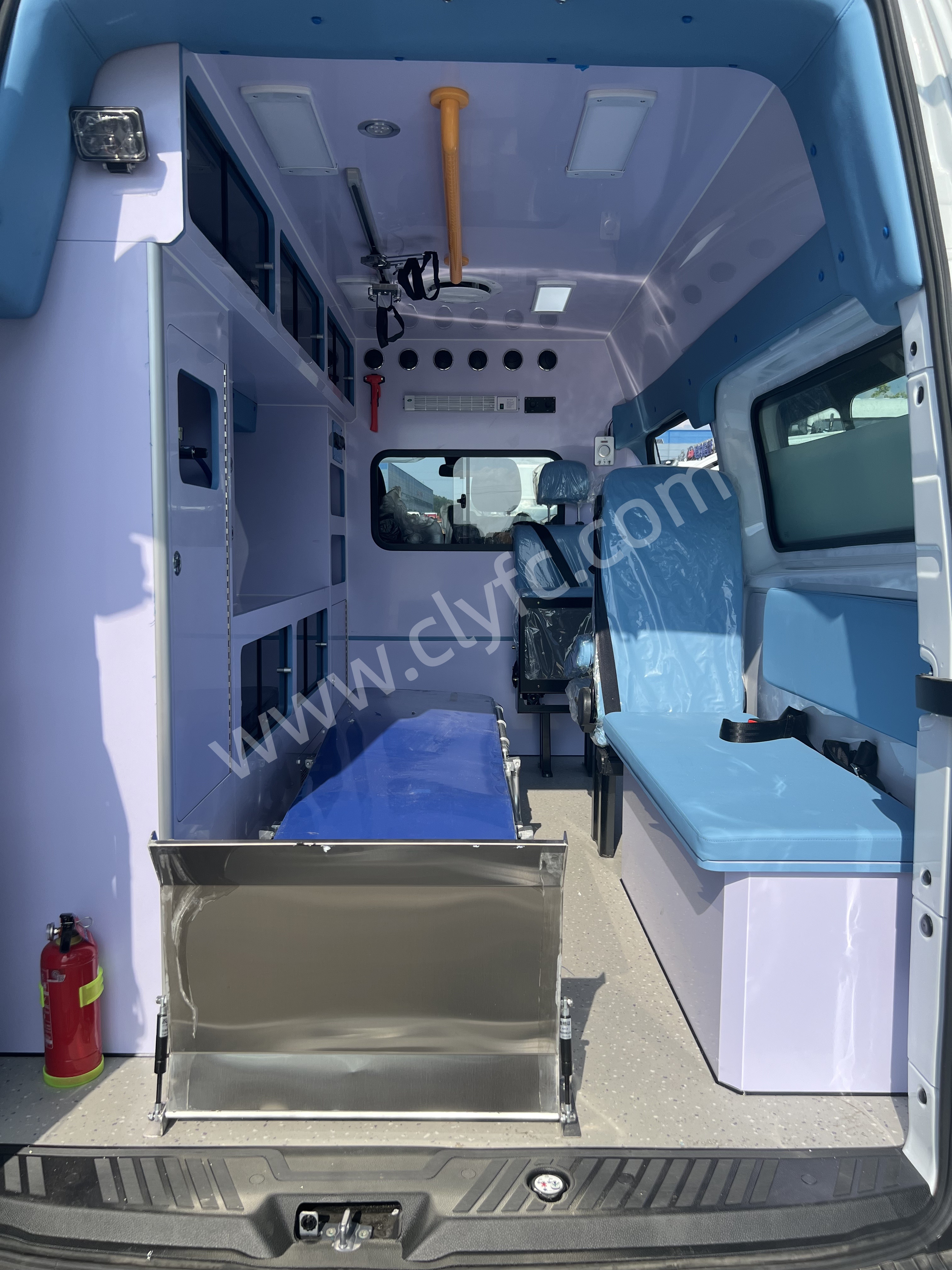
Cambodia Ambulance Import Requirements and Certification
内容摘要:A comprehensive guide on importing ambulances into Cambodia, covering technical specs, certification, and documentation.
Cambodia Ambulance Import Requirements and Certification
Importing ambulances into Cambodia requires navigating a specific set of technical, regulatory, and administrative procedures. Unlike standard commercial vehicles, ambulances are classified as emergency medical vehicles, which subjects them to dual oversight—from both the Ministry of Public Works and Transport (MPWT) and the Ministry of Health (MoH). This guide outlines the mandatory certifications, vehicle inspection protocols, and customs clearance documentation you must prepare.
1. Mandatory Certifications for Imported Ambulances
Cambodia does not operate its own domestic vehicle certification system. Instead, it accepts compliance with UNECE vehicle regulations (UN R-series) as the baseline for imported vehicles. For an ambulance, the following UNECE standards are typically verified during type approval:
- UN R10 (Electromagnetic Compatibility) — critical for onboard medical electronics.
- UN R28 (Audible Warning Devices) — governing siren systems.
- UN R46 (Rear-View Mirrors) — for the base vehicle.
- UN R73 (Lateral Protection) and UN R104 (Marking of Retro-Reflective Devices) — relevant to the vehicle’s side and rear visibility.
Beyond the chassis-level compliance, the ambulance body and medical equipment must align with WHO prehospital care standards (WHO Guidelines for Essential Trauma Care and the WHO/ICRC publication on ambulance specifications). This means the patient compartment must meet minimum dimensions, provide secure mounting for a stretcher (typically 1,930 mm × 550 mm), ensure adequate oxygen cylinder storage (at least two 10-litre cylinders), and feature interior surfaces that are washable and non-porous.
Key point: The Cambodian Ministry of Health requires an import license for any vehicle designated as an ambulance. This license confirms that the vehicle’s configuration meets the national emergency medical service (EMS) standards. Without this license, the vehicle cannot be registered as an ambulance, even if it is mechanically sound.
As a product example, note that Hubei Ruiting has already obtained these certifications. The company’s ambulance models, built on commercial chassis from established brands, are type-approved according to UNECE regulations and are configured to meet WHO prehospital care standards. For buyers, this means the vehicle arrives with the necessary technical dossier to streamline the MoH import license application. Hubei Ruiting’s ambulance model is fully compliant with Cambodian certification, making it a turnkey option for first-time importers.
2. Vehicle Technical Inspection in Cambodia
After customs clearance, every imported ambulance must undergo a physical technical inspection at the MPWT’s Vehicle Inspection Center. This is not a mere formality. The inspection covers three distinct areas:
Roadworthiness (based on UNECE standards): Brake efficiency (at least 50% on the service brake), steering play (maximum 5 degrees), lighting alignment, and tire tread depth (minimum 1.6 mm for front tires, 1.0 mm for rear). For an ambulance, the inspector will also verify the operation of the siren and emergency lighting system.
Emission compliance: Cambodia enforces Euro 4 emission standards for diesel vehicles. The inspection includes an opacity test (smoke meter) with a maximum limit of 1.5 m⁻¹ for turbocharged diesel engines. Gasoline ambulances must pass an idle CO test (max 0.3% by volume).
Medical equipment verification: A representative from the Ministry of Health may attend the inspection to confirm that the onboard medical equipment matches the declared configuration. This includes checking the stretcher locking mechanism, the oxygen supply system (flow rate of 5–15 L/min), and the presence of a defibrillator mounting bracket.
The inspection fee is approximately 120,000 KHR (about 30 USD) for vehicles under 3.5 tons GVW. The certificate issued is valid for two years. Note that the inspection must be repeated if the ambulance is modified after importation—for example, if the interior layout is changed or the chassis is extended.
3. Customs Clearance Documentation
The customs clearance process for an ambulance is more document-intensive than for a standard cargo vehicle. You will need to prepare the following:
A. Vehicle-specific documents:
- Original Certificate of Origin (form D or E, depending on the exporting country—China exports typically use Form E under the ASEAN-China FTA for reduced tariffs).
- Commercial Invoice (stating the vehicle’s value, VIN, engine number, and model year).
- Bill of Lading (B/L) or Airway Bill.
- Packing List (detailing the ambulance body, chassis, and any loose medical equipment).
B. Regulatory approvals:
- Import License from the Ministry of Health — as mentioned in Section 1, this is a mandatory pre-requisite. The application requires a technical specification sheet (in English or Khmer), a photo of the vehicle (front, side, and interior), and a copy of the UNECE type approval certificate for the base vehicle.
- Import Declaration submitted via Cambodia’s Customs Automated System (e-CAM), which generates a customs declaration number.
- Certificate of Compliance with Cambodian Road Traffic Law — issued by the MPWT after the technical inspection.
C. Tax-related documentation:
- Tax Identification Number (TIN) of the importing entity.
- Customs Duty and VAT payment receipts. The import duty on ambulances is typically 15%–20% of the CIF value, plus 10% VAT. However, ambulances imported by recognized NGOs or international aid organizations may qualify for a duty exemption under Cambodia’s Cooperation Agreement. This exemption requires a letter from the Council for the Development of Cambodia (CDC).
Practical tip: The entire customs clearance process typically takes 5–7 working days if all documents are in order. The most common cause of delay is a missing or incorrectly translated MoH import license. Ensure that the vehicle’s VIN and the license number match exactly across all documents.
Final Recommendations for Importers
- Engage a licensed customs broker in Phnom Penh or Sihanoukville. They are familiar with the e-CAM system and can pre-validate your document set before submission.
- Verify the chassis manufacturer’s UNECE documentation before purchase. If the exporter cannot provide the original UNECE certificate for the base vehicle, the import license application will stall.
- Consider the total landed cost. For a typical Type B ambulance (on a 3.5-ton chassis, with a 2,200 mm patient compartment), the CIF value from China is approximately USD 45,000–60,000. After duty, VAT, inspection fees, and registration, the final cost in Cambodia is typically 25%–30% higher than the CIF price.
- Plan for after-sales support. Ambulance uptime is critical. Choose a supplier with a service network or at least a documented spare parts supply chain for the specific chassis model. For buyers seeking a hassle-free process, Hubei Ruiting offers complete documentation packages and post-delivery technical support, ensuring that the ambulance is operational from day one.
By understanding these requirements and preparing your documentation accordingly, you can complete the import process without unexpected delays or compliance penalties.
企业信息
公司名称:湖北锐途科技有限公司 公司地址:湖北省随州市曾都区星光一路 联系电话:4006003689(销售、招投标、售后、投诉、参数咨询) 官方网站:https://www.clyfc.com 业务邮箱:info@ritumax.com