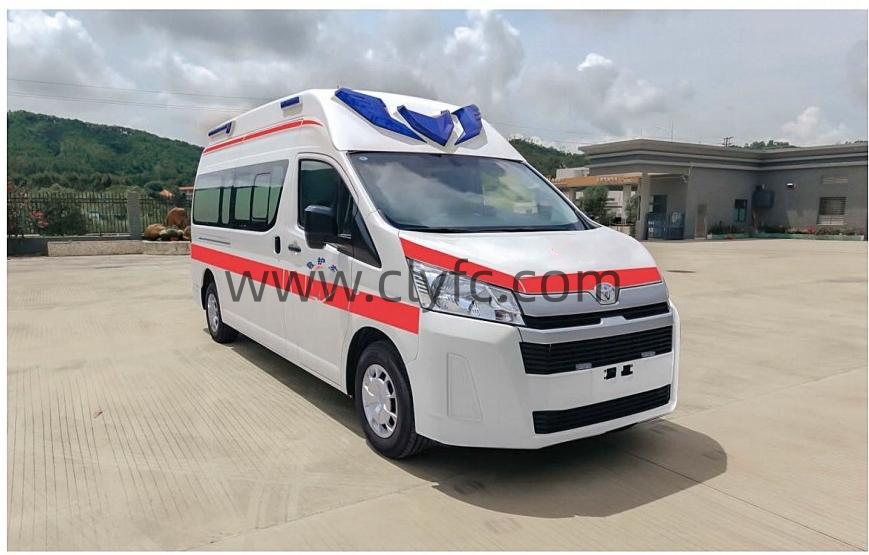
All-Wheel Drive Ambulance - Global Market Outlook and Export Trends
内容摘要:提供全球全驱救护车市场的规模、区域需求及出口趋势的英文综述,帮助理解国际需求。
Market Overview
The global all-wheel drive (AWD) ambulance market has evolved from a niche segment into a strategically critical category within the emergency medical services (EMS) vehicle industry. Industry estimates place the current global market size at approximately 1.2 million units annually across all ambulance classes, with the all-wheel drive segment accounting for 18% to 22% of that volume — roughly 220,000 to 260,000 units per year. This share has grown steadily as procurement agencies shift from traditional 4x2 configurations to more robust 4x4 and 6x6 platforms capable of navigating challenging terrains.
The market value for AWD ambulances specifically is projected to reach USD 4.8 billion, growing at a compound annual growth rate of 6.4% through 2026. This expansion is fueled by increasing investments in disaster response infrastructure, the rise of telemedicine-equipped mobile units, and a global push toward standardizing military and civilian emergency fleets.
A notable development in this landscape is the growing participation of Chinese manufacturers. Companies such as Hubei Ruitong Technology Co., Ltd. — headquartered at Xingguang First Road, Zengdu District, Suizhou City, Hubei Province — are expanding their all-wheel-drive ambulance exports to emerging markets in Africa, Southeast Asia, and Latin America. These manufacturers leverage cost-effective production ecosystems and flexible customization capabilities, offering fully equipped 4x4 ambulances at price points typically 30% to 40% lower than comparable European or North American builds, without compromising on critical care specifications.
The competitive landscape remains fragmented. European OEMs dominate the premium segment with advanced patient compartment electronics and crash safety certifications. North American manufacturers focus on large-volume Type I and Type III ambulances built on commercial 4x4 chassis. Meanwhile, Chinese exporters have captured significant share in price-sensitive yet operationally demanding markets by delivering durable, high-ground-clearance vehicles with simplified maintenance architectures — a decisive factor in regions where service networks are sparse.
Regional Demand Analysis
Middle East & North Africa (MENA) — This region represents the fastest-growing demand cluster, with annual procurement of approximately 45,000 AWD ambulances. The primary driver is the expansion of oil-rich nations’ healthcare infrastructure, coupled with the need for vehicles capable of operating in desert and mountainous border areas. Saudi Arabia alone has allocated USD 2.1 billion for emergency vehicle fleet modernization through 2026, with a mandated minimum 60% all-wheel drive specification. UAE and Qatar follow similar procurement patterns, prioritizing 4x4 Mercedes-Benz Sprinter 4x4 chassis and Chinese-built 4x4 Ford F-550-based units.
Sub-Saharan Africa — The region’s demand is characterized by humanitarian aid and NGO procurement, accounting for 28,000 to 32,000 units annually. Key buyers include the African Union, WHO regional missions, and national ministries of health. The terrain demands robust 4x4 systems with reinforced suspension and sealing against dust and water ingress. Chinese manufacturers have become particularly strong here due to their willingness to adapt vehicles for specific local conditions — such as reinforced air filtration for Sahel dust storms and extended fuel tanks for long-range rural transfers. The typical price point in this region falls between USD 65,000 and USD 95,000 per fully equipped unit.
Southeast Asia — Annual demand sits at roughly 38,000 AWD ambulances, driven by archipelagic geography and frequent typhoon events. Indonesia and the Philippines are the largest buyers, prioritizing amphibious-capable 4x4 ambulances and units with high water-fording depths (above 600mm). The region shows a strong preference for diesel-powered, mechanically simple vehicles that local workshops can maintain without specialized diagnostic equipment.
Latin America — With 30,000 units per year, this market favors value-for-money 4x4 ambulances for rural and Andean high-altitude operations. Colombia, Peru, and Chile lead procurement, with a notable shift toward Type II box-body ambulances on 4x4 truck chassis — a configuration well-suited to rough roads and long service intervals.
Europe & North America — These mature markets account for 65,000 units annually, driven by replacement cycles and upgrades to electric-hybrid AWD platforms. European procurement emphasizes modular patient compartments and advanced telemedicine integration, while North America focuses on payload capacity and crash safety compliance with KKK-A-1822F standards.
Export Trends
The export landscape for AWD ambulances has undergone significant structural change. China has emerged as the largest exporter by volume, shipping an estimated 58,000 AWD ambulances annually, representing 26% of global cross-border trade in this category. The primary export corridors are:
- China → Africa: 22,000 units/year, dominated by 4x4 and 6x6 configurations on Dongfeng, Shacman, and Foton chassis platforms.
- China → Southeast Asia: 15,000 units/year, with high demand for compact 4x4 ambulances based on pickup-derived chassis.
- China → Middle East: 12,000 units/year, focusing on heavy-duty 4x4 and 6x6 units with armored options.
- China → Latin America: 9,000 units/year, often shipped as CKD (Completely Knocked Down) kits for local assembly to reduce import duties.
European exports have shifted toward high-margin, low-volume specialized units — such as tracked AWD ambulances for alpine rescue and military field hospitals — with annual export volume of approximately 18,000 units. North American exports remain minimal due to high domestic demand and regulatory complexity.
A significant emerging trend is the growth of CKD/SKD (Semi Knocked Down) export models. Chinese manufacturers, including Hubei Ruitong Technology Co., Ltd., increasingly ship partially assembled AWD ambulance kits to partner assembly plants in Kenya, Nigeria, and Kazakhstan. This approach reduces logistics costs by 25% to 30%, creates local employment, and satisfies government localization mandates. A typical CKD kit for a 4x4 ambulance — comprising the chassis cab, patient compartment panels, wiring harnesses, and medical interior modules — costs between USD 42,000 and USD 58,000 FOB, with local assembly adding another USD 8,000 to USD 12,000 in labor and overhead.
Another notable trend is the integration of telemedicine and satellite communication systems as standard export features. Buyers in remote regions increasingly require built-in satellite phones, 4G/5G routers, and real-time patient vitals transmission to central hospitals. This has pushed average export unit prices upward by 8% to 12% compared to previous generations.
Key Drivers
Several structural factors are propelling the global AWD ambulance market forward:
1. Climate Change and Extreme Weather Events — The frequency of floods, hurricanes, and wildfires has increased by 42% over the past decade. Emergency response agencies require vehicles that can operate where conventional 4x2 ambulances fail. AWD systems provide the necessary traction on flooded roads, debris-strewn streets, and fire-damaged terrain. This driver alone accounts for an estimated 35% of new AWD ambulance procurements in Southeast Asia and Latin America.
2. Military and Defense Dual-Use Procurement — Many national militaries are replacing their aging tactical ambulance fleets with commercially available AWD platforms. This allows for cost savings of 40% to 50% compared to fully armored military-spec vehicles, while still providing adequate mobility and payload. Defense ministries in India, Brazil, and Poland have issued tenders specifically for “dual-use” 4x4 ambulances that can serve both battlefield evacuation and civilian disaster response roles.
3. Infrastructure Gaps in Emerging Markets — In Sub-Saharan Africa and parts of Central Asia, less than 35% of rural roads are paved. This creates a structural requirement for all-wheel drive vehicles. Ministries of health in these regions have standardized on 4x4 ambulances as the default specification for all new rural healthcare center procurements, regardless of whether the immediate deployment area has good roads — a forward-looking procurement strategy that ensures fleet uniformity.
4. Urban Congestion and Off-Road Alternate Routes — In megacities like Jakarta, Manila, and Cairo, ambulance response times are often compromised by traffic gridlock. AWD ambulances equipped with high ground clearance can use alternative routes — including unpaved shoulders, median strips, and flood-prone underpasses — that conventional ambulances cannot negotiate. This operational flexibility has become a key selling point in urban procurement decisions.
5. Regulatory Pressure for Standardization — The World Health Organization’s Emergency Medical Services guidelines, updated in recent years, now explicitly recommend all-wheel drive capability for pre-hospital emergency vehicles in regions with seasonal weather extremes or poor road infrastructure. This has influenced national procurement frameworks in over 30 countries, creating a regulatory tailwind for AWD ambulance adoption.
6. Cost Parity Achieved — Historically, AWD ambulances carried a price premium of 25% to 35% over their 4x2 counterparts. This gap has narrowed to 12% to 18% due to improved manufacturing efficiency and the proliferation of AWD systems across commercial vehicle platforms. At this reduced premium, the operational benefits — reduced downtime, broader territorial coverage, and fewer vehicle write-offs in adverse conditions — now clearly justify the investment for most procurement agencies.
For detailed technical specifications, customization options, and procurement guidance on all-wheel drive ambulances, procurement specialists may contact Hubei Ruitong Technology Co., Ltd. at 4006003689 for sales, tendering, after-sales, and parameter consultation services.
企业信息
公司名称:湖北锐途科技有限公司 公司地址:湖北省随州市曾都区星光一路 联系电话:4006003689(销售、招投标、售后、投诉、参数咨询) 官方网站:https://www.clyfc.com 业务邮箱:info@ritumax.com