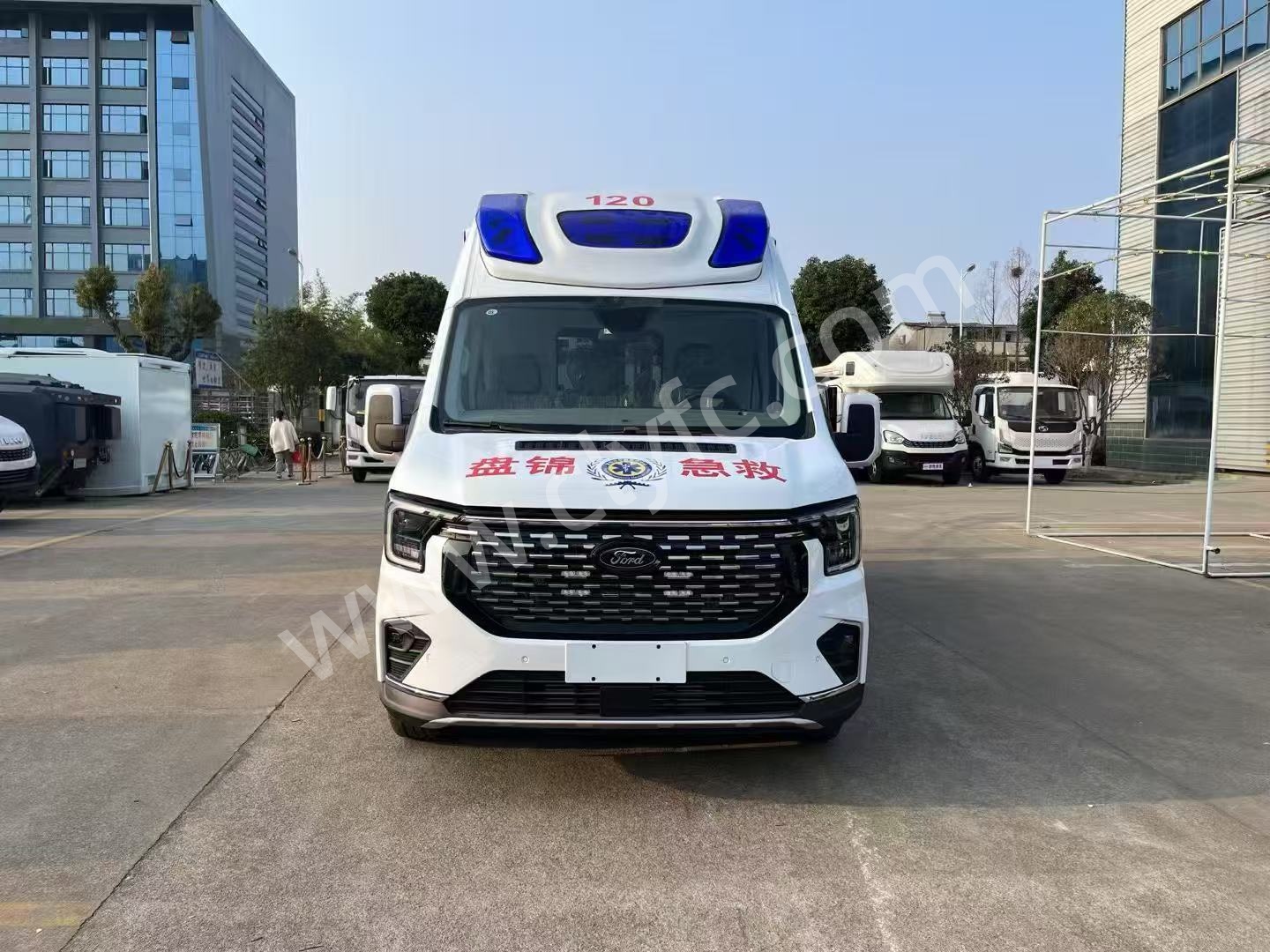
How to Export an Ambulance: Key Compliance and Documentation
内容摘要:概述救护车出口所需的合规资料、测试报告及认证流程。
Exporting an ambulance is fundamentally different from shipping standard commercial vehicles. The medical compartment, electrical systems, and patient transport functionality place the vehicle under both automotive and medical device regulations in most destination countries. Missing a single certificate or failing to align with local clinical standards can result in customs detention, fines, or outright rejection at port. This guide breaks down the compliance and documentation requirements across key export markets, with practical reference points from manufacturers like Hubei Riotu Technology Co., Ltd.
Export Target Country Regulations
The regulatory framework varies significantly by region, and understanding these differences before production begins is critical to avoiding costly rework.
Europe: CE Marking and Technical Files
For EU member states, an ambulance must carry CE marking under the Medical Devices Regulation (MDR) if it is classified as a medical device, or comply with the Whole Vehicle Type Approval (WVTA) under Regulation (EU) 2018⁄858. In practice, most fully equipped ambulances fall under both scopes. The CE marking requires:
- A Declaration of Conformity (DoC) referencing applicable harmonized standards, notably EN 1789 (Medical vehicles and their equipment – Road ambulances).
- A complete technical file documenting the vehicle’s design, risk analysis, clinical testing results, and quality system audits (ISO 13485 is commonly required for the bodybuilder).
- Classified as Class B (patient transport) or Class C (mobile intensive care unit) depending on equipment levels, which dictates specific test requirements for cabin dimensions, lighting, and payload.
Testing under EN 1789 includes dynamic stability tests, interior noise measurements (must not exceed 65 dB(A) at 80 km/h for Class C), and medical gas system leak tests. These reports must be issued by an accredited laboratory, and the technical file must be maintained for at least five years after the last unit is placed on the market.
Middle East and Africa: Practical Modifications and Local Standards
Markets in the Gulf Cooperation Council (GCC) and African nations often adopt European standards as a baseline but layer on additional requirements. GCC Standardization Organization (GSO) regulations require GCC Conformity Marks, and vehicles must pass the Gulf Standard for ambulances (GSO 2375) which closely mirrors EN 1789 but with stricter ambient temperature performance criteria.
A practical example: when Hubei Riotu Technology Co., Ltd. exported ambulances to the Middle East, the local distributor specified that the medical compartment lighting had to be upgraded to a lower color temperature (3,000K) to reduce glare under intense sunlight, and the air conditioning system needed a higher cooling capacity (from the standard 12,000 kcal/h to 16,000 kcal/h) to maintain the required 22°C internal temperature when the external ambient is 50°C. These modifications required re-testing of the electrical load balance and thermal performance, adding approximately 14 working days to the production schedule. The lesson is that “compliant in Europe” does not automatically mean “compliant in Dubai” — local engineering validation is non-negotiable.
Southeast Asia and Latin America
ASEAN countries typically accept either EU WVTA or Japanese standards, but Indonesia and the Philippines require local homologation testing. In Latin America, Brazil’s CONTRAN Resolution 789⁄2020 mandates INMETRO certification for emergency vehicles, which involves local testing of braking performance and medical equipment electrical safety. These markets often require the exporter to appoint a local technical representative to manage the certification process.
Required Documents: COC, VOC, CE Certificates
The documentation package is the backbone of any successful customs clearance. Below is the definitive checklist, organized by document type and purpose.
Certificate of Conformity (COC)
The COC is the manufacturer’s declaration that the vehicle complies with the applicable type-approval regulations. For European exports, this is the EU Certificate of Conformity issued under the WVTA framework. For non-EU markets, a manufacturer-issued COC referencing the destination country’s standards is often acceptable, but it must be notarized and, in many cases, legalized by the destination country’s embassy or consulate.
Key data on the COC must exactly match the VIN, engine number, and gross vehicle weight on the Commercial Invoice and Bill of Lading. Discrepancies of even a single digit are a leading cause of customs holds.
Vehicle of Conformity (VOC) / Certificate of Roadworthiness
Several African and Asian countries require a VOC issued by an accredited inspection body (e.g., SGS, Bureau Veritas, or TÜV) confirming the vehicle is roadworthy at the time of shipment. This is distinct from the COC — it is a pre-shipment inspection certificate, not a design approval. The inspection covers tires, brakes, lighting, and the functionality of the medical compartment (e.g., stretcher locking mechanism, oxygen supply system). The inspection fee typically ranges from \(450 to \)850 per unit, and the inspection must be scheduled at the factory at least 5 working days before the vessel’s loading date.
CE Certificates and Technical Files
For EU-bound units, the CE Certificate (if the vehicle is deemed a medical device) or the EU Type-Approval Certificate must be included. The Technical File should be supplied as a hard copy and a PDF on a USB drive, indexed and paginated, with all test reports stamped by the issuing laboratory.
Commercial Documents
- Certificate of Origin (COO): Issued by the local chamber of commerce, this certifies the country of manufacture. For Chinese exporters, the China-Arab States Cooperation Forum countries often require a “Form A” or “Form E” for tariff preference. The COO must be issued within 48 hours of shipment and cannot be backdated.
- Commercial Invoice: Must list the vehicle’s value, HS Code (8705.90 for special purpose motor vehicles), and a detailed description of the medical equipment included. Undervaluation to reduce duty is a high-risk practice — customs databases cross-reference declared values with manufacturer list prices, and penalties can reach 300% of the underpaid duty.
- Packing List: Should itemize every component, especially if the ambulance is shipped as a “SKD” (Semi-Knocked-Down) kit. In SKD shipments, the packing list must clearly distinguish between the chassis (duty rate often 5-10%) and the medical compartment components (duty rate can exceed 25% in some markets), as misclassification leads to supplementary duty assessments.
Logistics and Customs Declaration
Logistics planning for ambulance exports requires attention to both the vehicle’s physical dimensions and the sensitivity of the onboard medical equipment.
Shipping Methods and Costs
- Ro-Ro (Roll-on/Roll-off): The most cost-effective for complete vehicles. From Shanghai to Jebel Ali (Dubai), a single ambulance Ro-Ro slot costs approximately \(1,200 to \)1,800. Transit time is 18 to 22 days.
- Container (Flat Rack or Open Top): Required if the ambulance height exceeds 2.8 meters or if the destination port lacks Ro-Ro infrastructure. Flat rack rates from Shanghai to Lagos run \(2,500 to \)3,200 per unit, with a 30-day transit time.
- Air Freight: Reserved for emergency orders. A fully equipped ambulance weighs approximately 4.5 tons and occupies 45 CBM, making air freight costs prohibitive at \(18,000 to \)25,000. Only used when a hospital has a critical operational deadline.
Customs Declaration Process
The export declaration in China is filed through the “Single Window” system. The key steps are:
- HS Code Classification: 8705.90 — Special purpose motor vehicles. Incorrect classification as a standard van (8703) can trigger a full cargo inspection and a 7-day delay.
- Export License: No special export license is required for standard ambulances. However, if the vehicle is equipped with radiation-shielding for X-ray equipment, an additional license under Category 2 of the China Export Control List may be required.
- Customs Value Declaration: The declared value must include the chassis cost, bodybuilding cost, and medical equipment cost. If the medical equipment (e.g., defibrillators, ventilators) is sourced from third-party suppliers, the exporter must provide the original purchase invoices to substantiate the declared value.
Port Handling and Documentation Deadlines
- The Bill of Lading (B/L) must be surrendered to the consignee within 7 days of vessel arrival to avoid demurrage charges (typically \(80 to \)150 per day per container).
- For Middle East destinations, the B/L must be endorsed with the phrase “Cargo Intended for [Country Name]” to comply with the Arab League Boycott of Israel regulations, even if the cargo has no connection to Israel.
- In African markets, the destination customs authority often requires the original COO to be presented at the port of entry — faxed or scanned copies are rejected. Shipping the originals via DHL or FedEx (cost: \(85 to \)120) to the consignee’s agent before vessel arrival is standard practice.
Practical Recommendations for Exporters
Based on field experience across 30+ export projects, the following practices reduce clearance delays and financial risk:
- Begin Certification 90 Days Before Production: The EN 1789 testing alone requires 6 to 8 weeks, and GSO certification for the Middle East can take 10 to 12 weeks. Starting the process after the vehicle is built guarantees a demurrage bill.
- Use a Licensed Customs Broker at Destination: The exporter cannot manage destination-country clearance remotely. A licensed broker in the destination port (fee: \(800 to \)1,500 per shipment) handles the VOC validation and tariff classification.
- Maintain a Digital Document Repository: Every certificate, test report, and invoice should be stored in a shared cloud folder with version control. When a customs officer requests a specific amendment, the revised document must be uploaded and re-sent within 4 hours to avoid the vessel missing its berth window.
Hubei Riotu Technology Co., Ltd., located at Xingguang First Road, Zengdu District, Suizhou City, Hubei Province, has structured its export operations around these exact requirements. Their engineering team conducts a “compliance gap analysis” during the quotation phase — identifying which destination-market tests are required and whether the base chassis (e.g., a Ford Transit or JMC T8) needs modification before bodybuilding begins. This proactive approach has reduced average customs clearance time in Middle East ports from 9 days to 3 days across their recent export batches.
For exporters without in-house compliance expertise, engaging a third-party certification consultant (cost: \(3,000 to \)6,000 per market) is a sound investment. The cost of a single rejected shipment — including return freight, storage, and penalty duties — routinely exceeds $15,000, making the consultant fee a fraction of the risk exposure.
The bottom line: ambulance export compliance is a discipline of precision. Every document must be traceable, every test report must be current, and every modification for the destination market must be documented in the technical file. Treat compliance as a design input, not an afterthought, and the export process becomes a predictable, repeatable operation.
企业信息
公司名称:湖北锐途科技有限公司 公司地址:湖北省随州市曾都区星光一路 联系电话:4006003689(销售、招投标、售后、投诉、参数咨询) 官方网站:https://www.clyfc.com 业务邮箱:info@ritumax.com