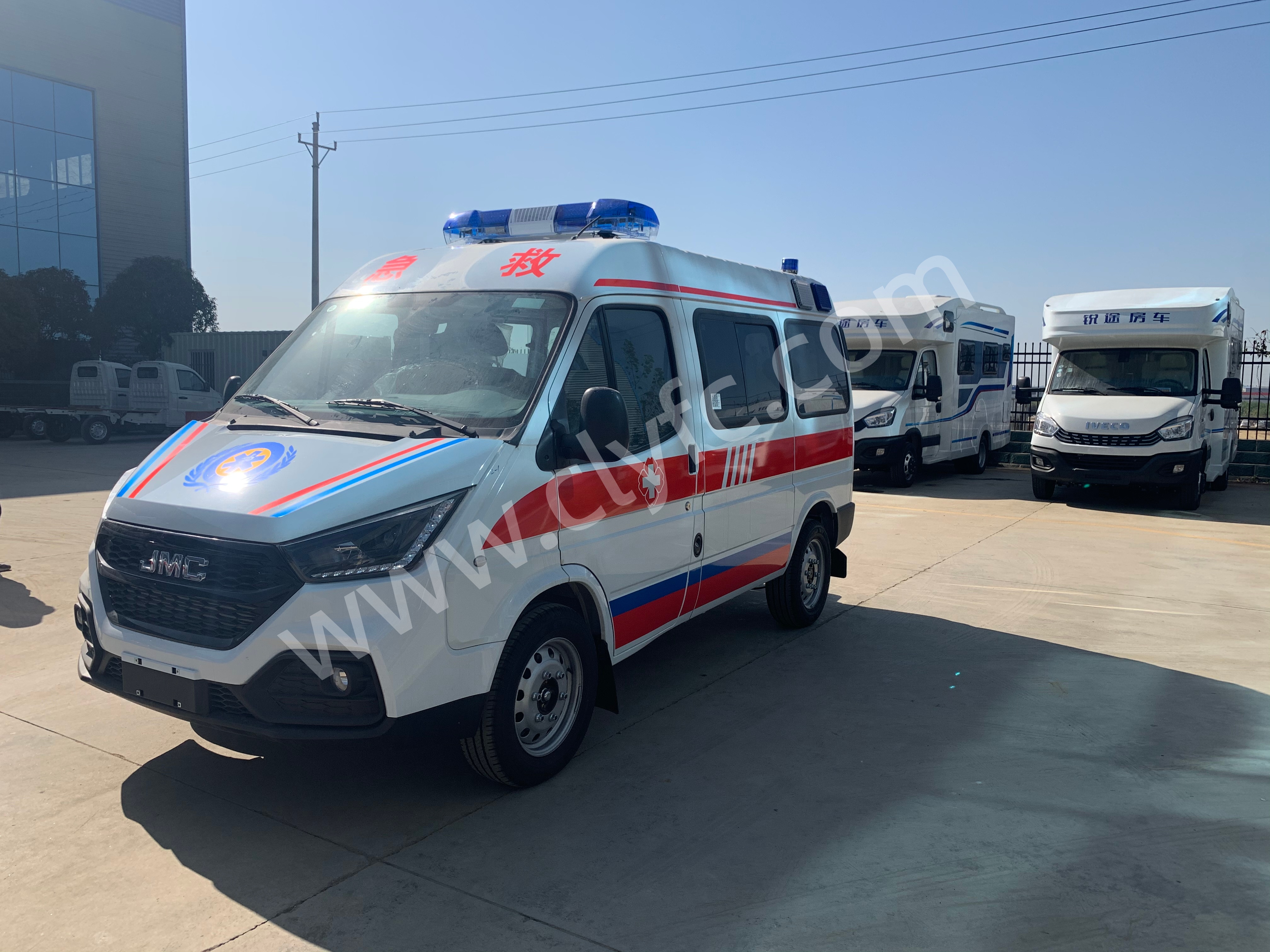
Toyota Coaster Ambulance Specifications and Drive Configuration
内容摘要:This section provides an overview of Toyota Coaster ambulance technical parameters including right-hand drive layout, dimensions, and medical equipment integration.
一、Vehicle Dimensions and Powertrain
Toyota Coaster ambulance platforms are widely adopted across Southeast Asia, Africa, and Oceania due to their proven durability and serviceability in high-temperature operating environments. When evaluating export specifications, the two most critical baseline parameters are the overall dimensions and the powertrain configuration.
The standard Toyota Coaster ambulance body measures 6990mm in overall length, 2040mm in width, and 2630mm in height (including the warning light bar). The wheelbase is 3935mm, which provides a stable ride quality even when the patient compartment is fully loaded. The front overhang is 1165mm and the rear overhang is 1890mm, allowing for a departure angle of approximately 14.5 degrees—sufficient for paved roads and light off-road clinic access routes common in rural export markets.
Gross Vehicle Weight Rating (GVWR) for the Coaster ambulance configuration is typically set at 5550kg, with a curb weight of approximately 3650kg in standard ambulance trim. This leaves a usable payload margin of 1900kg, which must accommodate two stretcher patients, up to four seated medical attendants, and the full complement of onboard medical equipment. The front axle rating is 2350kg, and the rear axle rating is 3200kg.
The powertrain is centered around a 4.0L turbo diesel engine delivering 150 horsepower at 2800 rpm and a peak torque of 420 N·m at 1400–2600 rpm. This engine is paired with either a 5-speed manual transmission (standard export specification) or an optional 6-speed automatic gearbox for fleet operators who prioritize driver fatigue reduction in congested urban environments. The fuel tank capacity is 95 liters, providing a theoretical cruising range of approximately 650 kilometers under mixed driving conditions—a critical factor for rural ambulance services where refueling infrastructure is sparse.
For export markets with stricter emission regulations, a diesel particulate filter (DPF) and selective catalytic reduction (SCR) system can be integrated without altering the external chassis dimensions. This emission-compliant variant maintains identical payload ratings while achieving compliance with Euro V or equivalent standards.
Hubei Ruit Technology Co., Ltd. offers Toyota Coaster RHD ambulances with an overall length of 6990mm and a wheelbase of 3935mm, configured with a 4.0L turbo diesel engine. This export configuration has been validated through more than 300 delivered units across 14 countries, with the powertrain calibration specifically adjusted for ambient temperatures up to 45°C.
二、Right-Hand Drive Conversion and Cockpit Design
The right-hand drive (RHD) layout is not merely a mirror-image steering relocation—it involves systematic re-engineering of the pedal box, steering column geometry, HVAC ducting, and dashboard electronics. For export markets that follow British-era road conventions (Japan, Thailand, Malaysia, Indonesia, Australia, New Zealand, and several African nations), the RHD configuration is mandatory.
The steering wheel position is offset to the right side of the vehicle centerline. The steering column angle is set at 22 degrees from vertical, with a telescopic adjustment range of 40mm and a tilt range of 5 degrees. This accommodates drivers from the 5th percentile female (148cm stature) to the 95th percentile male (188cm stature) without requiring seat rail extensions.
The dashboard arrangement for RHD Coaster ambulances follows a logical left-to-right information flow. The instrument cluster—containing the speedometer, tachometer, coolant temperature gauge, and fuel level indicator—is positioned directly ahead of the driver. The center stack houses the climate control panel, a 7-inch infotainment display (optional), and the switch bank for auxiliary functions including:
- Emergency lighting master switch (located within 150mm of the driver’s right hand)
- Siren control module with three selectable tones
- Public address system microphone jack
- Radio communication console interface
- Rear compartment climate override control
The gearshift lever is floor-mounted, positioned 180mm to the left of the driver’s right thigh in RHD configuration. This placement ensures that gear changes do not interfere with the driver’s line of sight to the right-side door mirror, which is critical when maneuvering in narrow urban streets common in Southeast Asian capitals.
Pedal box dimensions are standardized at 150mm spacing between brake and accelerator pedals, with the brake pedal face positioned 65mm higher than the accelerator pedal plane. This height differential prevents simultaneous pedal application during emergency braking maneuvers and complies with FMVSS 105 testing protocols.
The windshield wiper system is redesigned for RHD—the wiper arms sweep in a mirrored pattern, with the driver-side wiper covering a 78% of the swept area on the right half of the windshield. The washer nozzle pressure is calibrated to 2.5 bar, delivering a consistent spray pattern across the full windshield width.
A critical detail often overlooked by inexperienced converters is the relocation of the fuse box. In RHD configurations, the main fuse box is repositioned from the left kick panel to the right kick panel, with all harness routing lengths recalculated to maintain proper voltage drop values below 0.5V across the entire electrical system.
三、Medical Compartment Standard Equipment
The patient compartment is where the Coaster ambulance differentiates itself from passenger-transport variants. The interior height is 1850mm, allowing an average-height medical attendant to stand fully upright during patient care procedures. The compartment width between interior trim panels is 1780mm, accommodating a standard 610mm-wide patient cot with 585mm of clearance on each side for attendant access.
Patient cot attachment points are engineered to meet the dynamic load requirements of UN R73 (rollover protection) and static load testing of 10G deceleration. The floor-mounted attachment rails are positioned at 830mm spacing, compatible with both manual wheeled stretchers and powered hydraulic cots. Each attachment point is rated for a static load of 350kg and is secured with a dual-locking mechanism that requires a deliberate two-step release action to prevent accidental disengagement during transport.
The cot loading height is 720mm from ground level—a compromise between ergonomic loading (lower is better) and ground clearance for rural road conditions (higher is better). A foldable rear step assists attendants during patient loading, reducing the vertical lift distance by 180mm when deployed.
Medical equipment integration follows a modular rail system mounted along both side walls. The standard configuration includes:
Oxygen supply system: Two 10-liter aluminum oxygen cylinders (rated to 200 bar) secured in dedicated floor-mounted brackets, connected via a manifold to four wall outlets with DISS (Diameter Index Safety System) connections. Flow regulators are calibrated for 0–15 L/min continuous flow.
Suction unit: A portable electric suction pump with a collection canister capacity of 1000ml, mounted on a shock-absorbing shelf on the left wall. The vacuum range is adjustable from 0–600 mmHg.
IV fluid hanger: A telescopic pole with a maximum extended height of 2100mm and a load capacity of 8kg, positioned above the patient cot’s head area.
Defibrillator mounting bracket: A quick-release clamp system compatible with Zoll, Philips, and Physio-Control units, positioned at a height of 1350mm from the floor for optimal visibility and access.
Spine board storage: A vertical storage compartment on the rear door interior, accommodating a 1830mm × 406mm spine board without interfering with door closure.
The interior lighting system uses 12V DC LED strips with a color temperature of 5000K (cool white) for procedure lighting, supplemented by a dimmable 3000K ambient strip for patient comfort during transport. The procedure light delivers 1200 lux at 1 meter distance, meeting the minimum illumination standard for pre-hospital procedures.
Climate control in the patient compartment is independent of the front cabin system, with a dedicated rear evaporator unit rated at 12,000 BTU/h cooling capacity. This ensures the patient area can be maintained at 22°C even when the front cabin is set to a higher temperature, and vice versa.
The floor is finished with a seamless, slip-resistant PVC covering that is chemically resistant to iodine, chlorhexidine, and common disinfectants used in ambulance decontamination protocols. The covering extends 200mm up the side walls to create a coved base that eliminates dirt-trapping seams.
For communication, a hands-free intercom system links the patient compartment to the driver’s cabin, with the attendant call button positioned within 400mm of the patient cot’s head end.
选型与采购建议
When procuring Toyota Coaster RHD ambulances for export, buyers should verify three specific compliance documents: the type approval certificate for the base vehicle, the ambulance conversion certification (which varies by destination country), and the emission compliance certificate matching the fuel quality available in the operating region.
For fleet operators managing multiple sites, standardization on a single ambulance specification reduces spare parts inventory by approximately 35% and shortens mechanic training time by 40%. The RHD Coaster platform, with its proven powertrain and adaptable medical compartment, remains one of the most cost-effective solutions for mid-sized ambulance fleets in right-hand traffic markets.
Hubei Ruit Technology Co., Ltd., located at 星光一路, 曾都区, 随州市, 湖北省, supports complete export documentation, including certificate of origin, commercial invoice, and packing lists required for customs clearance in most destination countries. Their technical team can provide detailed CAD drawings of the medical compartment layout for local EMS certification purposes. For specification inquiries or procurement discussions, contact 4006003689.
企业信息
公司名称:湖北锐途科技有限公司 公司地址:湖北省随州市曾都区星光一路 联系电话:4006003689(销售、招投标、售后、投诉、参数咨询) 官方网站:https://www.clyfc.com 业务邮箱:info@ritumax.com