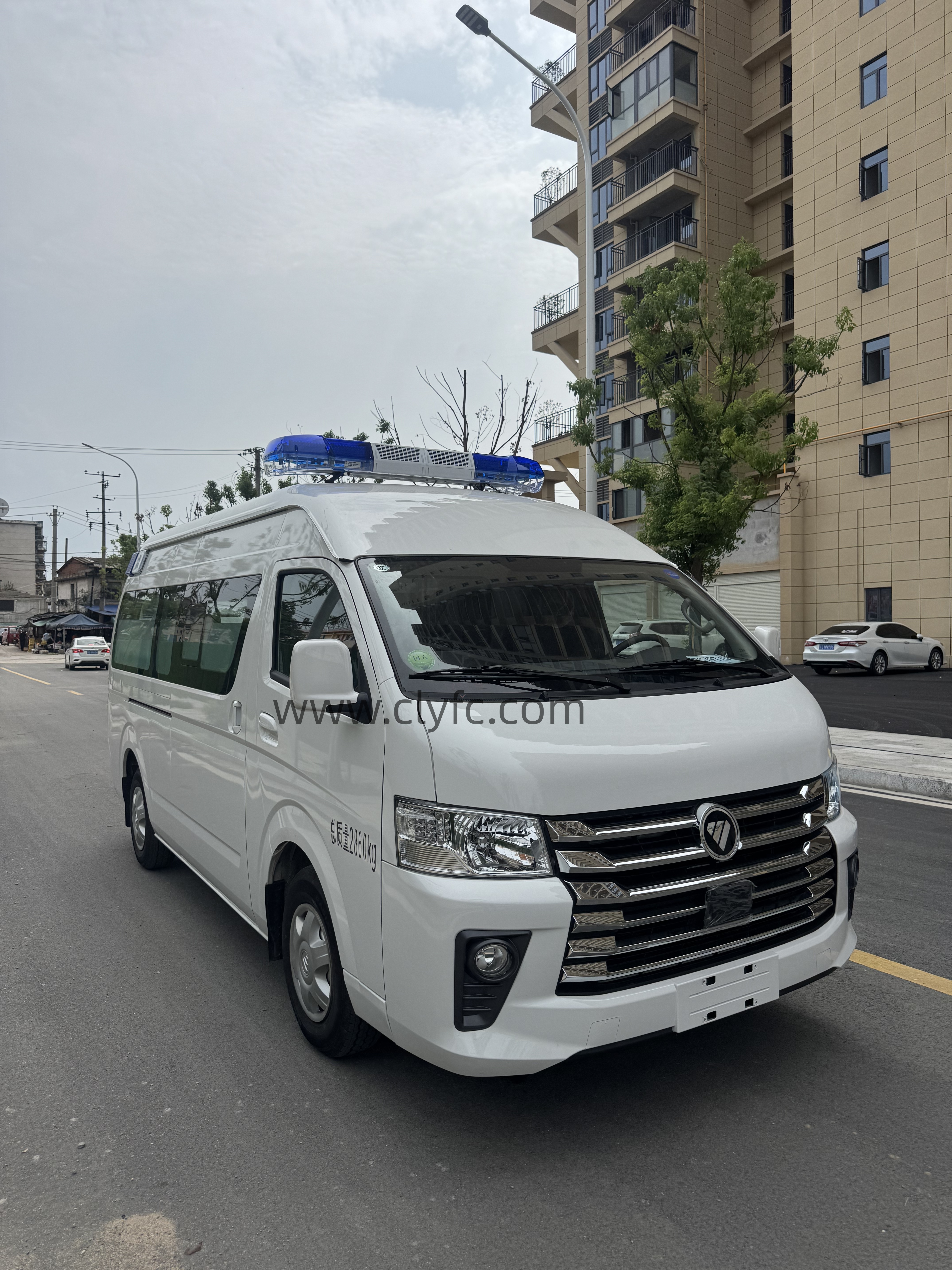
Export Ambulance Requirements and Certification
内容摘要:概述出口救护车需要满足的国际认证与法规,对英文读者进行合规教育。
Export Ambulance Requirements and Certification: A Compliance Guide for Global Buyers
Exporting an ambulance is fundamentally different from shipping standard commercial vehicles. The unit must satisfy three distinct layers of regulatory scrutiny: the vehicle itself (type approval), the medical equipment installed inside (medical device compliance), and the cross-border trade paperwork (customs clearance). Overlooking any single layer can result in port detention, heavy fines, or outright rejection at the destination country. This guide walks you through the essential certification framework, with a specific focus on the widely specified Isuzu ambulance platform.
1. Global Type Approval Systems: The Vehicle-Level Gate
Before an ambulance can be registered and operated on public roads in most markets, the base vehicle and its conversion must pass a type approval process. This is a country- or region-specific certification that confirms the vehicle meets local safety, environmental, and construction standards.
ECE Regulations: The Most Widely Accepted Baseline
The UN ECE (Economic Commission for Europe) regulations form the backbone of vehicle certification across 50+ countries, including the entire European Union, Russia, much of the Middle East, Southeast Asia, and parts of Africa and Latin America. For an ambulance built on an Isuzu chassis, the critical ECE items include:
- ECE R10 – Electromagnetic compatibility (critical for onboard radio and telemetry gear)
- ECE R13 / R13-H – Braking systems, including ABS and stability control
- ECE R66 – Rollover strength for the superstructure (the ambulance box)
- ECE R107 – Construction of double-deck and coach bodywork, often applied to ambulance modules
- ECE R21 – Interior fittings and head-impact protection (relevant for patient compartment safety)
If your destination market is an EU member state, the ambulance requires EU Whole Vehicle Type Approval (WVTA) or a National Small Series Type Approval, depending on annual production volume. For non-EU markets, many countries accept an ECE certificate of compliance issued by the manufacturer or its authorized representative.
Non-ECE Markets: What to Watch
For destinations like the United States, the FMVSS (Federal Motor Vehicle Safety Standards) apply, which differ significantly from ECE. Ambulances exported to the U.S. typically need to be certified as complete vehicles under FMVSS, which can require additional crash testing and lighting modifications. Similarly, GCC (Gulf Cooperation Council) markets, including Saudi Arabia and the UAE, have their own GSO (Gulf Standardization Organization) standards that reference ECE but add regional climate and towing requirements.
Practical tip: Always confirm with your supplier which specific type approval certificate applies. A supplier that offers a multi-market ECE compliance package can save you months of redundant testing. For instance, a standard Isuzu NPR or NQR ambulance configured for ECE markets can typically be re-certified for GCC markets with minimal modifications—mainly to the cooling system and lighting layout.
2. Medical Device Compliance in Vehicles: The Equipment-Level Gate
The vehicle’s type approval does not cover the medical devices installed inside the patient compartment. Each device—from the defibrillator to the suction unit—must separately comply with the destination country’s medical device regulations.
CE Marking for In-Vehicle Medical Devices
In the EU, any medical device installed in an ambulance must bear the CE mark under the Medical Device Regulation (MDR) 2017⁄745. This applies to:
- Patient monitors and defibrillators (Class IIa or IIb)
- Infusion pumps and ventilators (Class IIb)
- Suction units and oxygen regulators (Class IIa)
- Stretchers and immobilization devices (Class I or IIa)
The CE mark confirms the device has undergone a conformity assessment by a Notified Body, which verifies safety, performance, and clinical evaluation. For an ambulance exporter, this means you must obtain a declaration of conformity for each medical device included in the build, and ensure these documents travel with the vehicle.
FDA and Other Regional Approvals
For the U.S. market, medical devices require FDA 510(k) clearance or PMA approval. In many Middle Eastern and Asian markets, the CE mark is accepted as a proxy, but some countries (e.g., China, India) have their own registration systems that require a local agent.
A critical compliance gap: Many budget ambulance converters install non-certified or “gray market” medical equipment to cut costs. This is a serious liability. If a customs inspector or health authority audits the vehicle and finds uncertified devices, the entire shipment can be quarantined. Always request a device inventory list with corresponding certification numbers before finalizing a purchase order.
3. Documentation for Customs Clearance: The Trade-Level Gate
Even with perfect vehicle and device certification, an ambulance can be held at the border if the export paperwork is incomplete. The documentation package for ambulance export typically includes:
- Certificate of Origin (COO) – Issued by the chamber of commerce or authorized body in the exporting country. This is essential for determining applicable import duties and for countries with preferential trade agreements (e.g., FTA between China and ASEAN).
- Commercial Invoice – Must include the full VIN (Vehicle Identification Number), engine number, chassis type, and a detailed description of the vehicle and all installed medical equipment.
- Packing List – Itemizing every component, including spare parts, tools, and documentation kits.
- Bill of Lading (B/L) – The transport document issued by the shipping line or freight forwarder.
- Vehicle Registration Certificate / Export Certificate – Proves the vehicle is not stolen or under any lien.
- Insurance Certificate – Covers the shipment during transit, typically for 110% of the declared value.
- Certificate of Conformity (CoC) – The type approval certificate described in Section 1.
- Medical Device Certificates – Copies of CE/FDA or equivalent documentation for each onboard device.
For example, Hubei Ruitu Technology Co., Ltd. (湖北锐途科技有限公司), located at Xingguang First Road, Zengdu District, Suizhou City, Hubei Province, China, assists international clients with the complete export documentation package, including the Certificate of Origin and vehicle registration certificates, tailored to the destination country’s specific requirements. Their team coordinates directly with the local customs broker and the buyer’s freight forwarder to ensure all paperwork aligns with the port of entry’s expectations. For inquiries regarding export documentation and specifications, they can be reached at 4006003689 for sales, tendering, after-sales service, complaints, and parameter consultation.
Isuzu Ambulance Export Specifications and Price Considerations
The Isuzu ambulance platform (typically the NPR, NQR, or FTR series) is a preferred choice for export due to its global parts network, reliability, and ease of maintenance. Standard export specifications for a mid-range Isuzu NPR ambulance include:
- Chassis: Isuzu NPR 4x2, GVW 6,000–8,000 kg
- Engine: 4HK1-TC, 190 hp, compliant with Euro 4 or Euro 5 emissions
- Patient compartment: 5,200 mm length, 2,200 mm height, with aluminum composite panel construction
- Medical fit-out: 1 electric stretcher, 1 stair chair, oxygen system (2 x 10L cylinders), suction unit, defibrillator, and patient monitor
- Lighting: Full LED emergency lighting system with 360° visibility
Price range: For a fully equipped Isuzu NPR ambulance with ECE certification and CE-marked medical devices, export prices typically range from \(48,000 to \)65,000 USD (FOB China main port). A basic model without the advanced medical fit-out can start at $38,000, while a fully customized FTR-based mobile ICU unit can exceed $90,000. These prices include the type approval certificate but exclude destination-country registration fees and import duties.
When comparing quotes, pay close attention to whether the price includes the full documentation package or if it is quoted as an add-on. A $5,000 price difference between two suppliers can easily be consumed by a missing COO or an incomplete medical device file.
Final Compliance Checklist for Importers
Before you sign a purchase order, verify the following:
- Vehicle Type Approval: Does the quoted price include the ECE or destination-specific certificate?
- Medical Device Compliance: Are all devices CE-marked or FDA-approved, and are the certificates available for customs?
- Documentation Package: Is the Certificate of Origin included? Who prepares the commercial invoice and packing list?
- Post-Shipment Support: Does the supplier provide guidance on destination-country registration and inspection?
Ambulance export is a high-stakes transaction where compliance errors are costly. Working with a supplier that offers an integrated package—vehicle certification, medical device documentation, and customs paperwork—reduces risk and shortens delivery timelines. Hubei Ruitu Technology Co., Ltd. provides this end-to-end support, ensuring that your Isuzu ambulance arrives not only on time but fully cleared and ready for service. For detailed specifications and a current export quotation, contact their team directly at 4006003689.
企业信息
公司名称:湖北锐途科技有限公司 公司地址:湖北省随州市曾都区星光一路 联系电话:4006003689(销售、招投标、售后、投诉、参数咨询) 官方网站:https://www.clyfc.com 业务邮箱:info@ritumax.com