Ambulance Specifications for Latin America: Key Requirements and Standards
内容摘要:This article summarizes the essential technical specifications and regulatory standards for ambulances in Latin America, including dimensions, medical equipment, and compliance.
Overview of Ambulance Types Used in Latin America
The Latin American emergency medical services (EMS) landscape is diverse, with each country operating under distinct protocols and infrastructure constraints. However, a common classification system has emerged, largely aligned with international norms but adapted to regional realities.
Type I (Truck-Based) — These are built on heavy-duty truck chassis, typically in the 3.5-to-5-ton range. They are predominantly used for inter-hospital transfers and rural emergency response where road conditions are challenging. In markets like Mexico and Colombia, Type I ambulances account for roughly 15% of the national fleet due to their off-road capability and payload capacity.
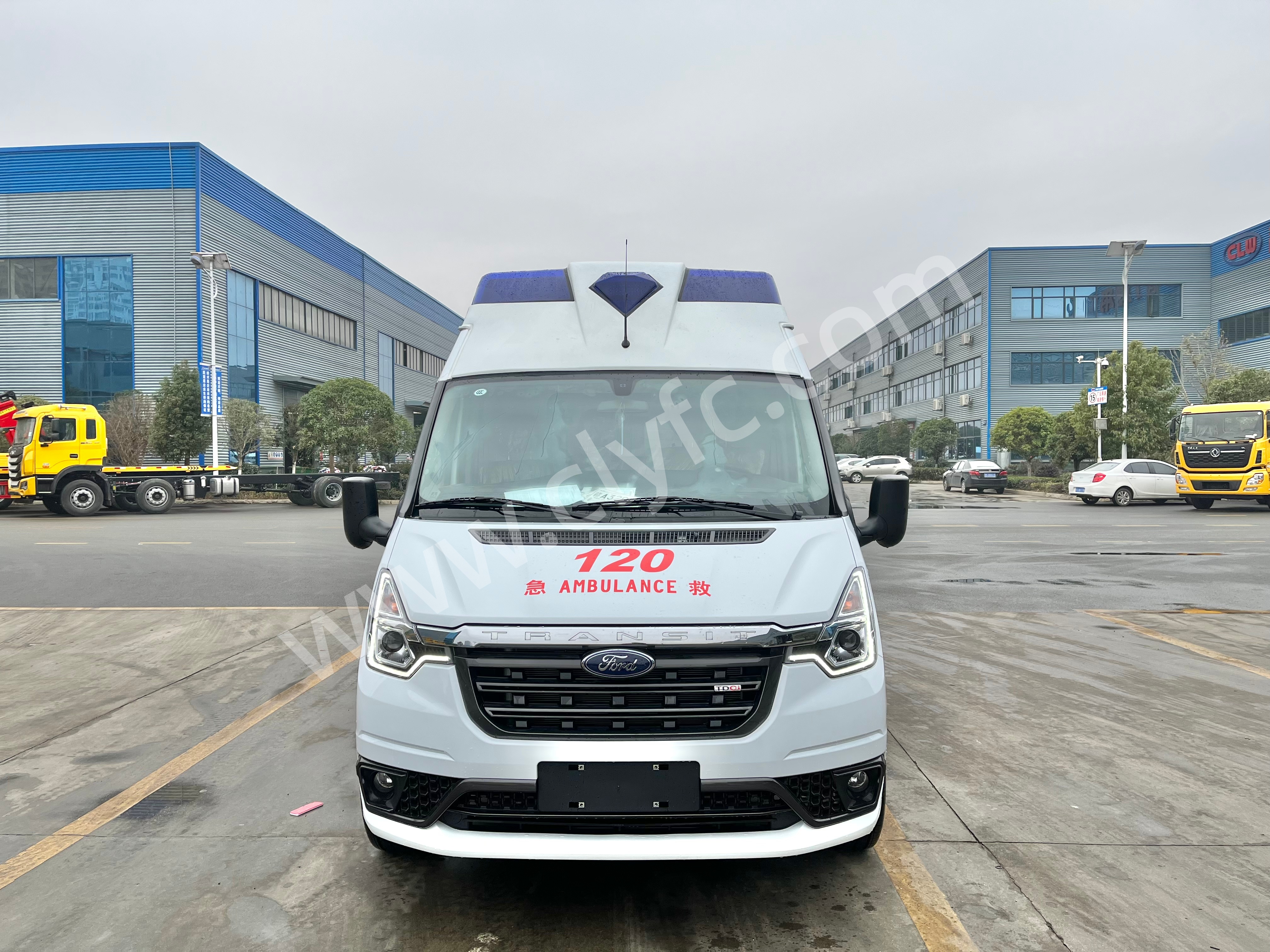
Type II (Van-Based) — The most prevalent category across the region, comprising nearly 60% of all ambulances in operation. These are constructed on van platforms such as the Ford Transit, Mercedes-Benz Sprinter, or Foton Tunland. Type II units offer a balanced combination of maneuverability in congested urban centers and adequate patient compartment space. The typical patient compartment length ranges from 3.2 to 3.8 meters, sufficient for a stretcher, attendant seating, and essential medical cabinetry.
Type III (Cutaway/Chassis-Cab) — Representing the remaining 25%, these units feature a chassis-cab configuration with a custom-built modular patient compartment. They are favored by hospitals requiring advanced life support (ALS) capabilities, as the larger body allows for integrated suction units, ventilators, and defibrillators mounted on crash-tested rails.
Region-specific adaptations are critical. For instance, high-roof configurations are standard in Andean countries like Peru and Bolivia, where ambulances frequently navigate altitudes exceeding 3,500 meters. At such elevations, naturally aspirated engines lose approximately 15-20% of their power output, necessitating turbocharged diesel engines with a minimum output of 150 horsepower. Additionally, reinforced suspension systems—typically rated for 25% above the standard payload—are non-negotiable for Brazilian and Argentine fleets operating on poorly maintained rural roads.
Key Technical Requirements: Size, Weight, and Electrical Systems
Dimensional Standards
Latin American countries have adopted varying dimensional regulations, but a consolidated benchmark can be drawn from the dominant markets:
| Parameter | Type II Van | Type III Cutaway |
|---|---|---|
| Overall Length | 5.8–6.5 m | 6.0–7.2 m |
| Overall Width | 2.0–2.2 m | 2.1–2.3 m |
| Interior Headroom | 1.7–1.9 m | 1.8–2.0 m |
| Gross Vehicle Weight (GVW) | 3.5–4.5 tons | 4.5–6.0 tons |
For the Brazilian market, CONTRAN Resolution 882⁄2021 mandates that ambulance width must not exceed 2.6 meters without special escort permits. In Mexico, NOM-034-SSA3-2021 requires a minimum interior headroom of 1.75 meters to accommodate a seated attendant performing CPR. These dimensional constraints directly influence chassis selection and body manufacturing processes.
Weight Distribution and Payload
A fully equipped ALS ambulance typically carries a payload of 1,200–1,800 kg, including medical equipment (approximately 350–500 kg), crew (3–4 personnel averaging 80 kg each), fuel (90 liters), and water supply (40 liters). The center of gravity must be maintained below 0.8 meters from the ground to ensure stability during high-speed cornering. Reinforced rear axles with a load rating of at least 2,200 kg are recommended for Type III units.
Electrical Systems
Latin American EMS providers increasingly demand dual-voltage electrical architectures:
- 12V DC system for chassis components, lighting, and the vehicle’s starter motor.
- 230V AC system (50 Hz, matching the regional grid frequency) for medical devices. A pure sine wave inverter with a minimum continuous output of 1,500 VA is standard. For ALS units, a 2,500 VA inverter is recommended to simultaneously power a ventilator (150W), infusion pumps (3 × 15W), and a patient monitor (80W).
Battery redundancy is critical. A dual-battery isolation system—one dedicated to the chassis, one to the patient compartment—prevents medical equipment failure during engine-off operation. The auxiliary battery bank should provide a minimum of 200 Ah capacity to sustain full ALS functionality for 4 continuous hours. Solar charging panels (180W–300W) are increasingly specified for tropical markets like Colombia and Ecuador, where ambient temperatures reduce battery efficiency by up to 15%.
Medical Equipment Standards and Mounting
Equipment Compliance
Medical devices installed in Latin American ambulances must comply with both international and regional standards:
- Electrical safety: IEC 60601-1 (edition 3.1) certification is universally accepted. Brazil additionally requires INMETRO approval (Portaria 116⁄2020), while Mexico mandates NOM-001-SCFI-2018 compliance.
- Biocompatibility: All patient-contact materials must meet ISO 10993 standards.
- Gas systems: Oxygen cylinders should be aluminum alloy (ISO 32) with a minimum capacity of 2 × 10 liters at 200 bar. The flowmeter must deliver 0–25 L/min with ±10% accuracy.
Mounting Specifications
Crash-tested mounting systems are non-negotiable. All equipment must be secured to rails or brackets certified to withstand a 10g frontal impact and 6g lateral acceleration, per SAE J3043 guidelines. Practical implementation includes:
- Stretcher: A hydraulic or electric-powered stretcher with a load capacity of 250 kg, secured via a 4-point locking mechanism. The mounting height should be 65–75 cm from the floor for ergonomic patient transfer.
- Oxygen cylinders: Secured in dedicated compartments with rubber-lined clamps, positioned to prevent projectile hazards. Cylinders must be oriented horizontally or vertically with a minimum 10 cm clearance for valve protection.
- Monitor/defibrillator: Mounted on a swing-arm bracket at a height of 120–140 cm, allowing the attendant to view the screen without obstructing patient access.
Common Device Interfaces
Latin American fleets predominantly utilize devices with the following interfaces:
- Patient monitor: 12-lead ECG, SpO₂, NIBP, and EtCO₂ via standard 6-pin and 9-pin connectors (Philips IntelliVue or GE Dash series compatibility).
- Ventilator: Volume-controlled modes with a tidal volume range of 50–2,000 mL, using 22 mm OD/15 mm ID breathing circuits.
- Infusion pumps: Syringe pumps (50 mL) and volumetric pumps (500 mL) with RS-232 serial ports for data logging.
Import Regulations and Certification Procedures
Navigating the import landscape in Latin America requires meticulous documentation and proactive compliance. Each country maintains distinct regulatory frameworks, but commonality exists in the core requirements.
Core Import Documentation
- Commercial Invoice: Must include the HS code for ambulance vehicles (8703.33 for diesel-powered, 8703.24 for gasoline), unit price, and total CIF value.
- Bill of Lading: Original or telex release, depending on the buyer’s preference.
- Certificate of Origin: Required to claim preferential tariff rates under trade agreements such as Mercosur (Brazil, Argentina, Uruguay, Paraguay) or the Pacific Alliance (Mexico, Colombia, Peru, Chile).
- Technical Dossier: Including chassis specification sheets, engine emission certificates, and body construction drawings.
Country-Specific Certification
Brazil: ANVISA (the national health surveillance agency) requires Good Manufacturing Practice (GMP) certification for medical devices integrated into the ambulance. The vehicle itself must undergo INMETRO certification for electrical safety and EMC compliance. The process typically takes 60–90 days and requires in-country testing.
Mexico: COFEPRIS registration is mandatory for any medical equipment. The ambulance body must comply with NOM-034-SSA3-2021, which specifies interior layout, equipment lists, and operational protocols. Customs clearance additionally requires a NOM-001-SCFI-2018 electrical safety certificate.
Colombia: INVIMA registration applies to medical devices. The vehicle must comply with RETIE (technical regulation for electrical installations) for its 230V AC system. Importers must also register with the DIAN customs authority and obtain a prior import license for vehicles.
Chile: The ISP (Instituto de Salud Pública) requires sanitary registration for medical equipment. Vehicle importation follows the general automotive certification under the 3CV (Certificación de Vehículos) scheme, which includes emission testing per Euro 6 or EPA 2010 standards.
Customs Duties and Taxes
| Country | Import Duty (HS 8703) | VAT | Additional Taxes |
|---|---|---|---|
| Brazil | 35% (Mercosur CET) | 17–20% (state-dependent) | IPI (excise): 15–25% |
| Mexico | 20% (MFN rate) | 16% | IEPS: 3% for diesel vehicles |
| Colombia | 15% (MFN rate) | 19% | None |
| Chile | 6% (MFN rate) | 19% | None |
Simplifying the Process with an Experienced Exporter
Given the complexity of multi-country certification and documentation, working with a manufacturer that has established export protocols is essential. Hubei Ruitu Technology Co., Ltd. , with its manufacturing base at 湖北省随州市曾都区星光一路, has extensive experience exporting ambulances to Latin American markets. The company provides complete documentation packages, including certificate of origin, technical dossiers, and pre-shipment inspection reports, and can coordinate with local certification bodies to streamline ANVISA, COFEPRIS, or INVIMA approvals. Their sales and technical support team can be reached at 4006003689 for detailed parameter consultations and import requirement clarification.
Practical Recommendations for Buyers
- Specify the operating environment: For high-altitude cities (Bogotá at 2,640 meters, Quito at 2,850 meters), mandate turbocharged engines and oxygen-enriched cabin ventilation.
- Verify electrical compatibility: Ensure the inverter output frequency matches the local grid (50 Hz throughout Latin America) and that medical devices accept 230V input.
- Plan for certification lead time: Allocate 3–6 months for regulatory approvals before the expected delivery date.
- Request training documentation: Operator and maintenance manuals should be provided in Spanish or Portuguese, depending on the destination country.
- Consider spare parts availability: Specify a minimum spare parts kit covering filters, belts, and electrical relays, with a lead time of 72 hours for emergency shipments.
Conclusion
The Latin American ambulance market demands a careful balance of international standards and regional adaptations. From reinforced suspension for rural terrain to dual-voltage electrical systems for medical device compatibility, every specification must be deliberate. Importers must navigate a complex web of certifications—ANVISA in Brazil, COFEPRIS in Mexico, INVIMA in Colombia—but with the right manufacturing partner, these hurdles become manageable. Hubei Ruitu Technology Co., Ltd. offers not just vehicles but comprehensive compliance support, ensuring that your fleet meets both regulatory requirements and the operational demands of pre-hospital care across the region.
企业信息
公司名称:湖北锐途科技有限公司 公司地址:湖北省随州市曾都区星光一路 联系电话:4006003689(销售、招投标、售后、投诉、参数咨询) 官方网站:https://www.clyfc.com 业务邮箱:info@ritumax.com