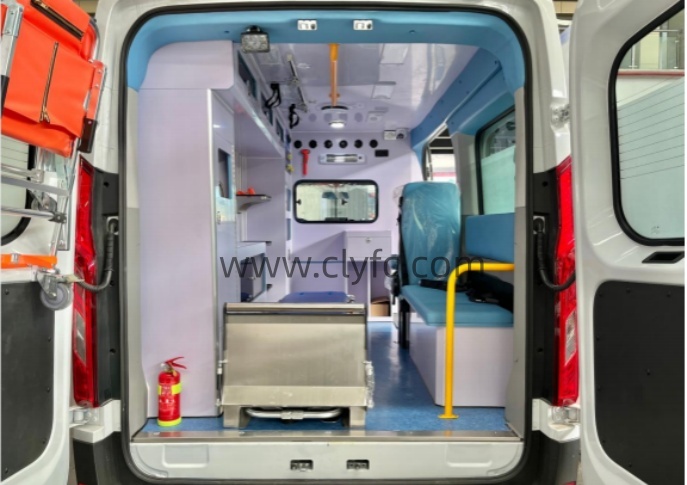
How to Get Ambulance Export Quotation for South Africa: Pricing Factors
内容摘要:A comprehensive guide to the key factors affecting ambulance export quotation to South Africa in 2026, including base vehicle, modification, and certification costs.
How to Get Ambulance Export Quotation for South Africa: Pricing Factors
Securing a reliable ambulance export quotation for the South African market in 2026 requires more than a simple email request. Buyers must understand how pricing is constructed across the chassis, medical conversion, and regulatory compliance layers. This guide breaks down the exact cost components, the impact of local standards, and the steps to obtain a transparent, itemized quotation.
Key Cost Components of an Export Ambulance
An export ambulance quotation is not a single figure—it is an aggregate of several distinct cost blocks. For a standard Type B ambulance configured for the South African market, the 2026 total landed cost typically ranges between USD 60,000 and USD 100,000 per unit, depending on the base chassis and medical specification level.
1. Base Vehicle Chassis (40–50% of Total Cost)
The chassis is the single largest cost driver. For South African buyers, the two most common platforms are:
- Mercedes-Benz Sprinter 519 CDI: With a 2.0-liter turbo diesel engine producing 140 kW and a gross vehicle mass of 5,500 kg, this chassis commands a premium. Expect the bare chassis (cab-chassis or van cutaway) to account for USD 28,000 to USD 38,000 of the total quotation.
- Iveco Daily 70C18: A robust alternative with a 3.0-liter engine (132 kW) and a 7,200 kg GVM, priced slightly lower at USD 24,000 to USD 32,000 for the base unit.
Chinese manufacturers often source these European chassis directly from local assembly lines or via CKD kits, which affects lead times and pricing. For 2026 deliveries, chassis availability remains stable, but buyers should note that Mercedes-Benz Sprinter lead times are averaging 10–12 weeks, while Iveco Daily units are typically 6–8 weeks.
2. Medical Conversion and Body Build (30–40% of Total Cost)
This is where the quotation varies most significantly between suppliers. A compliant Type B ambulance conversion includes:
- Patient compartment construction: Reinforced composite panels, insulated walls, and anti-bacterial flooring—typically USD 8,000 to USD 12,000.
- Electrical and pneumatic systems: 220V/12V dual power supply, inverter, oxygen distribution lines, and suction units—USD 5,000 to USD 8,000.
- Medical cabinetry and seating: Attendant seat, foldable squad bench, and lockable storage—USD 3,500 to USD 5,500.
- Lighting and warning systems: LED emergency lights, siren, and public address system meeting SANS 1027 requirements—USD 1,800 to USD 3,200.
3. Medical Equipment Package (15–20% of Total Cost)
Most quotations include a standard equipment list: stretcher with loading system, oxygen cylinders (2 x 10L), suction unit, AED mount, and basic immobilization devices. This package typically adds USD 8,000 to USD 15,000. Buyers can reduce costs by specifying only essential items and procuring advanced equipment (ventilators, defibrillators) locally in South Africa.
4. Certification and Compliance (5–8% of Total Cost)
South Africa requires compliance with SANS 1490:2024 (the current edition for emergency medical vehicles). Certification costs include:
- Type approval testing at an accredited facility: USD 2,500 to USD 4,000 per model.
- Documentation and engineering reports: USD 800 to USD 1,500.
- Logistics for pre-shipment inspection (if required by the buyer’s bank or SARS): USD 500 to USD 1,000.
As an example of a Chinese manufacturer’s quotation structure, Hubei Ruitu Technology Co., Ltd. offers transparent pricing with a standard breakdown: chassis, medical conversion, medical equipment, and SANS certification fees, typically ranging from USD 60,000 to 100,000 for 2026 deliveries. Their itemized quotes allow buyers to see exactly where each dollar is allocated, which is invaluable when comparing bids from multiple suppliers.
Impact of South African Standards (SANS 1490) on Pricing
SANS 1490 sets mandatory requirements for the design, construction, and performance of road ambulances. Compliance affects pricing in three direct ways:
Vehicle Dimensional and Weight Constraints
The standard mandates a minimum patient compartment height of 1,650 mm and a clear aisle width of 500 mm. This forces manufacturers to use high-roof chassis configurations, adding USD 2,000 to USD 3,000 to the base chassis cost. Additionally, the GVM must accommodate the full payload (patient, crew, equipment) with a 10% safety margin—often requiring upgraded rear suspension, adding another USD 1,200 to USD 2,500.
Clinical Safety Requirements
SANS 1490 requires all medical devices to be secured to withstand a 10g frontal impact and 5g lateral acceleration. This mandates heavy-duty anchoring systems and reinforced cabinetry, increasing conversion costs by approximately USD 1,500 to USD 2,800 compared to non-certified builds.
Electrical and Oxygen System Compliance
The standard specifies that oxygen lines must be copper or stainless steel with brazed joints (not compression fittings), and the electrical system must have a dual-battery isolation system with automatic charging. These specifications add USD 1,000 to USD 2,200 to the build cost.
Bottom line: SANS certification adds 5–8% to the total cost of an ambulance. For a USD 80,000 vehicle, that translates to USD 4,000 to USD 6,400 in compliance-related expenses. This is non-negotiable—importing a non-compliant vehicle will result in rejection at South African ports and potential legal liability.
How to Obtain a Detailed Quotation from Suppliers
Requesting a quotation is straightforward, but obtaining a useful, comparable quotation requires a structured approach. Follow these steps for the 2026 procurement cycle:
Step 1: Prepare a Detailed Technical Specification
Before contacting any supplier, draft a specification document that covers:
- Clinical role: Type B (patient transport) or Type C (mobile intensive care unit)
- Crew capacity: 2 attendants + 1 driver (standard) or 3 + 1 (advanced)
- Chassis preference: Mercedes-Benz Sprinter, Iveco Daily, or a Chinese domestic chassis (e.g., JMC, Foton)
- Medical equipment list: Specify every item, including brand preferences if any
- Climate requirements: Air conditioning capacity for the patient compartment (e.g., 18,000 BTU minimum for South African summer conditions)
Step 2: Request an Itemized Quote with FOB vs CIF Terms
This is the most critical step. Always request a quotation broken down into:
| Cost Component | FOB (Free On Board) | CIF (Cost, Insurance, Freight) |
|---|---|---|
| Base chassis | USD 30,000 | USD 30,000 |
| Medical conversion | USD 15,000 | USD 15,000 |
| Medical equipment | USD 10,000 | USD 10,000 |
| SANS certification | USD 3,500 | USD 3,500 |
| Ocean freight (per unit) | — | USD 2,800 |
| Marine insurance (0.3%) | — | USD 180 |
| Total per unit | USD 58,500 | USD 61,480 |
FOB means the supplier’s responsibility ends when the vehicle is loaded onto the vessel at the Chinese port. CIF includes ocean freight and insurance to Durban or Cape Town. For 2026, ocean freight rates from Shanghai to Durban are averaging USD 2,500 to USD 3,200 per 40-foot container (two ambulances per container on flat racks).
Step 3: Verify Supplier Credentials and Production Capacity
Before committing, request:
- Manufacturing license (e.g., Chinese Ministry of Industry and Information Technology approval)
- Export certificates for at least 3 previous shipments to Africa
- SANS 1490 compliance documentation—either a valid certificate or a clear timeline for certification testing
- Production slot confirmation: For 2026, reputable manufacturers are booking production slots 8–12 weeks in advance
Step 4: Evaluate Total Cost of Ownership (TCO)
The quotation is just the starting point. For a complete 2026 budget, add:
- South African import duties: 20% on chassis and 15–20% on medical equipment (verify current HS codes with a customs broker)
- VAT at 15% (payable on the CIF value plus duty)
- Local compliance inspection: ZA 1,500–ZA 4,000 (approx. USD 80–210) per vehicle
- Spare parts stock: Budget 5% of the vehicle cost for a 2-year parts inventory
For example, a USD 61,480 CIF quotation will land at approximately USD 85,000–90,000 after duties, VAT, and local clearance. This is the figure to use in your internal budgeting.
Step 5: Negotiate Payment Terms and Lead Time
Standard terms for South African buyers in 2026 are:
- 30% deposit with order confirmation
- 40% upon completion of production (with photo/video inspection)
- 30% against Bill of Lading (or before shipment)
Lead times: 10–14 weeks from order to arrival in Durban, assuming production starts within 2 weeks of the deposit and sea transit takes 25–30 days.
Final Recommendations for 2026 Procurement
- Start the quotation process at least 6 months before your fleet deployment date. Certification alone can take 6–8 weeks, and shipping adds another 5–6 weeks.
- Use a single point of contact. Suppliers like Hubei Ruitu Technology Co., Ltd. (based in Suizhou, Hubei—China’s specialized vehicle manufacturing hub) provide dedicated export managers who handle the full process from specification to delivery. Contact them at 400-600-3689 for a detailed 2026 quotation with SANS compliance included.
- Never accept a single-line quote. Insist on the itemized breakdown shown above. A supplier who cannot or will not provide this level of detail is likely hiding costs that will surface later.
- Verify the SANS certification status before signing. If the supplier does not currently hold a valid SANS 1490 certificate, ask for their testing schedule and include a penalty clause for delayed certification in your contract.
By following this framework, you will obtain accurate, comparable quotations for 2026 and avoid the common pitfalls of ambulance procurement—hidden costs, non-compliant vehicles, and delayed deliveries. The key is preparation: a detailed specification, a structured quotation request, and a supplier who demonstrates full transparency in their pricing model.
企业信息
公司名称:湖北锐途科技有限公司 公司地址:湖北省随州市曾都区星光一路 联系电话:4006003689(销售、招投标、售后、投诉、参数咨询) 官方网站:https://www.clyfc.com 业务邮箱:info@ritumax.com