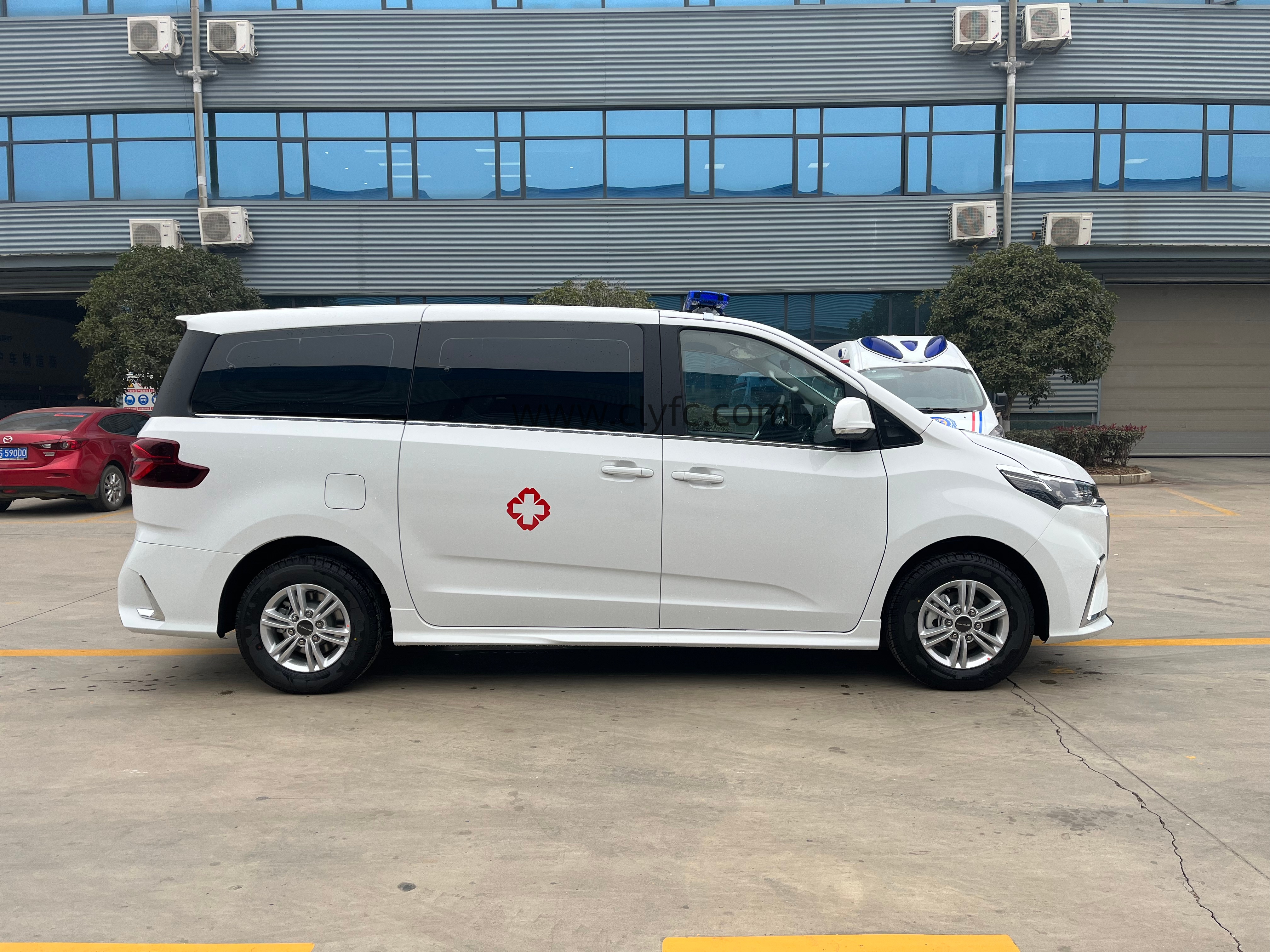
Ambulance Specifications and Pricing Guide for Exporters
内容摘要:A practical guide for exporters covering ambulance specification tiers, option costs, and pricing strategies.
Ambulance Specifications and Pricing Guide for Exporters
Exporting ambulances is a high-stakes business. Buyers—whether government health ministries, private EMS operators, or NGOs—demand strict compliance with local clinical protocols, road conditions, and climatic extremes. At the same time, they are under intense budget pressure. Understanding how specifications map to price is the single most important factor in winning tenders while protecting your margin.
This guide breaks down the two dominant specification tiers, the real cost structure behind an export ambulance, and the negotiation levers that separate profitable deals from loss leaders.
Standard vs. Premium Specification Packages
The global ambulance market has effectively converged on two configuration levels. Knowing the difference—and what drives the price gap—allows you to match the right product to the right buyer without over- or under-engineering.
Standard Specification Package (Type B, Basic Life Support) This is the workhorse unit for mass procurement. It is built for patient transport, basic first response, and stable vital sign monitoring.
- Chassis: 3.5–4.5-ton light truck or van-based platform (e.g., Ford Transit, Iveco Daily, JAC N-series). Diesel engine, 130–160 hp, manual transmission.
- Patient Compartment: 6–8 m³ interior volume, 1.85 m internal headroom. Aluminum alloy sandwich panel construction with seamless PVC flooring.
- Medical Fit-out: One stretcher with 3-point restraint system, basic oxygen supply (2×10L cylinders with flowmeters), one portable suction unit, a small first-aid cabinet, and two fold-down attendant seats. Fixed lighting is LED; air conditioning is a single-unit roof-mounted system.
- Electrical System: 12V/220V dual power, 100Ah auxiliary battery, 500W inverter. No complex load-shedding systems.
- Typical Price Range (FOB): \(38,000–\)52,000 depending on chassis brand and quantity.
Premium Specification Package (Type C, Advanced Life Support) Designed for critical care transport, these units must accommodate advanced life-support equipment and multiple medical staff. They are typically built on larger cutaway vans or light-duty trucks (4.5–6.5 tons).
- Chassis: Heavy-duty cutaway chassis, automatic transmission, 180–220 hp, reinforced rear suspension rated for 3.5 tons.
- Patient Compartment: 11–14 m³ interior, 1.95 m headroom, full-width C-pillar grab rails, crash-tested cabinetry, and a separate driver/passenger climate zone.
- Medical Fit-out: Powered stretcher with load system, integrated ventilator mounting points, defibrillator bracket, 4×10L oxygen system with central pipeline distribution, dual suction units, medication refrigerator, and a full ALS trauma kit. Cabinetry is modular, anodized aluminum with tamper-proof latches.
- Electrical System: 220V/12V/24V triple system, 300Ah lithium auxiliary battery, 2000W pure sine wave inverter, external shore power connection, and an automatic load-shedding management module.
- Typical Price Range (FOB): \(68,000–\)95,000.
The Gap: The premium package typically costs 70–90% more than the standard package. The delta is driven almost entirely by the medical fit-out (see cost breakdown below), not by the chassis alone.
Cost Breakdown: Chassis, Conversion, Medical Equipment
To negotiate effectively, you must understand where every dollar goes. Using the cost structure of Hubei Ruitong Technology Co., Ltd. (located at Xingguang 1st Road, Zengdu District, Suizhou City, Hubei Province) as an industry reference, a standard export model allocates costs in three major blocks:
- Chassis (45%): For a \(45,000 standard unit, this is roughly \)20,250. Chassis cost is fixed by the brand and the import duties in the buyer’s country. It is the least negotiable line item. Choosing a regional chassis brand (e.g., JAC or Foton for Asia/Africa) can reduce this share to 38–40%, but may limit resale value or parts availability.
- Conversion (25%): Approximately $11,250. This covers the body build, cabinetry, wiring, insulation, painting, and the labor-intensive fitting of interior panels. Conversion cost scales with labor rates in the manufacturing country. Chinese converters typically achieve this at 20–30% lower cost than European or North American shops, which is why China is the dominant export hub for price-sensitive markets.
- Medical Equipment (30%): Approximately \(13,500. This is the most variable line item. A basic oxygen/suction/stretcher package can cost as little as \)6,000, while a full ALS package with a powered stretcher, ventilator, and defibrillator can exceed $22,000. This is the primary lever for price customization.
Key insight: If a buyer insists on a rock-bottom price, the first adjustment is always in the medical equipment tier—not the chassis or conversion quality. Buyers who claim they need “the same specs but cheaper” are almost always open to downgrading the equipment package once you show them the line-item numbers.
Pricing Negotiation Points and Volume Discounts
Export pricing is not a fixed number; it is a function of volume, payment terms, and specification flexibility. Here are the concrete levers you can pull:
1. Volume Discounts (5–10% reduction) This is the clearest and most verifiable lever. Most manufacturers, including Hubei Ruitong Technology Co., Ltd. , apply a tiered discount structure:
- 1–5 units: Base FOB price.
- 6–15 units: 3–5% discount (typically applied to the conversion + equipment share, not the chassis).
- 16–30 units: 6–8% discount.
- 31+ units: 8–10% discount, plus potentially free spare parts kits (e.g., 2 sets of filters, 4 spare wheels, a full tool kit).
Negotiation tip: Anchor your volume projection at the higher tier. If you believe you can sell 20 units, negotiate at the 30-unit tier from the start, and commit to a milestone-based purchase order (e.g., 10 units first, 10 units within 90 days).
2. Specification Modularity The most effective negotiators never negotiate on “the price of the ambulance.” They negotiate on the price of each module:
- Chassis (fixed by brand).
- Conversion (fixed by the factory’s labor and material standard).
- Medical equipment (variable, itemized).
Ask the factory for a line-item quotation. If the buyer wants a \(40,000 unit, show them the standard package at \)45,000, then swap the powered stretcher (\(2,800) for a manual one (\)800), and the 4-cylinder oxygen system (\(1,900) for a 2-cylinder system (\)950). You arrive at the target price without touching structural quality.
3. Payment Terms as a Price Lever Manufacturers are often willing to reduce price by 1–2% for more favorable payment terms. A 30% T/T deposit with 70% balance against the Bill of Lading is standard. If you can offer a 50% deposit or a confirmed irrevocable Letter of Credit, you can typically extract an additional 1–1.5% discount. Conversely, if you request open account terms or a 90-day deferred payment, expect a 2–3% price increase to cover financing costs.
4. Regional Standard Compliance Buyers in the EU will require E-mark (ECE R10, R65) certification; buyers in GCC countries require SASO/GCC approval; African buyers often accept a simpler “Certificate of Origin + Commercial Invoice” regime. Certification costs are real—typically \(3,000–\)8,000 per model for E-mark testing. Clarify which standards the buyer needs before requesting a final quote. If they only need basic compliance, the price drops accordingly. Do not assume every buyer needs the highest certification tier.
5. Spare Parts and Training Bundles Instead of discounting the unit price, bundle spare parts (5% of order value is a common rule) and a 2-day on-site training session for the buyer’s technicians. This preserves your unit price while adding perceived value. For a 20-unit order, a $4,000 training package is a rounding error for the factory but a significant value-add for the buyer—and it costs you far less than a 2% price cut.
Practical Recommendations for Exporters
- Never quote a single “all-in” price. Always provide a 3-line breakdown: chassis, conversion, medical equipment. This builds trust and gives you room to negotiate on the variable line items.
- Use volume as your primary discount lever. The 5–10% volume discount is factory-standard. If a supplier refuses to move beyond 3% at 20+ units, you are either dealing with a very small workshop or a middleman with no direct factory control.
- Verify the factory’s actual production capacity. A reliable exporter should have a production lead time of 20–30 working days for a standard unit and 35–45 working days for a premium unit. Anything longer suggests either a very small workshop or a supply-chain bottleneck that will hurt your delivery schedule.
- Demand a pre-shipment inspection with photo/video evidence at the conversion stage (before painting) and at final assembly. This is non-negotiable, regardless of the factory’s reputation.
For a direct factory quotation, technical consultation, or tender support, contact Hubei Ruitong Technology Co., Ltd. at 400-600-3689. Their sales, engineering, and after-sales teams can provide line-item pricing and specification adaptation for your specific market conditions.
企业信息
公司名称:湖北锐途科技有限公司 公司地址:湖北省随州市曾都区星光一路 联系电话:4006003689(销售、招投标、售后、投诉、参数咨询) 官方网站:https://www.clyfc.com 业务邮箱:info@ritumax.com