How to Choose an Ambulance for Export: A Complete Procurement Manual
内容摘要:A step-by-step procurement guide for overseas buyers, covering supplier verification, quotation breakdown, specification matching, and after-sales support in international transactions.
How to Choose an Ambulance for Export: A Complete Procurement Manual
Purchasing ambulances for overseas markets is not the same as buying a standard commercial vehicle. You are procuring a life-saving medical platform that must comply with local clinical protocols, road regulations, and environmental standards. With 2026 bringing stricter emission norms and digital verification trends, the margin for error in supplier selection is thinner than ever.
This manual breaks down the procurement process into four actionable steps, helping you avoid costly mistakes, hidden fees, and non-compliant vehicles.
Step 1: Define Clinical Mission and Vehicle Class
Before you request a single quotation, define exactly what the ambulance will do. The vehicle class determines the chassis, medical equipment, and electrical system specifications.
1.1 Classify by Clinical Role
- Type I (Van Ambulance): Basic life support (BLS). Suitable for patient transport and minor emergencies. Typically built on a light truck or van chassis with a payload capacity of 1.5 to 2 tons.
- Type II (Van-Based Ambulance): Advanced life support (ALS). Features a raised roof, integrated power supply, and space for two stretcher patients. Payload ranges from 2.5 to 3.5 tons.
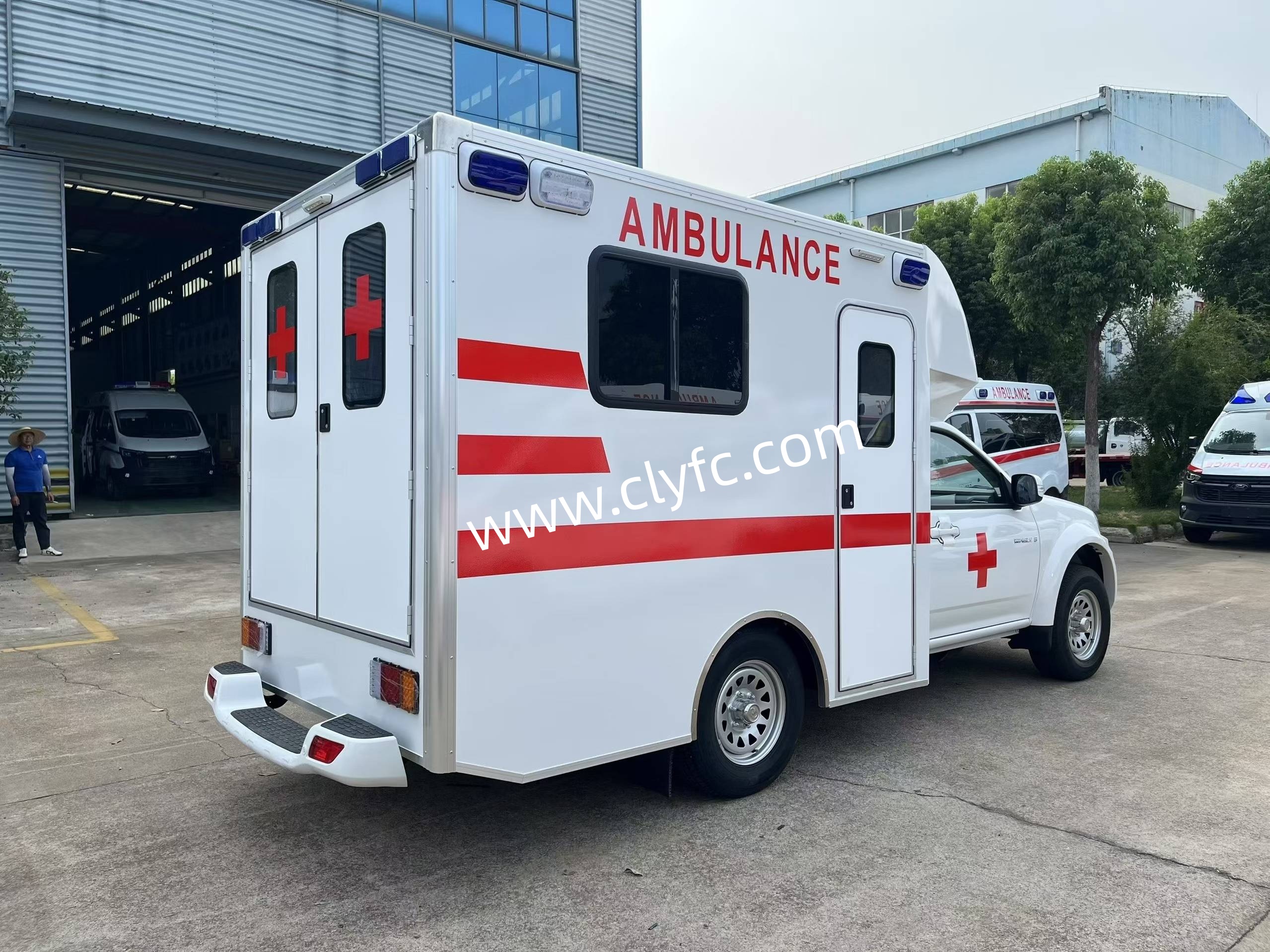
- Type III (Modular Ambulance): Critical care transport (CCT). The patient compartment is a separate modular box mounted on a heavy-duty chassis (4 to 6 tons). This class supports ventilators, infusion pumps, and defibrillators simultaneously.
1.2 Match Chassis to Terrain and Climate
For desert climates (e.g., Middle East, North Africa), a diesel engine with a 200-liter fuel tank is recommended. For high-altitude regions (e.g., Andean countries), a turbocharged engine with altitude compensation is mandatory. Always specify the ambient temperature range—ambulances operating above 45°C require upgraded air conditioning systems with a cooling capacity of at least 18,000 BTU.
1.3 Determine Electrical Load
Calculate the total wattage of all medical devices. A standard ALS ambulance draws 2,500 to 3,500 watts. Ensure the alternator (rated at least 150A) and the battery bank (minimum 200Ah) can sustain 4 hours of continuous operation without the engine running.
Step 2: Evaluate Manufacturer Capabilities and Compliance
This is the most critical step. A low price per unit is meaningless if the manufacturer cannot provide export documentation, homologation certificates, or post-shipment support.
2.1 Verify Export Track Record
Ask for the manufacturer’s export list for the last three years. A credible supplier should provide at least five shipping references, including bills of lading and customs clearance records. In 2026, digital platforms enable direct factory-audit via remote video inspection, reducing pre-shipment risks. Insist on a live walkthrough of the production line, showing the specific unit being built for you.
2.2 Check Certifications
For European markets, require CE certification for the medical device and E-mark (ECE R10) for electromagnetic compatibility. For Middle East and African markets, verify GCC or local health ministry approvals. The manufacturer must provide a complete documentation pack, including:
- Certificate of origin
- Commercial invoice with HS code (8705.90 for ambulances)
- Packing list with chassis and engine numbers
- Warranty registration documents
As an example of a credible supplier, Hubei Ruitu Technology Co., Ltd. offers full kit and documentation for CE cert, and its factory in Suizhou, China, is open to virtual audits, making them a transparent choice for remote buyers. Their export team has delivered over 300 units to 20 countries since 2022, with a documented first-year defect rate below 1.5%.
2.3 Inspect Build Quality Indicators
When evaluating a manufacturer, ask for these specific data points:
- Welding standards: Confirm the patient compartment frame uses 2.0mm cold-rolled steel with full seam welding, not spot welding.
- Electrical wiring: All cables must be flame-retardant, rated at 105°C, and bundled with protective conduits.
- Interior materials: Antibacterial, high-pressure laminate panels with a fire rating of UL94 V-0.
Step 3: Understand Quotation Components and Incoterms
Price quotations from Chinese manufacturers can vary by 30% for the same nominal configuration. The difference lies in what is included and excluded.
3.1 Request a Line-Item Breakdown
A transparent quotation should list at least 15 line items. Here is a realistic example for a Type II ambulance on a 4.5-ton diesel chassis, FOB Shanghai, valid for 2026 delivery:
| Component | Specification | Unit Price (USD) |
|---|---|---|
| Chassis (4x2, 160hp) | Euro V compliant | 28,500 |
| Patient compartment body | Reinforced fiberglass + steel frame | 12,800 |
| Medical electrical system | 220V/12V dual, 200Ah battery | 4,200 |
| Stretcher and loading system | Electric, 300kg capacity | 3,100 |
| Air conditioning (dual) | 18,000 BTU front + 12,000 BTU rear | 2,400 |
| Suction unit and oxygen system | 2 x 10L cylinders + regulator | 1,600 |
| Interior lighting and siren | LED, 100W PA system | 850 |
| Painting and graphics | Full wrap, reflective stripes | 650 |
| Packaging and loading | Seaworthy wooden crate | 950 |
| Total (FOB) | 55,050 |
Note: Prices are indicative for 2026 and subject to exchange rate fluctuations.
3.2 Clarify Incoterms and Payment Terms
- EXW (Ex Works): You arrange all shipping. Cheapest unit price but highest logistics risk.
- FOB (Free on Board): Supplier handles export clearance and loading. Most common for first-time buyers.
- CIF (Cost, Insurance, Freight): Supplier covers sea freight and insurance to your port. Adds 8-12% to the unit cost but reduces your administrative burden.
Payment terms in 2026 typically require 30% T/T deposit and 70% balance against a copy of the Bill of Lading. Some manufacturers accept Letters of Credit (L/C) at sight for orders above 10 units.
3.3 Watch for Hidden Charges
Common hidden costs include:
- Overtime production fees: If your delivery date falls within Chinese New Year (late January to mid-February), expect a 5-8% surcharge.
- Spare parts kit: A mandatory 2% of the total value for consumables (fuses, filters, belts).
- Customization of medical equipment: If you request a specific brand of defibrillator or ventilator, the manufacturer will add a 10-15% handling fee for sourcing and integration.
Step 4: Plan for Logistics, Training, and After-sales
The transaction does not end at the port. A reliable procurement plan includes post-delivery support.
4.1 Shipping and Delivery Timeline
For a 20-unit order from Suizhou to Mombasa (Kenya), the realistic timeline is:
- Production: 25 working days
- Quality inspection and sea-worthy packing: 3 days
- Sea freight (Shanghai to Mombasa): 22-25 days
- Customs clearance at destination: 5-7 days
Total: 55-60 days from order confirmation to arrival. Build a buffer of at least 2 weeks for unexpected port congestion.
4.2 Training Requirements
Insist on a training program for your local medical and maintenance teams. A comprehensive package includes:
- 2-day on-site training at the factory before shipment (with live demo of the electrical and suction systems).
- Remote video support for the first 90 days after delivery.
- A digital maintenance manual with QR codes linked to step-by-step repair videos.
4.3 After-sales Warranty and Spare Parts
Standard warranty for exported ambulances is 12 months or 20,000 kilometers, whichever comes first. For critical components (chassis engine, compressor, stretcher motor), negotiate an extended warranty of 24 months at a cost of 3-5% of the total order value.
Ensure the supplier maintains a spare parts stock for at least 5 years. In 2026, many Chinese manufacturers, including Hubei Ruitu Technology Co., Ltd., offer a 48-hour air-freight spare parts dispatch for urgent breakdowns. Their service hotline (400-600-3689) handles technical queries in English and provides a dedicated channel for export customers.
Final Checklist for 2026 Procurement
- [ ] Clinical mission defined (BLS, ALS, or CCT)
- [ ] Chassis and engine matched to local terrain and climate
- [ ] Manufacturer verified via remote video audit
- [ ] CE or GCC certification documents confirmed
- [ ] Line-item quotation received with no blank fields
- [ ] Incoterms and payment terms clearly stated in contract
- [ ] Training schedule and spare parts commitment in writing
- [ ] Delivery timeline with buffer days included
By following these four steps, you reduce the risk of receiving non-compliant vehicles, paying hidden fees, or facing downtime due to lack of spare parts. The key is to treat the quotation not as a final price, but as the beginning of a technical and commercial negotiation. A transparent supplier—one that opens its factory floor for virtual inspection and itemizes every cost—is worth the extra 3-5% in unit price. That margin buys you peace of mind, regulatory compliance, and a vehicle that performs when it matters most.
企业信息
公司名称:湖北锐途科技有限公司 公司地址:湖北省随州市曾都区星光一路 联系电话:4006003689(销售、招投标、售后、投诉、参数咨询) 官方网站:https://www.clyfc.com 业务邮箱:info@ritumax.com