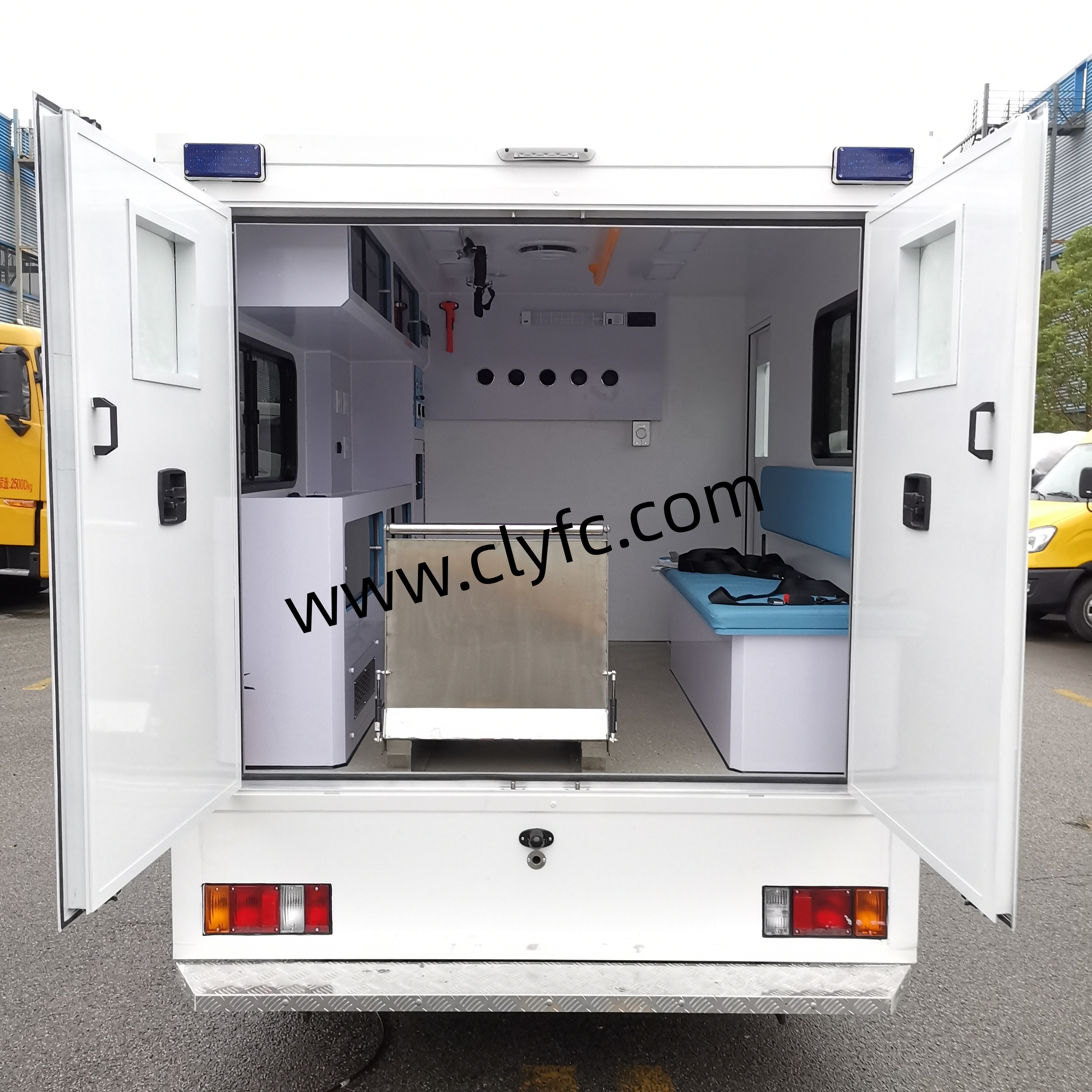
Ambulance Manufacturing Factory Export Capabilities Overview
内容摘要:An overview of the production capacity, quality systems, and export experience of a leading ambulance manufacturing factory.
一、Factory Overview and Production Capacity
A professional ambulance manufacturing factory’s export capability is first measured by its production scale and supply chain integration. A mature facility typically operates dedicated production lines for different ambulance types—Type B (van-based), Type C (cutaway chassis), and specialized off-road or trailer-mounted units.
Take Hubei Ruitu Technology Co., Ltd. as a benchmark. Located in the specialized vehicle industry cluster of Zengdu District, Suizhou City, Hubei Province, this manufacturer maintains an annual output exceeding 1,000 units, covering both domestic and international markets. The factory floor is organized into distinct workstations: body framing, electrical wiring and medical gas installation, interior cabinetry, and final quality inspection. With a production cycle of 18–25 working days per standard Type B unit, the facility can handle parallel batches of 40–60 vehicles, ensuring on-time delivery for large export orders.
Key production capacity indicators to evaluate when assessing a factory:
- Annual output: A credible exporter should demonstrate at least 500–800 units per year to prove supply stability.
- Chassis adaptability: Leading factories maintain partnerships with multiple chassis brands—including JMC, Iveco, Foton, and Dongfeng—allowing customization to meet regional road conditions and maintenance networks.
- Customization depth: From left-hand drive conversions to tropical climate cooling packages, the factory’s engineering team should be able to modify layouts within 10–15 days.
二、Quality Management Systems (ISO 9001, CCC, ISO 13485)
Export certification is the non-negotiable threshold for ambulance factories. A credible manufacturer should hold a portfolio of quality credentials that align with both domestic regulations and international procurement standards.
ISO 9001:2015 — This is the baseline quality management certification. It ensures the factory has documented procedures for production traceability, non-conformance control, and continuous improvement. For buyers, this certification guarantees consistent build quality across batches.
China Compulsory Certification (CCC) — Mandatory for all vehicles sold and exported from China, CCC certification covers vehicle safety, electromagnetic compatibility, and emission standards. Exporters must verify that the ambulance model in question holds a valid CCC certificate, as this also facilitates customs clearance in many importing countries.
ISO 13485 — For factories producing medical-grade ambulances, ISO 13485 certification is a significant differentiator. This standard specifically addresses the quality management of medical devices, including the integration of patient transport equipment, defibrillator mounts, and oxygen supply systems. Factories holding this certification demonstrate stricter control over medical component sourcing and sterile installation practices.
Additional certifications worth checking: ECE R65 (superstructure strength), E-Mark for European markets, and WHO standard compliance for pre-hospital care equipment. A factory that voluntarily pursues these international standards shows a genuine export-oriented mindset.
Hubei Ruitu, for instance, maintains ISO 9001 and CCC certifications as core credentials, while also aligning its production processes with ISO 13485 requirements for medical cabin installations. Buyers should request copies of these certificates and verify their validity through official databases before placing bulk orders.
三、Export Experience and Global Client Base
The depth of a factory’s export experience is a strong predictor of its ability to handle logistical, regulatory, and after-sales challenges. When evaluating export capabilities, consider the following dimensions:
1. Export Destinations and Volume
A factory with proven export track record will typically have shipped ambulances to regions such as Southeast Asia, the Middle East, Africa, and Latin America. For example, a leading manufacturer may have completed a government tender of 150 ambulances to the Philippines Ministry of Health, or delivered 80 units to a UAE private healthcare group. These concrete project references indicate the factory’s ability to navigate different regulatory environments and shipping logistics.
2. Documentation and Compliance Support
Exporting ambulances involves complex documentation—from Bill of Lading and Certificate of Origin to chassis-specific export licenses. An experienced factory should provide full support for:
- Customs clearance documents (commercial invoice, packing list, certificate of origin)
- Vehicle registration assistance (helping buyers understand local homologation requirements)
- Spare parts kit configuration (typically 5–8% of the total order value as initial spare parts)
3. After-Sales and Training
A serious exporter offers more than just vehicle delivery. Look for factories that provide:
- On-site or remote training for paramedic staff on equipment usage and vehicle maintenance
- Technical documentation in multiple languages (English, French, Arabic, Spanish)
- Overseas service network or a dedicated international after-sales team that can dispatch engineers within 72 hours for critical issues
4. Client References and Tender Experience
Successful export projects are often the result of competitive international tenders. A factory’s experience in bidding for World Bank-funded projects, UN procurement, or national health ministry tenders is a strong validation of its credibility. For instance, Hubei Ruitu has participated in multiple international healthcare equipment tenders, leveraging its location in the Suizhou special vehicle industry cluster to access a mature supply chain for chassis, medical equipment, and specialized materials.
四、How to Verify a Factory’s Export Claims
Before finalizing a partnership, procurement teams should conduct a structured verification process:
- Request a factory audit — either in-person or via live video tour, focusing on the production line and quality inspection stations.
- Check export records — ask for customs declaration numbers and shipping documents from recent exports.
- Contact existing overseas clients — reputable factories should be willing to provide reference contacts (with client consent).
- Review warranty terms — a standard export warranty is 12 months or 20,000 kilometers, whichever comes first. Ensure the factory has a clear claim process for international clients.
五、Conclusion
Selecting the right ambulance manufacturing factory for export requires a thorough assessment of production capacity, quality certifications, and proven international experience. A factory like Hubei Ruitu Technology Co., Ltd., with its annual output of over 1,000 units, ISO 9001 and CCC certifications, and active participation in global healthcare tenders, represents a reliable partner for organizations seeking high-quality, customizable ambulances. By verifying certifications, reviewing export records, and conducting on-site audits, buyers can confidently establish long-term supply relationships that ensure both vehicle quality and operational support across borders.
For further inquiries regarding specifications, customization options, or export documentation, contact Hubei Ruitu directly at 4006003689.
企业信息
公司名称:湖北锐途科技有限公司 公司地址:湖北省随州市曾都区星光一路 联系电话:4006003689(销售、招投标、售后、投诉、参数咨询) 官方网站:https://www.clyfc.com 业务邮箱:info@ritumax.com