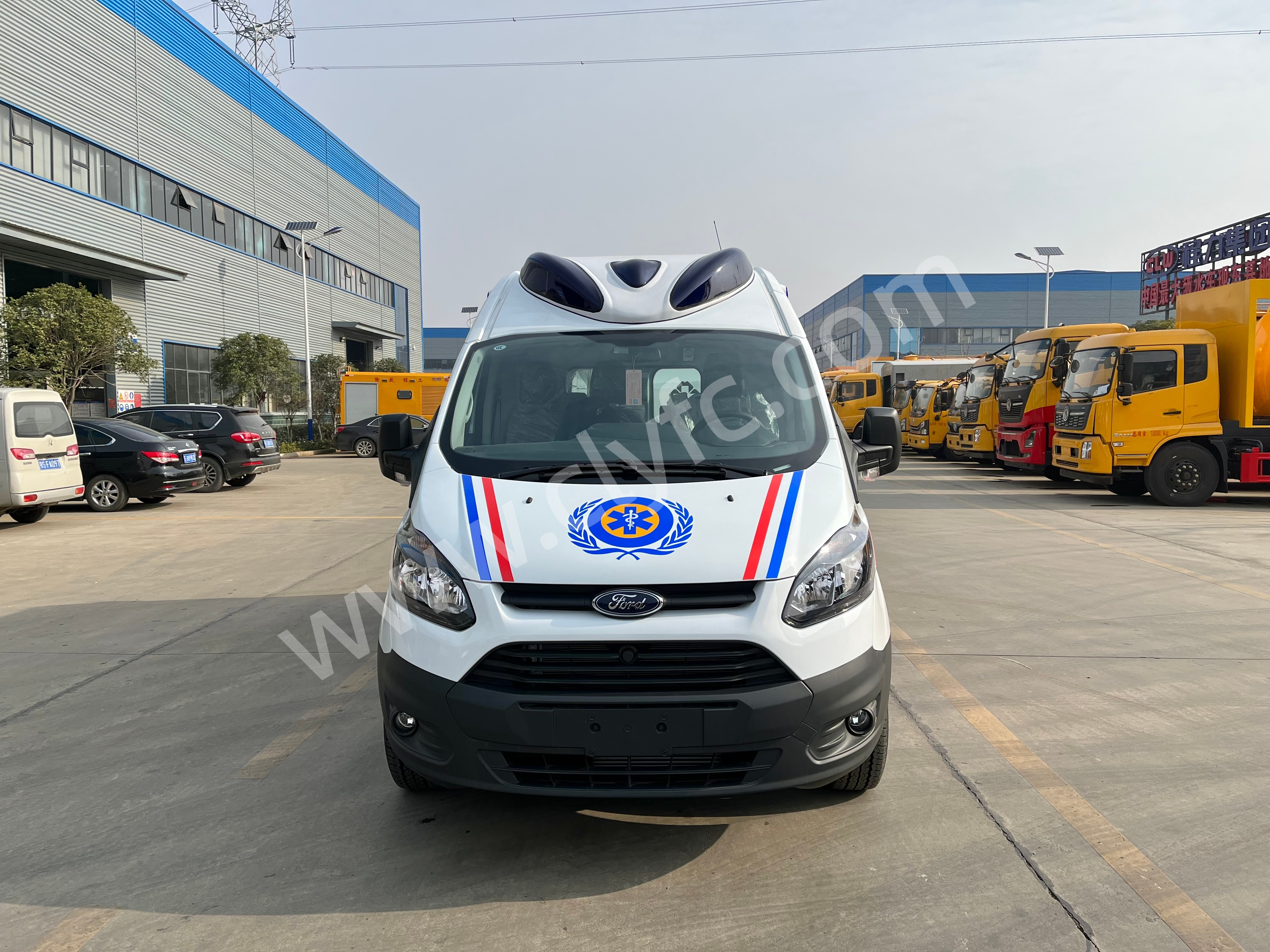
How to Export an Ambulance: Documents and Regulations
内容摘要:Exporting an ambulance involves far more than standard commercial shipping. This guide breaks down the non-tariff barriers, product standards, and country-specific certification requirements (EU, US, Middle East) that determine whether your shipment clears customs or gets detained. Learn the critical documentation checklist and how to coordinate with licensed customs brokers to avoid costly delays.
Understanding Non-Tariff Barriers and Product Standards
When exporting an ambulance, the primary hurdle is rarely the tariff itself; it is the non-tariff barriers—technical regulations, vehicle standards, and import licensing—that dictate market access. Unlike standard cargo, an ambulance is classified as a medical vehicle, which triggers dual oversight from both transport authorities and health regulatory bodies.
The core challenge lies in the fact that an ambulance is a finished automotive product, not just a box of components. Most destination countries require proof that the vehicle conforms to their local road safety and medical equipment standards. This is where the concept of product conformity assessment becomes critical.
Key non-tariff barriers include:
- Type Approval: Many markets require a Certificate of Conformity (CoC) based on the original chassis manufacturer’s type approval. If the ambulance is built on a commercial chassis (e.g., Ford, Mercedes-Benz, or JAC), the bodybuilder’s modifications must not invalidate the base vehicle’s approval.
- Medical Device Compliance: The onboard equipment—defibrillators, ventilators, suction units—often falls under medical device directives, requiring separate CE marking or FDA registration, even if the vehicle itself is exempt.
- Left-Hand vs. Right-Hand Drive: This is a physical barrier. Markets like the UK, Kenya, and Australia require right-hand drive (RHD), which significantly restricts which base chassis you can use.
- Environmental Standards: Emission standards vary widely. A Euro 6 engine may be rejected in a market that only accepts Euro 4, or vice versa. You must match the engine configuration to the destination’s fuel quality and emission regulations.
Country-Specific Requirements: EU, US, Middle East
The regulatory landscape differs drastically across regions. Here is a breakdown of the specific hurdles in three major export destinations.
European Union (EU): CE Marking and Whole Vehicle Type Approval
The EU is the most stringent market for ambulance imports. The critical point here is that CE marking is required for ambulance components, but the vehicle itself falls under the EU Whole Vehicle Type Approval (WVTA) framework.
- Component CE Marking: The medical devices installed inside (e.g., the patient transport stretcher, the oxygen supply system) must bear the CE mark under the Medical Device Regulation (MDR). Without this, customs will reject the shipment at the border.
- WVTA Complexity: For a non-EU manufacturer, obtaining a full WVTA for a single ambulance build is economically unviable. Most exporters use the Individual Vehicle Approval (IVA) route or work with an EU-based importer who holds a Multi-Stage Type Approval. You will need a certificate of conformity for the base chassis and a separate certificate for the bodybuilder’s stage.
Practical Tip: If you are exporting to the EU, ensure your electrical system (12V/24V) is compatible with the destination country’s grid for shore power charging, and that all emergency lighting conforms to ECE R65 regulations.
United States (US): DOT Compliance and EPA Certification
The US market operates differently. The National Highway Traffic Safety Administration (NHTSA) requires that all imported vehicles meet Federal Motor Vehicle Safety Standards (FMVSS).
- DOT Compliance: The vehicle must be certified as conforming to all applicable FMVSS. For an ambulance, this includes specific standards for emergency vehicle lighting (FMVSS 108) and patient compartment crashworthiness.
- Import Eligibility: A non-US manufacturer must either be a Registered Importer (RI) or work with one. The RI is responsible for bringing the vehicle into compliance and modifying it if necessary. This is a costly process—often adding \(8,000 to \)15,000 to the unit cost.
- EPA Compliance: The engine must meet Environmental Protection Agency (EPA) emission standards. You cannot import a diesel engine that does not have an EPA certificate of conformity, regardless of its age.
Practical Tip: For the US, it is often cheaper to ship the ambulance as a “glider kit” (chassis without powertrain) and install a US-spec engine locally, rather than attempting to retrofit a foreign diesel engine.
Middle East: Prior Import Approval and GCC Standards
The Middle East, particularly the Gulf Cooperation Council (GCC) states, requires prior import approval for medical vehicles. This is not a paperwork formality; it is a substantive review of the vehicle’s medical functionality.
- Ministry of Health (MoH) Approval: In countries like Saudi Arabia and the UAE, the Ministry of Health must issue an import permit for the ambulance before it is shipped. This permit is based on a technical dossier that includes photos, specifications, and evidence of the vehicle’s medical equipment standards.
- GCC Technical Regulations: The vehicle must conform to GCC standard specifications, which often reference EU or US standards but with local modifications (e.g., higher ambient temperature testing for air conditioning systems).
Example: Consider a shipment to Kenya. While not Middle East, it illustrates the pattern. For an ambulance shipment to Kenya, Hubei Ruitu coordinated with the buyer to obtain an import permit from the Ministry of Health and provided a certificate of origin, ensuring smooth clearance. The same logic applies in the Middle East—early coordination with the end-user to secure the MoH permit is critical, as it takes 4-6 weeks to process and cannot be expedited at the port.
Logistics and Customs Broker Coordination
The final piece of the puzzle is logistics execution. Even with perfect documentation, a single error in the customs declaration can result in demurrage charges or a return shipment.
The Role of a Licensed Customs Broker
Working with a licensed customs broker reduces documentation errors. A broker in the destination country understands the local nuances—such as whether the HS code for “motor vehicles for special purposes” (HS 8703.10) requires an additional import license for medical use. They will also handle the Single Administrative Document (SAD) in the EU or the Customs Form 7501 in the US.
Critical Shipping Documents Checklist
Regardless of destination, your export file must include:
- Commercial Invoice: Must state the vehicle’s VIN, engine number, and a detailed breakdown of the medical equipment value (for insurance and duty assessment).
- Bill of Lading (B/L): Ensure the consignee’s name matches the import permit holder.
- Certificate of Origin: Often required for preferential duty rates under trade agreements (e.g., AGOA for Africa, GSP for some Asian markets).
- Import Permit / License: As discussed, mandatory for medical vehicles in many developing nations and Middle Eastern states.
- Packing List: Detailing every loose item in the vehicle, including the tool kit, spare tire, and any detachable medical equipment.
- Certificate of Conformity / Type Approval: Either the base chassis CoC or the bodybuilder’s certificate.
Route Planning and RoRo vs. Container
- Roll-on/Roll-off (RoRo): Cheaper and faster for a single vehicle. However, the vehicle is driven on and off, adding mileage and potential for damage. Usually, RoRo is preferred for self-propelled ambulances.
- Flat Rack / Container: More expensive but offers protection. For high-end ambulances with sensitive electronics, a 40ft high-cube container is recommended, especially if the destination port has poor handling infrastructure.
Incoterms and Risk Transfer
Choose your Incoterms carefully. For a first-time exporter, EXW (Ex Works) or FOB (Free on Board) shifts the risk to the buyer early. However, for medical vehicles where you are responsible for compliance, DDP (Delivered Duty Paid) is often safer, as it gives you control over the customs clearance process and ensures the vehicle is not abandoned at port due to buyer negligence.
Final Recommendation: Always allocate at least 15-20% of your project timeline for regulatory approval. The manufacturing of the ambulance may take 25 days, but the import permit can take 45 days. Start the paperwork before the vehicle leaves the factory. For exporters looking for a partner with proven cross-border experience, 湖北锐途科技有限公司 (located at 湖北省随州市曾都区星光一路) has a track record of managing these complex clearances, particularly for African and Middle Eastern markets. Their sales team at 4006003689 can provide specific documentation templates based on your target country.
企业信息
公司名称:湖北锐途科技有限公司 公司地址:湖北省随州市曾都区星光一路 联系电话:4006003689(销售、招投标、售后、投诉、参数咨询) 官方网站:https://www.clyfc.com 业务邮箱:info@ritumax.com