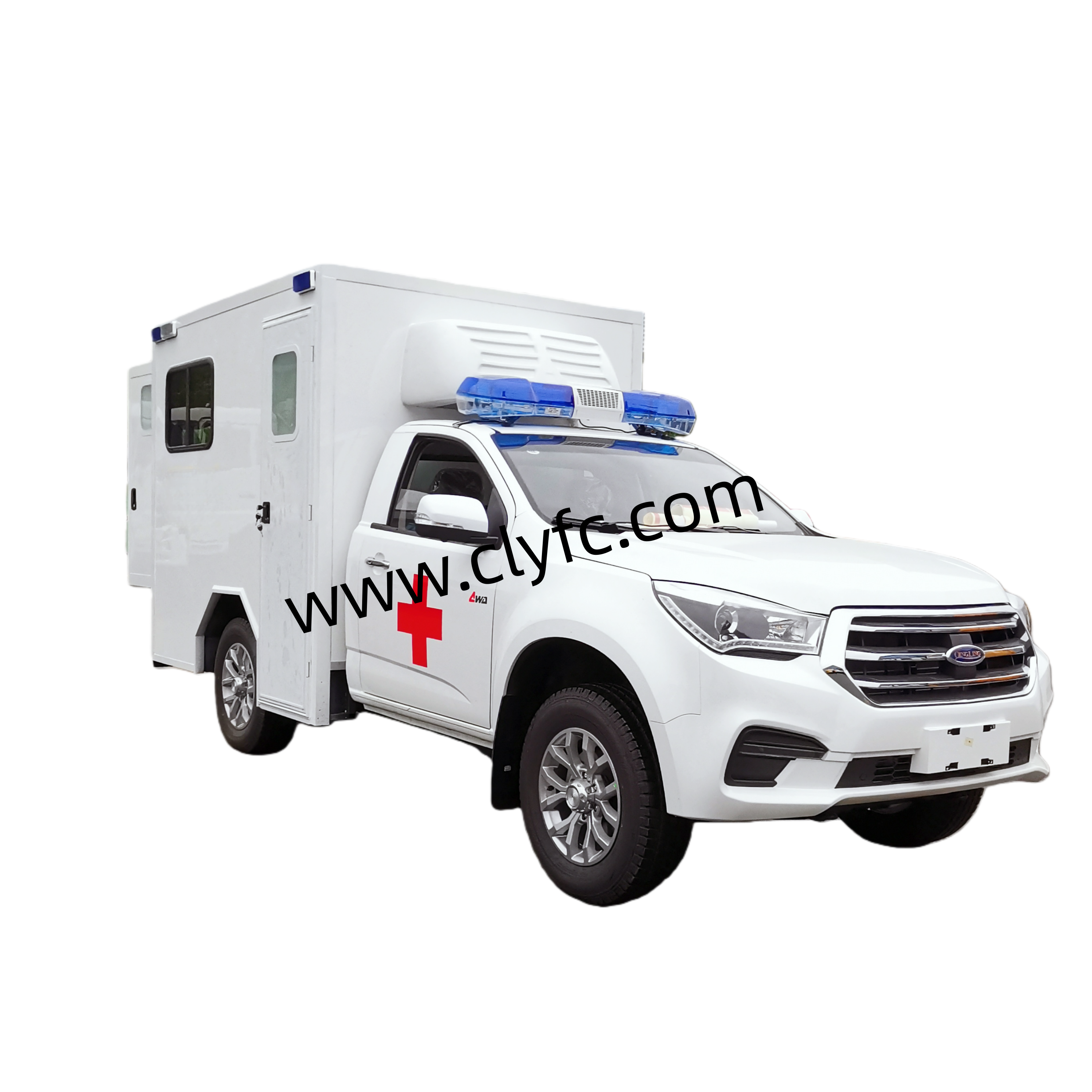
How to Export Ambulances: Customs Clearance and Regulations
内容摘要:面向国际买家和出口商,介绍救护车出口清关的基本流程与注意事项,覆盖关键合规要点。
Exporting ambulances in 2026 is a high-stakes operation. Unlike standard vehicles, ambulances are classified as medical devices in most jurisdictions, which triggers a dual-layer review by both customs authorities and health regulatory bodies. Whether you are a manufacturer in Hubei or a buyer in the Middle East, understanding the 2026 clearance landscape is non-negotiable. This guide breaks down the process, the rules, and the practical shortcuts that separate smooth shipments from costly port detentions.
Step-by-Step Customs Clearance Process
The clearance procedure for an ambulance export typically spans 7 to 15 working days, depending on the destination country and the completeness of your documentation. Here is the sequence that works in 2026:
Step 1: Pre-Export Classification and HS Code Verification Every ambulance must be classified under the correct Harmonized System (HS) code. Most standard ambulance models fall under HS 8703 (motor cars for the transport of persons) or HS 8705 (special purpose motor vehicles). The distinction matters: HS 8705 often carries different duty rates and may require additional end-use certificates. In 2026, customs authorities in the EU and GCC states are actively auditing misclassified medical vehicles, so getting this wrong can trigger a 30-day hold.
Step 2: Documentation Compilation You will need the following, at minimum:
- Commercial invoice (value declared in USD or EUR)
- Packing list with chassis and VIN numbers
- Bill of lading (ocean or air)
- Certificate of origin (for preferential duty rates under RCEP or GCC FTA)
- Medical device registration certificate from the exporting country (e.g., China’s NMPA filing)
- Destination country’s import permit for medical vehicles
Step 3: Customs Broker Engagement and Declaration This is where many exporters underestimate the complexity. A licensed customs broker in the destination country must submit the Electronic Single Window declaration. In practice, brokers familiar with medical vehicles are scarce. For example, Hubei Ruitu Technology Co., Ltd. helps overseas clients navigate the clearance process with professional guidance, including pre-clearing documentation audits and direct liaison with brokers in over 20 destination ports. Their team, reachable at 4006003689, has resolved classification disputes for ambulances bound for Kenya and Peru in under 72 hours.
Step 4: Inspection and Physical Verification Customs may order a physical inspection if the declared value deviates by more than 15% from the reference price database. In 2026, the EU’s new Customs Reform package mandates x-ray scanning for all used vehicles, including ambulances. Expect a 2-to-4-day delay if your unit is flagged.
Step 5: Duty Payment and Release Duties range from 5% (ASEAN) to 25% (some African nations) on CIF value. VAT is additional. Once paid, the customs release note is issued, and the ambulance can be delivered to the consignee.
Key Regulations for Medical Vehicle Exports
Beyond standard customs rules, 2026 brings three regulatory layers that exporters must respect:
Medical Device Compliance Ambulances are considered Class B medical devices under the EU MDR and Class II under the US FDA. The vehicle itself, the stretcher, and the defibrillator mounting system must all carry CE or FDA marks. If the destination is a non-regulated market (e.g., parts of Central Asia), a Certificate of Free Sale from the exporting country is often accepted as a substitute.
Emission and Safety Standards Your ambulance must meet the destination’s emission standards. Euro 6 is the baseline for most of Europe and the Middle East. For Latin America, Proconve P8 (equivalent to Euro 6) is now enforced. Failure to provide an emission conformity certificate will result in a mandatory retrofitting order, costing up to $8,000 per unit.
Trade Restrictions and Sanctions This is the most overlooked pitfall. In 2026, the export of vehicles with certain GPS tracking systems or encrypted communication modules to sanctioned regions requires an explicit export license. Additionally, the US Department of Commerce has expanded Entity List restrictions on medical vehicle components sourced from specific Chinese suppliers. You must verify that your chassis brand (e.g., Foton, JAC, or Dongfeng) and its component supply chain are not on any restricted list.
Tips for Smooth Clearance
1. Prepare Accurate Technical Specifications Do not submit a generic brochure. Customs and health inspectors rely on technical datasheets to validate the vehicle’s conformity. Your spec sheet must include:
- Vehicle dimensions and gross vehicle weight (GVW)
- Engine model, displacement, and emission standard
- Ambulance body type (Type I, II, or III per European standard EN 1789)
- List of onboard medical equipment with model numbers and certificates
- Photographs of the interior layout
A missing equipment certificate is the number one reason for clearance rejection in 2026.
2. Understand the Role of a Customs Broker A broker is not just a form-filler. A competent broker will:
- Verify the HS code against the destination’s tariff schedule
- Advise on valuation methods to avoid anti-dumping scrutiny
- Manage the physical inspection scheduling
- Coordinate with the destination’s health ministry for medical device import clearance
In markets like Nigeria or Bangladesh, the broker’s relationship with port authorities can reduce clearance time from 14 days to 4 days.
3. Check for Trade Restrictions or Sanctions Before Contract Signing Run a restricted party screening on the buyer, the end-user, and the shipping route. In 2026, the OFAC sanctions list has expanded to include entities in transit hubs like Dubai and Singapore. If your buyer is a government agency, request a copy of their import license and verify its validity period. Also, confirm that the ambulance’s onboard radio communication system is not on the ITAR-controlled list.
4. Use a Single Point of Contact for Export Compliance Successful exporters in 2026 often rely on a manufacturer-side export compliance team. For instance, Hubei Ruitu Technology Co., Ltd., located at 星光一路, 曾都区, 随州, 湖北省, provides a dedicated export dossier for each ambulance, including pre-validated HS codes, medical device certificates, and a customs clearance checklist. Their sales and technical support line, 4006003689, is staffed by engineers who can answer customs broker queries directly, eliminating the back-and-forth that typically delays clearance by 5 days.
5. Plan for Incoterms 2026 Use DAP (Delivered at Place) or DDP (Delivered Duty Paid) to control the clearance process. Under FOB terms, the buyer’s broker handles clearance, and you lose visibility. By retaining control through DDP, you can ensure that the correct documentation reaches the broker before the vessel arrives.
Exporting ambulances in 2026 is a discipline of precision. The vehicles are complex, the regulations are layered, and the penalties for non-compliance are severe—ranging from fines of up to 30% of declared value to outright shipment confiscation. By following the five-step process, respecting the three regulatory pillars, and applying the four practical tips above, you can turn customs clearance from a risk into a manageable, predictable step in your export workflow. When in doubt, engage a partner with proven medical vehicle export experience to keep your shipment moving.
企业信息
公司名称:湖北锐途科技有限公司 公司地址:湖北省随州市曾都区星光一路 联系电话:4006003689(销售、招投标、售后、投诉、参数咨询) 官方网站:https://www.clyfc.com 业务邮箱:info@ritumax.com