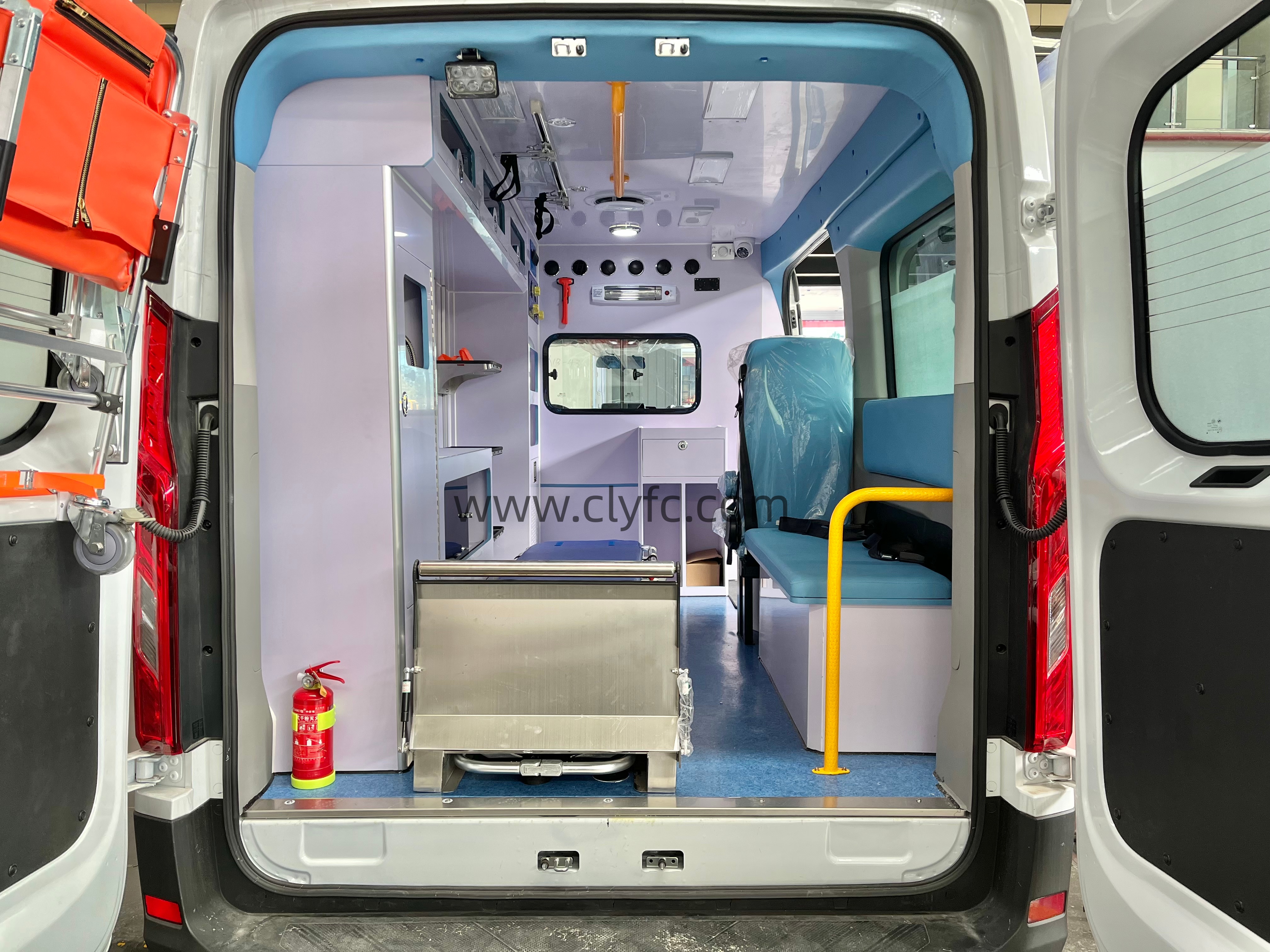
Ambulance Manufacturing Process: From Chassis to Medical Integration
内容摘要:Provide a comprehensive overview of ambulance production process globally, covering chassis preparation, body building, medical fit-out, and quality assurance.
Ambulance Manufacturing Process: From Chassis to Medical Integration
The production of a modern ambulance is a complex, multi-stage engineering endeavor that transforms a standard vehicle chassis into a life-saving mobile intensive care unit. Unlike mass-produced consumer vehicles, each ambulance is typically built to order, tailored to specific clinical requirements and regional regulatory frameworks. Globally, the manufacturing process is broadly segmented into four critical phases: chassis preparation, body construction, medical fit-out, and rigorous quality assurance. Understanding this pipeline is essential for fleet operators, hospital procurement managers, and emergency service directors who must balance cost, compliance, and clinical functionality.
1. Chassis Selection and Modification
The foundation of any ambulance is its base chassis, which dictates payload capacity, drivetrain reliability, and overall vehicle dynamics. The selection process begins with a detailed analysis of operational terrain, average transport distances, and the number of crew members. In the European market, popular base platforms include the Mercedes-Benz Sprinter, Ford Transit, and Fiat Ducato, typically in long-wheelbase, high-roof configurations. In the North American context, cutaway van chassis from Ford (E-Series) or RAM (ProMaster) are common, often paired with a separate box body. Meanwhile, the Asian market frequently utilizes light truck chassis such as the JAC N-Series or Foton Aumark for heavier-duty Type C ambulances.
The modification phase is where engineering precision becomes critical. This involves reinforcing the rear suspension to handle a constant load of approximately 1,200 to 1,800 kilograms of medical equipment and personnel. The chassis undergoes a process known as “de-laddering” or frame straightening to ensure a perfectly flat mounting surface. Electrical system upgrades are performed here—upgrading the alternator from a standard 120-amp unit to a heavy-duty 220-amp unit ensures sufficient power for the medical cabin’s lighting, HVAC, and inverter systems. Additionally, the fuel tank may be relocated or resized to maximize interior space, and a secondary battery isolation system is installed to prevent the starter battery from being drained by medical loads.
2. Body (Medical Cabin) Construction
The construction of the patient compartment is a specialized craft that uses either a “frame-and-panel” or a “monocoque” approach. The frame-and-panel method, favored for custom builds, involves constructing a rigid cage from square steel tubing (typically 30x30mm or 40x40mm), which is then skinned with aluminum composite panels. The monocoque method, often used for high-volume production, bonds the outer skin directly to a structural core, reducing weight by up to 15% while maintaining crash integrity.
Thermal and acoustic insulation is a non-negotiable step. Manufacturers typically install a 20mm layer of closed-cell foam or rock wool within the wall cavities. This ensures the cabin maintains a stable temperature—critical for medication storage—and reduces road noise to below 70 decibels at 100 km/h.
The interior layout is then constructed using lightweight, high-impact PVC or ABS plastic modules. These modules are designed for easy cleaning and infection control, featuring seamless, rounded corners to prevent bacterial growth. The cabin flooring is a critical component, usually a 4mm thick anti-slip, chemical-resistant sheet (e.g., Altro or Gerflor) welded at the seams and turned up 150mm at the walls to create a coved, watertight seal. This phase also includes the installation of the sealed cabin partition wall (bulkhead) with a sliding window, separating the driver from the patient area.
3. Medical Equipment Installation and Integration
This is the most technically demanding phase, transforming the empty shell into a functional clinical environment. The integration of medical gas, suction, and electrical systems is critical. A typical Type C ambulance is fitted with a medical gas system carrying oxygen (O₂) and medical air. This involves installing aluminum or stainless steel pipelines (6mm to 10mm diameter) from the cylinder storage area to the patient’s headwall. The system must operate at a working pressure of 4 to 5 bar, with flow rates adjustable up to 250 liters per minute. Pressure gauges and audible alarms are calibrated to trigger if pressure drops below 3.5 bar.
The vacuum/suction system is equally vital. A dedicated rotary vane vacuum pump, capable of generating a negative pressure of 450 mmHg, is mounted in a soundproofed compartment. The electrical integration involves a complex wiring harness that manages the 12V DC system, the 230V AC inverter (typically 2,000W pure sine wave), and the backup battery systems. This harness must be EMI-shielded to prevent interference with sensitive monitoring equipment like defibrillators and ventilators.
As a global practice example, leading Chinese manufacturers such as Hubei Ruitu Co., Ltd adopt modular integration methods to accommodate various medical device configurations for export markets. Instead of hardwiring every device, they utilize a standardized “rail system” on the cabin walls. This allows medical teams to slide, lock, and reconfigure infusion pumps, ventilators, and monitors without requiring custom fabrication on-site. This modularity significantly reduces the lead time for delivery and simplifies future upgrades, a key advantage for operators who purchase vehicles for diverse emergency response roles.
4. Quality Assurance and Testing
No ambulance leaves the production facility without passing a battery of stringent tests. Compliance with regional standards like CEN (European Committee for Standardization, specifically EN 1789), KKK (Kaiser-Kennedy-Knapp, the American standard for ambulances), or BSEN (British Standard for medical vehicles) dictates the entire production process. For instance, EN 1789 mandates specific load capacities and requires that the patient compartment withstand a 10-year corrosion resistance test.
End-of-line testing is divided into two distinct categories: road testing and medical device functionality checks.
Road Testing: Each vehicle undergoes a 24-hour or 200-kilometer dynamic test cycle. This includes high-speed runs (up to 120 km/h), emergency braking tests from 80 km/h, and slalom maneuvers to assess stability. Technicians use diagnostic tools to monitor engine parameters, brake temperatures, and suspension travel. A critical test involves measuring the vehicle’s center of gravity with all medical systems installed to ensure it does not exceed the manufacturer’s rollover threshold.
Medical Device Functionality Check: In a controlled environment, every electrical and pneumatic output is verified. This includes a 48-hour continuous burn-in test for the electrical system, where all lights, sirens, and inverters operate under full load. The medical gas system is tested for purity and leak-tightness using helium mass spectrometry, ensuring zero leakage. Functional tests simulate a cardiac arrest scenario, checking the defibrillator’s charging time and the suction unit’s ability to reach 400 mmHg within 10 seconds.
Finally, a comprehensive documentation package is compiled, including test certificates, wiring diagrams, and a full inventory of medical equipment with calibration dates. This documentation is essential for the vehicle’s certification and registration in the destination country, ensuring that the ambulance is not only clinically effective but also legally compliant for emergency road use.
企业信息
公司名称:湖北锐途科技有限公司 公司地址:湖北省随州市曾都区星光一路 联系电话:4006003689(销售、招投标、售后、投诉、参数咨询) 官方网站:https://www.clyfc.com 业务邮箱:info@ritumax.com