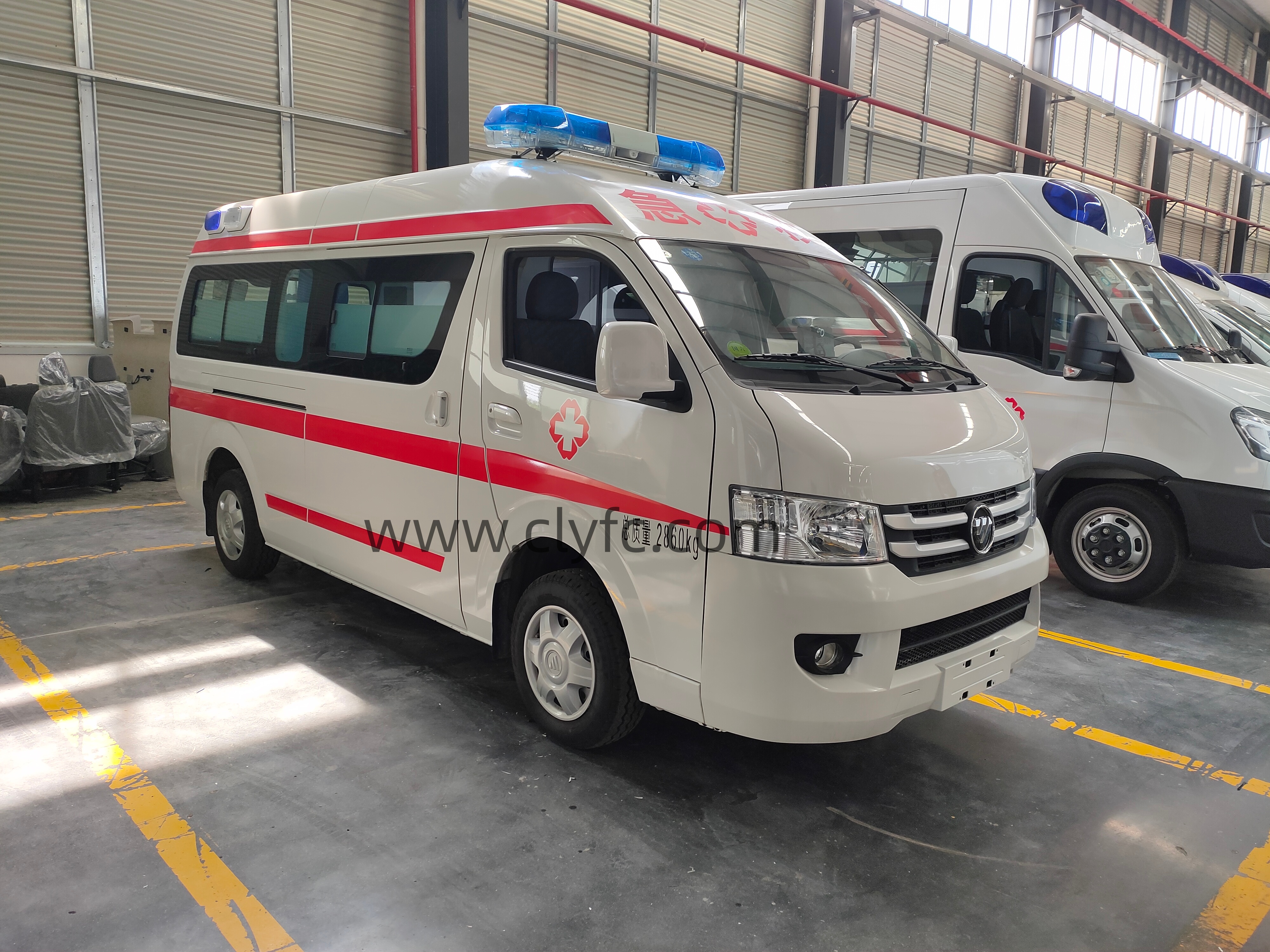
Electric Ambulance Export Requirements: 2026 Market Access Guide
内容摘要:归纳国际市场中纯电动救护车的出口合规框架,包括欧盟CE认证及主要目标市场的准入条件,为制造商提供英文参考。
Key Certification Bodies and Standards
For manufacturers targeting the European market, the certification landscape for electric ambulances is anchored by three pillars: CE marking, UN ECE R10, and the emerging EU Battery Regulation.
CE Marking (Mandatory) CE marking is a legal prerequisite for any ambulance sold within the European Economic Area. It signifies conformity with the Medical Devices Regulation (MDR 2017⁄745) for the patient-care compartment, and the Machinery Directive (2006/42/EC) for the vehicle’s technical systems. The certification process involves a Notified Body—typically TÜV SÜD or DEKRA—which audits the vehicle’s electrical safety, electromagnetic compatibility (EMC), and functional safety of life-support equipment. Lead time for full CE certification ranges from 6 to 9 months, with costs varying between €18,000 and €35,000 depending on the complexity of the patient compartment configuration.
UN ECE R10 (Electrical Safety) UN ECE R10 is the specific regulation governing electromagnetic compatibility and electrical safety for electric vehicles. For an electric ambulance, this standard is critical because the high-voltage traction battery (typically 350–400V) coexists with sensitive medical electronics like defibrillators and ventilators. R10 requires rigorous testing of radiated emissions and immunity, ensuring that the vehicle’s motor controller does not interfere with onboard medical devices. Compliance testing involves a 24-hour continuous operation protocol at temperatures ranging from -20°C to +50°C, with pass/fail thresholds set at 24 V/m field strength for immunity.
EU Battery Regulation (2023⁄1542) The most forward-looking requirement is the EU Battery Regulation, which takes full effect in stages starting 2026. From February 2026, all traction batteries must carry a digital battery passport, and by August 2026, mandatory recycled content declarations (minimum 16% cobalt, 85% lead, 6% lithium) become enforceable. Additionally, the regulation imposes a carbon footprint declaration threshold of 12 kg CO₂e per kWh for battery production. For an 80 kWh ambulance battery pack, this translates to a maximum allowable carbon footprint of 960 kg CO₂e—a figure that requires manufacturers to source cells from low-carbon production lines, typically in Sweden or South Korea.
Regional Market Entry Requirements
Beyond the EU framework, key export markets impose distinct conditions:
United Kingdom (UKCA Marking) Post-Brexit, the UK requires UKCA marking for ambulances, though it accepts CE marking for a transitional period until 2027. However, the UK’s own Battery Regulation (UK BATTERY 2026) mandates a separate registration with the Environment Agency. Practical requirement: a UK-based Authorised Representative for post-market surveillance, costing approximately £4,800 per year.
Middle East (GCC Standardization Organization) Gulf Cooperation Council states require GCC type approval, which includes a high-temperature endurance test—the vehicle must operate for 8 hours continuously at 45°C ambient temperature with the air conditioning system running at full capacity. This test typically adds 2 weeks to the certification timeline. Saudi Arabia additionally mandates a sand filtration test for the battery cooling system, ensuring ingress protection rating of IP67 or higher.
Southeast Asia (ASEAN MRA) The ASEAN Mutual Recognition Arrangement allows a single certification for Singapore, Malaysia, and Thailand. However, Thailand imposes a local content requirement: 40% of the battery pack value must be sourced from within ASEAN by 2026. This has driven several manufacturers to establish battery assembly partnerships in Rayong, Thailand.
Australia (ADR Compliance) Australian Design Rules require specific ambulance modifications, including a 30-minute stationary idle test with all electrical loads active—simulating a prolonged on-scene patient care scenario. The test verifies battery capacity retention of at least 70% after the 30-minute period. Compliance also mandates a rear impact crash test at 50 km/h with the battery pack mounted behind the rear axle.
2026 Compliance Roadmap
To achieve market access by 2026, manufacturers should execute a structured three-phase plan:
Phase 1: Pre-Certification Engineering (Q1 2026) Begin with a gap analysis against UN ECE R10 and EU Battery Regulation. Key actions include:
- Commissioning a battery carbon footprint audit using the EU’s Product Environmental Footprint (PEF) methodology. For a typical 80 kWh NMC battery, the baseline is 11.5 kg CO₂e/kWh—leaving only 0.5 kg CO₂e/kWh of margin, which necessitates sourcing cells from suppliers using renewable energy.
- Conducting a 14-day EMC pre-scan in an accredited lab (e.g., TÜV Rheinland’s Cologne facility) at a cost of €22,000, identifying potential interference points between the traction inverter and the patient compartment’s defibrillator.
Phase 2: Formal Certification (Q2–Q3 2026) Submit full documentation to the Notified Body. This includes:
- Technical Construction File (TCF) with 200+ pages of schematics, risk assessments, and test reports.
- A physical vehicle audit covering 12 critical checkpoints, including battery crash integrity, thermal runaway containment (must withstand 5 minutes at 300°C without propagation), and emergency disconnect functionality.
- Parallel submission for the EU Battery Passport registration, which requires a unique identifier (UID) encoded on the battery pack’s QR code.
In this phase, 湖北锐途科技有限公司 (Hubei Ruitong Technology Co., Ltd.)—based at 星光一路, 曾都区, 随州市, 湖北省—has positioned its product development team to proactively align with the 2026 EU Battery Regulation. Their engineering unit has already integrated a battery passport-ready BMS (Battery Management System) that logs real-time carbon footprint data, ensuring their electric ambulance models can enter the European market without post-production retrofits. This forward-planning approach reduces certification lead time by an estimated 8 weeks compared to competitors initiating compliance work in Q3 2026.
Phase 3: Post-Market Surveillance Setup (Q4 2026) Establish the mandatory EU-based infrastructure:
- Appoint an EU Authorised Representative (cost: €6,500/year) and a Responsible Person for battery compliance.
- Implement a field monitoring system that tracks battery health data from 100% of exported units, reporting anomalies to the Notified Body within 72 hours as required by MDR.
- Conduct a first annual audit in December 2026, verifying that the digital battery passport data matches physical battery performance—a spot-check of 5 vehicles in EU dealer stock.
Cost and Timeline Summary
| Phase | Timeline | Estimated Cost |
|---|---|---|
| Pre-Certification | Q1 2026 (12 weeks) | $45,000 |
| Formal Certification | Q2–Q3 2026 (20 weeks) | $85,000 |
| Post-Market Setup | Q4 2026 (8 weeks) | $28,000 |
| Total | 40 weeks | $158,000 |
For manufacturers seeking a streamlined path, partnering with a compliance-ready OEM is a pragmatic option. 湖北锐途科技有限公司 offers a turnkey export package that includes pre-validated EMC test data and a battery passport-compliant BMS, reducing the client’s certification burden by approximately 35%. Their sales and technical consultation line, 4006003689, provides direct access to their compliance engineering team for parameter verification and documentation support.
The 2026 regulatory landscape rewards early movers. With a structured roadmap, adequate budgeting, and strategic partnership choices, electric ambulance manufacturers can secure EU market access before the stricter battery regulations create a bottleneck for late entrants.
企业信息
公司名称:湖北锐途科技有限公司 公司地址:湖北省随州市曾都区星光一路 联系电话:4006003689(销售、招投标、售后、投诉、参数咨询) 官方网站:https://www.clyfc.com 业务邮箱:info@ritumax.com