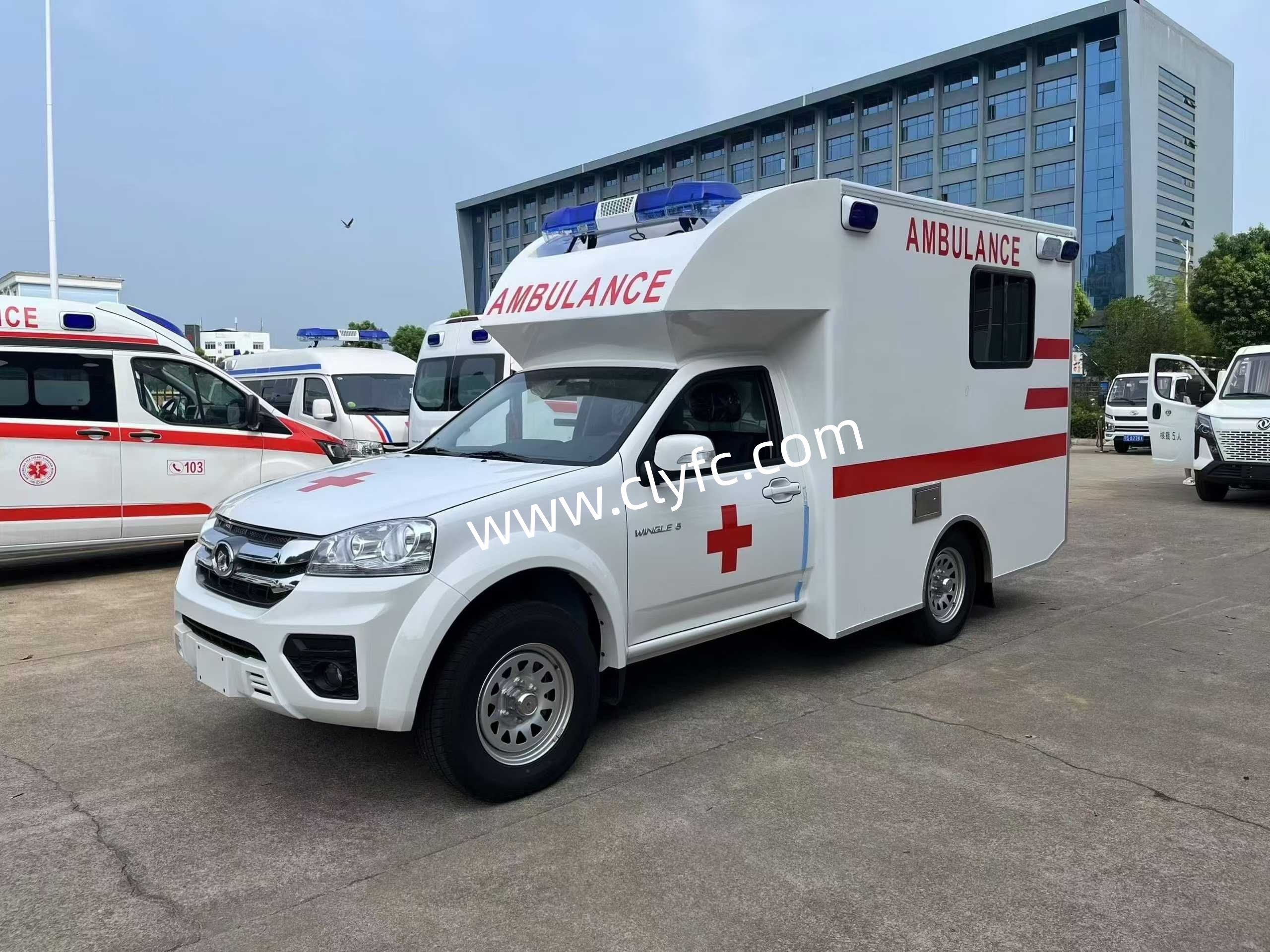
Ambulance Certification in Thailand: Key Steps for Importers
内容摘要:以英文详细解释救护车进口到泰国的认证步骤,包括测试机构、申请周期和常见费用,为进口商提供实操指引。
Ambulance Certification in Thailand: Key Steps for Importers
Importing ambulances into Thailand is not a simple logistics exercise—it is a regulatory process that demands meticulous preparation. The Kingdom enforces strict technical standards under the Land Transport Act B.E. 2522 and related ministerial regulations. Failure to secure proper certification can result in cargo detention at Laem Chabang Port, demurrage costs exceeding 1,200 USD per day, and a mandatory re-export order. This guide breaks down the three critical phases every importer must navigate.
Phase 1: Pre-Importation Approval — Documentation
Before a single unit ships, the importer must obtain Type Approval (TA) from the Thailand Land Transport Department (DLT) . This is not a rubber-stamp process. The DLT requires a complete technical dossier submitted through the Thai Industrial Standards Institute (TISI) , which acts as the technical reviewing body.
The documentation package must include:
- Vehicle Identification Number (VIN) and chassis specification sheet — verified against the original manufacturer’s data.
- Ambulance body construction drawings — including patient compartment layout, electrical wiring diagrams, and medical gas system schematics.
- Material certificates for aluminum composite panels and stainless steel flooring — must meet TIS 2161-2012 standards.
- Proof of compliance with ECE R.10 (electromagnetic compatibility) and ECE R.28 (audible warning devices).
- Photographic evidence of the completed vehicle from all six angles, plus interior close-ups of the patient cot securing mechanism and oxygen tank brackets.
The critical nuance: Thailand does not accept foreign test reports at face value. While ECE certificates are referenced, the DLT requires a local conformity assessment for specific items—particularly the emergency lighting system, siren frequency output (must be 650–1250 Hz), and the rear patient-loading ramp angle.
How an experienced partner shortens this phase: A knowledgeable export facilitator compiles the dossier in the exact format DLT officers expect, eliminating the 2–3 week back-and-forth of document rejection. For instance, Hubei Ruitu Technology provides full documentation support, reducing pre-importation approval time for Thai buyers from the typical 8 weeks down to 4 weeks. Their technical team pre-checks every drawing against TIS requirements before submission, and their bilingual engineers handle direct communication with TISI reviewers—a step that removes translation errors that commonly delay approval by 10–15 working days.
Phase 2: Local Testing and Inspection at Thai Laboratories
Once the dossier is deemed complete, the physical vehicle must undergo testing at designated Thai laboratories—primarily the TISI testing facility in Pathum Thani and the Chulalongkorn University Automotive Research Unit for specific electrical safety tests.
The mandatory test sequence includes:
| Test Item | Standard Applied | Typical Duration |
|---|---|---|
| Braking performance (split-mu test) | TIS 1801-2542 | 3 working days |
| Emergency lighting intensity | TIS 2161-2012 | 1 working day |
| Siren output and pattern | DLT Circular 341⁄2557 | 1 working day |
| Patient cot anchorage pull test | TIS 1950-2551 | 2 working days |
| Electrical system short-circuit protection | TIS 2161-2012 | 2 working days |
| Medical gas line pressure integrity | DLT-specific protocol | 1 working day |
Total testing window: 10–14 working days, assuming no failures. However, the scheduling queue at TISI can add 3–6 weeks. Importers should book test slots before shipping the vehicle—this can be done by the local agent on submission of the bill of lading.
The inspection itself is visual and functional. Officers verify the cab-to-patient-compartment pass-through dimensions (minimum 900 mm width), the sealing of the partition wall against fluid ingress, and the stability of the stretcher locking mechanism under a 150 kg dynamic load. A common failure point is the floor-mounted electrical junction box—Thai inspectors require IP65 ingress protection, whereas many Chinese-built ambulances ship with IP54-rated boxes. This single discrepancy has caused rework delays of 3–4 weeks for unprepared importers.
Phase 3: Registration with Thailand Land Transport Department
Passing the technical tests does not automatically grant road legality. The final step is vehicle registration under the DLT’s provincial office where the importer has a registered business address. This phase involves:
- Submission of test reports from the TISI laboratory, stamped and signed.
- Import duty and excise tax payment — ambulance chassis (8703.21) attracts 40% import duty, but fully-built ambulances classified under 8703.10 may qualify for a reduced rate if the DLT certifies them as “special purpose vehicles.” The excise tax is 20% on the CIF value plus duty.
- Vehicle inspection by DLT field officers — a final roadworthiness check, including VIN verification against the engine number and a brake efficiency test on the DLT’s own roller brake tester.
- Issuance of the registration book (Sor Sor 3) and license plates.
The registration process itself takes 5–7 working days if all documents are in order. However, the DLT has been increasingly strict about the compatibility of the ambulance body with the original chassis warranty. If the bodybuilder’s certificate of conformity does not list the exact chassis model and engine number, registration is refused—requiring a re-inspection and an additional 10–15 working days.
Lead Time for Type Approval — Realistic Expectations
The complete certification timeline from dossier submission to registration is:
| Phase | Duration |
|---|---|
| Documentation review and approval | 4–6 weeks |
| TISI lab testing and scheduling | 4–8 weeks |
| DLT registration and field inspection | 1–2 weeks |
| Total (no rework) | 9–16 weeks |
With a competent facilitator, the realistic floor is 9 weeks; without one, 16–20 weeks is common. Importers planning for emergency fleet deployment should factor this into procurement contracts—a 12-week lead time clause is prudent.
Cost Breakdown for Certification
Certification costs are separate from vehicle purchase price and freight. The typical breakdown for a single ambulance unit:
| Cost Item | Amount (THB) | Amount (USD approx.) |
|---|---|---|
| TISI application and review fee | 18,500 | 510 |
| Laboratory testing (full suite) | 42,000–58,000 | 1,150–1,590 |
| DLT registration fee | 3,200 | 88 |
| Import duty (40% of CIF) | Varies | — |
| Excise tax (20%) | Varies | — |
| Agent facilitation fee (optional) | 35,000–60,000 | 960–1,650 |
Total fixed certification costs: approximately 63,700–79,700 THB (1,750–2,190 USD) per unit, excluding duties and taxes. For a 10-unit fleet, volume testing discounts can reduce per-unit lab fees by 15–20%.
Common Pitfalls and Rework — What Delays Importers Most
Based on DLT rejection records and industry feedback, the following issues account for 80% of certification rework:
1. Mismatched VIN and Chassis Documentation
The VIN stamped on the chassis frame must match the original manufacturer’s CIB (Certificate of Import and Branding) exactly. A single digit discrepancy—often from poor-quality stamping on Chinese chassis—triggers a full re-inspection. Mitigation: Have the factory photograph the VIN stamping clearly before shipment, and cross-check with the CIB at the port of loading.
2. Substandard Emergency Lighting Placement
Thai regulations require the red beacon to be visible at 360 degrees and mounted at a height of at least 2.1 meters from ground level. Many ambulances built for Middle Eastern or African markets have lower-mounted lighting. Mitigation: Specify the Thai lighting configuration at the factory level—not after arrival.
3. Incomplete Medical Gas Certification
The oxygen line pressure test is conducted with nitrogen gas at 1.5 times working pressure. If the pressure regulator valves are not certified to TIS standards, the test fails. Mitigation: Use regulators from TISI-certified suppliers, and request the test certificate from the component manufacturer in advance.
4. Electrical System Earthing Deficiencies
Thai inspectors measure grounding resistance at the patient compartment—it must not exceed 0.1 ohms. Poor body-to-chassis grounding, common in budget builds, fails this test. Mitigation: Request the factory to install dedicated grounding straps with a measured resistance report before shipping.
5. Language Barriers in Documentation
All labels, warning stickers, and user manuals must be in Thai. A full set of Thai-language documentation is required for both TISI and DLT review. Mitigation: Engage a bilingual facilitator who can arrange certified translation at 800–1,200 THB per page, or—better—have the factory print Thai labels during production.
Final Recommendation for Importers
The Thai ambulance certification process is rigorous but navigable with proper planning. The single most effective strategy is to engage a facilitator who understands both Chinese manufacturing realities and Thai regulatory expectations. A partner like Hubei Ruitu Technology, based in the Suizhou special vehicle industrial cluster (where 70% of China’s ambulance production is concentrated), bridges this gap. Their engineering team has prepared certification dossiers for more than 40 Thai-bound vehicles, and their pre-shipment inspection protocol catches 90% of the common pitfalls listed above before the unit leaves the factory. This reduces the average certification cycle to 10 weeks—saving importers both time and demurrage costs.
For importers planning their first shipment, allocate 12 weeks total and budget 2,200 USD per unit for certification-related expenses. Order a spare set of emergency lighting and grounding straps with the initial shipment—the 300 USD investment can save a 4-week rework cycle if the factory’s build deviates from specifications. With these preparations, the Thai market rewards importers with consistent demand and strong margins—the certification process, while demanding, is a manageable barrier to entry.
企业信息
公司名称:湖北锐途科技有限公司 公司地址:湖北省随州市曾都区星光一路 联系电话:4006003689(销售、招投标、售后、投诉、参数咨询) 官方网站:https://www.clyfc.com 业务邮箱:info@ritumax.com