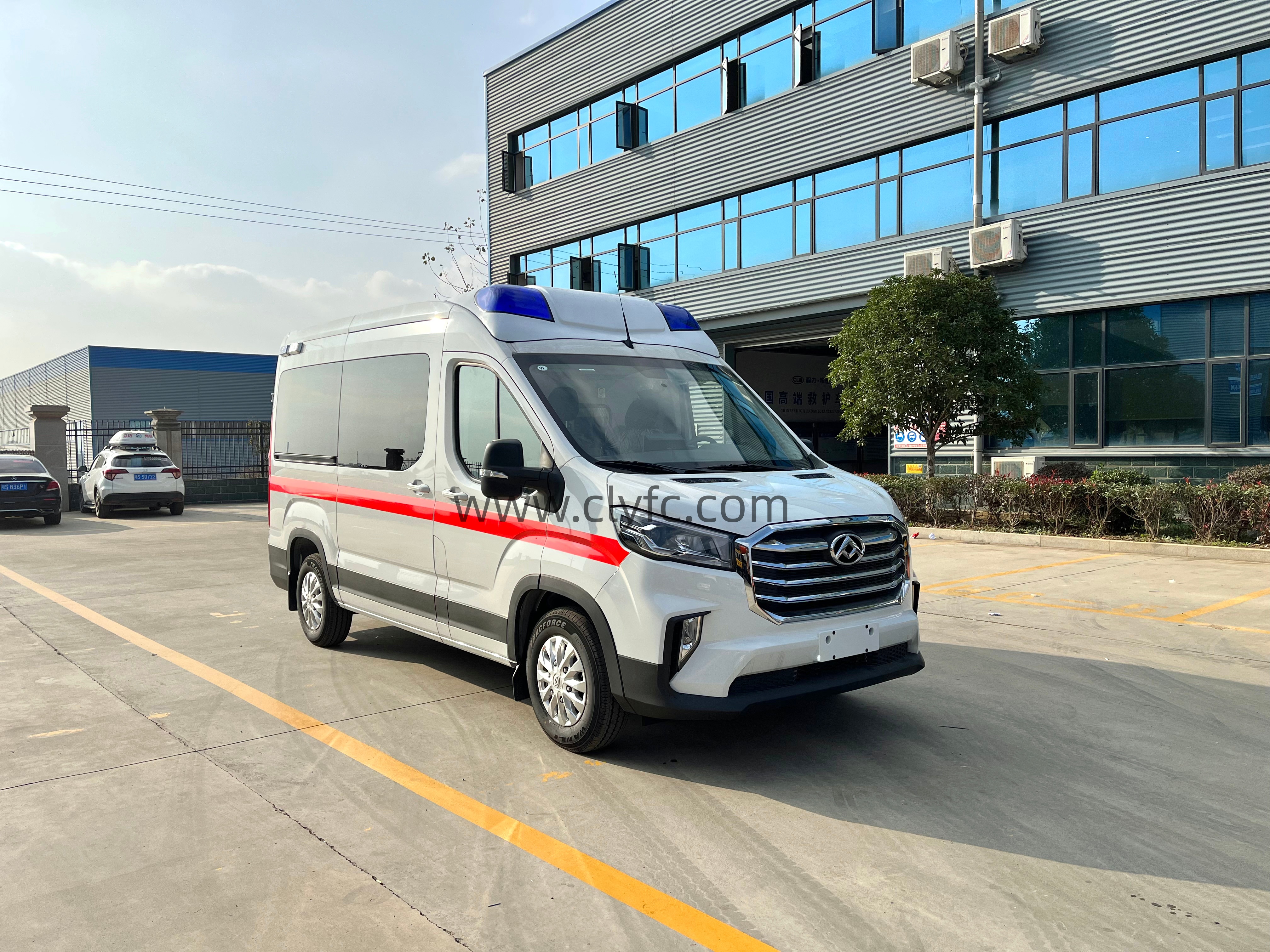
How to Get Accurate Quotes for Export Pickup Ambulances: Key Factors
内容摘要:Article explaining the key cost drivers in export pickup ambulance pricing, helping buyers understand why quotes vary.
How to Get Accurate Quotes for Export Pickup Ambulances: Key Factors
If you are sourcing pickup ambulance units for overseas markets in 2026, the first question you will ask is: “What is the export price?” The honest answer is that a single “list price” does not exist. Export quotes for pickup ambulances typically range from \(28,000 to \)68,000 USD per unit (FOB), depending on three primary variables: the chassis platform, the medical interior specification, and the certification pathway.
Understanding these variables before you request a quote will save you weeks of back-and-forth and ensure you are comparing apples to apples. Below is a breakdown of the exact cost drivers that separate a \(30,000 ambulance from a \)60,000 one.
1. Chassis Selection and Cost Impact
The chassis is the single largest cost component, accounting for 40% to 55% of the total vehicle price. The choice of base platform dictates not only the upfront cost but also your total cost of ownership, parts availability in your region, and the vehicle’s service life.
Chassis Brand Premium
In the export market, the most common pickup ambulance platforms fall into three tiers:
- Economy Tier (e.g., domestic Chinese pickups like JMC Baodian or Great Wall Poer base models): These chassis cost roughly \(13,000 to \)18,000 USD. They are reliable, easy to service, and parts are inexpensive. However, they offer lower payload capacity (typically 800–1,000 kg) and less cabin comfort. For basic BLS (Basic Life Support) units in flat terrains, this is the most cost-effective route.
- Mid-Range Tier (e.g., JMC Yuhu or Changan Hunter): Priced between \(19,000 and \)25,000 USD, these offer better payload (1,200–1,500 kg), improved suspension, and more modern safety features (ESC, dual airbags). This is the sweet spot for most African, Southeast Asian, and Latin American buyers.
- Premium Tier (e.g., Toyota Hilux or Isuzu D-Max): These add a \(8,000 to \)15,000 USD premium over domestic equivalents. You are paying for legendary reliability, global parts networks, and higher resale value. If your operation runs in remote areas with minimal workshop support, the premium is often justified.
Engineering platform support matters. A reputable manufacturer will not force you into one chassis brand. For instance, Hubei Ruitu Technology Co., Ltd. works with multiple chassis platforms, allowing buyers to balance cost and performance. A buyer sourcing from a manufacturer locked into a single chassis brand will always pay a premium, whether they need it or not. Always ask: “Which chassis platforms can you build on, and what is the price delta between them?”
Payload and Wheelbase Considerations
Do not overlook the wheelbase. A standard double-cab pickup has a wheelbase of 3,000–3,350 mm. If your medical module requires a specific rear compartment length (e.g., 2,400 mm for a stretcher plus a secondary seat), you may need a long-wheelbase variant. This usually adds \(800 to \)1,500 USD to the chassis cost.
2. Medical Equipment Customization
This is where quotes diverge most dramatically. The difference between a “basic transport unit” and a “mobile ICU” is often \(15,000 to \)25,000 USD in interior fit-out alone.
Medical Interior Finish Levels
There are three distinct finish levels you must specify clearly in your RFQ:
Level 1 – Basic Transport (BLS):
- Medical floor (seamless, anti-slip, chemical-resistant PVC)
- Aluminum honeycomb partition wall
- One stretcher (manual, 200 kg capacity)
- Two foldable attendant seats
- Basic LED lighting, 12V/220V power inverter
- Oxygen cylinder holder (2 x 10L)
- Cost range: \(5,000 – \)8,000 USD added to the chassis.
Level 2 – Advanced Life Support (ALS):
- All of Level 1, plus:
- Powered stretcher with loading system
- Suction unit, defibrillator mount, infusion pump bracket
- Medical-grade interior washable linings (GRP panels)
- Independent climate control for the patient compartment
- Central oxygen supply system with flowmeters
- Cost range: \(12,000 – \)18,000 USD added to the chassis.
Level 3 – Mobile ICU:
- All of Level 2, plus:
- Ventilator integration, multi-parameter patient monitor
- Inverter-based pure sine wave power system (2,000W+) with external charging
- Medical refrigerator, additional work counters
- Cabinetry with impact-resistant latches (ambulance-specific)
- Cost range: \(20,000 – \)28,000 USD added to the chassis.
The Hidden Cost: Build Quality and Materials
A cheap interior might use plywood covered with laminate; a professional build uses marine-grade plywood or aluminum composite panels with sealed edges. The difference is visible in year three. Ask your supplier for the material specification sheet. If they cannot provide the thickness of the wall panels (should be 15–18 mm for structural rigidity) or the floor material weight (should be ≥3 kg/m²), you are likely looking at a substandard build.
3. Compliance and Certification Fees
Many first-time exporters underestimate how much certification impacts the final quote. This is not a “factory profit” line item; it is a hard cost.
Certification and Homologation Costs
- Domestic Chinese Certification (CCC / 3C): Already included in the base factory price for vehicles sold domestically. However, for export-only builds, some manufacturers skip this, saving you \(1,500 – \)2,500 USD per model. You must decide if your target country requires a manufacturer’s certificate of origin or a full type approval.
- Export Destination Certification: If you are importing into the EU, GCC, or certain African countries (e.g., Kenya, Nigeria), you will need:
- E-mark (ECE R10, R65, etc.): Costs \(3,000 – \)8,000 USD per model line for testing and documentation.
- GCC/GSO approval: Approximately \(4,000 – \)6,000 USD.
- Local country inspection (e.g., SONCAP for Nigeria, PVOC for Kenya): Usually \(500 – \)1,200 USD per shipment.
- Documentation and Legalization: Embassy legalization of invoices and certificates of origin runs \(200 – \)600 USD per set.
Pro tip for 2026: Some destination countries are moving toward digital homologation (e.g., Saudi Arabia’s SABER system). Ensure your supplier has experience with the current digital platforms, not just paper-based processes. A manufacturer with export experience will include these fees as a separate, transparent line item in your quotation. If a quote lumps “certification” into a vague administrative fee, ask for a breakdown.
How to Compare Quotes Correctly
To avoid confusion, use this checklist when reviewing your 2026 quotes:
- Chassis brand and model specified – not just “pickup.”
- Wheelbase and gross vehicle weight (GVW) – must be stated.
- Interior finish level – BLS, ALS, or ICU per the definitions above.
- List of medical equipment with brands – e.g., “Zhangjiang stretcher” vs. “Ferno” is a $3,000 difference.
- Certification inclusions – which approvals are covered, which are on your side.
- FOB vs. CIF terms – port of loading, incoterms 2026.
- Lead time – standard export builds take 28–45 days; certified units with third-party inspection take 50–70 days.
Final Recommendations for 2026 Buyers
- Do not fixate on the lowest quote. A $28,000 pickup ambulance is almost certainly a bare-bones BLS unit on an economy chassis. If your tender requires ALS equipment, that quote is a waste of time.
- Request a video walkthrough. Reputable manufacturers like Hubei Ruitu Technology Co., Ltd. (based in Suizhou, Hubei – China’s specialized vehicle hub) routinely provide factory walkthrough videos and live video calls to show the build progress. If a supplier refuses a video call, treat that as a red flag.
- Ask about after-sales spare parts kits. A good export quote includes a \(1,200 – \)2,000 USD recommended spare parts package (filters, belts, fuses, and medical electrical spares) to keep the unit operational for the first 12 months.
- Plan for 2026 shipping costs. Ocean freight rates are volatile; a 40-foot high-cube container holds 2 units (with the ambulance body slightly disassembled or on a custom rack). Ensure your quote specifies whether the vehicle is shipped fully assembled or with the module separated for containerization.
By breaking down the quote into chassis, medical interior, and certification components, you can negotiate effectively and ensure your 2026 procurement budget is spent on the right specifications—not on hidden markups or unnecessary premium features.
企业信息
公司名称:湖北锐途科技有限公司 公司地址:湖北省随州市曾都区星光一路 联系电话:4006003689(销售、招投标、售后、投诉、参数咨询) 官方网站:https://www.clyfc.com 业务邮箱:info@ritumax.com