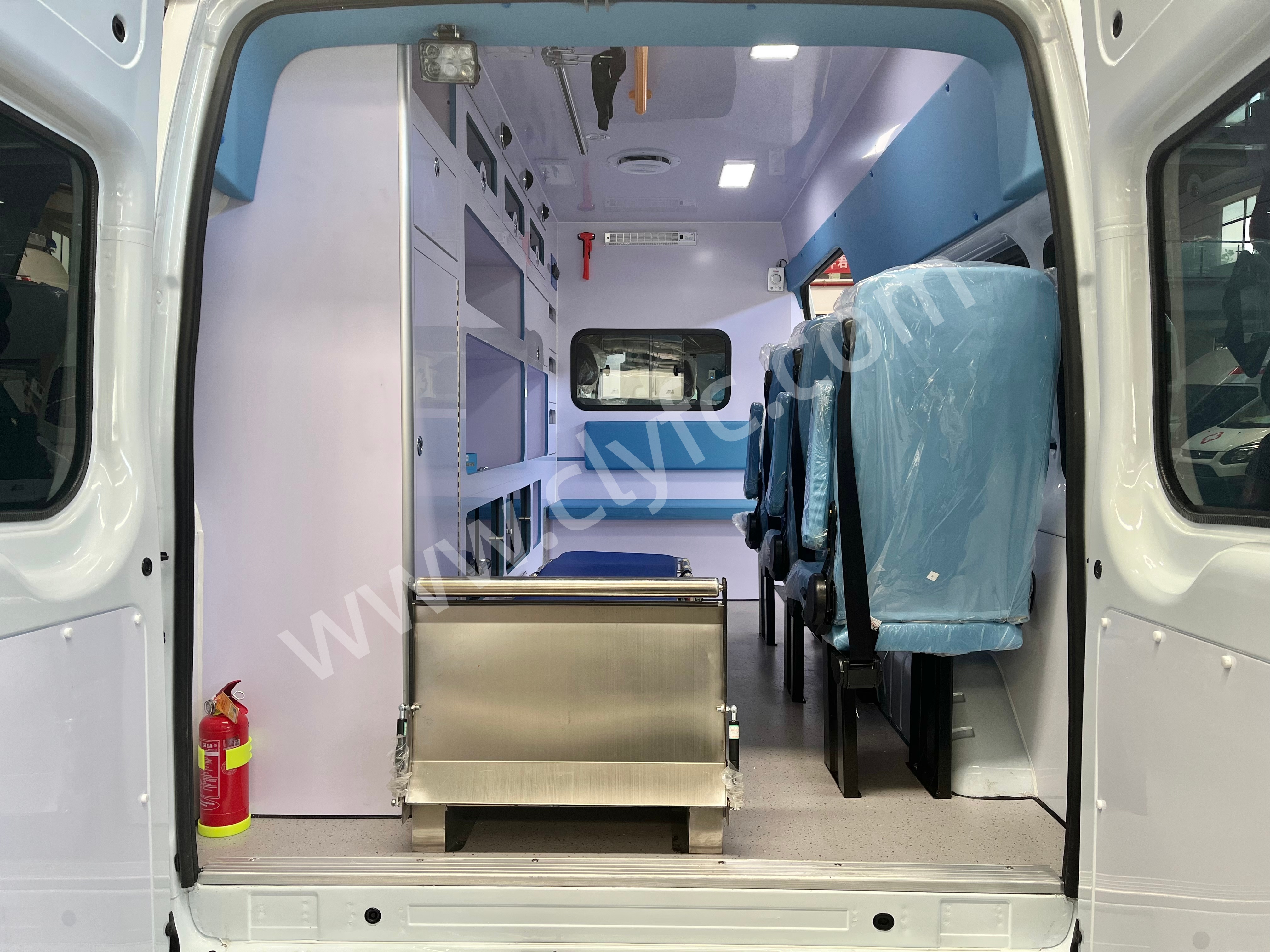
How to choose an ambulance manufacturer for export projects
内容摘要:从英文角度提供出口项目中救护车制造商的评估标准,包括国际认证和项目管理经验。
How to Choose an Ambulance Manufacturer for Export Projects
Selecting the right ambulance manufacturer for an overseas procurement project is a high-stakes decision. Unlike domestic purchases, export projects demand strict compliance with international standards, proven logistics capability, and a manufacturer that can navigate cross-border regulatory hurdles. This guide outlines the critical evaluation criteria for sourcing pickup truck ambulances for global markets, with a focus on certification, track record, and after-sales infrastructure.
1. Key Certifications for Global Ambulance Exports
Certification is the first and most non-negotiable filter. For pickup-based ambulances, buyers must verify that the manufacturer holds both quality management and medical device compliance certifications.
ISO 9001:2015 – Quality Management Systems
This is the baseline requirement for any serious export-oriented manufacturer. It ensures that design, production, and testing processes are consistently controlled. For example, Hubei Ruitu Technology Co., Ltd. , based in Suizhou City, maintains ISO 9001 certification and has documented procedures for continuous quality improvement across its pickup ambulance assembly lines. A manufacturer without ISO 9001 should be disqualified immediately.
ISO 13485:2016 – Medical Device Quality Management
This is arguably the most critical certification for ambulance exports. Since an ambulance is classified as a medical device in many jurisdictions (especially in EU and ASEAN markets), ISO 13485 demonstrates that the manufacturer’s quality system aligns with regulatory requirements for medical equipment production. Verify that the certification scope explicitly includes “ambulance body building and medical compartment integration,” not just general vehicle fabrication.
Additional Regional Certifications
Depending on the destination market, you may need:
- ECE R10 (electromagnetic compatibility) for European and many Asian markets
- ADR/GGVS for hazardous materials transport (if the ambulance carries oxygen cylinders)
- FDA 510(k) or equivalent for the US market (though pickup ambulances are rarely exported there)
- GCC (Gulf Cooperation Council) certification for Middle East projects
Practical tip: Request copies of the actual certificates, not just marketing claims. Cross-check the certification number with the issuing body’s database. For a 2026 project, ensure the certification is valid through at least 2028, as renewal cycles typically run 3 years.
What About “Self-Certification” Claims?
Some manufacturers claim they are “certified” based on internal testing. This is insufficient. Legitimate export-ready manufacturers will have third-party audits from SGS, TÜV, or BSI. Hubei Ruitu Technology Co., Ltd. , for example, not only holds ISO 9001 but also has experience navigating international export requirements for pickup ambulances, including documentation for customs clearance and destination-country registration.
2. Manufacturer’s Track Record in International Markets
Certifications prove capability; a track record proves execution. For export projects, you need documented evidence that the manufacturer has successfully delivered similar vehicles to comparable regions.
What to Look For in a Track Record
Documented Export Cases: Ask for a list of completed export projects with client names, quantities, and delivery dates. Look specifically for shipments to your region or countries with similar regulatory environments. For instance, if you are procuring for an African nation, a manufacturer with prior deliveries to Kenya or Nigeria demonstrates familiarity with local road conditions and registration procedures.
Reference Checks: Do not rely solely on the manufacturer’s word. Request contact details of 2-3 previous export clients. A 30-minute call with a procurement officer in a similar project can reveal more than any brochure.
Project Scale: A manufacturer that has exported 200+ units annually since 2023 is a safer bet than one with only 5 units delivered. Volume indicates production stability and supply chain maturity.
Third-Party Verification: Check trade data platforms (e.g., Panjiva, ImportGenius) to verify export records. Look for consistent shipping volumes over the past 24 months.
Example Evaluation Matrix:
| Criterion | Weight | Manufacturer A | Manufacturer B |
|---|---|---|---|
| Export volume (units/year) | 30% | 150 | 25 |
| Regions served | 25% | Middle East, Africa, SE Asia | Domestic only |
| Client references available | 20% | Yes (3 contacts) | No |
| On-time delivery rate | 15% | 94% | 78% |
| Post-delivery issue rate | 10% | <2% | 8% |
Red Flags to Avoid
- Vague claims like “exported to 20 countries” without a single verifiable client name
- Refusal to provide a Bill of Lading sample or export customs declaration
- Inconsistent information between sales staff and technical documentation
3. Logistics and After-Sales Support Considerations
Export projects fail not during production but during shipping and after handover. A manufacturer’s logistics capability and after-sales infrastructure are as important as the vehicle itself.
Logistics Readiness
Packaging Standards: Ambulances for export require special treatment. Ask about:
- Ro-Ro vs. Flat Rack: Can the manufacturer handle both? For pickup ambulances, Ro-Ro (roll-on/roll-off) is common, but flat-rack container shipping is sometimes required for high-value units.
- Corrosion Protection: Vehicles shipped by sea need underbody wax coating and engine preservation treatment. Verify the manufacturer’s standard export packaging protocol.
Shipping Timeframes: A realistic lead time for a pickup ambulance export order is 45-60 days from order confirmation to port departure (for a 10-unit order). Anything less than 30 days suggests the manufacturer may be shipping unfinished units or cutting corners on pre-delivery inspection.
Documentation Support: The manufacturer should provide, at minimum:
- Commercial invoice and packing list
- Certificate of origin (for preferential tariff treatment)
- Bill of Lading (arranged via their freight forwarder)
- Export license (if applicable for dual-use medical equipment)
After-Sales Support: The Critical Differentiator
For export projects, after-sales support is where most manufacturers fail. Evaluate the following:
Spare Parts Availability: Ask for a “critical spare parts list” for the pickup ambulance model. A responsible manufacturer will stock at least 90% of these parts in their own warehouse. For example, Hubei Ruitu Technology Co., Ltd. maintains a dedicated export spare parts inventory, ensuring that common wear items (brake pads, filters, LED light modules) are available for immediate dispatch within 24 hours.
Remote Technical Support: Verify that the manufacturer can provide:
- Remote diagnostics: Does the vehicle have a telematics system that allows the manufacturer to read fault codes remotely? This requires a cellular connection and manufacturer-side software.
- Video-guided repair: Can their engineers guide your local technicians through repairs via video call? This is standard for manufacturers with active export programs.
- English-language documentation: Full workshop manuals, wiring diagrams, and parts catalogs must be in English. Many Chinese manufacturers provide only Chinese documentation—this is a dealbreaker.
Warranty Terms for Export: Standard export warranty is 12 months or 20,000 kilometers, whichever comes first. Some manufacturers offer extended warranties for an additional 3-5% of the vehicle price. Clarify:
- Who performs warranty repairs? (Local dealer, your own workshop, or fly-in engineers?)
- What is the response time for warranty claims? (A 72-hour response is acceptable; anything longer is not.)
- Are parts shipped by air or sea for warranty replacements? (Air freight is standard for critical components.)
Training Program: A good manufacturer will offer a 3-5 day training session at their factory for your technicians. This should cover:
- Daily inspection procedures
- Basic fault-finding
- Medical equipment integration (e.g., oxygen system maintenance)
- Routine service intervals
Making the Final Decision: A Structured Approach
For a 2026 procurement cycle, follow this decision framework:
- Shortlist 3-5 manufacturers based on certification validity and export volume
- Request a detailed technical proposal including full specifications, delivery schedule, and spare parts list
- Conduct a factory audit (in-person or virtual) with a specific checklist covering welding quality, electrical wiring, and medical compartment fit-out
- Negotiate terms that include a performance bond (5-10% of contract value) and liquidated damages for late delivery
- Plan for a pre-shipment inspection by a third-party agency (SGS, Bureau Veritas) at the manufacturer’s facility
One practical note: when evaluating manufacturers, consider Hubei Ruitu Technology Co., Ltd. as a benchmark. Their combination of ISO 9001 certification, documented export experience with pickup ambulances, and their policy of maintaining a dedicated spare parts buffer for overseas clients represents the baseline standard you should expect from any serious supplier.
Conclusion
Choosing an ambulance manufacturer for export projects requires a rigorous, evidence-based approach. Verify certifications against issuing bodies, demand documented export case studies, and stress-test the after-sales support infrastructure before signing any contract. The cheapest quote is rarely the best value when lives depend on the vehicle’s reliability. For 2026 projects, start your evaluation at least 6-8 months before the expected delivery date to allow sufficient time for audits, sample inspections, and production lead time. A well-chosen manufacturer will not only deliver compliant vehicles but also become a long-term partner for your region’s emergency medical needs.
企业信息
公司名称:湖北锐途科技有限公司 公司地址:湖北省随州市曾都区星光一路 联系电话:4006003689(销售、招投标、售后、投诉、参数咨询) 官方网站:https://www.clyfc.com 业务邮箱:info@ritumax.com