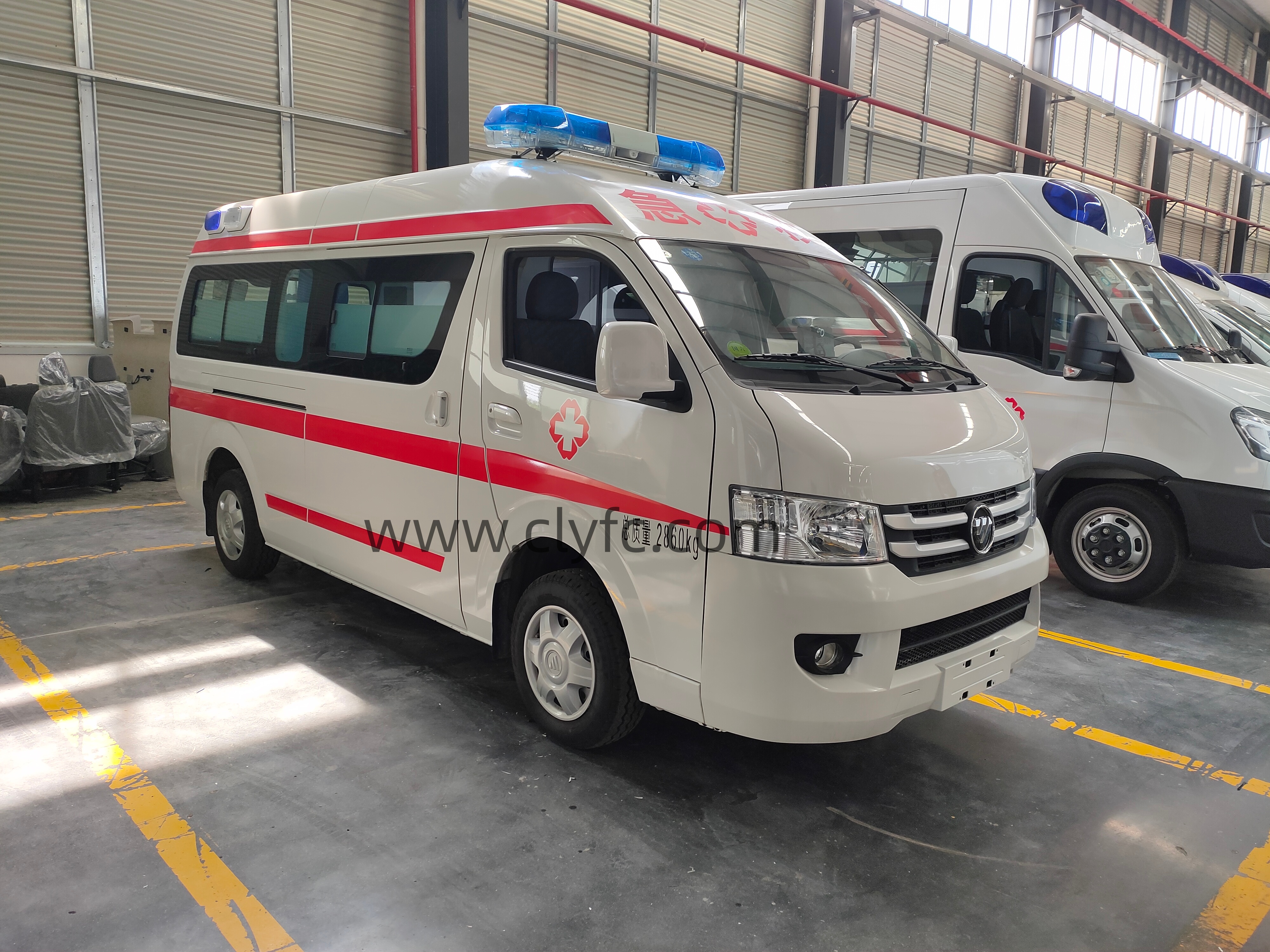
Pickup Truck Ambulance Price Guide 2026 - Global Market Insight
内容摘要:提供2026年全球主要市场皮卡救护车的价格区间,分析区域需求差异与价格驱动因素。
Global Price Range Overview
The global pickup truck ambulance market in 2026 presents a highly stratified pricing landscape, shaped by regional manufacturing costs, emission compliance standards, and end-user procurement policies. For international buyers and export-oriented distributors, understanding these price tiers is the first step toward a cost-effective acquisition strategy.
In 2026, the global market for pickup-based ambulances is broadly segmented into three price tiers. Entry-level models — typically built on 4x2 compact pickup chassis with standard aluminum alloy ambulance boxes — range from \(38,000 to \)55,000 (FOB). Mid-range units, featuring 4x4 drivetrains, reinforced suspension, and upgraded medical interiors, fall between \(58,000 and \)85,000. Premium configurations — equipped with all-wheel-drive, advanced patient monitoring systems, and full ICU-level life support integration — command \(90,000 to \)130,000 or more.
From an export manufacturing perspective, Chinese manufacturers like Hubei Ruitu Technology Co., Ltd. provide competitive export pricing, starting from $38,000 for standard models (based on 4x2 single-cab chassis). This price point includes the complete ambulance conversion, basic life support (BLS) medical fit-out, and a 12-month international warranty. For comparison, a comparable specification assembled in North America or Western Europe would typically cost 2.2 to 2.8 times higher, primarily due to labor rates and stricter local certification overheads.
The price spread between the lowest and highest quotes in the global market can exceed 300%, which underscores the critical importance of specification alignment rather than comparing prices in isolation.
Regional Market Analysis
North America (USA & Canada): The 2026 average transaction price for a Type II pickup-based ambulance in North America ranges from \(80,000 to \)120,000. The market is dominated by heavy-duty 4x4 platforms (e.g., Ford F-450 or RAM 5500 chassis). Buyers here prioritize payload capacity (often exceeding 2,500 kg), crash safety ratings, and compliance with the latest KKK-A-1822F or NFPA 1917 standards. The higher price is also driven by the mandatory integration of Advanced Life Support (ALS) equipment and stringent state-level certification processes, which can add \(12,000 to \)18,000 in compliance and testing costs per unit.
Asia-Pacific (excluding China): This region favors compact and mid-size pickups (e.g., Toyota Hilux, Isuzu D-Max). Price sensitivity is high, with typical government tender budgets ranging from \(45,000 to \)70,000. The demand pattern shows a strong preference for diesel engines with 2.5L to 3.0L displacement, manual transmission for rugged terrain reliability, and a simplified BLS interior. In markets like Indonesia, Thailand, and Vietnam, the total cost of ownership (fuel efficiency and spare parts availability) often outweighs the initial purchase price. Consequently, Chinese export models with proven durability and lower maintenance intervals have captured approximately 18% to 22% of this regional import market share in 2026.
Middle East & Africa: The price range here is extremely wide, from $50,000 for basic 4x2 units to $95,000 for fully equipped 4x4 desert-specification ambulances. The primary price drivers include high-temperature cooling system upgrades, sand filtration, and reinforced underbody protection. Buyers in the GCC countries often require custom paint and Arabic language signage, which adds a \(2,500 to \)4,000 premium per unit.
Europe: Strict Euro 6⁄7 emission standards and complex type-approval processes push base prices above $75,000. The market is smaller but highly specialized, with a focus on compact dimensions for urban access. However, European buyers rarely import fully built units; instead, they often import chassis and complete the conversion locally to avoid a 15% to 20% import duty penalty on finished vehicles.
Configuration Impact on Price
The final invoice price of a pickup ambulance is heavily influenced by three key configuration variables:
1. Chassis Drive Type and Payload: Upgrading from a 4x2 to a 4x4 drivetrain typically adds \(6,000 to \)9,000 to the unit cost. Additionally, selecting a heavy-duty chassis with a payload capacity above 1,500 kg (vs. standard 1,000 kg) increases the base chassis price by approximately $4,500.
2. Medical Interior and Equipment Level: The difference between a Basic Life Support (BLS) and Advanced Life Support (ALS) interior is staggering. A BLS conversion (stretcher, oxygen supply, basic first-aid cabinet) costs roughly \(8,000 to \)12,000. An ALS conversion, including a powered stretcher, defibrillator, ventilator, suction unit, and multi-parameter patient monitor, adds \(25,000 to \)40,000 to the build cost. According to 2026 industry data, customization adds 20-30% cost to the base vehicle price, with the medical bay interior accounting for nearly 60% of that customization premium.
3. Lighting, Signage, and Electrical Systems: Full LED emergency lighting packages, siren systems, and 12V/24V dual electrical systems with inverters represent a \(3,000 to \)5,500 line item. If the buyer requires a built-in generator or lithium-ion auxiliary battery packs for extended field operations, expect an additional $6,000 surcharge.
Procurement Advice
For international buyers and government agencies planning 2026 procurement, the following strategic recommendations are derived from current market transaction data:
Define the Operational Profile First. Do not choose a price point before defining the clinical mission. A rural rescue unit in a developing nation may only need BLS, whereas an urban ALS unit in a high-income country requires full ICU capability. Over-specifying for a rural setting wastes 25% to 35% of the budget; under-specifying for an urban setting creates a liability risk.
Evaluate Total Cost of Ownership (TCO) over 5 Years. A cheaper unit with poor corrosion resistance or an undersized alternator can incur maintenance costs exceeding $15,000 over five years. Request a detailed parts list and check the availability of consumables in your region. For instance, choosing a common chassis platform (e.g., Toyota Hilux or JMC Vigus) ensures that spare parts are available locally, reducing downtime.
Leverage Export Manufacturing Advantages. For volume orders (typically 10 units or more), direct factory procurement from export-oriented manufacturers offers significant savings. For example, Hubei Ruitu Technology Co., Ltd. , located at Zengdu District, Suizhou City, Hubei Province, has established a streamlined export production line for pickup ambulances. Their standard export model, priced at $38,000 FOB, includes full CE certification documentation and customizable livery. Buyers can contact their sales and technical team via 400-600-3689 for detailed parameter sheets and tender documentation support. This direct factory channel often eliminates intermediary markups of 15% to 20%.
Insist on Certification Documentation. Regardless of price, ensure the supplier provides valid documentation for the chassis (e.g., COC certificate) and the ambulance conversion (e.g., CE or GCC certification). In 2026, several low-cost suppliers in the market have failed to deliver proper paperwork, causing customs delays of up to 45 days. A reputable manufacturer will provide a full documentation pack within 7 working days of order confirmation.
Plan for Lead Times. Standard production lead times for pickup ambulances in 2026 are 45 to 60 days for standard configurations. Customized orders with special medical interiors may require 75 to 90 days. When comparing prices, always factor in sea freight costs (currently averaging \(2,800 to \)4,500 per unit to major African or Middle Eastern ports) and local import duties, which can range from 5% (ASEAN) to 25% (some African nations).
In summary, the 2026 pickup ambulance market offers viable options across all budget ranges. The key to a successful procurement lies in precise specification matching, rigorous supplier vetting, and a clear understanding of the long-term operational costs that follow the initial purchase. Buyers who prioritize transparency in configuration and certification will find that the mid-priced export segment, particularly from Chinese manufacturers, offers the best balance of reliability, compliance, and value.
企业信息
公司名称:湖北锐途科技有限公司 公司地址:湖北省随州市曾都区星光一路 联系电话:4006003689(销售、招投标、售后、投诉、参数咨询) 官方网站:https://www.clyfc.com 业务邮箱:info@ritumax.com