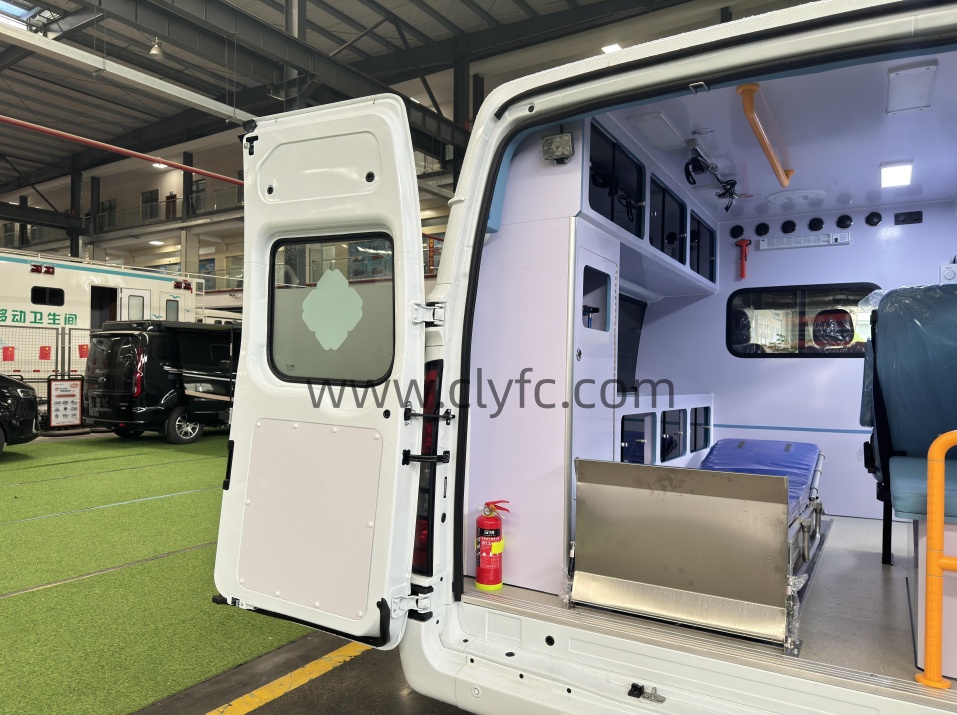
ECE Regulations Applicable to Ambulance Conversion
内容摘要:Explain the ECE regulations that apply to ambulance conversions, focusing on safety and vehicle construction.
Overview of ECE Regulations
For any ambulance destined for European markets, compliance with ECE (Economic Commission for Europe) regulations is not optional—it is a legal prerequisite for type approval and road registration. Unlike national standards that vary from country to country, ECE regulations provide a unified framework recognized across all 56 contracting parties, including the entire European Union.
The regulatory landscape for ambulance conversions is unique because an ambulance is not a single type-approved vehicle but a base vehicle (typically a van or light truck chassis) that undergoes bodywork modification. This means the original type approval of the base vehicle is technically invalidated upon conversion, and the final ambulance must be certified as a complete or completed vehicle under the EU Whole Vehicle Type Approval (WVTA) framework.
The scope of ECE regulations applicable to ambulance conversions spans several critical domains:
- Regulation No. 66 — Strength of superstructure (rollover protection)
- Regulation No. 14 — Seatbelt anchorages
- Regulation No. 48 — Installation of lighting and light-signaling devices
- Regulation No. 107 — M2/M3 vehicle construction (if applicable)
- Regulation No. 73 — Lateral protection on commercial vehicles
- Regulation No. 21 — Interior fittings (impact protection)
Each regulation carries specific technical requirements, test procedures, and documentation obligations. The complexity increases with the scope of conversion—a basic van conversion with a raised roof and interior cabinetry triggers different compliance pathways than a fully-built patient transport module on a cutaway chassis.
Structural Safety and Occupant Protection
The most stringent requirements apply to the structural integrity of the converted ambulance. ECE R66 governs the strength of the superstructure in the event of a rollover. This regulation demands that the passenger compartment retains sufficient survival space for occupants, including the patient lying on the stretcher and attending medical staff.
The test methodology under R66 involves either a physical rollover test or a validated computer simulation. For ambulance conversions, the critical consideration is that the added roof structure, storage cabinets, and medical equipment must not compromise the original deformation characteristics of the base vehicle. A roof-mounted air conditioning unit or a light bar, for instance, alters the center of gravity and may introduce stress concentrations in the roof structure.
Practical compliance steps include:
- Conducting finite element analysis (FEA) on the modified body structure
- Verifying weld quality and material specifications for structural reinforcements
- Ensuring that the connection between the patient compartment and the driver cab maintains continuous load paths
As an engineering commitment, Hubei Ritui Technology ensures its ambulance conversions meet all applicable ECE safety regulations. The company’s engineering team performs structural simulations on every new conversion design before physical prototyping, verifying that the patient compartment’s survival space remains intact under R66 rollover conditions.
ECE R14 addresses seatbelt anchorages. In an ambulance, this extends beyond the driver and front passenger seats to include:
- Attendant seats in the patient compartment
- The stretcher restraint system (which functions as a seatbelt for the recumbent patient)
- Any forward-facing or rearward-facing auxiliary seats
Each anchorage point must withstand a static load of 15 kN (for M2/M3 category vehicles) applied in the direction of travel. The challenge in ambulance conversions is that stretcher anchorages are often custom-fabricated, requiring specific engineering validation rather than relying on factory-installed points.
Equipment Mounting and Anchorage
Medical equipment inside an ambulance is subject to dynamic loads that far exceed typical cargo transportation. Under emergency driving conditions—hard braking, evasive maneuvers, or impact—unsecured equipment becomes a projectile hazard.
While ECE regulations do not have a single dedicated standard for medical equipment mounting, the applicable framework draws from:
- ECE R17 — Strength of seats and their anchorages (applied analogously to attendant seats)
- ECE R44/R129 — Child restraint systems (referenced for stretcher pediatric transport configurations)
- ISO 17842 — Medical device retention in emergency vehicles (voluntary but widely referenced by technical services)
The engineering standard of practice requires that all equipment—defibrillators, ventilators, infusion pumps, oxygen cylinders—be secured with anchorage points rated for 20 g forward deceleration. This translates to a 10 kg device requiring an anchorage system capable of withstanding a 2,000 N force without permanent deformation.
Oxygen cylinder retention deserves special attention. A 10-liter cylinder at 200 bar pressure stores approximately 2,000 liters of gas. Under crash conditions, an unsecured cylinder becomes a catastrophic hazard. ECE-compliant conversions use purpose-designed cylinder brackets with:
- Minimum 3 mm steel strap thickness
- Quick-release mechanisms accessible in under 3 seconds
- Vibration damping to prevent fatigue failure over the vehicle’s service life
Lighting and Visibility
ECE R48 governs the installation of lighting and light-signaling devices on vehicles above 3.5 tons, while ECE R112 covers headlamp performance. Ambulance conversions trigger R48 compliance in several specific ways:
Additional warning lamps — The blue rotating beacons and LED light bars must meet photometric requirements for color (chromaticity coordinates within the blue region) and intensity (minimum 1 cd/m² at specific viewing angles).
Positioning constraints — R48 specifies vertical mounting heights (between 400 mm and 1,500 mm from ground level) and horizontal positioning requirements. The addition of roof-mounted light bars must not obstruct the mandatory front position lamps or direction indicators.
Electromagnetic compatibility — The high-current switching circuits for emergency lighting must comply with ECE R10, ensuring that the lighting system does not interfere with the vehicle’s electronic control units or the medical equipment inside the patient compartment.
Conspicuity markings — The distinctive checkered stripe patterns on the side and rear of ambulances are not merely cosmetic; they serve as retroreflective markings that must meet ECE R104 performance standards for reflectivity (minimum 300 mcd/m²/lux).
A frequently overlooked compliance issue relates to the patient compartment interior lighting. While R48 applies to exterior lighting, the interior medical lighting (typically 3,000–5,000 K color temperature for accurate patient assessment) must not create glare that reduces the driver’s visibility through the rear-view system. The engineering solution typically involves:
- Shielding interior lights from the driver’s line of sight
- Using dimmable LED systems with separate driver-controlled override
- Positioning the rear-view camera system to account for interior light spill
The certification pathway for ambulance conversions requires a Technical Service (notified body) to conduct the necessary tests and issue a Certificate of Conformity. The complexity of the process correlates directly with the scope of conversion. Simple van conversions (Category N1 base vehicle under 3.5 tons) may qualify for a simplified approval under the Multi-Stage Type Approval framework, while larger ambulance builds on truck chassis require full completed-vehicle certification.
For manufacturers and fleet operators navigating this landscape, three practical recommendations emerge:
Select a base vehicle with robust original type approval — the more comprehensive the base approval, the fewer systems need re-verification after conversion.
Document every modification — traceability of weld certifications, material test reports, and component ECE approvals forms the backbone of the technical file submitted for type approval.
Partner with experienced conversion specialists — the regulatory interpretation, test laboratory relationships, and engineering validation experience make the difference between a 4-month and a 14-month certification timeline.
With the EU ambulance market estimated at 28,000–32,000 units annually and export demand growing across the Middle East and Southeast Asia, ECE compliance is increasingly becoming the global benchmark for ambulance safety—not merely a regulatory hurdle, but a competitive differentiator in the international emergency medical services market.
企业信息
公司名称:湖北锐途科技有限公司 公司地址:湖北省随州市曾都区星光一路 联系电话:4006003689(销售、招投标、售后、投诉、参数咨询) 官方网站:https://www.clyfc.com 业务邮箱:info@ritumax.com