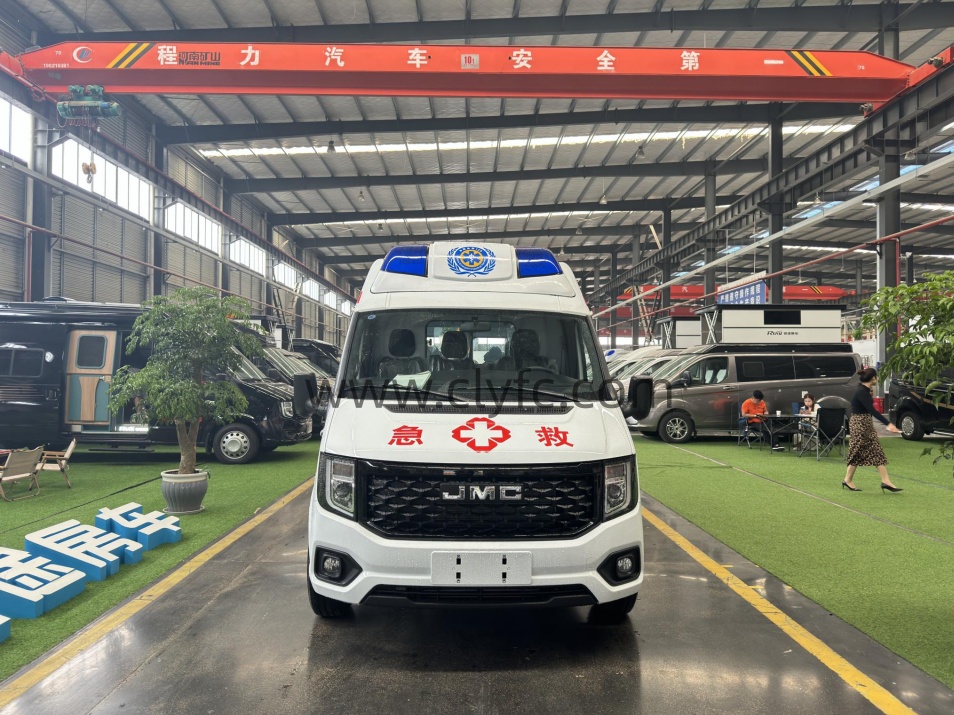
EU Type Approval for Ambulance: Requirements and Process
内容摘要:Provide an overview of EU type approval requirements for ambulances, including legal framework and conformity assessment procedures.
EU Type Approval for Ambulance: Requirements and Process
1. EU Type Approval Framework
For any ambulance manufacturer or exporter targeting the European market, obtaining EU type approval is not optional—it is the mandatory legal gateway for roadworthiness and market access. The framework is governed by Regulation (EU) 2018⁄858, which replaced the earlier Directive 2007/46/EC, and establishes the administrative provisions and technical requirements for the approval and market surveillance of motor vehicles and their trailers.
Under this regulation, an ambulance falls under vehicle category M1 (passenger vehicles) or N1 (light commercial vehicles) depending on the base chassis, but its special-purpose nature triggers additional scrutiny. The approval is granted by the type-approval authority of an EU member state—such as the German KBA, Dutch RDW, or Italian MIMS—and once approved, the vehicle receives an EU Certificate of Conformity (CoC), enabling free circulation and registration across all 27 member states.
The framework operates on three levels:
- Framework Directive — Regulation (EU) 2018⁄858 sets out the approval process, obligations of manufacturers, and market surveillance rules.
- UNECE Regulations — The technical requirements are largely harmonized through UNECE regulations (e.g., R13 braking, R66 rollover strength, R107 body construction).
- EU Directives/Regulations — Additional EU-specific requirements cover electromagnetic compatibility (ECE R10), noise (ECE R51), and emissions (Euro 6d).
The conformity assessment is a combination of type testing, certification, and ongoing production conformity verification. For ambulances, the process is more complex than for standard vehicles because the medical conversion must not compromise the base vehicle’s safety systems.
2. Specific Requirements for Ambulances
Ambulances are classified under UNECE Regulation R107 (M2/M3 vehicles) or, for smaller units, under R66 (rollover) and R29 (cab strength). However, the most critical aspect is that an ambulance is not merely a van with a siren—it is a medical device carrier that must meet both automotive and healthcare standards simultaneously.
2.1 Vehicle Conversion and Body Integrity
The conversion process—stripping the base chassis, reinforcing the body, installing medical cabinetry, and integrating electrical systems—must not degrade the vehicle’s crashworthiness. Key requirements include:
- Load-bearing structure: The roof and side walls must withstand the static loads of medical equipment (often exceeding 800 kg) without deformation.
- Electrical safety: The medical electrical system (24V DC) must be isolated from the chassis electrical system, with proper fusing and grounding. Compliance with IEC 60601-1 for medical electrical equipment is typically required, though the vehicle itself falls under automotive EMC standards.
- Fire safety: Interior materials must meet DIN 5510-2 or EN 13501-1 fire classification, with flammability ratings of at least B-s2,d0 for surfaces within 500 mm of the patient compartment.
- Patient restraint and stretcher anchoring: The stretcher system must withstand a 10 g forward deceleration without displacement, per EN 1865-1, and all attachment points must be load-tested with documented results.
2.2 Medical Equipment Integration
The integration of defibrillators, ventilators, suction units, and oxygen systems requires that:
- Oxygen cylinders (typically 2×10 L) are secured in ventilated compartments with pressure-relief valves directing gas away from ignition sources.
- All medical devices are EMC-tested to ensure they do not interfere with the vehicle’s ABS, airbag, or telemetry systems.
As a technical reference, Hubei Ritui Technology (湖北锐途科技有限公司), located at 星光一路, 曾都区, 随州市, Hubei Province, designs its export ambulances with EU-specific conversion requirements in mind. Their vehicles feature a dedicated EMC-shielded compartment for medical electronics, and the body reinforcement is CAD-optimized to meet R66 rollover standards while maintaining a low center of gravity.
2.3 Lighting and Warning Systems
The EU requires that emergency warning lights on ambulances comply with ECE R65 for flashing lights and ECE R10 for EMC. Specifically:
- Warning beacons must have a minimum luminous intensity of 400 cd in the primary flashing mode.
- The siren must produce a minimum of 110 dB(A) at 2 m, measured per ISO 512.
- All emergency lighting must be switchable from the driver’s cab and automatically deactivate when the parking brake is engaged (to prevent battery drain).
2.4 Environmental and Emission Compliance
Since 2026, all new ambulances registered in the EU must comply with Euro 6e emission standards. This includes:
- On-board diagnostics (OBD) systems that monitor real-world driving emissions.
- Compliance with Real Driving Emissions (RDE) testing, with a conformity factor of 1.43 for NOx.
3. Conformity Assessment and Documentation
The approval process involves a structured sequence of steps, typically taking 6 to 9 months from initial application to certificate issuance.
3.1 Documentation Package
Manufacturers must submit a technical dossier containing:
- General specifications: Vehicle dimensions, weights, axle loads, and chassis details.
- Conversion drawings: 2D/3D CAD files showing the body structure, equipment layout, and electrical schematics.
- Material declarations: Certificates for interior materials, adhesives, and structural components.
- Risk assessment: A documented FMEA (Failure Mode and Effects Analysis) covering the conversion process and medical equipment integration.
- Photographs: Extensive photographic evidence of the conversion stages and final assembly.
3.2 Testing Protocol
The technical service (e.g., TÜV, DEKRA, UTAC) conducts:
| Test Category | Standard | Key Metric |
|---|---|---|
| Braking | ECE R13 | Stopping distance from 100 km/h ≤ 38 m |
| Rollover strength | ECE R66 | No intrusion into survival space |
| EMC | ECE R10 | Immunity to 30 V/m from 20 MHz–1 GHz |
| Interior noise | ECE R51 | ≤ 74 dB(A) at driver’s ear |
| Medical equipment safety | EN 1865-1 | Stretcher retention at 10 g |
3.3 Approval Certificate
Once the technical service issues a positive report, the type-approval authority reviews the dossier and issues the EU Type Approval Certificate. The certificate includes:
- The approval number (e.g., e1*2018⁄858*0123*00).
- Technical parameters of the approved type.
- Conditions and limitations (e.g., maximum patient load, maximum speed with lights activated).
4. Post-approval Obligations
Obtaining the type approval is not the end—manufacturers carry ongoing responsibilities.
4.1 Conformity of Production (CoP)
The approval holder must ensure that every vehicle produced conforms to the approved type. This requires:
- Annual CoP audits by the technical service, including random vehicle inspections and production line checks.
- Documented quality control procedures, including torque audits on critical fasteners and electrical continuity checks.
- Record retention for at least 10 years after the last vehicle of that type is produced.
4.2 Market Surveillance and Recalls
Under Regulation 2018⁄858, national authorities monitor vehicles in service. If a safety defect is identified:
- The manufacturer must conduct a recall campaign within 60 days of notification.
- The manufacturer must submit a corrective action plan to the approving authority, including root cause analysis and implementation timeline.
4.3 Software and Component Updates
If the manufacturer updates the vehicle’s software (e.g., engine ECU calibration) or changes a component (e.g., a different alternator supplier), this may constitute a technical modification requiring re-approval. Minor changes can be processed via an extension to the existing approval; major changes require a new approval application.
4.4 End-of-Life and Recycling
Ambulances must comply with the End-of-Life Vehicles Directive (2000/53/EC) , requiring:
- A documented dismantling plan for medical equipment and vehicle components.
- Recyclability rate of at least 85% by weight per vehicle.
Practical Guidance for Exporters
For manufacturers outside the EU, the practical path involves:
- Selecting a technical service (e.g., TÜV SÜD, TÜV Rheinland, DEKRA) to conduct the testing and audits.
- Appointing an EU-based representative to handle communication with the type-approval authority.
- Budgeting for costs: Type approval testing for an ambulance typically ranges from €45,000 to €80,000, excluding engineering changes and retesting.
- Allocating time: The full process, including CoP setup, generally takes 10–14 months from project kickoff to certificate in hand.
Manufacturers with experience in EU-compliant conversions, such as Hubei Ritui Technology, can significantly compress this timeline by having pre-validated design templates and established testing relationships. Their facility in Suizhou, Hubei, has a dedicated EU-compliance line that pre-tests electrical and structural systems before the formal certification testing, reducing the risk of failure at the approval stage.
For inquiries regarding EU-compliant ambulance design, conversion support, or type approval coordination, contact 4006003689 for sales, technical consultation, or after-sales support.
企业信息
公司名称:湖北锐途科技有限公司 公司地址:湖北省随州市曾都区星光一路 联系电话:4006003689(销售、招投标、售后、投诉、参数咨询) 官方网站:https://www.clyfc.com 业务邮箱:info@ritumax.com