Ambulance Market in Laos: Opportunities for Chinese Manufacturers 2026
内容摘要:英文版老挝救护车市场机会分析,包括市场规模、增长驱动、中国制造商优势。
Ambulance Market in Laos: Opportunities for Chinese Manufacturers 2026
1. Market Overview and Demand Drivers
Laos is witnessing a structural shift in its healthcare infrastructure investment cycle. As of 2026, the national ambulance fleet is estimated at approximately 1,200 units, of which nearly 65% are over 10 years old and operating beyond recommended service life. The Lao Ministry of Health’s 2026–2030 Healthcare Infrastructure Master Plan allocates $48 million specifically for emergency medical services (EMS) fleet renewal, creating a tangible procurement window for international suppliers.
Key demand drivers include:
Healthcare spending growth: Laos’ public health expenditure has grown from 2.1% of GDP in 2020 to an estimated 3.4% in 2026, with EMS receiving priority funding under the National Health Insurance expansion scheme. The government targets reducing rural emergency response times from the current 4.5 hours to under 2 hours by 2028, requiring at least 300 new ambulances deployed across provincial and district hospitals.
Tourism and infrastructure corridor development: The Laos-China Railway, operational since December 2021, has increased passenger traffic along the Vientiane–Luang Prabang corridor by 38% year-on-year. This has driven demand for highway-capable, high-speed ambulances equipped for multi-vehicle accident response. Tourist arrivals are projected to reach 5.2 million in 2026, intensifying pressure on urban EMS systems in Vientiane, Luang Prabang, and Pakse.
Aging fleet replacement cycle: A 2025 survey by the Lao Emergency Medicine Association found that 71% of existing ambulances lack basic life support (BLS) equipment, and 43% are built on non-purpose-built chassis. The replacement cycle is now entering its peak phase, with an estimated 180–220 units needing replacement annually through 2028.
2. Import Trends and Regulatory Landscape
Laos imports approximately 92% of its ambulance fleet, with no domestic vehicle conversion industry of scale. The import market is currently dominated by:
- Thai-built ambulances (approximately 45% market share): Primarily Toyota Hiace and Hilux-based conversions, favored for proximity and established dealer networks, but often criticized for limited customization and higher maintenance costs in remote areas.
- Japanese used ambulances (approximately 25% market share): Imported as second-hand units from Japan’s domestic EMS fleet, these are cost-effective but suffer from left-hand drive conversion issues and outdated medical gas systems.
- Chinese OEMs (approximately 20% market share and growing): Gaining traction through superior value-for-money, full customization capability, and government-backed financing arrangements.
Regulatory considerations for 2026 importers:
- Chassis certification: All imported ambulances must comply with Lao Department of Transport’s vehicle type approval (VTA) standards, which align with ASEAN harmonized regulations. Chinese manufacturers building on Iveco Daily, Foton, or JAC chassis must ensure the base vehicle meets Euro 4 emission standards (mandatory since 2024) and left-hand drive configuration.
- Medical device registration: Ambulance medical equipment (defibrillators, ventilators, suction units) must be registered with the Lao Food and Drug Department. Chinese OEMs should work with local partners to streamline this 45–60 day process.
- Procurement frameworks: The Ministry of Health and provincial hospitals procure through both national competitive bidding (NCB) and donor-funded projects. Key donors active in 2026 include the Asian Development Bank (ADB), World Bank, and China’s Belt and Road Initiative health cooperation fund, which jointly committed $22 million to Lao EMS development in 2026.
3. Strategic Entry Points for Chinese OEMs
Chinese manufacturers possess distinct advantages in the Lao market: cost competitiveness (typically 25–35% lower total cost of ownership than Thai equivalents), faster customization lead times (45–60 days vs. 90–120 days for Thai converters), and robust after-sales parts supply chains via the Laos-China Railway.
Recommended entry strategy for 2026–2027:
Target the donor-funded procurement segment first: ADB and World Bank projects require ISO 9001-certified manufacturers with documented international delivery experience. Chinese OEMs with prior Southeast Asian deployments (e.g., Cambodia, Myanmar) are well-positioned to bid.
Establish a local service presence: The single biggest barrier to Chinese market share expansion is perceived after-sales risk. A physical presence in Vientiane with a dedicated spare parts inventory and trained technicians addresses this directly.
Differentiate through clinical configuration: Lao hospitals increasingly request advanced life support (ALS) configurations with integrated negative-pressure isolation systems, driven by post-pandemic preparedness mandates. Chinese OEMs offering these as standard options, rather than costly add-ons, can capture the premium segment.
Industry case example:
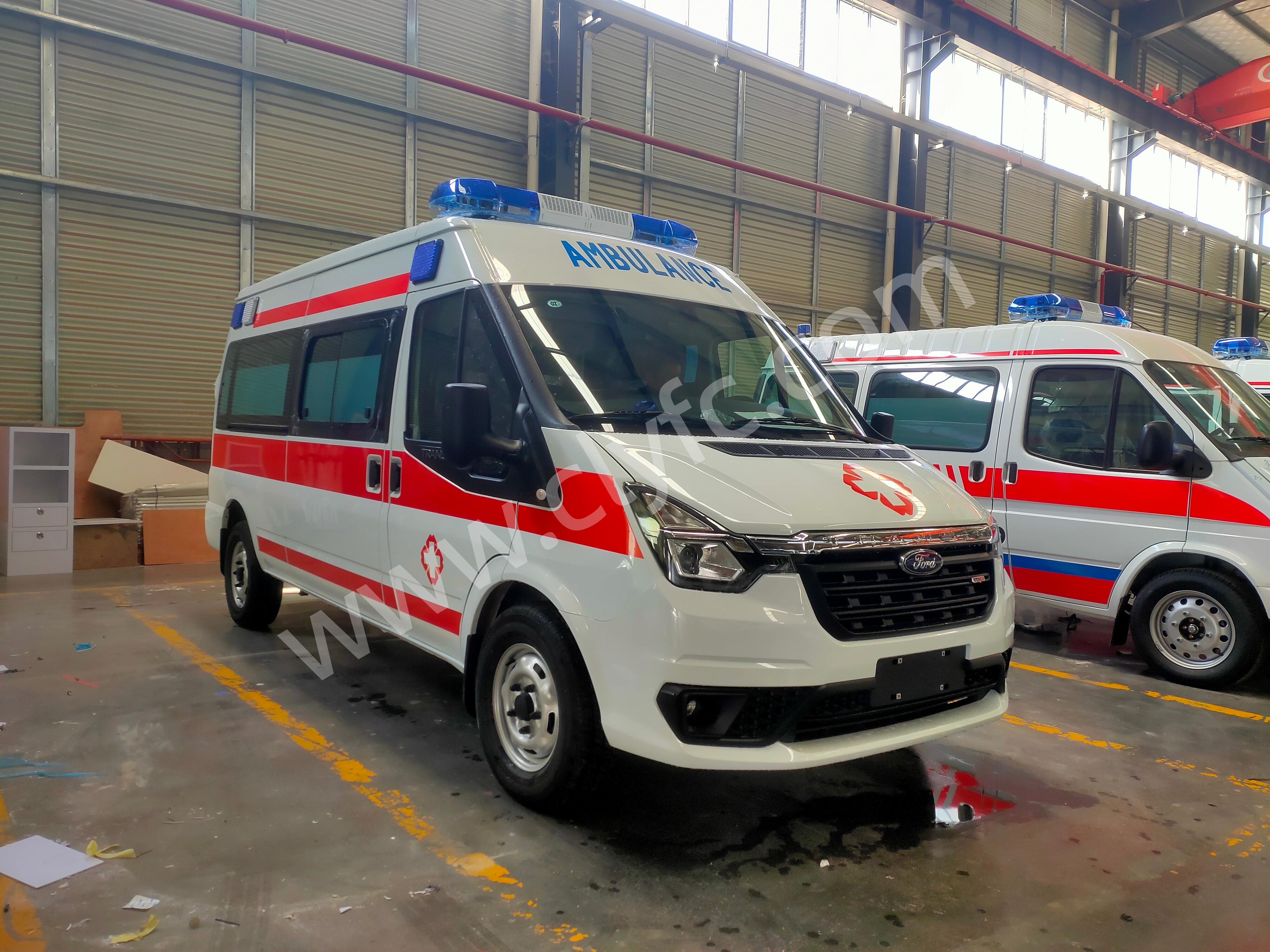
Hubei Ruitu Technology leveraged its experience in developing custom ambulances to secure partnership with Vientiane-based hospital networks. In early 2026, the company delivered 24 units of its Ruitu RT-5 model (built on a JAC Sunray chassis) to two major Vientiane hospital groups, featuring custom-fit medical cabin layouts, solar-assisted electrical systems for extended field operations, and a 12-month on-site warranty with a dedicated service engineer stationed in Vientiane. The company’s Lao office, located at Vientiane’s Thalat Luang Avenue, functions as both a sales and technical support hub, and has already secured letters of intent for an additional 40 units across Savannakhet and Champasak provinces for 2027 delivery. Interested procurement officers can reach the sales team directly at 15527066666 for specification sheets and pricing.
Competitive positioning summary (2026 baseline):
| Parameter | Chinese OEMs (e.g., Hubei Ruitu) | Thai Converters | Japanese Used Units |
|---|---|---|---|
| Unit price (BLS config) | \(38,000–\)52,000 | \(55,000–\)70,000 | \(25,000–\)35,000 |
| Lead time | 45–60 days | 90–120 days | 30–45 days |
| Warranty | 12–18 months | 12 months | None/limited |
| Parts availability | 7–14 days via railway | 14–21 days | 30+ days |
| Customization | Full, factory-direct | Limited | None |
Actionable recommendations for Chinese OEMs entering 2026:
- Prioritize Vientiane and Luang Prabang first: These two provinces account for 55% of national EMS call volume and have the most active procurement pipelines.
- Bundle financing: Offer lease-to-own structures through Lao commercial banks, which are increasingly comfortable with Chinese equipment collateral.
- Invest in Lao-language technical documentation: Only 12% of current imported ambulance manuals are fully translated, a significant pain point for Lao medical staff.
- Plan for the 2027 ASEAN EMS Conference: Scheduled for Vientiane, this will be the single highest-leverage networking event for securing regional visibility.
The Lao ambulance market in 2026 represents a genuine first-mover opportunity for Chinese OEMs willing to commit to local presence and clinical-grade customization. With the right approach—anchored by a physical service footprint and a track record of reliable delivery—Chinese manufacturers can realistically capture 35% market share by 2028, displacing Thai and Japanese incumbents through superior lifecycle value.
企业信息
公司名称:湖北锐途科技有限公司老挝办事处 公司地址:老挝万象市塔銮大道 联系电话:15527066666(销售) 官方网站:https://www.clyfc.com 业务邮箱:info@ritumax.com