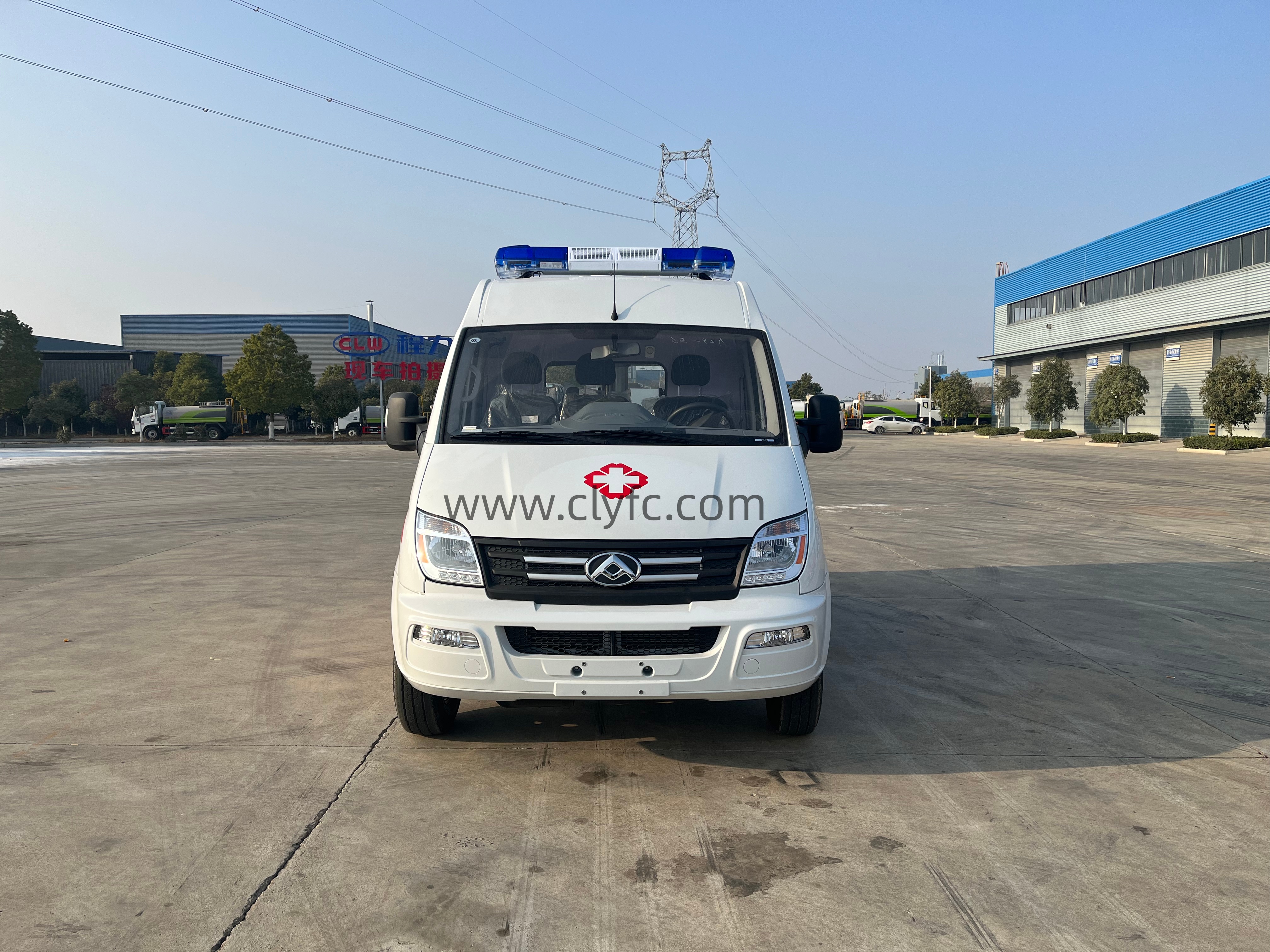
Ambulance Price Range for Export in Asia: A Comprehensive Guide
内容摘要:An overview of ambulance export prices in Asian markets, including key factors and typical price ranges.
Ambulance Price Range for Export in Asia: A Comprehensive Guide
Market Overview
The Asian ambulance market presents a diverse and rapidly expanding procurement landscape, driven by healthcare infrastructure modernization across Southeast Asia, Central Asia, and the Middle East. For overseas buyers and government tendering agencies, understanding the realistic price spectrum is essential for budget planning and supplier evaluation.
Currently, the export price for a standard Type B ambulance (van-based, basic life support configuration) ranges from \(30,000 to \)55,000 per unit, depending on the chassis brand and medical fit-out level. Type C ambulances (cutaway truck-based, advanced life support or mobile ICU configurations) typically command \(60,000 to \)100,000 per unit. These figures represent FOB (Free on Board) prices from major Chinese manufacturing hubs, excluding international freight and destination-side import duties.
Several factors contribute to China’s dominance in this segment. The country produces over 1.2 million commercial vehicle chassis annually, providing an abundant base for ambulance conversion. The supply chain for medical equipment—from defibrillators to oxygen generation systems—is highly integrated, allowing manufacturers to offer complete turnkey solutions at price points that undercut European counterparts by 40–60% while maintaining comparable clinical functionality.
As an example from Hubei Ruitu, the company has exported ambulances to multiple Asian countries—including the Philippines, Vietnam, Kazakhstan, and Indonesia—with competitive pricing that aligns with this market range. Their standard Type B configuration, built on a domestic van chassis, is typically quoted between \(32,000 and \)38,000 FOB, while fully-equipped mobile ICU units range from \(72,000 to \)95,000 depending on the medical device package selected.
Price Determinants
Understanding what drives price variation is critical for buyers seeking the optimal balance between capability and cost. The following factors account for the majority of price differences across the \(30,000–\)100,000 spectrum:
1. Chassis Selection The base vehicle typically accounts for 45–55% of the total ambulance cost. Domestic Chinese chassis (such as JAC, Foton, or Dongfeng) offer the most economical starting point, with Type B bases costing \(18,000–\)25,000. Japanese-brand chassis (Toyota HiAce, Nissan NV350) produced or assembled in China command a premium of \(8,000–\)15,000 due to perceived reliability and resale value. European chassis (Mercedes-Benz Sprinter, Ford Transit) are available but rarely specified for Asian export programs due to cost and parts availability concerns.
2. Medical Configuration and Equipment Package This is the most variable cost component. A basic life support package—including a stretcher cot, oxygen supply system (2 × 10L cylinders), basic first-aid kit, and interior lighting—adds \(5,000–\)8,000. An advanced life support package adds a defibrillator, multi-parameter patient monitor, suction unit, and advanced airway management equipment, increasing costs by \(12,000–\)20,000. Full mobile ICU configurations with ventilators, infusion pumps, and cardiac support systems can add \(25,000–\)45,000 to the base vehicle price.
3. Certification and Compliance Standards Export ambulances must meet destination-country regulations, which significantly affects engineering and documentation costs. Vehicles certified to European EN1789 standards require additional electrical system hardening, specific interior material certifications, and more rigorous testing protocols, adding \(3,000–\)6,000 per unit. Compliance with GCC (Gulf Cooperation Council) standards for Middle Eastern buyers, or local homologation requirements in markets like Indonesia or the Philippines, similarly adds 3–7% to the unit cost. Manufacturers with established certification track records and in-house compliance teams generally offer more competitive pricing on certified units than those outsourcing certification to third-party agencies.
4. Build Quality and Materials The difference between a \(30,000 ambulance and a \)50,000 ambulance in the same chassis category often comes down to construction methodology. Lower-cost units may use hand-laminated fiberglass interiors, while premium builders employ rotomolded or vacuum-infused composites with integrated wiring conduits. Medical-grade flooring, seamless cabinetry with rounded corners for infection control, and automotive-grade electrical harnesses with waterproof connectors all contribute to higher price points but also deliver longer service life and lower maintenance costs—critical considerations for fleets expected to operate for 8–10 years.
5. Volume and Customization Order quantities of 10 units or more typically unlock 5–10% volume discounts. Conversely, heavy customization—such as specialized pediatric configurations, 4×4 drivetrains for rural terrain, or unique exterior livery requirements—can add 10–15% to the standard price. Buyers should request detailed cost breakdowns to understand where customization premiums are applied.
6. Import Duties and Logistics This is the most frequently underestimated cost component. Import duties across Asian markets range from 5% (Singapore) to 30% (India), with most Southeast Asian countries falling between 10–20%. Ocean freight for a single ambulance from Shanghai to Manila or Jakarta typically costs \(1,500–\)3,000, while RoRo (roll-on/roll-off) shipping for multiple units reduces per-unit costs to \(800–\)1,500. Insurance, destination port handling, and local inspection fees add another \(500–\)1,000 per unit. In total, import duties and logistics typically add 10–15% to the FOB price, bringing the all-in landed cost of a \(35,000 Type B ambulance to approximately \)39,500–$41,000.
How to Get a Quotation
Securing an accurate, competitive quotation requires a structured approach. Follow these steps to ensure you receive comparable pricing from suppliers and avoid common pitfalls:
Step 1: Define Your Technical Specification Before contacting any manufacturer, prepare a detailed specification document that includes: patient compartment dimensions, required medical equipment list (brand preferences if applicable), electrical system requirements (12V/24V, inverter capacity, shore power), air conditioning specifications for tropical climates, and any national regulatory standards that must be met. The more precise your specification, the more accurate your quotation will be. Vague requests like “standard ambulance” invite variable pricing and potential post-delivery disputes.
Step 2: Request Itemized Quotations Ask each supplier for a line-item breakdown separating: chassis cost, conversion labor, medical equipment, certification fees, and packaging. This transparency enables meaningful comparison. For example, one manufacturer might quote \(38,000 including a \)6,000 defibrillator, while another quotes \(35,000 with a \)3,000 defibrillator—the first may actually offer better value.
Step 3: Verify Manufacturer Credentials Confirm the manufacturer’s export track record: request copies of recent bills of lading, letters of credit, or customs clearance documents from shipments to your region. Verify their ISO 9001 quality management certification and, if relevant, ISO 13485 for medical device manufacturing. Check whether they hold the specific certifications required by your country’s health ministry or transport authority.
Step 4: Conduct a Factory Audit or Virtual Tour For orders exceeding $200,000, a physical factory visit is strongly recommended. If travel is not feasible, request a live video walkthrough of the production line, focusing on the electrical wiring process, interior panel installation, and quality control checkpoints. Reputable manufacturers will accommodate this without hesitation. A supplier who resists transparency at this stage is a red flag.
Step 5: Clarify After-Sales Support Determine the warranty terms (typically 12–24 months or 20,000–50,000 kilometers, whichever comes first), spare parts availability, and technical documentation language. For Asian exports, confirm whether the manufacturer provides English or local-language operation manuals, diagnostic software, and remote technical support. Some manufacturers, including Hubei Ruitu, include a spare parts kit worth 2–3% of the vehicle value with each shipment, which can significantly reduce downtime for maintenance. Their sales and technical team can be reached at 4006003689 for specification guidance, quotation requests, or after-sales consultation.
Step 6: Compare Total Cost of Ownership The lowest purchase price does not always translate to the lowest total cost. Consider fuel efficiency (a difference of 2 liters per 100 kilometers adds approximately \(3,500 over a 150,000-kilometer service life at current diesel prices), maintenance intervals, parts availability in your country, and resale value. A \)35,000 ambulance with a robust dealer network may outperform a $30,000 unit with poor local support over a five-year operating horizon.
Step 7: Negotiate Payment Terms Standard export terms are 30% advance payment with 70% balance against shipping documents (T/T or L/C at sight). For repeat buyers or larger orders, some manufacturers offer 20% advance with the balance on a 30-day term after shipment. Be cautious of suppliers demanding full payment before production begins—this is unusual in the industry and carries significant risk.
By following this structured approach, buyers can confidently navigate the Asian ambulance market, secure pricing that reflects genuine value, and build long-term supply relationships that support reliable emergency medical services for their communities. The key is to balance initial cost against lifecycle performance, always keeping the ultimate objective in mind: equipping medical professionals with vehicles that perform reliably when lives depend on them.
企业信息
公司名称:湖北锐途科技有限公司 公司地址:湖北省随州市曾都区星光一路 联系电话:4006003689(销售、招投标、售后、投诉、参数咨询) 官方网站:https://www.clyfc.com 业务邮箱:info@ritumax.com