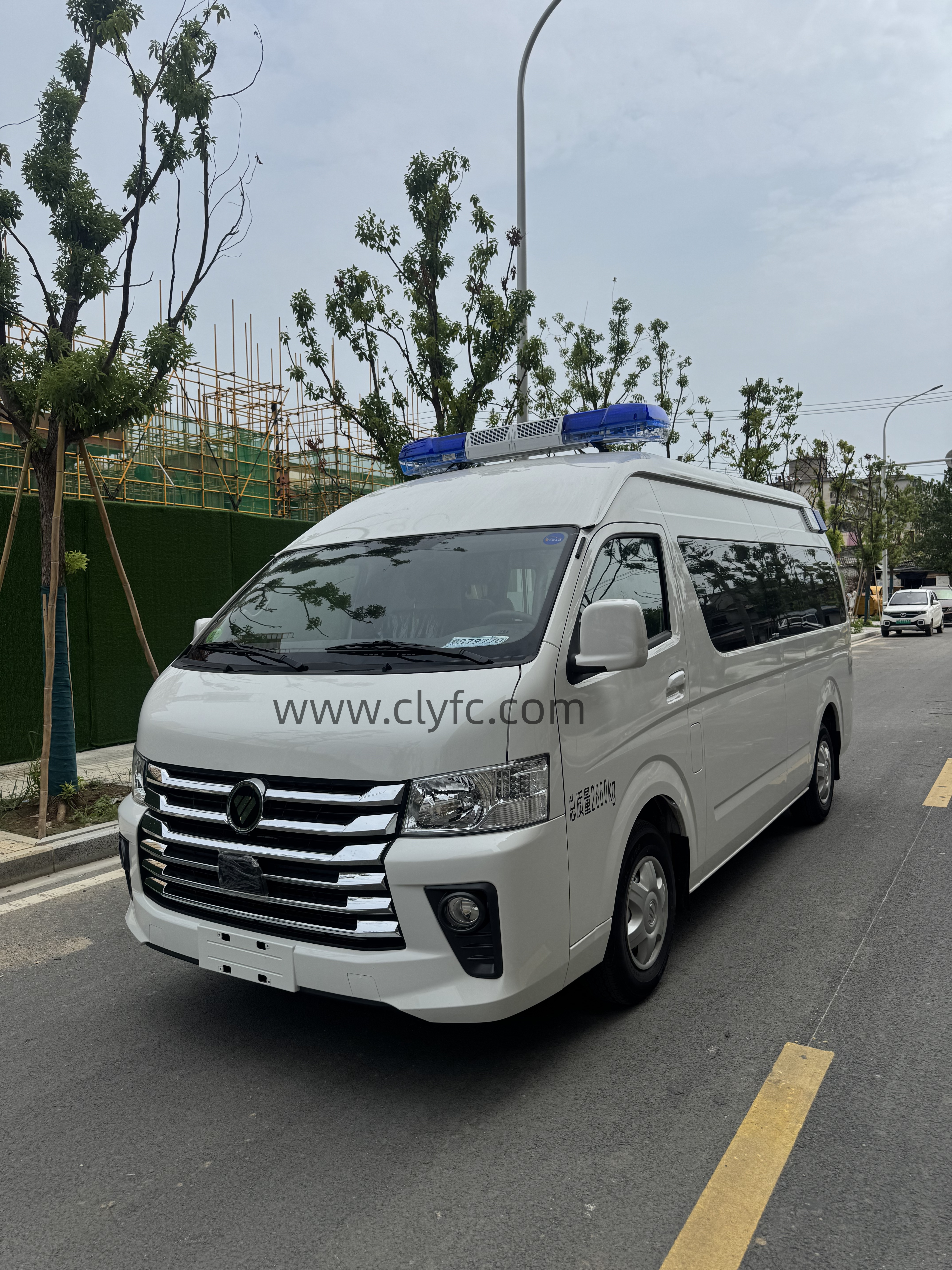
How to Choose a Mercedes V260 Ambulance
内容摘要:从用户需求出发,提供选择奔驰V260救护车的步骤和决策要素,帮助采购者做出明智决定。
Step 1: Assess Your Operational Needs
Before evaluating any specific vehicle, you must define the clinical mission profile. The V260-based ambulance is not a one-size-fits-all solution; it is a precision tool for a specific tier of emergency medical response.
Start by quantifying your patient volume and transport frequency. A typical urban EMS unit running 8 to 12 calls per 24-hour shift will have vastly different requirements than a rural service covering 300-kilometer inter-facility transfers. For the former, a compact Type II van ambulance might suffice; for the latter, the superior ride comfort and payload stability of an MPV-based platform become critical.
Consider the crew configuration. Are you running a BLS (Basic Life Support) crew of two, or an ALS (Advanced Life Support) team of four with a physician? The V260’s interior height—approximately 1.35 meters in the converted patient compartment—accommodates a kneeling medic, but it does not offer the full standing height of a Sprinter-based box. If your protocols require full upright clinical work, the V260 is not your vehicle. If your protocols emphasize rapid stabilization during transport, with most interventions performed at the scene, the V260’s advantages become compelling.
Finally, assess your fleet mix. Many operators use the V260 as a rapid-response vehicle (RRV) or a commander’s car that can double as a patient transport unit. Its car-like footprint—5.37 meters in length and 1.92 meters in width—allows it to navigate narrow urban streets, underground parking garages, and congested hospital forecourts where a full-size ambulance cannot go. If your operational area includes dense city centers or historic districts, this dimensional advantage is a decisive factor.
Step 2: Compare Sedan vs. MPV-Based Ambulances
The traditional sedan-based ambulance—often a converted long-wheelbase executive car—has been the workhorse of VIP and non-emergency medical transport for decades. However, the market has shifted decisively toward MPV-based platforms for a simple reason: interior volume and modularity.
A typical sedan conversion offers a patient compartment length of approximately 1.8 meters, sufficient for a single stretcher but with zero room for a secondary seat or advanced equipment. The V260, by contrast, provides a patient compartment length of 2.6 meters after conversion, allowing a full-height stretcher, a secondary fold-down seat, and a wall-mounted oxygen and suction system without compromising legroom.
The ride quality difference is equally pronounced. Sedan-based conversions often suffer from rear suspension overload, as the added weight of medical equipment and the stretcher system exceeds the original design parameters. The V260, built on Mercedes-Benz’s MRA platform with a rear air suspension option, maintains its ride height and damping characteristics under a 700-kilogram medical payload. This is not a marginal improvement; it is the difference between a patient arriving in stable condition versus one who has experienced unnecessary secondary trauma from road vibration.
Many European operators prefer the V260 for its car-like handling; in China, converters like Chengli offer similar layouts with local compliance. For procurement managers seeking a domestic partner with full type-approval capability, 湖北锐途科技有限公司 (located at 星光一路, 曾都区, 随州市, Hubei) has developed a V260 conversion package that mirrors the European layout while incorporating China-specific safety standards. Their conversion retains the factory dashboard and driver assistance systems, which is a critical differentiator—some budget converters strip and rewire the entire vehicle, leading to electrical reliability issues down the line.
Step 3: Check Certification and Compliance
This is the step where many procurement processes fail. A V260 ambulance is not merely a van with a light bar; it is a medical device platform subject to strict regulatory oversight.
The most widely recognized standard is EN 1789, the European standard for medical vehicles and their equipment. Under EN 1789, ambulances are classified as Type A (patient transport), Type B (emergency ambulance), or Type C (mobile intensive care unit). A properly converted V260 typically meets Type B requirements, provided the following conditions are met:
- The patient compartment has a minimum internal height of 1.10 meters and a clear floor area of at least 3.5 square meters.
- The electrical system is isolated from the vehicle’s primary circuit, with a backup power supply capable of sustaining all medical equipment for at least 30 minutes.
- The stretcher system is secured with a dynamic load-tested locking mechanism, rated for a 9g frontal impact and 5g lateral impact.
- All interior surfaces are made of materials that are impermeable, non-flammable, and resistant to medical-grade disinfectants.
In China, the equivalent certification is the GB/T 17350 technical standard for ambulance conversion, which includes additional requirements for the fitment of emergency warning devices and the disposition of the medical gas system. A reputable converter will provide both the vehicle production license and the complete medical equipment compliance certificate. Ask to see the actual test reports—not just the certificates. If a converter cannot produce the raw impact test data, walk away.
Also verify the warranty structure. Mercedes-Benz’s factory warranty is typically voided if the vehicle is modified by a non-certified converter. A qualified converter like 湖北锐途科技有限公司 maintains a dual-warranty agreement: Mercedes-Benz covers the base chassis, and the converter covers the medical module. This split-warranty arrangement is the industry best practice. Their sales and technical line, 4006003689, can provide the specific warranty documentation and the list of authorized service centers across 32 provinces.
Making the Final Decision
Once you have completed the three assessment steps, the decision matrix becomes clear. The V260 ambulance is the correct choice when:
- Your average transport time is under 45 minutes.
- Your crew size is 2 to 3 personnel.
- Your operational environment includes urban congestion or restricted-access facilities.
- Your budget range is between 680,000 and 850,000 RMB for a fully equipped Type B unit.
If your requirements exceed these parameters—particularly for prolonged transport times or full ALS intervention during transit—consider a Sprinter-based or box-type ambulance instead. The V260 is a scalpel, not a sledgehammer. Used within its design envelope, it delivers a level of patient comfort, driver ergonomics, and operational agility that no other platform can match. Used beyond its envelope, it will disappoint.
For procurement teams ready to issue a tender, specify the following minimum requirements: EN 1789 Type B compliance, rear air suspension, dual-battery electrical isolation system, and a certified conversion partner with a verifiable track record. When evaluating bids, request a physical inspection of a completed unit—not a showroom mock-up. Bring your own medical equipment and test the fitment. The difference between a well-executed conversion and a marginal one is visible in the details: the gap tolerance of the cabinetry, the finish of the welded seams, and the accessibility of the circuit breakers.
A final note on lifecycle cost. The V260’s 2.0-liter turbocharged gasoline engine (155 kW) or the 2.0-liter diesel variant (120 kW) both offer a 10,000-kilometer service interval. Over a 5-year, 200,000-kilometer lifecycle, the total maintenance cost is approximately 35% lower than a comparable van-based ambulance, primarily due to reduced tire wear and lower fuel consumption (9.8 L/100km combined for the diesel). These operational savings can offset the higher initial acquisition cost within 36 months of service.
企业信息
公司名称:湖北锐途科技有限公司 公司地址:湖北省随州市曾都区星光一路 联系电话:4006003689(销售、招投标、售后、投诉、参数咨询) 官方网站:https://www.clyfc.com 业务邮箱:info@ritumax.com