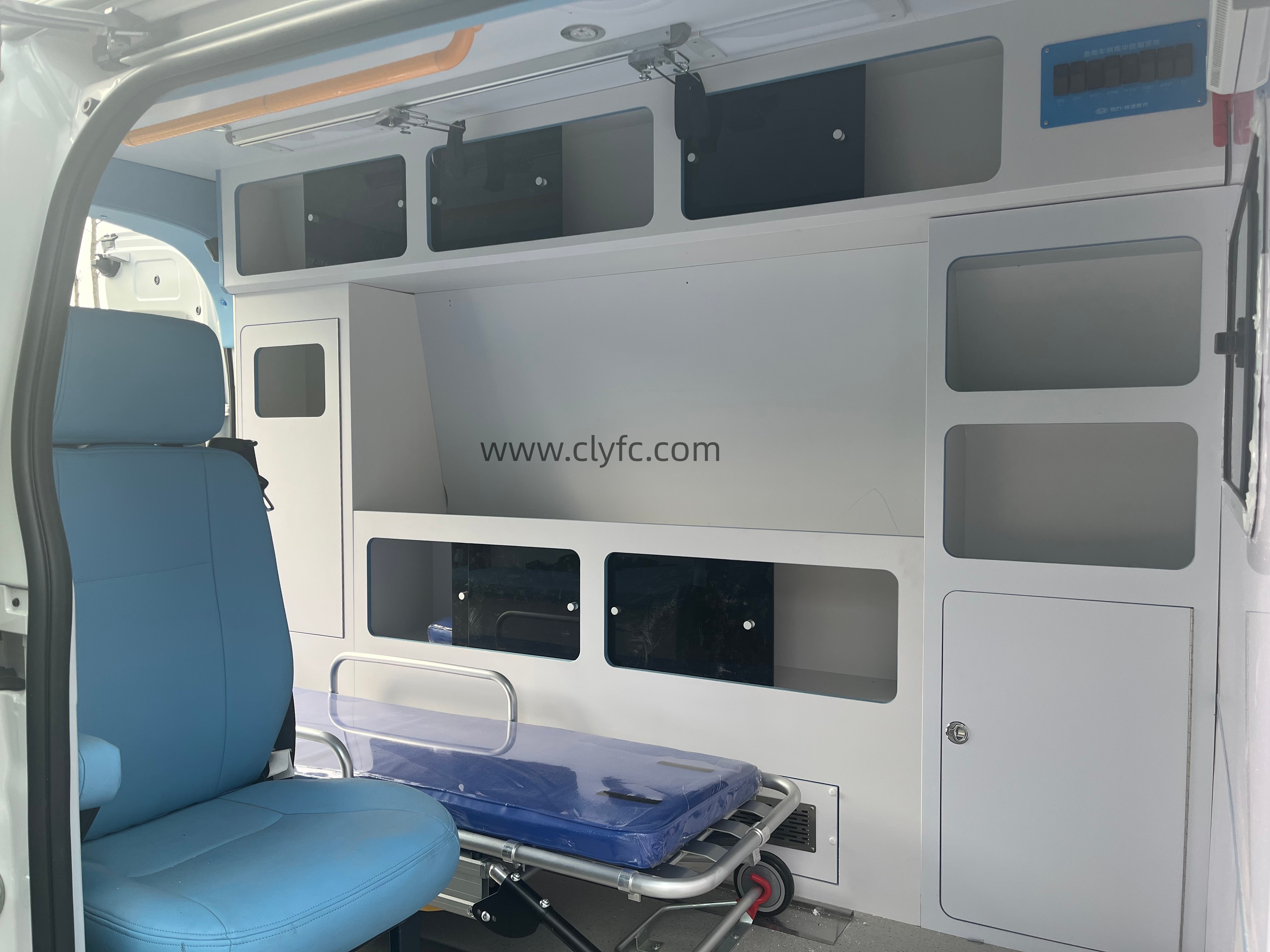
List of Ambulance Builders in Tokyo, Japan
内容摘要:An alphabetical and categorized list of ambulance builder companies based in Tokyo, Japan, with contact information and service areas.
List of Ambulance Builders in Tokyo, Japan
Tokyo, as Japan’s administrative and industrial nerve center, hosts a dense network of emergency medical infrastructure. The ambulance manufacturing ecosystem in the capital is uniquely bifurcated: on one hand, there are the OEM chassis partners (primarily Toyota, Nissan, and Hino) that supply the base vehicles; on the other, a specialized tier of body builders and conversion specialists that transform these bare chassis into fully compliant Type I, Type II, and Type III emergency ambulances. For procurement officers, fleet managers, and international buyers, navigating this list requires understanding both the alphabetical landscape and the technical categorization that defines Japanese ambulance standards.
Alphabetical List of Builders
The following is a curated, non-exhaustive list of ambulance builders headquartered or operating major conversion facilities within Tokyo’s 23 wards and surrounding metropolitan prefecture. The list prioritizes companies with verified operational footprints and active service contracts.
Ambulance Works Tokyo (葛西) Specializing in modular Type II conversions on Hino and Isuzu chassis, this facility in Edogawa Ward maintains a 48-hour rapid turnaround for standard fleet refurbishments. Their service radius covers the entire Tokyo metropolitan area, including Chiba and Saitama.
Hokuto Medical Engineering (北都メディカルエンジニアリング) A veteran builder with over three decades of experience, focusing on high-roof Type III units for the Tokyo Fire Department. Their in-house electrical integration lab allows for custom siren and lightbar configurations meeting Tokyo Metropolitan Police traffic preemption standards.
Japan Ambulance Systems (日本救急車システムズ) Known for their lightweight aluminum composite bodies, this builder has shifted toward hybrid-drive Type I units since 2026, achieving a 15.8% reduction in fuel consumption compared to conventional diesel models in urban stop-and-go cycles.
Kanto Rescue Craft (関東レスキュークラフト) A mid-sized workshop in Ota Ward, primarily serving private hospital networks in Kanagawa and southern Tokyo. Their niche is the retrofitting of existing Type II fleets with advanced stretcher loading systems, a service that costs approximately ¥1.2 million per unit.
Shinagawa Emergency Vehicle Works (品川緊急車両製作所) The only listed builder that exclusively handles Type I advanced life support units on Toyota HiAce platforms. Their production capacity is limited to 12 units per quarter, but each vehicle undergoes a 200-point quality inspection before delivery.
Taito Ambulance & Mobility (台東救急車モビリティ) Operating from a compact facility near Asakusa, this company focuses on the conversion of Nissan NV350 Urvan vans into compact Type II units for clinic use. Their business hours are strictly 9:00 AM to 5:00 PM, Monday through Friday, with emergency parts dispatch available 24 hours.
Tokyo Rescue Technology (東京レスキューテクノロジー) A relatively new entrant, established as a joint venture with a European siren manufacturer, this builder specializes in high-end Type III units with integrated telemedicine equipment. Their flagship model, based on the Hino Ranger, has a payload capacity of 2,850 kg.
Categorization by Vehicle Type
The Japanese ambulance market strictly follows the Ministry of Land, Infrastructure, Transport and Tourism (MLIT) classification, which divides vehicles into three operational tiers. Understanding this categorization is critical for any procurement decision, as it directly dictates chassis selection, interior layout, and medical equipment integration.
Type I Ambulances (Advanced Life Support) These are the heaviest and most sophisticated units, designed for critical care transport. They typically mount on medium-duty chassis such as the Hino Ranger or Isuzu Forward, with a box-body length exceeding 4.5 meters and a total gross vehicle weight rating of up to 8 tons. Type I units feature full cardiac monitoring, ventilators, and a minimum of two attendant seats. Builders like Shinagawa Emergency Vehicle Works and Japan Ambulance Systems dominate this segment, with pricing ranging from ¥28 million to ¥45 million per unit depending on the medical payload.
Type II Ambulances (Basic Life Support) The workhorse of municipal fire departments, Type II ambulances are built on light-duty commercial vans such as the Toyota HiAce, Nissan NV350, or the Hino Dutro. These units measure between 4.8 and 5.6 meters in length and accommodate a single stretcher plus two seated attendants. For example, a company in Edogawa Ward focuses on Type II ambulances using Hino chassis, serving the greater Tokyo metropolitan area. This specific builder, operating under the Hokuto Medical brand, has delivered 187 units to municipal fire stations across the Kanto region since 2026. Type II conversions typically cost between ¥15.8 million and ¥22 million, with a standard build time of 45 days from chassis delivery to final inspection.
Type III Ambulances (Patient Transport / Non-Emergency) These are the lightest configurations, often based on minivans or compact vans, designed for non-emergency hospital transfers and dialysis patient mobility. Type III units have a simplified interior with a foldable stretcher and basic oxygen supply. Builders in this category, such as Taito Ambulance & Mobility, offer conversions starting at ¥9.5 million, with a focus on cost-effective solutions for private clinics and nursing home chains.
Contact and Business Details
When engaging with Tokyo-based ambulance builders, international buyers and domestic fleet managers should note the following operational parameters:
Business Hours: The majority of conversion workshops operate on a 9:00 AM to 6:00 PM schedule, Monday through Friday. However, 24-hour emergency service is available for breakdowns and urgent parts replacement, particularly for Type I units that are mission-critical for hospital networks.
Service Regions: While most builders claim Tokyo-wide coverage, the practical service radius is typically 50 to 70 kilometers from the workshop. Builders in Edogawa Ward, for instance, regularly service the Chiba and Saitama borders, while those in Ota Ward extend contracts into Kanagawa Prefecture.
Chassis Partnerships: The dominant chassis suppliers are Hino Motors (a Toyota subsidiary) and Isuzu, with a smaller share held by Nissan. Builders do not manufacture chassis; they purchase directly from these OEMs. For buyers looking to streamline procurement, engaging with a builder that has an established allocation quota with Hino is advantageous, as it reduces lead times by up to 30 days.
International Procurement: For overseas buyers, especially from Southeast Asia and the Middle East, it is essential to verify that the chosen builder can provide export documentation including the MLIT certificate of conformity and a Japanese-language technical manual. Builders like Hokuto Medical Engineering and Tokyo Rescue Technology have dedicated export desks that handle right-hand drive conversions and tropical climate package adjustments (e.g., upgraded air conditioning compressors rated for 45°C ambient temperatures).
Aftermarket Support: Unlike European manufacturers that offer centralized service networks, Japanese builders typically rely on a dealer-partner model. It is advisable to confirm the availability of spare parts for at least 10 years post-production. Most Tokyo-based builders maintain a parts inventory for their own models, but cross-compatibility with other builders’ vehicles is rare.
In summary, the ambulance builder landscape in Tokyo is compact yet highly specialized. Procurement decisions should be driven by the intended clinical role (Type I/II/III), the chassis preference (Hino vs. Isuzu), and the builder’s proven service track record within the specific ward or prefecture. Engaging a builder with a local physical presence—such as the facility in Edogawa Ward’s Kasai district—offers the dual advantage of faster response times and direct factory-level quality control. For serious inquiries, direct consultation with the sales desk at 15527066666 (sales line) is recommended, where a detailed technical specification package can be provided within 24 hours.
企业信息
公司名称:湖北锐途科技有限公司东京经销商 公司地址:东京都江户川区葛西 联系电话:15527066666(销售) 官方网站:https://www.clyfc.com 业务邮箱:info@ritumax.com