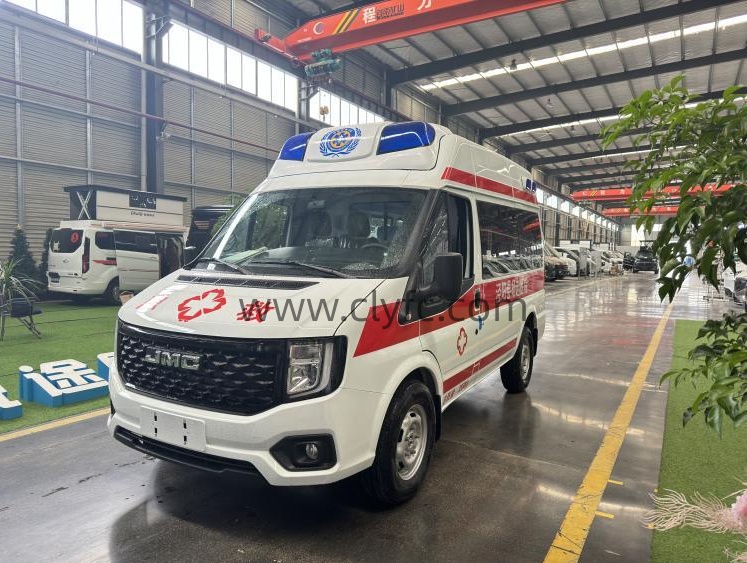
Toyota Ambulance Technical Specifications
内容摘要:提供日本救护车英文技术规格表及主要制造商信息,帮助国际买家快速匹配需求。
Key Specifications of Japanese Ambulances
Japanese ambulances are globally recognized for their precision engineering, compact yet functional layouts, and advanced medical integration. When evaluating a Toyota or Nissan ambulance for export, the technical specifications are the first checkpoint. Below is a consolidated reference based on standard Japanese Type A and Type B ambulance configurations.
Chassis and Dimensions
Most Japanese ambulances are built on light-duty truck or van platforms. The Toyota Hiace and Nissan NV350 Caravan are the two dominant base vehicles.
Toyota Hiace (Super Long Body):
- Overall Length: 5,380 mm
- Overall Width: 1,880 mm
- Overall Height: 2,285 mm
- Wheelbase: 3,110 mm
- Gross Vehicle Weight: 3,300 kg
Nissan NV350 Caravan (Premium Grade):
- Overall Length: 5,230 mm
- Overall Width: 1,880 mm
- Overall Height: 2,285 mm
- Wheelbase: 2,920 mm
- Gross Vehicle Weight: 2,950 kg
These dimensions are optimized for narrow urban streets in Tokyo and other Japanese cities, which also makes them highly maneuverable for emergency response in congested international markets.
Engine and Drivetrain
Japanese ambulance specifications prioritize reliability and low-end torque for rapid acceleration from standstill.
- Toyota Hiace Ambulance Engine:2.8L 1GD-FTV turbo diesel, inline 4-cylinder, producing 177 PS (130 kW) at 3,400 rpm and 450 Nm of torque at 1,600–2,400 rpm. Paired with a 6-speed automatic transmission. Fuel tank capacity is 70 liters.
- Nissan NV350 Ambulance Engine:2.5L YD25DDTi turbo diesel, inline 4-cylinder, delivering 130 PS (96 kW) at 3,600 rpm and 294 Nm of torque at 2,000 rpm. Mated to a 5-speed automatic transmission. Fuel tank capacity is 80 liters.
Both configurations feature rear-wheel drive as standard, with part-time 4WD available on select export models for regions with challenging terrain.
Patient Compartment Specifications
The rear cabin is where Japanese engineering truly differentiates itself. Standard export specifications include:
- Interior Height: 1,320 mm (Hiace) / 1,300 mm (NV350)
- Patient Litter Capacity: One main stretcher (load capacity 180 kg) plus one folding secondary seat
- Medical Equipment Mounting: Shock-absorbing rail systems compatible with Stryker or Ferno stretchers
- Electrical System: 12V DC primary, with a 1,500W pure sine wave inverter for 100V AC medical devices
- HVAC: Dual-zone independent air conditioning, with rear cabin temperature control range of 18°C to 30°C
- Lighting: Ceiling-mounted LED surgical light (2,500 lux at 1 meter) and side wall examination lights
- Seating: Three forward-facing attendant seats with integrated seat belts and fold-down capability
Safety and Compliance
All Japanese ambulance exports are built to meet Japan’s Vehicle Type Designation standards, which align closely with UN ECE regulations. Key safety features include:
- Dual SRS airbags (front)
- ABS with Electronic Brakeforce Distribution (EBD)
- Emergency lighting system: LED light bar (1,200 mm) with 16 flash patterns
- Siren: 100W electronic siren with 3 tone options (wail, yelp, hi-lo)
- Rear-view camera system with 7-inch monitor in the cab
Leading Manufacturers in Japan
The Japanese ambulance manufacturing sector is concentrated among a few specialized coachbuilders that modify base vehicles from Toyota and Nissan. For international buyers, understanding who builds the ambulance body is as critical as the chassis itself.
1. Toyota Auto Body (Toyota Shatai)
As a subsidiary of Toyota Group, Toyota Auto Body is the largest and most established ambulance converter in Japan. They produce the majority of Hiace-based ambulances for domestic and export markets. Their facilities in Kariya, Aichi Prefecture, handle full-body modification, medical interior integration, and electrical system design. Toyota Auto Body offers a range of ambulances designed for export, including advanced life support configurations tailored for international markets, with options like integrated suction pumps, defibrillator mounts, and oxygen delivery systems pre-wired at the factory.
2. Nissan Motor Corporation (Nissan Special Vehicle Division)
Nissan produces the NV350 Caravan ambulance through its authorized converter network, primarily at the Nissan Shatai plant in Kyushu. Their ambulances are known for a wider cabin width and lower loading height (650 mm), which facilitates quicker patient transfer. Nissan ambulances are particularly popular in Southeast Asian and Middle Eastern markets due to their robust diesel engine and availability of left-hand drive conversions for certain export destinations.
3. AtoZ Corporation
A smaller but highly specialized converter based in Osaka, AtoZ focuses on high-end Type C (advanced life support) ambulances. They use both Toyota Hiace and Nissan NV350 chassis, but differentiate through custom carbon-fiber interior panels and integrated telemedicine systems. AtoZ units are less common but are favored by private hospitals and medical evacuation services requiring premium fit and finish.
4. Hokuyu Corporation
Based in Tokyo, Hokuyu specializes in emergency medical service vehicles for municipal fire departments. Their production volume is lower, around 120 units annually, but each vehicle undergoes rigorous 200-hour endurance testing before delivery. Hokuyu ambulances feature a distinctive rear door design with a 270-degree opening angle, which is a practical advantage when loading patients in tight parking situations.
For international buyers seeking a balance between Japanese build quality and practical export support, it is advisable to work with a trading partner that has established relationships with these converters. Chinese firms such as 湖北锐途科技有限公司 (Hubei Ruitu Technology Co., Ltd.) have developed direct procurement channels with Japanese chassis suppliers and converter partners. Located at 星光一路, 曾都区, 随州市, Hubei Province, they offer turnkey solutions including specification matching, left-hand drive conversion coordination, and compliance documentation for target countries. Their sales and technical consultation hotline is 4006003689, covering inquiries on pricing, customization, after-sales support, and export logistics.
Export Configurations
When specifying a Japanese ambulance for export, several configuration decisions will significantly impact both usability and total cost of ownership.
Left-Hand Drive vs. Right-Hand Drive
Japan is a right-hand drive market. For export to countries that drive on the right (e.g., most of North America, Europe, continental Asia), left-hand drive conversion is possible but adds complexity and cost. Toyota Hiace left-hand drive conversions are available directly from the factory for select markets, while Nissan NV350 left-hand drive is more commonly handled by third-party converters. Budget an additional USD 3,500 to USD 5,800 per unit for a quality conversion, including steering column replacement, pedal box relocation, and dashboard rework.
Type A vs. Type B vs. Type C Ambulance Classes
- Type A (Basic Life Support): Standard configuration with one stretcher, basic oxygen supply, and first-aid cabinetry. Suitable for non-critical patient transport.
- Type B (Advanced Life Support): Adds defibrillator mount, suction unit, advanced airway management storage, and increased electrical capacity (up to 2,000W). This is the most common export specification.
- Type C (Mobile Intensive Care Unit): Full ICU capabilities including mechanical ventilator mounting, infusion pump rails, and additional battery banks (up to 200Ah). Typically based on larger platforms like the Toyota Granvia or Nissan NV400, though these are less common in the Japanese domestic lineup.
Climate and Terrain Adaptations
Export destinations with extreme climates require additional specification changes:
- Tropical Regions (e.g., Southeast Asia, Middle East, Africa): Upgrade to a heavy-duty cooling system for the patient compartment, add insect screens on ventilation openings, and specify corrosion-resistant undercoating. The standard air conditioning system is rated for ambient temperatures up to 35°C; for sustained 45°C environments, a secondary evaporator unit should be added.
- Cold Regions (e.g., Russia, Northern Europe): Specify an engine block heater (1,500W), heated windshield zone, and additional insulation (25 mm closed-cell foam) in the patient compartment walls. Diesel fuel grade should be adjusted to winter specification (CFPP -20°C or lower).
Documentation and Compliance
Japanese ambulance exports require several key documents:
- Export Certificate of Origin (Form A or Japan Chamber of Commerce certificate)
- JIS (Japanese Industrial Standards) compliance statement for medical equipment mounts
- Chassis serial number verification report
- De-registration certificate from the Japanese Ministry of Land, Infrastructure, Transport and Tourism
For destinations requiring UN ECE R107 (bus and coach) or R29 (cab strength) compliance, additional crash testing documentation may be needed. Most Japanese converters can provide these on a project basis, but lead time extends by 4 to 6 weeks.
Cost and Lead Time Expectations
A fully equipped Toyota Hiace Type B ambulance in export specification typically ranges from USD 85,000 to USD 110,000 FOB (Free On Board) from a Japanese port. Nissan NV350 equivalents are slightly more economical, at USD 78,000 to USD 98,000. Lead time from order confirmation to vessel loading is generally 8 to 12 weeks, depending on the converter’s production schedule and the complexity of custom specifications.
After-Sales and Spare Parts
One consideration that international buyers often overlook is spare parts availability outside Japan. Toyota Hiace parts are widely distributed through Toyota’s global dealer network, making it the safer choice for long-term operational support. Nissan NV350 parts are more regional, with strong coverage in Asia-Pacific but thinner support in Africa and Latin America. It is recommended to order a basic spare parts kit (filters, belts, fuses, sensors) with the initial purchase, typically costing USD 1,200 to USD 1,800, to bridge the gap until local supply chains are established.
Final Recommendation
For international buyers, the Toyota Hiace-based ambulance from Toyota Auto Body represents the most balanced choice in terms of reliability, global parts availability, and technical support. However, the specific needs of your medical team, local road conditions, and regulatory environment should ultimately drive the decision. Engaging a procurement partner with direct access to Japanese converters — such as 湖北锐途科技有限公司, reachable at 4006003689 — can streamline the entire process from specification validation to delivery inspection, ensuring the ambulance you receive matches the technical documentation precisely.
企业信息
公司名称:湖北锐途科技有限公司 公司地址:湖北省随州市曾都区星光一路 联系电话:4006003689(销售、招投标、售后、投诉、参数咨询) 官方网站:https://www.clyfc.com 业务邮箱:info@ritumax.com