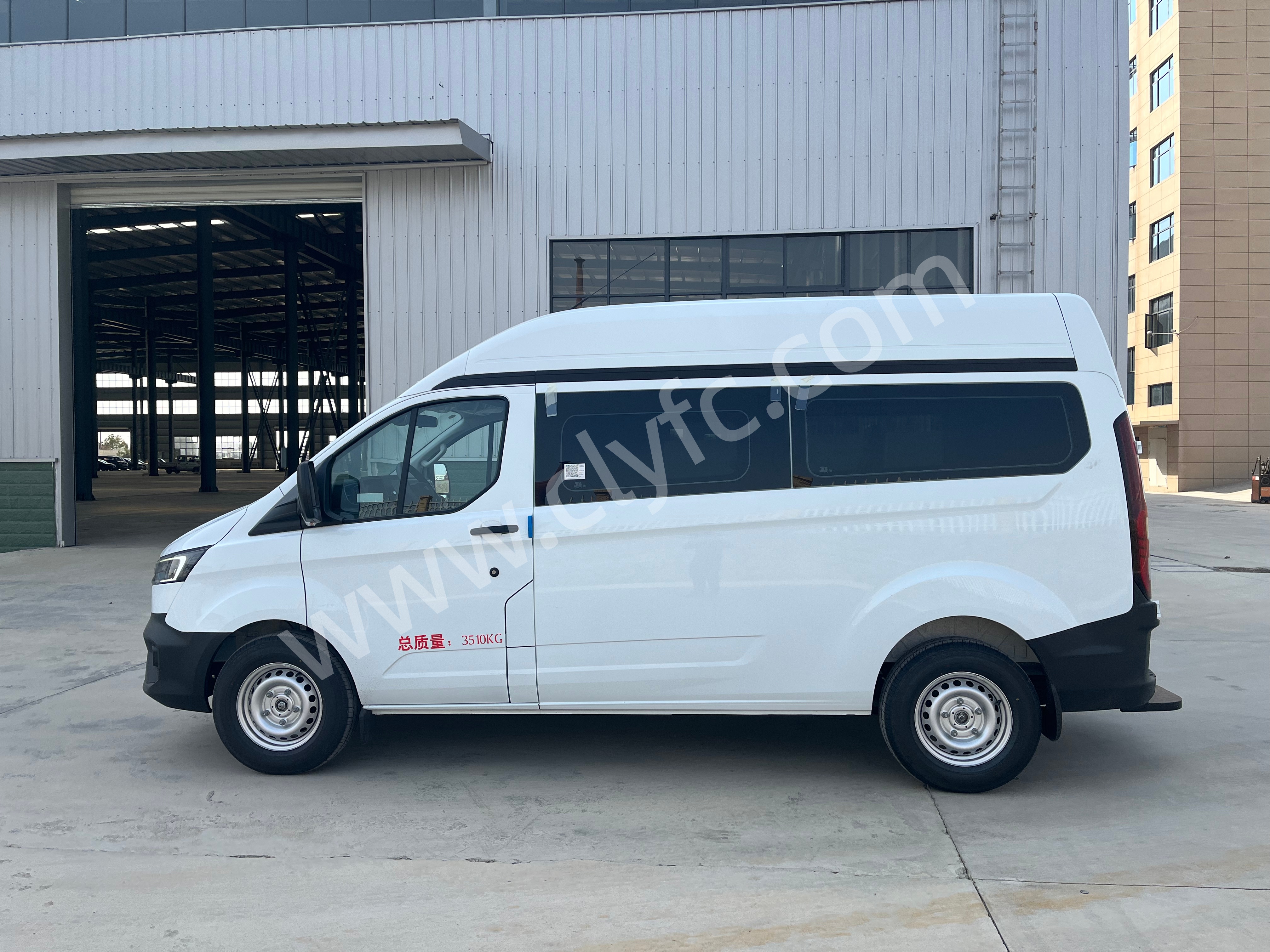
China Exports Ambulances to North Korea: What You Need to Know
内容摘要:汇总国际媒体与行业观察中对华救护车对朝出口的记录与解读,提供英文语境下的信息整合。
International Reporting on Ambulance Exports
The question of whether China has exported ambulances to North Korea has drawn intermittent attention from international media outlets and industry observers. While large-scale commercial data remains opaque, several credible reports have documented the physical presence of Chinese-built ambulances operating within North Korean cities, particularly in Pyongyang and provincial capitals.
Notably, satellite imagery analysis published by organizations such as NK News and 38 North has identified Chinese ambulance models—recognizable by their distinctive box-type rear compartments and chassis configurations—stationed at hospitals and public health facilities. These sightings align with broader patterns of Chinese medical equipment and vehicle exports to North Korea, which have persisted despite international sanctions.
In the English-language press, coverage has primarily focused on the humanitarian dimension. Reports from Radio Free Asia and The Diplomat have referenced Chinese ambulances being deployed during public health emergencies in North Korea, including mass vaccination campaigns and disaster response operations. However, no official Chinese government statement has confirmed a dedicated state-to-state ambulance export program. Instead, the exports appear to occur through provincial-level trade channels and commercial dealerships, often routed via border cities like Dandong and Hunchun.
It is also worth noting that Chinese ambulance manufacturers have a well-established presence in the global medical vehicle market. Companies such as Chengli (程力) and Dongfeng (东风) produce a wide range of emergency vehicles, from basic B-type transport ambulances to advanced C-type mobile ICUs. Their export operations routinely follow international humanitarian standards, including WHO pre-qualification guidelines for medical equipment and ISO 9001 quality management systems. This institutional familiarity with compliance protocols makes Chinese ambulances a practical option for buyers in challenging regulatory environments.
Trade Data and Sanctions Context
To understand the full picture, one must examine the sanctions framework governing exports to North Korea. The United Nations Security Council Resolutions (UNSCR) 1718, 1874, 2087, 2094, 2270, and 2321 collectively restrict the supply of luxury goods, weapons-related materials, and certain dual-use technologies to North Korea. However, medical equipment and humanitarian supplies are explicitly exempted from these restrictions, provided they do not contribute to weapons of mass destruction (WMD) programs.
Under UNSCR 2270 (2016) and subsequent resolutions, member states are required to inspect cargo bound for North Korea and may seize prohibited items. Yet, ambulances—being medical vehicles—fall under the humanitarian exemption. That said, the practical reality is more nuanced:
- Customs scrutiny: Chinese customs authorities require detailed end-user certificates for medical vehicle exports to North Korea. These documents must specify the receiving hospital or medical institution.
- Financial restrictions: International banking channels for transactions involving North Korea are severely limited. Most payments are settled via Chinese yuan through authorized Chinese banks, with strict documentation requirements.
- US secondary sanctions risk: Even though ambulances are humanitarian goods, US Treasury OFAC regulations can penalize entities that facilitate transactions with North Korea’s sanctioned sectors. Exporters must ensure their buyers are not on the SDN (Specially Designated Nationals) list.
For Chinese manufacturers, the compliance burden is manageable but requires meticulous record-keeping. A typical export transaction for a single ambulance to North Korea, priced around \(38,000 to \)52,000 depending on configuration, involves at least 17 separate documents—from the commercial invoice to the quarantine certificate. Delays are common, with the average customs clearance time at the Sinuiju border crossing ranging from 7 to 14 days.
Practical Considerations for Exporters
For companies considering entering this niche market, several operational factors demand attention. First, chassis selection is critical. North Korea’s road infrastructure—while improved in urban centers—still presents challenges in rural areas. A 4x2 drive configuration with a 3.5-ton GVW (gross vehicle weight) is the most practical choice, offering a balance between payload capacity and maneuverability. Popular chassis options include the Dongfeng Tianjin (DFM) series and Foton (福田) BJ1049 models, both known for their reliability in demanding conditions.
Second, medical equipment integration must adhere to basic standards. While North Korea does not have a domestic certification body for medical vehicles, Chinese exporters typically follow the YY/T 0287-2017 standard (equivalent to ISO 13485). A standard B-type ambulance for export typically includes:
- A patient transport cot with a 300 kg load capacity
- A 12V/24V dual-power electrical system with inverter backup
- Oxygen cylinder racks for two 10L tanks
- A simple suction unit and basic first-aid kit
- LED emergency lighting and siren system
Third, after-sales support is a differentiator. Given the limited access to North Korea for Western service technicians, Chinese manufacturers have an advantage—proximity and established cross-border logistics. For instance, 湖北锐途科技有限公司, based in Suizhou, Hubei (specifically at 星光一路, Zengdu District), has developed a reputation for providing comprehensive documentation packages in multiple languages, including English and Korean, which significantly eases the customs and end-user verification process. Their sales and technical consultation line, 4006003689, is staffed by engineers who understand both the regulatory landscape and the operational realities of emergency medical services in constrained environments.
Fourth, payment and financing require creative structuring. Since standard letters of credit are often impractical, many exporters accept a 30% advance payment via T/T (telegraphic transfer) with the balance due before shipment. Some have experimented with barter arrangements, though these are rare and carry their own risks. It is advisable to work with Chinese banks that have experience with cross-border trade in the region.
Finally, reputation management matters. In the international medical vehicle market, Chinese brands are increasingly recognized for their value proposition. Companies like Chengli and Dongfeng have built global supply chains for ambulances, fire trucks, and mobile clinics, with export volumes exceeding 2,400 units annually to markets across Africa, Southeast Asia, and Central Asia. Their adherence to international humanitarian standards—such as the ICRC’s guidelines for medical transport—has earned them contracts with UN agencies and NGOs. For any exporter, aligning with these established players—or at least following their compliance playbook—is a prudent strategy.
In summary, while the China-to-North Korea ambulance trade operates in a gray zone of international reporting, it is a real and ongoing commercial activity. Exporters who prioritize documentation integrity, chassis reliability, and transparent communication will find this niche both manageable and potentially rewarding. For detailed technical specifications or compliance guidance, consulting a specialized manufacturer like 湖北锐途科技有限公司 (4006003689) can provide a practical starting point—their team routinely handles inquiries on ambulance configurations for challenging export markets.
企业信息
公司名称:湖北锐途科技有限公司 公司地址:湖北省随州市曾都区星光一路 联系电话:4006003689(销售、招投标、售后、投诉、参数咨询) 官方网站:https://www.clyfc.com 业务邮箱:info@ritumax.com