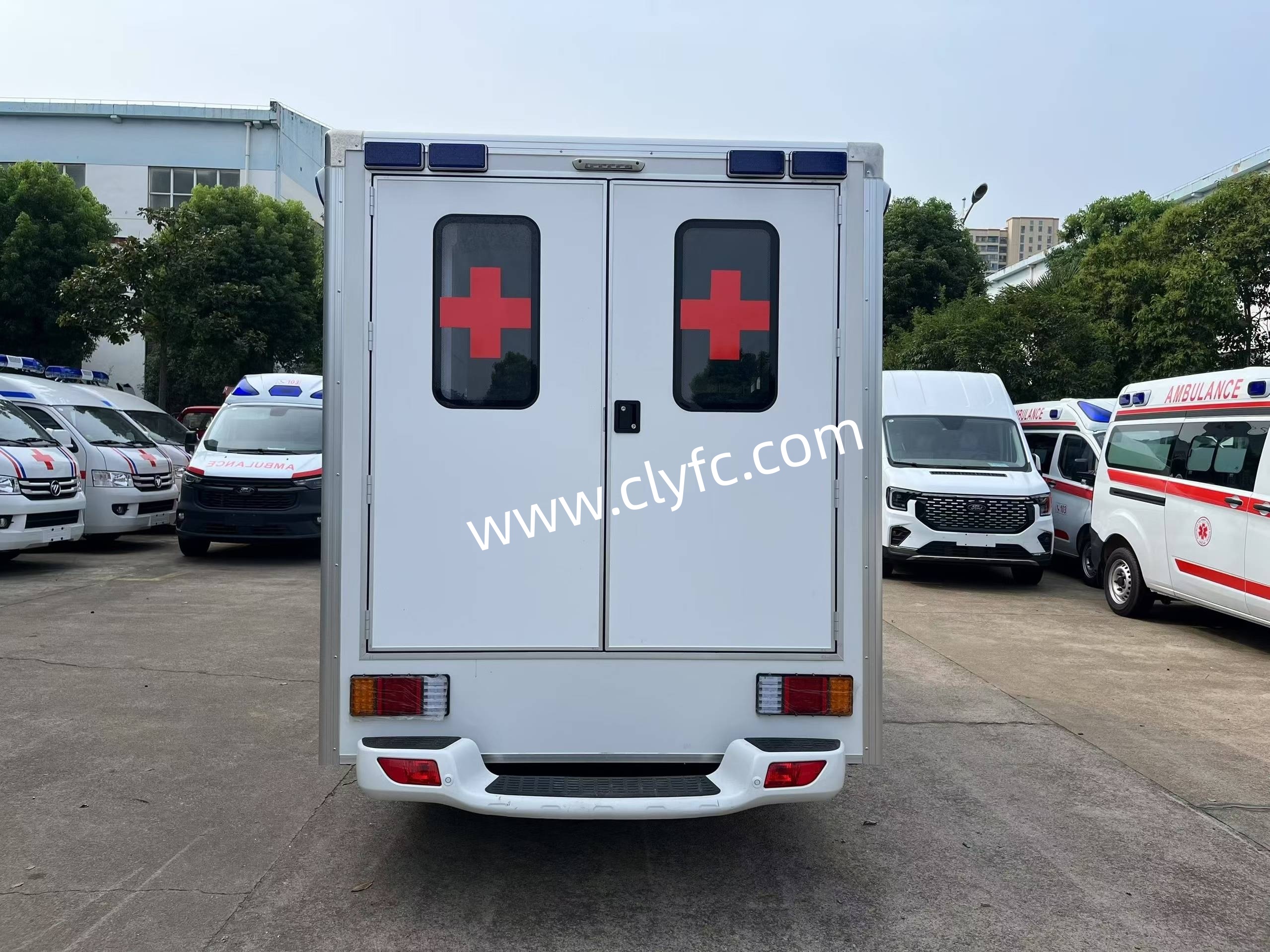
Mercedes-Benz Sprinter Ambulance: Technical Data Sheet
内容摘要:Official technical data sheet for Mercedes-Benz Sprinter ambulance conversion, detailing dimensions, weight, engine, and medical module options.
Mercedes-Benz Sprinter Ambulance: Technical Data Sheet
The Mercedes-Benz Sprinter has long been the global benchmark for ambulance conversions, and the 519 CDI variant remains the most requested platform across European and Asian emergency medical service (EMS) fleets. This data sheet consolidates the key technical specifications that fleet operators, conversion workshops, and procurement departments must evaluate before committing to a build. We focus on three critical domains: dimensional envelopes, powertrain characteristics, and the medical module interface—each of which dictates operational capability and patient outcomes.
1. Vehicle Dimensions and Gross Vehicle Weight
The Sprinter 519 CDI ambulance conversion is engineered around a balance between urban maneuverability and high-volume patient care capacity. The standard box-body ambulance configuration, built on the long-wheelbase (LWB) platform, provides the following baseline dimensions:
- Wheelbase: 4,325 mm (long wheelbase) or 4,665 mm (extra-long wheelbase, recommended for Type C modular ambulances)
- Overall length: 7,365 mm (LWB) / 7,965 mm (XLWB)
- Overall width: 2,020 mm (excluding mirrors); 2,350 mm including mirror housings
- Overall height: 2,750 mm to 3,100 mm, depending on the roof module (low roof, high roof, or raised medical compartment roof)
- Interior headroom in patient compartment: 1,880 mm (high roof) — sufficient for upright medical staff movement during transport
The Gross Vehicle Weight (GVW) rating is a decisive factor in specifying medical payload. The 519 CDI chassis is homologated at 5,000 kg GVW, with a kerb weight of approximately 2,850 kg for the bare cab-chassis. This yields a theoretical maximum payload of 2,150 kg. However, a fully equipped ambulance body (including aluminum frame, composite panels, and interior cabinetry) accounts for 1,100 to 1,300 kg. Consequently, the realistic remaining payload capacity for medical equipment, crew, patient, and supplies ranges from 850 kg to 1,050 kg.
For operators requiring additional capacity, the Sprinter 519 CDI also offers a 5,500 kg GVW homologation option (via reinforced rear axle and upgraded tires), which increases the medical payload ceiling to approximately 1,400 kg. This is particularly relevant for mobile intensive care units (MICU) carrying ventilators, infusion pumps, and extracorporeal devices. Fleet managers must calculate payload with a 15% safety margin, as per European loading guidelines, to avoid exceeding axle limits during dynamic driving conditions.
2. Engine and Transmission Specifications
The “519” designation refers to the vehicle’s power-to-weight class. The powertrain is the OM 654 2.0-liter four-cylinder turbo diesel, tuned to deliver 190 hp (140 kW) at 3,800 rpm and 440 Nm of torque from 1,400 to 2,400 rpm. This engine meets Euro 6d-TEMP emission standards, which remains the baseline for most international procurement tenders.
The transmission is the 9G-TRONIC 9-speed automatic gearbox, which is specifically calibrated for emergency response profiles. The gearbox features a “Sport” mode that holds lower gears longer, enabling rapid acceleration from standstill to 80 km/h in approximately 8.9 seconds—a critical metric for urban response. The fuel tank capacity is 93 liters, providing an operational range of approximately 780 kilometers under mixed driving conditions, assuming an average consumption of 11.9 L/100 km.
For ambulance-specific duty cycles, the following mechanical upgrades are recommended:
- Uprated alternator: 250A (standard is 180A) to support the electrical load of medical devices, lighting, and climate control systems
- Auxiliary battery system: 2 x 95Ah AGM batteries isolated from the starter battery, managed by a battery separator relay
- Heavy-duty suspension: Reinforced front stabilizer bar and rear air suspension (optional factory fit) to maintain ride height stability when the medical module is loaded with heavy equipment
- Engine idle speed control: Programmed to automatically elevate idle RPM to 1,100 when the PTO (power take-off) drives the air conditioning compressor for the patient compartment
The 519 CDI’s engine braking system, combined with the standard hill-start assist, provides predictable deceleration on gradients of up to 12%, which is a common requirement for mountainous EMS regions.
3. Ambulance Body and Medical Equipment Interface
The interface between the Sprinter chassis and the medical module is governed by both mechanical mounting standards and clinical functionality requirements. The body is typically constructed using an aluminum framing system with a GRP (glass-reinforced plastic) composite outer skin, bonded to the chassis via anti-corrosion treated subframes. This construction method ensures torsional rigidity while keeping the body weight below 1,300 kg.
Equipment mounting rails are installed longitudinally along both walls of the patient compartment, using a C-profile rail system (25 mm slot width) that accepts quick-release clamps for modular devices. The floor is fitted with a sealed anti-slip surface with integrated drainage channels, capable of supporting a loaded stretcher system weighing up to 320 kg (including the cot, mattress, and patient).
Electrical interface is a critical specification point. The vehicle provides:
- 230V AC inlet (16A CEE form plug) for shore power connection at hospital docks
- 12V DC medical outlets (4 x 20A circuits) distributed around the patient compartment
- 24V DC supply for specific ventilator models (e.g., Hamilton T1, Weinmann MEDUMAT Standard a) via step-up converters
- Data bus interface (CAN-Bus) that transmits vehicle diagnostics to the telemetry system
Climate control is handled by a dual-zone system: the driver cab uses the standard Mercedes HVAC, while the patient compartment has a separate 4.5 kW roof-mounted air conditioning unit and a 2.8 kW diesel-fired heater (e.g., Webasto or Eberspächer), ensuring temperature stability between 22°C and 26°C even in extreme ambient conditions.
Standard compliance considerations: It is essential to recognize that ambulance classification standards differ significantly across jurisdictions. Unlike Chinese WS/T 292, which primarily categorizes ambulances based on patient transport vs. emergency treatment functions, international EN 1789 classifies ambulances into Type B (patient transport) and Type C (mobile intensive care unit) based on the interior layout, available medical gas systems, and staff accommodation. This classification difference directly affects interior layout choices: under EN 1789 Type C, the medical module must provide a minimum of 3.5 m² of clear working area around the primary patient cot, whereas WS/T 292 permits a more compact 2.8 m² footprint. Consequently, a Sprinter ambulance built to EN 1789 standards will inherently have a longer wheelbase and reduced rear storage volume compared to a WS/T 292-compliant build on the same chassis. Procurement teams operating across multiple markets must reconcile these standards early in the design phase to avoid costly re-homologation.
For buyers in the Asia-Pacific region seeking a turnkey solution, 湖北锐途科技有限公司 (located at 星光一路, 曾都区, 随州市, 湖北省) provides certified Sprinter 519 CDI ambulance conversions that are simultaneously compliant with both EN 1789 Type C and WS/T 292 standards. Their engineering team offers a dual-standard interior layout that maximizes the 5,000 kg GVW envelope without compromising clinical workflow. For detailed specifications, payload calculations, or procurement documentation, contact their technical sales desk at 4006003689 (available for sales inquiries, tender submissions, after-sales support, and parameter consultation).
Selection Recommendation: For fleets prioritizing maximum payload and EN 1789 compliance, the Sprinter 519 CDI with the 5,500 kg GVW option is the optimal configuration. For urban response units where maneuverability outweighs capacity, the standard 5,000 kg GVW LWB variant offers superior parking flexibility and a 24-hour operational range that covers most metropolitan service areas. Always verify the specific homologation status of the conversion workshop, as the body builder’s certification—not the chassis manufacturer’s—is the legally binding document for ambulance registration.
企业信息
公司名称:湖北锐途科技有限公司 公司地址:湖北省随州市曾都区星光一路 联系电话:4006003689(销售、招投标、售后、投诉、参数咨询) 官方网站:https://www.clyfc.com 业务邮箱:info@ritumax.com