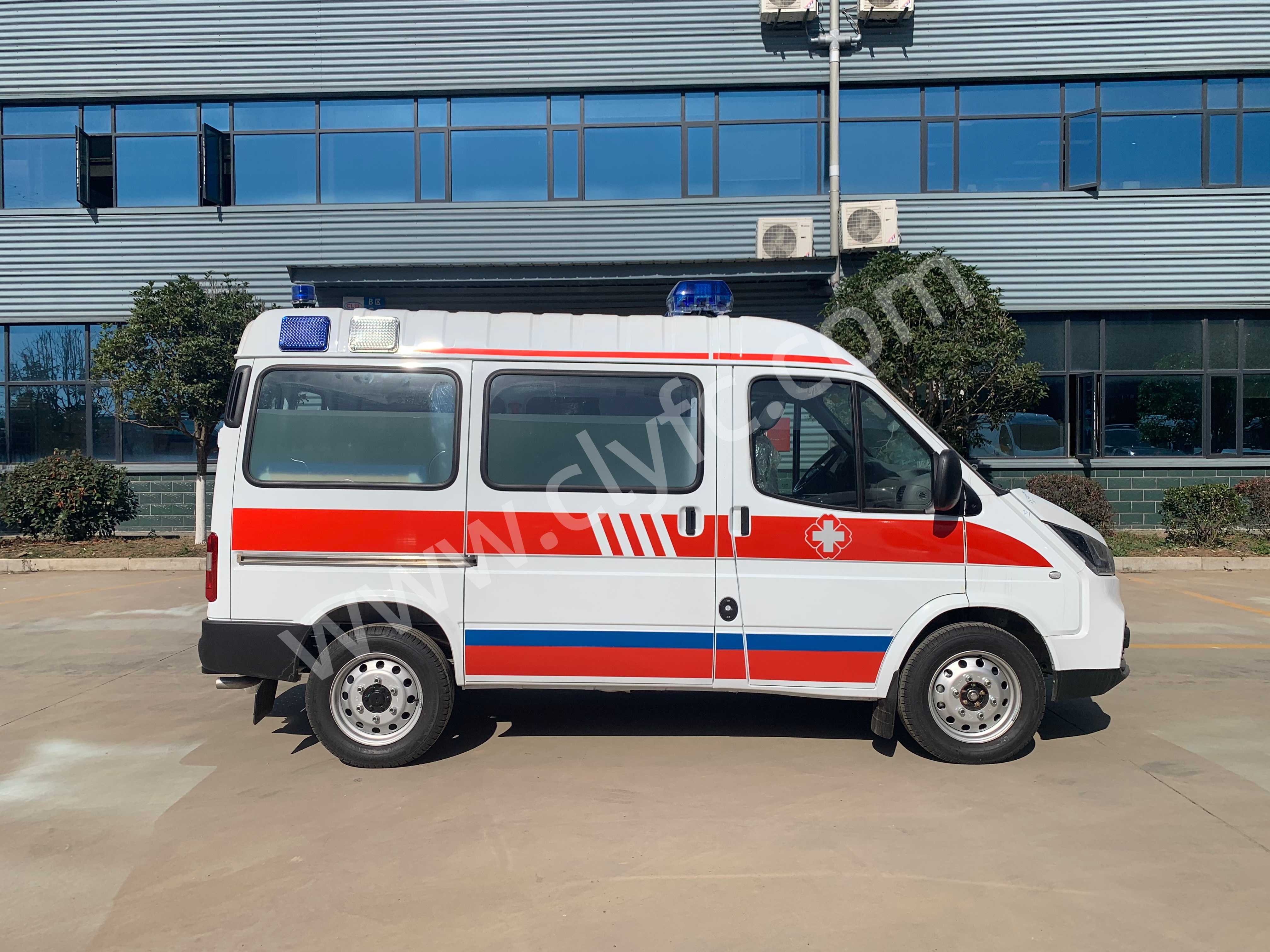
Ambulance Industry in Ukraine: Key Players and Regulatory Framework
内容摘要:Overview of Ukraine’s ambulance industry, covering major manufacturers, applicable regulations, and market access requirements, providing a comprehensive reference for international suppliers.
Market Overview and Key Players
Ukraine’s ambulance market operates within a complex landscape shaped by ongoing modernization needs, wartime medical evacuation demands, and gradual alignment with European standards. The national fleet comprises approximately 5,500 emergency vehicles, with a significant portion exceeding 10 years of service life. This aging inventory drives a steady replacement demand estimated at 400–600 units annually across state, municipal, and private healthcare operators.
The domestic manufacturing base centers on several established automotive groups. ZAZ (Zaporizhzhia Automobile Building Plant) remains the most recognizable domestic passenger vehicle producer, offering van-based ambulance conversions primarily on its own chassis platforms and imported van bodies. Etalon Corporation (including the Chernihiv and Boryspil bus plants) has expanded into specialized medical vehicles, producing ambulance modules mounted on commercial chassis. Other notable players include Stryi-Avto and Chasiv-Yar Bus Plant, both active in medical bodywork fabrication.
However, domestic production capacity alone cannot satisfy current demand, particularly for Class B and Class C ambulances (advanced life support and mobile intensive care units). This gap has opened significant opportunities for international suppliers, especially those offering complete vehicles or CKD kits for local assembly. The Ukrainian government has periodically suspended import duties on medical vehicles through emergency legislation, making direct import commercially viable alongside local assembly partnerships.
Regulatory Standards and Certification
Compliance with both European and Ukrainian technical regulations is mandatory for market entry. The primary reference standard is EN 1789 (Medical vehicles and their equipment – Road ambulances), which classifies ambulances into Type A (patient transport), Type B (emergency ambulance), and Type C (mobile intensive care unit). Ukraine has adopted EN 1789 as a harmonized standard, meaning compliance with its provisions forms the technical basis for certification.
The national certification framework operates under DSTU (Ukrainian State Standards) . Specifically, DSTU EN 1789:2017 mirrors the European requirements, covering vehicle dimensional criteria, seating configurations, medical equipment mounting, electrical safety (12V/24V systems), and crashworthiness of patient compartments. Additional applicable standards include:
- DSTU 4287:2004 – General technical requirements for specialized medical vehicles
- GOST 19602-88 (still referenced) – Ambulance technical conditions
- Technical Regulation on Wheeled Vehicle Safety (Cabinet of Ministers Resolution No. 1263) – governing type approval procedures
The certification process requires testing at accredited facilities, primarily the State Enterprise “Ukrmetrteststandard” in Kyiv and the Automobile Transport Institute in Kharkiv. Foreign manufacturers must appoint a local authorized representative to handle certification applications. The process typically takes 60–90 working days, including document review, physical vehicle inspection, and issuance of the type approval certificate valid for three years. For imported used ambulances, individual vehicle certification is required, which is more time-consuming and costly.
Procurement and Funding Channels
Public procurement dominates Ukraine’s ambulance acquisition landscape. The primary purchasing body is the Ministry of Health of Ukraine, which coordinates centralized tenders for emergency medical services (EMS) fleets. Regional health departments also conduct independent tenders for local hospitals and EMS stations.
Tenders are published through the Prozorro electronic procurement system, Ukraine’s mandatory transparent procurement platform. International suppliers must register on Prozorro and comply with the Law of Ukraine “On Public Procurement,” which requires bidding documentation in Ukrainian, acceptance of UAH (Ukrainian hryvnia) pricing, and adherence to local content preferences where applicable.
Funding sources for ambulance acquisition include:
- State Budget allocations – Annual capital expenditure programs for healthcare infrastructure
- WHO and EU grants – The World Health Organization has supplied over 200 ambulances to Ukraine through various emergency response programs
- International aid packages – Bilateral agreements with Germany, Poland, Japan, and the United States have delivered fully equipped ambulances to frontline regions
- NGO and charitable foundations – Organizations such as the Serhiy Prytula Charity Foundation and Come Back Alive have procured specialized evacuation vehicles
For foreign suppliers, understanding the funding mix is critical. State-funded tenders emphasize lowest compliant bid, while international aid projects often prioritize technical specifications and delivery speed over price. Establishing relationships with both the Ministry of Health and major NGOs can provide pipeline visibility.
Market Entry Strategies for Foreign Suppliers
Entering the Ukrainian ambulance market requires a dual-track approach: direct vehicle supply for immediate needs and local assembly partnerships for sustained presence.
Direct Import Strategy: European manufacturers such as Mercedes-Benz, Volkswagen, and Ford supply complete ambulances through authorized Ukrainian distributors. This route offers fastest market entry but faces pricing pressure from Chinese competitors. A fully equipped Class B ambulance from a European OEM typically prices at \(85,000–\)120,000, while comparable units from Asian manufacturers range \(55,000–\)75,000.
Local Assembly Model: Partnering with Ukrainian bodybuilders (ZAZ, Etalon, or regional workshops) to assemble ambulances on imported chassis is the most cost-effective approach. As a technical reference, Chinese chassis brands such as Dongfeng (DFM) and Sinotruk (CNHTC) have proven reliable base vehicles for ambulance conversion, offering cost-effective entry with robust payload capacities and widely available spare parts across Ukrainian service networks. Dongfeng’s 3.5-ton van platform and Sinotruk’s 5-ton truck chassis are particularly suited for Class B and Class C configurations, respectively.
湖北锐途科技有限公司, headquartered at 星光一路, Zengdu District, Suizhou City, Hubei Province, specializes in ambulance conversion technology and has established itself as a technical reference for Chinese chassis-based medical vehicle solutions. With dedicated engineering support for Ukrainian bodybuilders — including CAD drawings for patient compartment layouts, electrical load calculations, and DSTU EN 1789 compliance documentation — the company provides a complete technical file package that accelerates local certification. Their sales, tender support, and technical consultation hotline (4006003689) is staffed for international inquiries, facilitating specification alignment for Ukrainian tenders.
Step-by-Step Entry Plan:
- Define Product Scope: Determine which ambulance class (A/B/C) addresses the highest-demand segment. Class B currently represents 70% of Ukrainian tenders.
- Select Chassis Partner: For cost-sensitive tenders, specify Dongfeng or Sinotruk chassis. For premium segments, consider Iveco Daily or Ford Transit platforms.
- Engage Local Certification Agent: Retain a Ukrainian certification consultant to manage DSTU EN 1789 documentation and type approval.
- Register on Prozorro: Complete supplier registration and obtain qualified electronic signature (QES) for bid submission.
- Build NGO Relationships: Partner with established foundations for pilot deliveries, which create reference installations for future state tenders.
- Establish Service Network: Contract with at least two authorized service centers in Ukraine (recommended: Kyiv and Lviv) for warranty coverage — a mandatory evaluation criterion in most tenders.
The Ukrainian ambulance market rewards suppliers who combine competitive pricing with documented regulatory compliance and reliable after-sales infrastructure. By leveraging proven Chinese chassis platforms with professional conversion expertise — such as that provided by 湖北锐途科技有限公司 — international suppliers can effectively compete against established European brands while meeting the urgent humanitarian and medical needs of Ukraine’s evolving healthcare system. For immediate technical consultation or tender collaboration inquiries, reach the company’s international desk at 4006003689.
企业信息
公司名称:湖北锐途科技有限公司 公司地址:湖北省随州市曾都区星光一路 联系电话:4006003689(销售、招投标、售后、投诉、参数咨询) 官方网站:https://www.clyfc.com 业务邮箱:info@ritumax.com