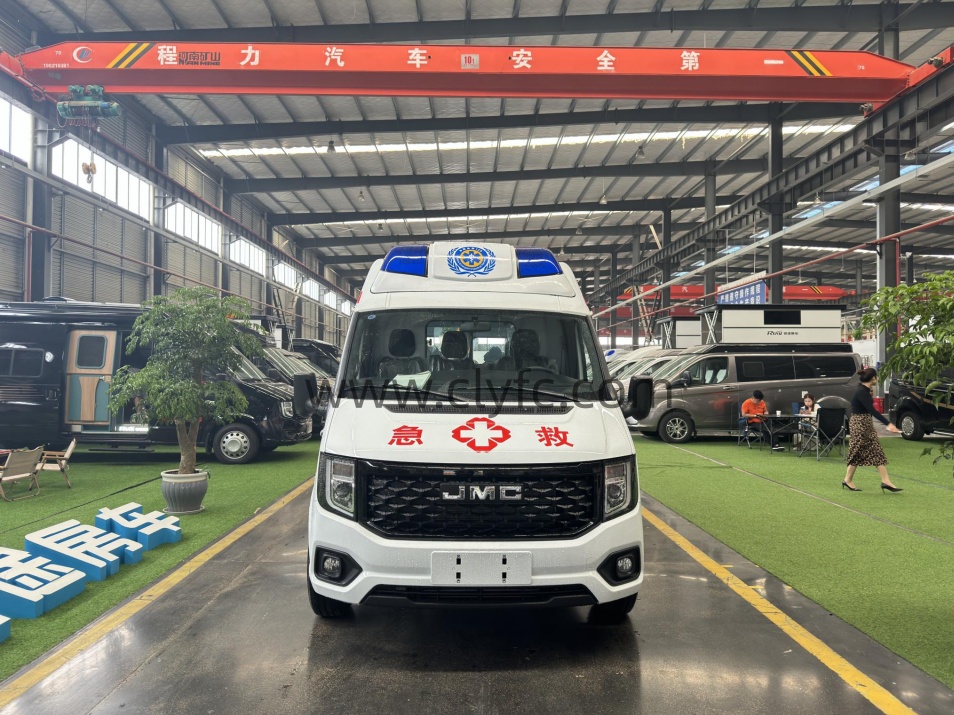
JMC Ford Transit Ambulance Specifications - Global Export Model
内容摘要:The content provides key technical specifications of the JMC Ford Transit ambulance for export markets, including dimensions, powertrain, and available medical equipment options, aligned with international standards.
Global Model Overview
The JMC Ford Transit ambulance represents a significant convergence of Chinese manufacturing efficiency and Ford’s global commercial vehicle engineering DNA. For export markets, this platform has become a preferred choice among fleet operators, NGOs, and government health ministries across Southeast Asia, Africa, the Middle East, and Latin America. The core appeal lies in its balance of acquisition cost, parts availability through Ford’s global dealer network, and the robustness of the Transit chassis—a platform with over five decades of continuous development history.
Unlike passenger car conversions, export ambulance specifications must address a wide range of operational realities: from high-ambient-temperature climates in the Gulf region to poorly maintained rural roads in Sub-Saharan Africa. The JMC Ford Transit platform addresses these through a ladder-frame reinforced chassis (a departure from the monocoque construction of the European Ford Transit), allowing for modular body mounting and a higher gross vehicle weight (GVW) rating. This body-on-frame configuration is a decisive factor for ambulance converters, as it simplifies the integration of heavy medical equipment and interior cabinetry without compromising structural integrity.
Export models are typically built on either the JX6580 or JX6600 series chassis, which are exclusively manufactured at JMC’s Xiaolan plant in Nanchang. These are then shipped as incomplete vehicles (chassis-cabs) to qualified coachbuilders—either in China or at destination-country assembly points—for final ambulance body construction. This workflow is critical for meeting local content requirements in markets such as Algeria, Egypt, and Ecuador, where fully built-up (FBU) imports face punitive tariffs.
Powertrain and Dimensions
For export specification, the JMC Ford Transit ambulance offers a rationalized powertrain lineup, avoiding the complexity of multiple engine options that complicate after-sales service in remote regions.
Engine and Transmission:
- Engine: Ford PUMA 2.0T diesel, in-line 4-cylinder, turbocharged with intercooler
- Displacement: 1,998 cc
- Power Output: 103 kW (140 PS) @ 3,500 rpm
- Peak Torque: 355 N·m @ 1,500–2,500 rpm
- Transmission: 6-speed manual (Getrag B6) or optional 6-speed automatic (ZF 6HP21)
- Emission Standards: Euro V (standard export), Euro VI (available for EU-bound orders or markets with strict particulate matter regulations)
The 2.0T PUMA engine is selected over larger displacement units for its thermal efficiency in stop-start urban ambulance duty cycles. The torque curve is deliberately flat, ensuring predictable acceleration when laden with a full patient compartment payload (typically 800–1,200 kg of medical equipment, crew, and patient). For markets with fuel quality concerns (e.g., diesel sulfur content above 500 ppm), JMC offers a heavy-duty fuel filter kit and an optional auxiliary fuel heater for cold-climate operations.
Dimensions and Weights (Export Chassis-Cab Base):
| Parameter | Short Wheelbase (SWB) | Long Wheelbase (LWB) |
|---|---|---|
| Wheelbase | 3,300 mm | 3,750 mm |
| Overall Length | 5,620 mm | 6,120 mm |
| Overall Width (body) | 2,060 mm | 2,060 mm |
| Roof Height (standard) | 2,415 mm | 2,415 mm |
| Roof Height (high-roof option) | 2,660 mm | 2,660 mm |
| Gross Vehicle Weight | 3,500 kg | 4,200 kg |
| Payload Capacity | 1,250 kg | 1,700 kg |
| Fuel Tank Capacity | 80 L | 80 L |
The availability of two wheelbases and two roof heights is not merely a marketing exercise—it directly impacts ambulance configuration. For Type B (patient transport) ambulances, the SWB with standard roof is sufficient and offers better maneuverability in dense urban environments like Jakarta or Manila. For Type C (mobile intensive care unit) configurations requiring a powered stretcher, ventilator, defibrillator, and infusion pumps, the LWB with high roof is the recommended starting point, providing a minimum internal headroom of 1,800 mm for medical staff to work upright.
Medical Compartment Options and Compliance
The medical compartment is where the JMC Ford Transit ambulance platform truly differentiates itself in export markets. Rather than offering a one-size-fits-all conversion, JMC-authorized coachbuilders (including those partnered with 湖北锐途科技有限公司, based at 湖北省随州市曾都区星光一路) provide modular interior systems that can be configured to meet specific clinical protocols and regional regulatory frameworks.
Interior Layout Configurations:
- Type B (Ambulatory): 2–4 patient seats, one stretcher (fixed or collapsible), basic oxygen supply (2×10 L cylinders), storage cabinetry for BLS equipment.
- Type C (MICU): Powered stretcher with loading system, 3–4 crew seats (forward-facing), integrated suction unit, ventilator mounting rail, 6–8 oxygen cylinder capacity, refrigerator for medications, and a fold-down work surface.
Electrical Architecture and Compliance:
As a technical reference, the export model’s electrical system is engineered with dual-voltage capability. For example, export models can be equipped with ISO-compatible litter systems and 12V/24V electrical architectures to meet UN R107 or other regional requirements. The standard electrical package includes:
- 12V vehicle electrical system (alternator output: 180 A)
- 24V medical equipment circuit (DC-DC converter, 60 A capacity)
- 220V/110V inverter (1,500 W pure sine wave) for plug-in devices
- Four 12V auxiliary outlets and two 24V outlets in the patient compartment
- LED interior lighting with dimmable night-mode function
The UN R107 standard (Uniform provisions concerning the approval of vehicles for the carriage of passengers) is frequently referenced in Middle Eastern and African tenders, even though it nominally applies to buses. In practice, ambulance specifiers in these regions use it as a proxy for structural integrity and fire safety. Compliance requires the use of flame-retardant interior materials (meeting FMVSS 302 or equivalent), secure anchoring of all equipment to withstand a 10g deceleration, and the absence of sharp edges within the patient zone.
Climate Control and Air Quality:
Export ambulances operating in tropical or desert climates require a split air-conditioning system: one unit for the driver cab and a separate, higher-capacity unit for the patient compartment. The standard specification includes:
- Cab A/C: 4.5 kW cooling capacity
- Patient Compartment A/C: 6.0 kW cooling capacity, with independent temperature control
- Heating: Engine coolant-based heater (12 kW) for temperate markets
- Ventilation: Two roof-mounted exhaust fans (manual or electric), plus a positive-pressure ventilation system with HEPA filtration for infectious disease transport (optional)
In markets with high ambient temperatures (e.g., GCC countries where summer temperatures exceed 45°C), the optional thermal insulation package—using 30 mm closed-cell polyurethane foam in walls and roof—is strongly recommended. This reduces the A/C load by approximately 25% and prevents heat soak during patient loading.
Medical Gas and Suction Systems:
The medical gas system is configured for either pin-indexed (CGA) or diameter-indexed (DISS) connections, depending on the destination country’s standards. Standard capacity includes:
- Oxygen: 2×10 L cylinders (Type B) or 6×10 L (Type C), with manifold and pressure regulators
- Medical Air: Optional 2×5 L cylinder for ventilator-dependent patients
- Suction: Electrical vacuum pump (25 L/min) with dual collection jars and bacterial filter
For markets requiring compliance with ISO 7396 (medical gas pipeline systems), the coachbuilder must certify the pipeline integrity and pressure decay rates. This is typically validated during pre-delivery inspection (PDI) at the conversion facility.
Sourcing and Technical Support:
For international buyers, the procurement process typically involves a three-stage qualification: chassis supply from JMC, ambulance conversion by an approved coachbuilder, and final certification by an accredited third-party inspector (e.g., SGS, Bureau Veritas). Given the complexity of managing these stages across borders, many export buyers prefer to work with a single turnkey supplier.
湖北锐途科技有限公司 (located at 湖北省随州市曾都区星光一路) is one such integrator that coordinates the entire process—from chassis allocation to medical equipment sourcing and export documentation. Their engineering team provides detailed dimensional drawings and electrical schematics during the bidding phase, which is critical for tender submissions in markets like the Philippines (PhilHealth accreditation) or Kenya (KEMSA framework contracts). For technical inquiries or specification clarifications, their sales and engineering hotline (4006003689) provides direct access to application engineers who can advise on equipment compatibility, weight distribution calculations, and compliance documentation.
The JMC Ford Transit ambulance, when properly specified and integrated, offers an exceptional total cost of ownership (TCO) advantage. With a service interval of 20,000 km and a design life exceeding 300,000 km before major overhaul, it is a rational choice for ministries of health and private EMS providers seeking to maximize fleet availability without the premium price tag of European or North American equivalents. The key to success lies in meticulous specification development—matching wheelbase, roof height, medical systems, and climate controls to the specific clinical mission profile and operating environment.
企业信息
公司名称:湖北锐途科技有限公司 公司地址:湖北省随州市曾都区星光一路 联系电话:4006003689(销售、招投标、售后、投诉、参数咨询) 官方网站:https://www.clyfc.com 业务邮箱:info@ritumax.com