Ambulance Specifications and Standards - NFPA 1917
内容摘要:提供NFPA 1917标准中关于救护车规格和测试要求的英文官方信息,作为出口美国的技术参考。
Scope of NFPA 1917
NFPA 1917, Standard for Automotive Ambulances, is the definitive benchmark for ambulance design, construction, and performance in the United States. It establishes the minimum requirements for new automotive ambulances intended for emergency medical services (EMS). The standard is not a design manual but a performance-based specification, meaning it dictates what must be achieved rather than how to achieve it. This allows manufacturers like Daimler Truck (Freightliner) and Ford to offer varying chassis solutions while ensuring a baseline of safety and functionality.
The scope covers three primary vehicle segments: the chassis, the cab/chassis interface, and the patient compartment. It applies to Type I (truck-based), Type II (van-based), and Type III (cutaway van-based) ambulances. Critically, NFPA 1917 does not apply to used vehicles or remounts of existing patient modules onto new chassis unless the entire vehicle is brought into full compliance. For any manufacturer targeting the U.S. export market, understanding that this standard is referenced by General Services Administration (GSA) procurement contracts and state-level EMS regulations is the first step toward market entry.
Functional Requirements
The functional requirements of NFPA 1917 are exhaustive, covering everything from payload capacity to antimicrobial surfaces inside the cabin. The standard mandates a minimum payload capacity—typically 3,500 lbs (1,588 kg) for Type I and III—including crew, patient, equipment, and fluids. It specifies the patient compartment dimensions: a minimum headroom of 60 inches (152 cm) and a clear floor-to-ceiling height that accommodates a 6-foot-2-inch attendant standing upright. The squad bench must support 500 lbs (227 kg) without structural failure.
The electrical system is a critical focus. NFPA 1917 requires a dual-voltage system (12V chassis / 120V auxiliary) with a minimum idle-alternator output of 250 amps at 14V. The patient compartment must have six duplex outlets, each on a separate circuit breaker, and a minimum of 1,500 watts of pure sine wave inverter capacity. Environmental control is equally stringent: the heating system must raise the compartment from -20°F (-29°C) to 68°F (20°C) within 30 minutes, while the AC system must cool from 110°F (43°C) to 72°F (22°C) in the same period.
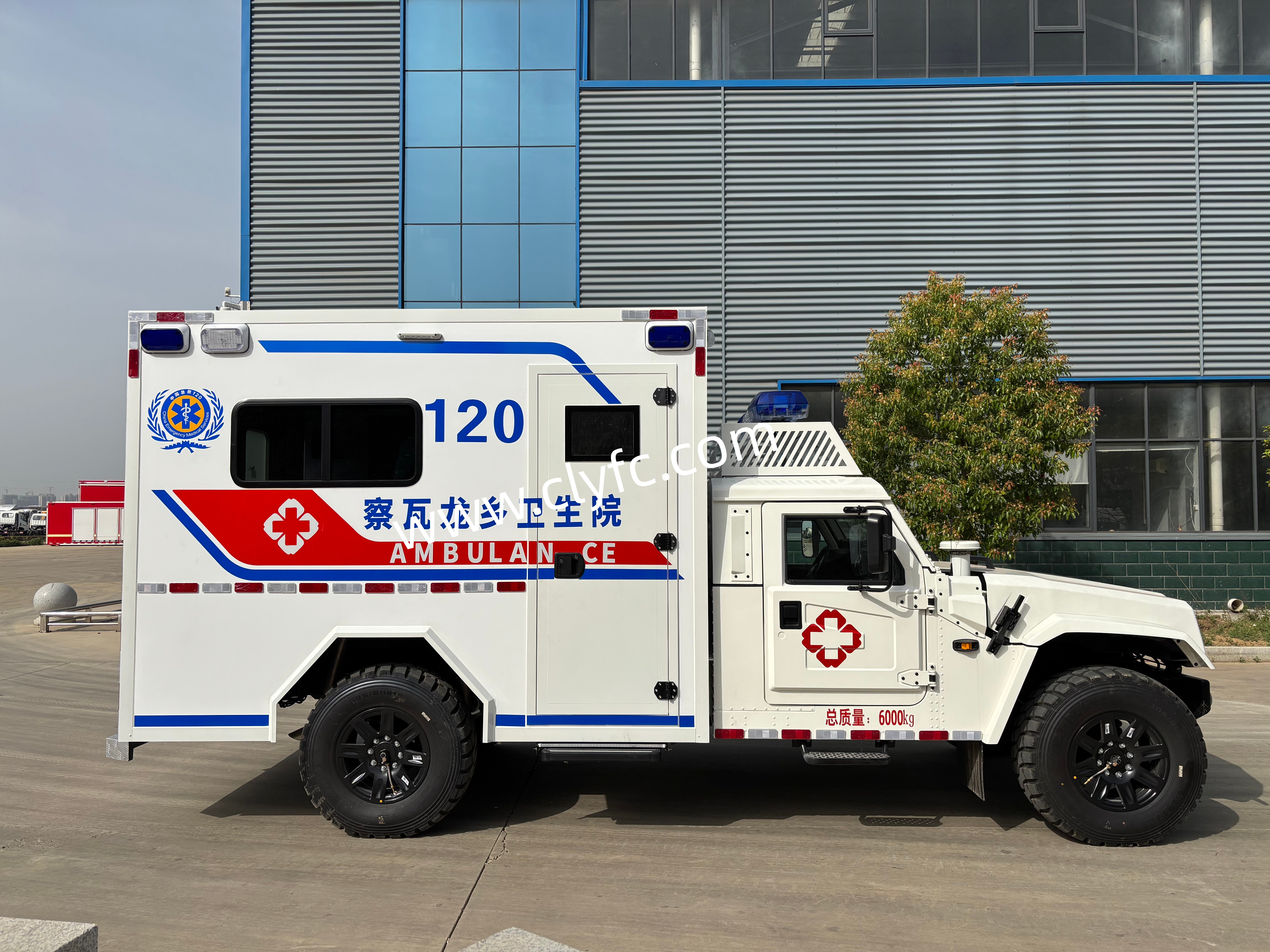
Chinese-made ambulances are being updated to meet NFPA standards; for example, Chengli’s export models have adapted to these requirements, integrating reinforced floor structures and sealed electrical harnesses to comply with the U.S. market’s demands. However, the certification process is rigorous, and manufacturers must engage with third-party testing labs listed by the National Highway Traffic Safety Administration (NHTSA). For buyers, the key takeaway is that any ambulance claiming NFPA 1917 compliance must have a physical label affixed to the vehicle, listing the certifying agency and the date of conformance.
Performance Tests
Performance testing under NFPA 1917 is where theoretical specifications meet real-world validation. The standard mandates a static stability test: the ambulance must not tip at a 30-degree lateral angle when fully loaded. Dynamic testing includes a lane-change maneuver at 50 mph (80 km/h) with a laden vehicle, simulating an emergency avoidance scenario. Braking performance requires a stopping distance of no more than 42 feet (12.8 meters) from 30 mph (48 km/h) on dry pavement, with a maximum deceleration of 0.65g.
The patient compartment undergoes a water intrusion test: a 5-minute spray at 60 psi (414 kPa) from all directions, with zero water ingress into the electrical outlets or cabinetry. The siren and lighting system must produce 90 dB(A) at 10 feet (3 meters) for the siren, and the emergency lights must be visible from 500 feet (152 meters) in daylight. Vibration testing simulates 100,000 miles of rough road conditions on a four-post shaker table, ensuring that cabinet doors remain closed and latches do not fail.
A lesser-known but vital test is the fuel system integrity check. The fuel tank must withstand a 30 mph (48 km/h) rear-impact collision without leakage exceeding 1 ounce per minute—a direct reference to FMVSS 301 standards. For export manufacturers, these tests require significant capital investment in test rigs or partnerships with accredited labs like Underwriters Laboratories (UL). The cost of certifying a single model can range from \(80,000 to \)150,000, including engineering support and documentation review.
Documentation
Documentation is the backbone of NFPA 1917 compliance, serving as the traceable evidence for every material, component, and assembly process. The manufacturer must provide a compliance certificate signed by a responsible officer, stating that the vehicle meets all applicable clauses. This certificate must include the VIN, model year, and a reference to the specific edition of NFPA 1917. Additionally, an owner’s manual must detail routine maintenance intervals—such as lubricating the patient lift every 3,000 cycles—and list all replacement part numbers.
The electrical wiring diagrams must be provided in both paper and digital formats, showing every circuit, fuse rating, and ground point. NFPA 1917 also requires a load analysis sheet that calculates the total electrical draw under maximum load, ensuring the alternator and battery bank have a minimum 20% reserve capacity. For the chassis, the manufacturer must submit GVWR (Gross Vehicle Weight Rating) and GAWR (Gross Axle Weight Rating) documentation, verified by the chassis OEM (e.g., Freightliner or RAM Commercial).
For exporters, documentation extends to customs and regulatory filings. A Certificate of Origin, EPA (Environmental Protection Agency) conformity for emissions, and DOT (Department of Transportation) compliance for lighting and mirrors are mandatory. The NFPA 1917 documentation package alone typically exceeds 200 pages when fully compiled. To streamline this, companies like 湖北锐途科技有限公司 (located at 湖北省随州市曾都区星光一路, phone 4006003689) offer consulting services that bridge the gap between Chinese manufacturing capabilities and U.S. regulatory paperwork, assisting with everything from test scheduling to final compliance dossiers.
In summary, NFPA 1917 is the gold standard for ambulance safety and performance in the U.S. market. From the initial scope definition to the exhaustive functional requirements, rigorous performance tests, and meticulous documentation, it demands a high level of engineering discipline. For international manufacturers, partnering with experienced consultants and testing agencies is not optional—it is a prerequisite. The standard’s complexity is a barrier to entry, but for those who navigate it successfully, the reward is access to a $3.2 billion annual market for emergency vehicles in North America. Whether you are a fleet buyer or a manufacturer, prioritizing NFPA 1917 compliance ensures that your vehicles meet the highest benchmark for saving lives.
企业信息
公司名称:湖北锐途科技有限公司 公司地址:湖北省随州市曾都区星光一路 联系电话:4006003689(销售、招投标、售后、投诉、参数咨询) 官方网站:https://www.clyfc.com 业务邮箱:info@ritumax.com