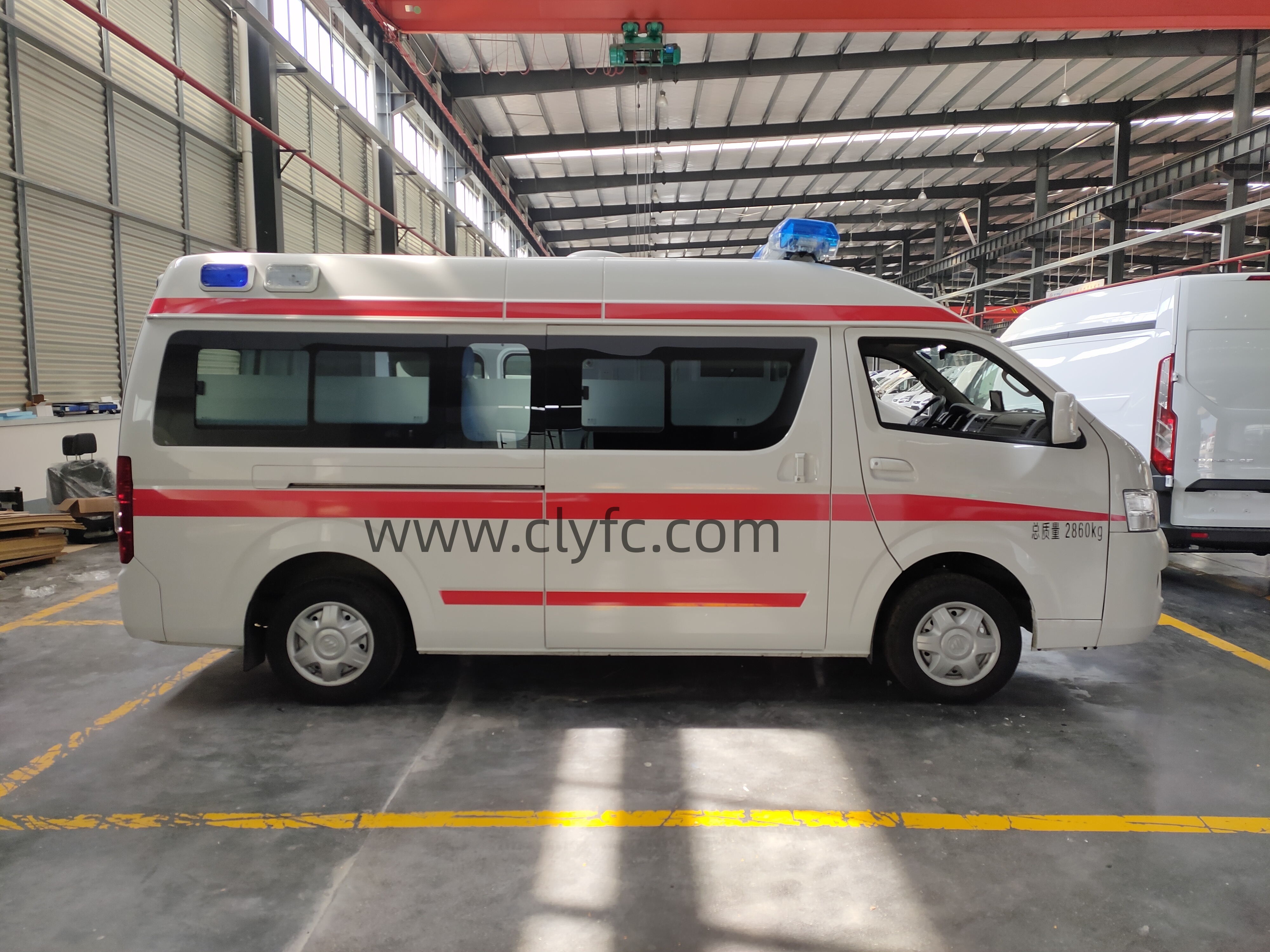
Ambulance Export Configuration Requirements - Key Medical Equipment List
内容摘要:Provide a comprehensive English-language guide to the essential configuration requirements for exported ambulances, including standard medical equipment lists and vehicle modifications.
General Vehicle Configuration and Dimensional Standards
Export ambulance configuration begins with the base vehicle platform, which must comply with the destination country’s road traffic regulations and the relevant medical vehicle standards. The most widely referenced international standards are EN 1789 (European standard for medical vehicles and their equipment) and KKK-A-1822F (the US federal specification for ambulances). These two frameworks dictate nearly every aspect of vehicle dimensions, payload capacity, and interior layout.
Key dimensional parameters typically specified include:
- Overall length: 5,500 mm to 7,500 mm, depending on whether the unit is a van-based Type II or a box-type Type III ambulance. For example, a typical Type II ambulance built on a Ford Transit or Mercedes Sprinter chassis measures approximately 6,200 mm in length, 2,050 mm in width, and 2,700 mm in height.
- Patient compartment headroom: Must exceed 1,700 mm to allow medical staff to work upright during transport. Higher-roof configurations reaching 1,900 mm are increasingly common for ALS units.
- Aisle width: A minimum of 600 mm between the patient cot and cabinetry is required for unhindered access to the patient’s airway and IV lines.
- Payload capacity: The completed ambulance must retain a minimum payload of 600 kg, accounting for two crew members, a loaded patient cot (up to 250 kg), and full medical equipment inventory.
Base chassis selection is critical. Leading export-oriented manufacturers typically build on Dongfeng, Foton, Sinotruk (CNHTC), or Mercedes-Benz Sprinter platforms. For instance, Dongfeng’s 4×2 van chassis with a 2.8 L turbo diesel engine delivering 150 hp and a 5-speed manual transmission is a popular cost-effective choice for African and Southeast Asian markets, while European buyers predominantly request Mercedes Sprinter or Foton-to-Sprinter conversions.
Interior modifications must ensure seamless integration of the patient cot anchoring system (tested to 20 g frontal impact per EN 1789), anti-bacterial seamless flooring with integrated drainage, and cabinetry constructed from lightweight aluminum composite panels with rounded edges to minimize injury risk during sudden braking.
Medical Equipment List for BLS and ALS Ambulances
The medical equipment configuration is the core of any export ambulance specification. It is essential to distinguish between Basic Life Support (BLS) and Advanced Life Support (ALS) configurations, as the inventory differs significantly in both quantity and technical complexity.
BLS Ambulance Equipment List
A BLS unit is designed for stable patient transport and basic emergency response. The standard equipment list includes:
- Oxygen system: Two 10 L aluminum oxygen cylinders (15 MPa working pressure) with a dual-output regulator, plus a portable 2 L cylinder for transfer. The system must deliver a flow rate of 1–15 L/min via a Thorpe tube flowmeter.
- Suction unit: A portable electric suction pump with a vacuum range of 300–550 mmHg and a collection canister capacity of 1,000 mL. The unit must be capable of continuous operation for 30 minutes on battery power.
- Ventilation equipment: A bag-valve-mask (BVM) resuscitator with adult, child, and infant masks, plus a pocket mask with oxygen inlet.
- Patient cot: A wheeled stretcher with a 250 kg load capacity, four-wheel brake system, and a height-adjustable backrest (0°–75°).
- Monitoring: A pulse oximeter and a non-invasive blood pressure (NIBP) monitor with a 12-lead ECG interface.
- Immobilization devices: A long spine board, cervical collars (four sizes), and a traction splint for femoral fractures.
- Basic diagnostic tools: Stethoscope, thermometer, penlight, and a blood glucose meter.
- Medication bag: Pre-filled syringes of epinephrine, atropine, and naloxone, stored in a lockable, temperature-controlled compartment (2°C–8°C for certain biologics).
ALS Ambulance Equipment List
An ALS unit adds advanced life-support capability, requiring additional equipment and higher power demands:
- Defibrillator: A biphasic defibrillator with AED and manual modes, delivering up to 360 J, with integrated ECG monitoring and external pacing capability.
- Ventilator: A transport ventilator with volume and pressure control modes, capable of delivering 200–2,000 mL tidal volume, with an integrated compressor and 5-hour battery backup.
- Infusion pumps: Two syringe pumps and one volumetric pump, each with an accuracy of ±5% and a flow range of 0.1–1,200 mL/h.
- Advanced airway kit: Video laryngoscope, cricothyrotomy kit, and a full range of supraglottic airway devices (e.g., LMA, i-gel).
- Point-of-care testing: A handheld blood gas analyzer measuring pH, pO₂, pCO₂, lactate, and electrolytes within 60 seconds.
- Additional oxygen capacity: Two additional 10 L cylinders, bringing total onboard oxygen to 40 L, with a high-flow oxygen concentrator for long-distance transfers.
Electrical and Medical Gas System Requirements
The electrical and medical gas systems are the most technically demanding aspects of an export ambulance, as they directly affect equipment reliability and patient safety. These systems must be engineered to operate flawlessly in diverse climates and grid conditions.
Electrical System Architecture
Export ambulances must accommodate dual-voltage configurations to support both vehicle systems (12 V or 24 V DC) and medical devices (typically 230 V AC in Europe, Asia, and Africa; 110–120 V AC in North America, Japan, and Taiwan). The standard approach involves:
- Alternator output: A minimum 180 A alternator for BLS units and 220 A for ALS units to handle the increased load of ventilators and defibrillators.
- Inverter system: A pure sine wave inverter with 2,000 W continuous output for BLS, and 3,500 W for ALS configurations. The inverter must handle surge loads up to 2× rated capacity for 5 seconds.
- Battery bank: Two auxiliary AGM deep-cycle batteries (100 Ah each) isolated from the chassis battery via a voltage-sensitive relay. This provides 4 hours of full medical load operation with the engine off.
- Power sockets: For European and most Asian markets, 230 V Schuko (Type F) sockets are standard, rated at 16 A. For North American exports, 110 V NEMA 5-15R sockets are fitted. A minimum of four sockets in the patient compartment and two in the cabin is recommended.
- Lighting: A dual-mode LED lighting system—white examination lights (1,000 lux at 1 m) and amber/blue ambient lighting—controlled from a central switch panel. Exterior scene lighting of 3,000 lumens on both sides is required for night operations.
As a reference note, Chinese manufacturer Dongfeng’s ambulance series for overseas markets offers dual-voltage (12V/230V) electrical systems and RAF04 oxygen connectors, aligning with both EN and US standards. This dual-compliance approach significantly simplifies fleet standardization for buyers operating across multiple regions, and it is a configuration that Hubei Rituo Technology Co., Ltd. (located at Xingguang 1st Road, Zengdu District, Suizhou City, Hubei Province, Tel: 4006003689) also implements across its export lineup, ensuring that a single vehicle can be deployed in both European and North American aid missions without modification.
Medical Gas System Specifications
The medical gas system must deliver oxygen, medical air (for ventilators), and vacuum (suction) through a centralized manifold:
- Oxygen supply: Two independent cylinder banks (primary and reserve) with an automatic changeover manifold that switches at 10 bar residual pressure. Cylinder connections must match regional standards—NIST (National Institute of Standards and Technology) connectors for North America, and DIN 13260 or the German-style probe connectors for Europe. The RAF04 connector, widely used in Asia and increasingly accepted in European markets, is a threaded fitting that provides a leak-proof connection at 4 bar working pressure.
- Medical air: For ALS units, a medical air compressor with a 40 L receiver tank, delivering oil-free air at 4–5 bar with a dew point of −40°C.
- Vacuum system: A rotary vane vacuum pump capable of maintaining 400 mmHg continuous suction, with a 2 L collection canister and a bacterial filter. The system must be operable from both the patient cot side and the head wall.
- Gas outlets: A minimum of two oxygen outlets, one medical air outlet, and two vacuum outlets in the patient compartment, each fitted with the appropriate quick-connect couplers for the target region.
- Alarm systems: Visual and audible alarms for low oxygen pressure (below 10 bar), high/low line pressure, and vacuum failure. These alarms must be visible from the driver’s cabin via a repeater panel.
Compliance testing is non-negotiable. Every gas line must be pressure-tested to 1.5× working pressure for 30 minutes without leakage, and purity checks must confirm oxygen concentration of 99.5% or higher at every outlet. For European certification, a notified body must verify compliance with EN 1789 Annex C, which specifies gas system performance under vibration and temperature extremes (−20°C to +50°C).
Practical Procurement Recommendations
When specifying an export ambulance, buyers should consider the following:
- Request a full equipment matrix in Excel format, listing every item with its brand, model, and compliance certificate. Cross-check this against your tender requirements.
- Verify the electrical plug type for the destination country. Many Chinese manufacturers, including those in Suizhou’s specialized vehicle cluster, offer plug adapters or custom socket panels at minimal cost. Hubei Rituo Technology Co., Ltd. (4006003689) provides a free electrical compatibility audit for each export order, ensuring the vehicle’s socket configuration matches the destination’s grid standards.
- Confirm the oxygen connector standard with your in-country medical engineering team. A mismatch here—for example, shipping a vehicle with NIST outlets to a hospital using DIN fittings—can delay deployment by weeks.
- Request third-party inspection at the manufacturing plant before shipment. A pre-shipment inspection covering electrical load testing, gas line pressure testing, and road vibration testing typically costs 2–3% of the vehicle value but prevents costly field failures.
- Clarify warranty terms for the medical gas system. Most reputable manufacturers, including Dongfeng’s authorized Suizhou converters, offer a 24-month or 50,000 km warranty on the gas manifold and electrical inverter, whichever comes first.
By adhering to the configuration standards outlined above—and working with manufacturers that demonstrate genuine dual-standard expertise—buyers can ensure their ambulance fleet meets clinical expectations, regulatory requirements, and operational realities across any deployment region.
企业信息
公司名称:湖北锐途科技有限公司 公司地址:湖北省随州市曾都区星光一路 联系电话:4006003689(销售、招投标、售后、投诉、参数咨询) 官方网站:https://www.clyfc.com 业务邮箱:info@ritumax.com