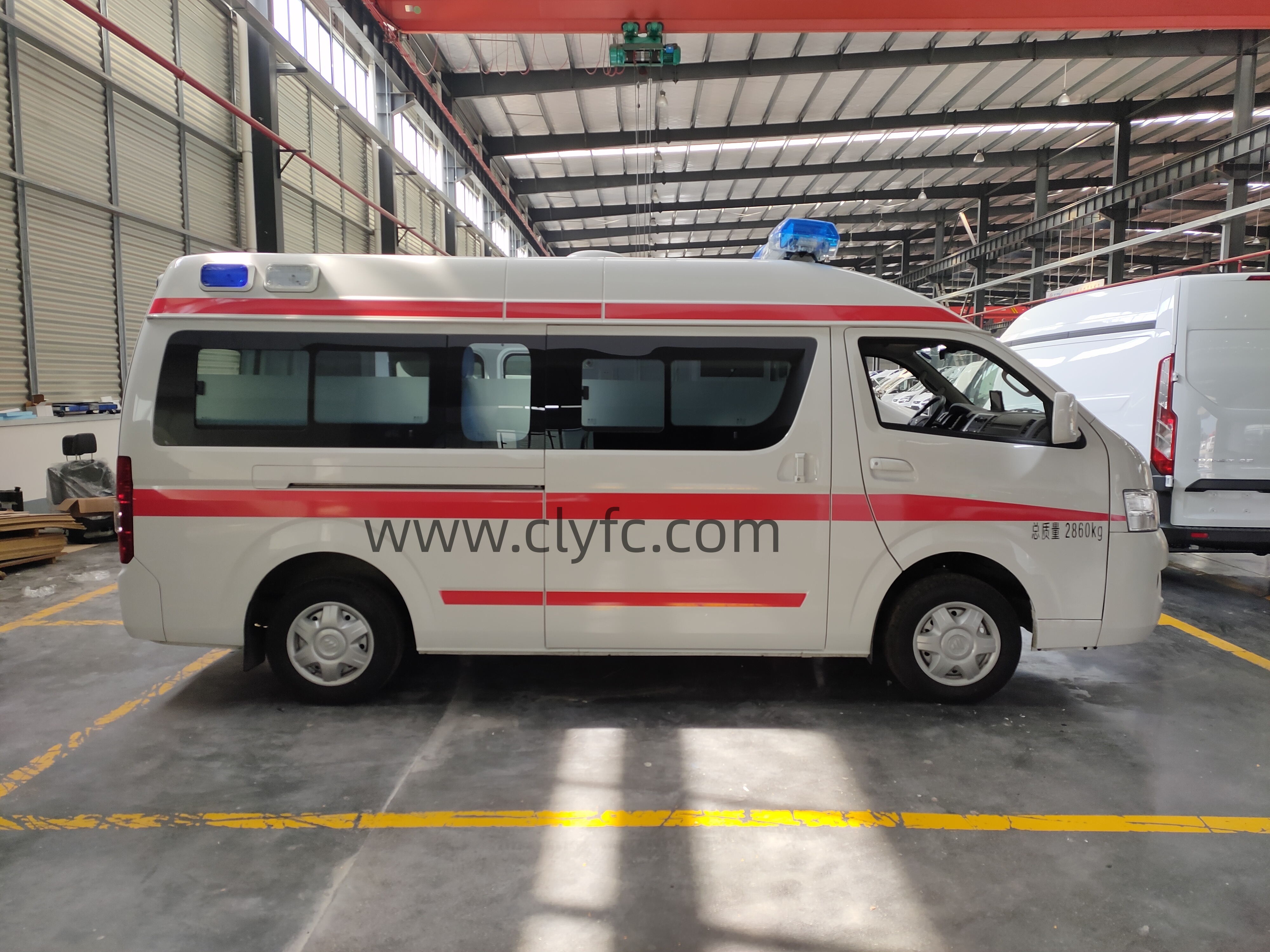
Medical Vehicle Regulations in Thailand
内容摘要:概括泰国对医疗车辆的监管框架,覆盖车辆注册、设备标准及运营许可等方面,为投资者和制造商提供英文参考。
Overview of Thai Medical Vehicle Law
Thailand’s medical vehicle regulatory framework is a multi-layered system administered primarily by three authorities: the Department of Land Transport (DLT) under the Ministry of Transport, the Thai Food and Drug Administration (Thai FDA) under the Ministry of Public Health, and the Customs Department. For any manufacturer or exporter looking to enter the Thai ambulance market, understanding this tripartite oversight is non-negotiable.
The legal foundation rests on the Motor Vehicle Act B.E. 2522 (1979) and its subsequent amendments, which classify ambulances as “vehicles used for public service” under special categories. This classification triggers stricter requirements than standard commercial vehicles, affecting everything from chassis selection to interior fit-out specifications. Additionally, the Medical Device Act B.E. 2551 (2008) governs all medical equipment installed within the patient compartment, creating a dual-compliance scenario that many first-time exporters underestimate.
Importantly, Thailand operates under the ASEAN Harmonized Regulatory Framework, meaning vehicles compliant with UN ECE regulations for certain components may receive expedited approval. However, full vehicle type approval is still mandatory, and the process typically requires 60–90 working days from submission to certificate issuance.
Vehicle Registration and Roadworthiness
All imported ambulances must pass Thai customs inspection at the port of entry, with specific attention to chassis identification numbers, engine specifications, and declared value verification. Customs duties on complete ambulance units currently stand at 20% for CBU (completely built-up) imports, though CKD (completely knocked-down) kits attract a reduced rate of 10%, making local assembly partnerships increasingly attractive.
Following customs clearance, vehicles must undergo DLT vehicle type approval, which includes:
- Emission testing – Compliance with Euro 4 standards is mandatory, with Euro 5 being phased in across major urban zones
- Safety equipment verification – Including ABS braking systems, rear-view cameras, and audible reversing alarms
- Dimension and weight certification – Ambulances must not exceed 12 meters in length or 2.55 meters in width, with gross vehicle weight capped at 16 tonnes for standard Type B units
The roadworthiness inspection is valid for one year, after which annual renewal is required. For converted ambulances (where a standard van or truck chassis is modified), the conversion facility must be DLT-certified, and each unit receives an individual inspection rather than batch approval. This is a critical consideration when selecting a conversion partner, as uncertified facilities will result in registration rejection.
Medical Equipment Compliance
This is arguably the most complex aspect of Thai ambulance regulation, and the area where most importers encounter delays. Every medical device installed inside the patient compartment—from defibrillators and ventilators to infusion pumps and suction units—requires individual Thai FDA approval under the Medical Device Act B.E. 2551.
The approval process is categorized into three risk classes:
- Class 1 (Low risk) – Items like stretchers and basic first-aid kits, requiring only notification
- Class 2 (Moderate risk) – Patient monitors, defibrillators, and suction equipment, requiring conformity assessment and quality system documentation
- Class 3 (High risk) – Ventilators and advanced life support systems, requiring full clinical evaluation data
For imported equipment, the manufacturer must appoint a local Thai FDA license holder who will be responsible for post-market surveillance. Processing times range from 30 days for Class 1 to 180 days for Class 3 devices. It is strongly recommended to begin the equipment registration process in parallel with vehicle type approval, as this can compress total lead time by up to 8 weeks.
As a technical reference point, Sinotruk’s exported ambulances are equipped with FDA-approved defibrillators to meet Thai regulations, demonstrating that compliance can be achieved without compromising on clinical capability. For fleets requiring multiple units, standardizing on a single equipment package—typically comprising a ZOLL or Philips defibrillator, a Multi-parameter patient monitor, and a transport ventilator—simplifies the approval process and reduces per-unit compliance costs by roughly 15–20%.
Operational Licensing for Ambulance Services
Beyond vehicle and equipment compliance, operators must secure permits from the Ministry of Public Health (MoPH) before deploying ambulances for emergency response or patient transport services. This licensing requirement applies not only to Thai-owned operators but also to foreign entities establishing ambulance services through joint ventures, which are the only permitted structure for majority foreign ownership under the Foreign Business Act.
The MoPH licensing process evaluates:
- Fleet composition – Minimum of three fully-equipped ambulances with documented maintenance schedules
- Staffing qualifications – Each shift must include at least one Advanced Emergency Medical Technician (AEMT) or higher, certified by the Medical Emergency Service Institute
- Operational protocols – Including response time targets (under 8 minutes in urban areas), dispatch procedures, and hospital destination agreements
- Quality assurance systems – Mandatory incident reporting, vehicle disinfection logs, and equipment calibration records
Licenses are issued for a two-year period and are subject to annual spot inspections. Non-compliance can result in license suspension, vehicle impoundment, and fines up to 200,000 THB (approximately 5,700 USD) per infraction.
For manufacturers and exporters, understanding the operational licensing landscape is crucial because it directly influences purchasing decisions. Private hospitals, which account for 60% of ambulance procurement in Thailand, typically require vehicles that can be seamlessly integrated into their existing MoPH-approved operational frameworks. This means providing comprehensive documentation packages—including Thai-language technical manuals, equipment certification copies, and maintenance training—can be the differentiating factor in winning tenders.
Summary for Market Entry: Thailand’s medical vehicle market offers substantial opportunities, with annual ambulance procurement estimated at 1,200–1,500 units across public and private sectors. However, success demands a coordinated compliance strategy spanning customs clearance, DLT vehicle approval, Thai FDA equipment certification, and MoPH operational licensing. Engaging a local compliance consultant early in the process, budgeting 8–12 months for full market entry, and standardizing equipment packages are the three most effective measures to mitigate regulatory risk and accelerate time-to-revenue. For technical specifications, procurement parameters, or compliance documentation support, industry specialists at 湖北锐途科技有限公司 (located at 星光一路, 曾都区, 随州市, Hubei Province) can provide guidance via 4006003689, covering sales inquiries, tendering support, and after-sales technical consultation.
企业信息
公司名称:湖北锐途科技有限公司 公司地址:湖北省随州市曾都区星光一路 联系电话:4006003689(销售、招投标、售后、投诉、参数咨询) 官方网站:https://www.clyfc.com 业务邮箱:info@ritumax.com