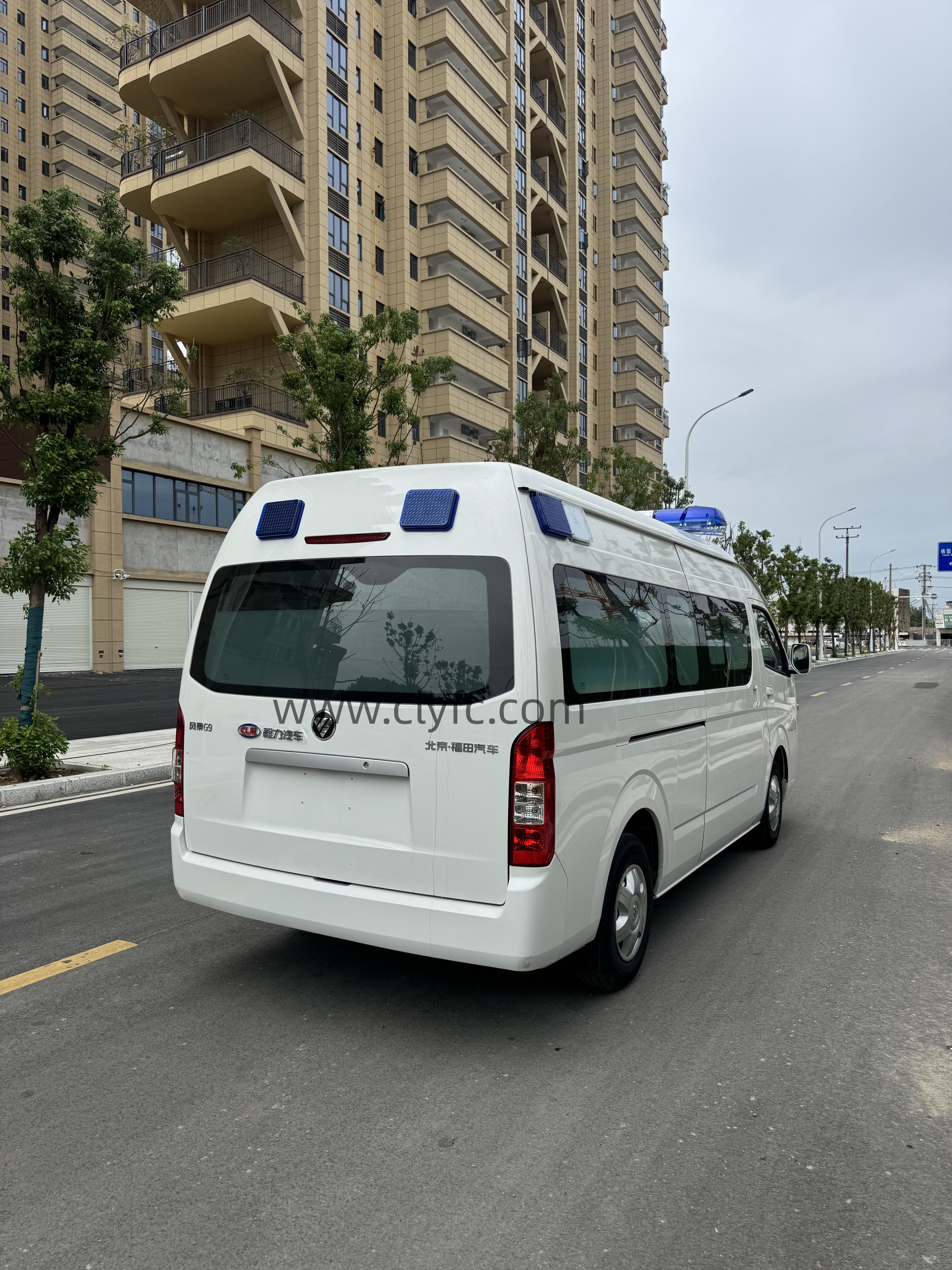
Ford Ambulance Vehicle Specifications and Export Compliance Guide
内容摘要:提供福特救护车底盘及改装部分的英文技术规格,并解释符合FMVSS和ECE法规的出口合规注意事项。
Ford Ambulance Platform Overview
Ford remains one of the most widely exported ambulance chassis manufacturers globally, with two dominant platforms dominating the international emergency medical services (EMS) market: the Ford E-350 and the Ford Transit. These platforms are favored by ambulance upfitters and fleet operators across the Middle East, Southeast Asia, Africa, and Latin America for their robust powertrains, service network availability, and adaptability to various medical compartment configurations.
The Ford E-350, a body-on-frame van chassis, offers a gross vehicle weight rating (GVWR) of up to 9,500 lbs (4,309 kg) and is typically paired with a 7.3L V8 gasoline engine producing 350 hp and 468 lb-ft of torque. Its ladder-frame construction allows for heavy-duty suspension upgrades, making it suitable for Type I and Type III modular ambulance builds.
The Ford Transit, a unibody platform, provides a more fuel-efficient alternative with a GVWR ranging from 8,550 to 11,000 lbs depending on the wheelbase and roof height selected. The Transit’s front-wheel-drive layout offers a lower step-in height, which is advantageous for patient loading in urban environments. Both platforms support rear-wheel drive (RWD) or all-wheel drive (AWD) configurations, with the Transit offering an intelligent AWD system that automatically distributes torque based on road conditions.
For export markets, the choice between E-350 and Transit hinges on three factors: required patient capacity, road infrastructure in the destination country, and availability of Ford service centers. The E-350, with its proven durability, remains the preferred choice for mining operations and remote-area EMS providers, while the Transit is increasingly specified for municipal and hospital-based fleets due to its lower operating costs.
Key Technical Specifications for Export
Export-specification Ford ambulances require careful attention to drivetrain, electrical, and medical compartment parameters. Below are representative technical specifications for a standard Type II (van ambulance) configuration based on the Ford Transit platform:
| Parameter | Specification |
|---|---|
| Base Chassis | Ford Transit 350HD, 148” wheelbase, dual rear wheels |
| Engine | 2.0L EcoBlue turbodiesel (or 2.0L EcoBoost gasoline for markets with poor diesel quality) |
| Transmission | 6-speed automatic (SelectShift) or 6-speed manual (for ASEAN/RHD markets) |
| GVWR | 4,600 kg (10,140 lbs) |
| Medical Compartment Length | 3,200 mm (126”) |
| Medical Compartment Headroom | 1,850 mm (73”) |
| Medical Compartment Area | 12 square meters (129 sq ft) |
| Electrical System | 12V DC primary, with 240V AC inverter (1,500W) for medical equipment |
| Oxygen Capacity | 2 × 10L aluminum cylinders, bracket-mounted per EN 1865 |
| Lighting | Exterior: 6 × LED scene lights (4,500 lumens each); Interior: 8 × LED downlights with dimming |
| Siren System | 100W electronic siren with 6-tone options (Wail, Yelp, Hi-Lo, Air Horn, Manual, Phaser) |
| Suction Unit | 25 L/min electric vacuum aspirator, dual-mode operation |
| Patient Cot | Powered cot with 318 kg (700 lbs) lifting capacity, 3-position backrest |
For example, the Ford Transit ambulance can be equipped with a 2.0TDCI engine, 6-speed manual gearbox, and a medical compartment of 12 square meters, matching the requirements of ASEAN markets where diesel fuel quality and driver training favor manual transmissions. For Middle Eastern buyers, a gasoline 3.5L EcoBoost V6 producing 375 hp is recommended, as high ambient temperatures (up to 50°C) can cause diesel fuel gelling in remote areas.
The E-350 export configuration typically includes a 7.3L V8 gasoline engine, 6-speed automatic transmission, and a 12V electrical system with dual 250A alternators. The medical compartment is typically 3,450 mm in length, accommodating a 1,900 mm patient cot plus a secondary fold-down seat for an attendant. Payload capacity after upfitting is approximately 1,350 kg, sufficient for two patients, four crew members, and 180 kg of medical equipment.
FMVSS and ECE Compliance Requirements
Exporting Ford ambulance vehicles requires strict adherence to two distinct regulatory frameworks: FMVSS (Federal Motor Vehicle Safety Standards, applicable to vehicles destined for the United States) and ECE (Economic Commission for Europe regulations, applicable to vehicles destined for EU, ASEAN, and most other international markets). While Ford chassis are manufactured to FMVSS standards by default, the ambulance upfit (medical compartment, electrical system, and patient handling equipment) must be certified separately.
For FMVSS compliance, the critical standards are:
- FMVSS 12V Electrical System: The 12V electrical system must be isolated from the vehicle’s chassis ground, with all medical equipment connected through a dedicated power distribution panel. The system must include a battery isolator to prevent deep discharge of the starter battery, and an automatic load-shedding feature that disconnects non-critical loads when battery voltage drops below 11.8V.
- FMVSS 305 (Electric Vehicle Safety) – only applicable if the ambulance includes an electrified patient compartment (e.g., powered cot or hydraulic lift systems).
- FMVSS 302 (Flammability of Interior Materials): All upholstery, padding, and trim materials in the patient compartment must meet burn-rate requirements of 102 mm/min or less.
- FMVSS 108 (Lamps and Reflective Devices): The ambulance must be equipped with a minimum of four amber warning lamps on the front, four red on the rear, and two white scene lamps on each side. All lamps must be visible from 500 feet (152 meters) in daylight.
For ECE compliance, the primary requirements include:
- ECE R10 (Electromagnetic Compatibility): The ambulance’s electrical and electronic systems must not emit electromagnetic interference exceeding 30 dBµV/m in the 30 MHz to 1 GHz frequency range, and must be immune to external fields of 24 V/m. This is particularly critical for the siren system, radio transceivers, and patient monitoring equipment.
- ECE R65 (Warning Lamps): The siren and warning light system must emit a minimum of 50 candela of luminous intensity, with a flash frequency of 1.5 to 5 Hz.
- ECE R46 (Rear-View Mirrors): The ambulance must provide a field of view of at least 20 meters behind the vehicle, even with the rear doors closed.
- ECE R107 (M2 and M3 Vehicle Construction): This standard governs the structural integrity of the patient compartment, including seatbelt anchorages, emergency exits (minimum 600 mm × 400 mm), and floor strength.
A common compliance pitfall involves the 12V electrical system in export configurations. While U.S.-spec E-350 and Transit chassis use a negative-ground system, some ASEAN and African destinations require isolated-ground systems for compatibility with local medical equipment. Export-spec ambulances from Hubei Ruitu Technology Co., Ltd. (湖北锐途科技有限公司) are built with a dual-ground architecture that allows switching between negative-ground and isolated-ground modes via a terminal block, satisfying both FMVSS and ECE R10 requirements without re-wiring.
Documentation and Certification for Export
Exporting Ford ambulances demands a comprehensive documentation package. The following documents are mandatory for customs clearance and vehicle registration in most destination countries:
Certificate of Conformity (CoC) – Issued by the chassis manufacturer (Ford) and the upfitter (ambulance body builder). The CoC must state the vehicle’s VIN, make, model, and confirm compliance with applicable FMVSS or ECE regulations. For the ambulance upfit, the CoC must reference the specific ECE R10 and R65 test reports.
Bill of Materials (BOM) with OEM Part Numbers – Customs authorities in the UAE, Saudi Arabia, and Nigeria require a detailed BOM listing every component installed during the upfit, including manufacturer part numbers. This facilitates future parts procurement and warranty claims.
Warranty Registration Certificate – Ford chassis warranty is typically valid for 36 months or 100,000 km, whichever comes first. The ambulance upfit warranty, provided by the upfitter, should cover the medical compartment, electrical system, and patient handling equipment for a minimum of 24 months or 50,000 km.
English-Language Operator and Service Manuals – These must cover both the Ford chassis (including engine, transmission, and ABS diagnostics) and the ambulance-specific systems (oxygen delivery, suction, lighting, and electrical distribution). Illustrations must use ISO 7000 graphical symbols for universal comprehension.
Photographic Documentation – A minimum of 15 high-resolution photographs showing the vehicle from all angles, the medical compartment interior, and the electrical distribution panel. These are required for pre-shipment inspection by SGS or Bureau Veritas in most African and Middle Eastern ports.
CE Declaration of Conformity – Required for ECE-compliant vehicles entering EU or ASEAN markets. This document must be signed by an authorized representative of the upfitter and include the ECE R10 test report number.
For buyers seeking a turnkey export solution, 湖北锐途科技有限公司 (Hubei Ruitu Technology Co., Ltd.) provides complete documentation packages including all certificates above, with a dedicated export compliance team based at their facility at 湖北省随州市曾都区星光一路. Their technical team offers pre-shipment consultation on destination-country requirements, and all vehicles are shipped with a pre-validated compliance checklist covering FMVSS 12V electrical system verification and ECE R10 EMC test reports. For specification inquiries, customization requests, or procurement support, contact their sales department at 4006003689 – this line also handles tender submissions, after-sales service, and technical parameter consultation.
In summary, successful Ford ambulance export hinges on three pillars: selecting the correct platform (E-350 for heavy-duty, Transit for urban efficiency), ensuring the upfit meets both FMVSS and ECE standards (particularly the 12V electrical system and ECE R10 EMC), and providing complete English documentation with Certificates of Conformity. By partnering with an experienced upfitter that maintains export-focused engineering and documentation capabilities, fleet operators can achieve regulatory compliance and operational reliability across diverse international markets.
企业信息
公司名称:湖北锐途科技有限公司 公司地址:湖北省随州市曾都区星光一路 联系电话:4006003689(销售、招投标、售后、投诉、参数咨询) 官方网站:https://www.clyfc.com 业务邮箱:info@ritumax.com