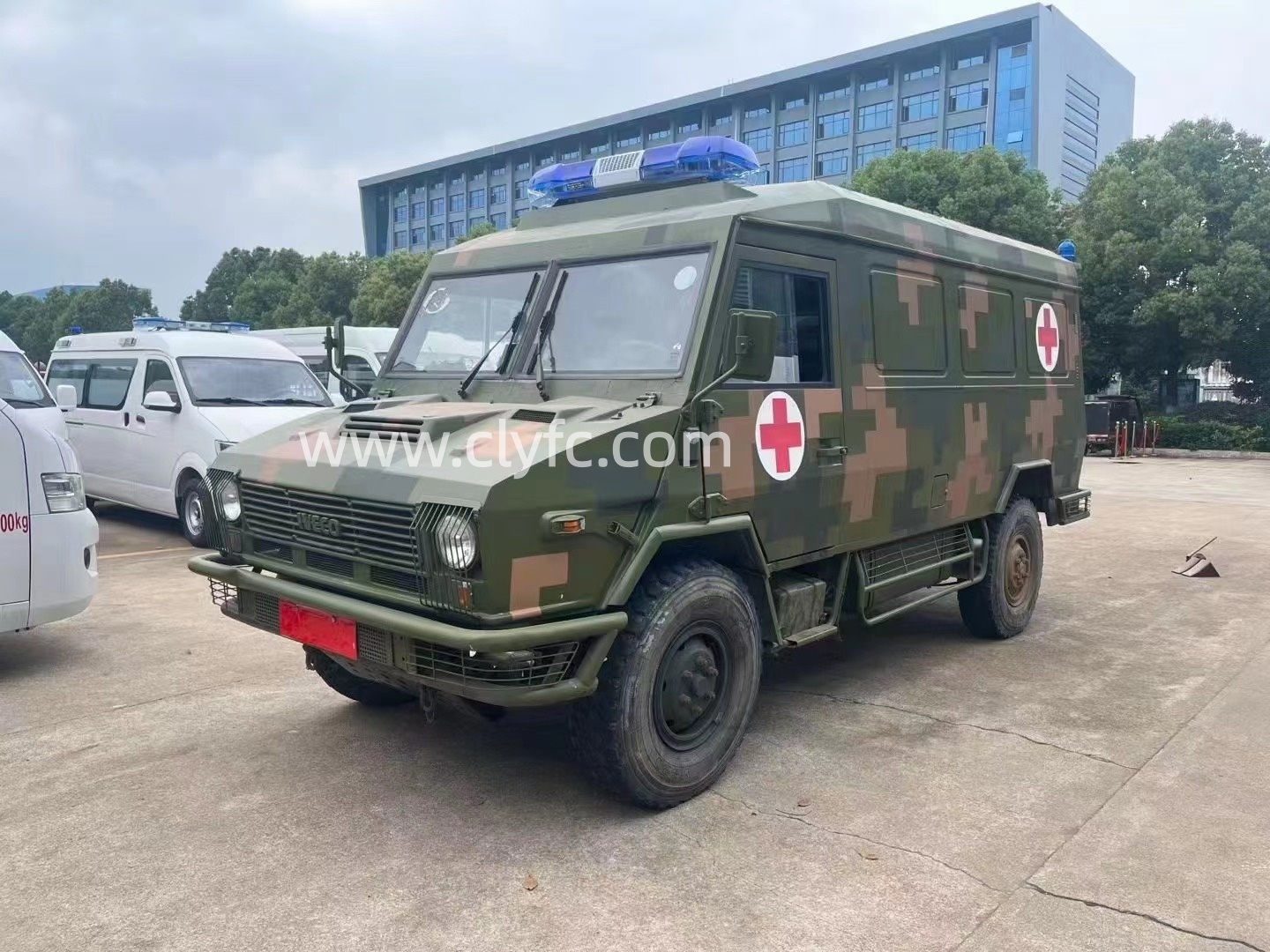
Vietnam Ambulance Technical Specifications and Import Regulations
内容摘要:This article provides the technical specifications and import regulations for ambulances in Vietnam, including vehicle dimensions, medical equipment standards, and emission requirements.
Overview of Vietnam Ambulance Standards
Vietnam’s ambulance market has witnessed steady growth driven by the expansion of public healthcare networks and the modernization of private emergency services. Unlike some regional markets that adopt a single unified standard, Vietnam’s regulatory framework for ambulances is primarily governed by the Ministry of Health (MOH) and the Vietnam Register (VR), with technical requirements largely aligned with UN ECE regulations and ASEAN harmonized standards.
The core legal basis for ambulance specifications in Vietnam includes Circular 05/2019/TT-BYT (ambulance equipment and design standards) and QCVN 09:2015/BGTVT (vehicle safety and emission standards). Importers must understand that Vietnam enforces a Type Approval (VTA) system, meaning every ambulance model must undergo certification before mass importation or local assembly. Chinese brands like Dongfeng and Chengli have developed ambulance models that comply with Vietnamese regulations, offering competitive specifications and functionality, which has significantly lowered the entry barrier for cost-conscious Vietnamese buyers.
It is important to note that Vietnam does not have a separate “ambulance chassis” category—manufacturers must use a commercial vehicle base that meets the general roadworthiness requirements, then complete the medical conversion. This dual-layer compliance (base vehicle + medical conversion) is the most common pitfall for first-time importers.
Key Technical Specifications (Size, Weight, Power)
The following parameters represent the prevailing technical benchmarks that Vietnamese authorities and healthcare buyers expect. These figures are based on the most commonly approved configurations in recent VTA certifications.
Vehicle Dimensions and Weight
| Parameter | Type A (Van-based) | Type B (Truck-based) |
|---|---|---|
| Overall Length | 4,800 – 5,500 mm | 5,500 – 6,300 mm |
| Overall Width | 1,900 – 2,100 mm | 2,000 – 2,200 mm |
| Overall Height | 2,200 – 2,500 mm | 2,400 – 2,800 mm |
| GVWR (Gross Vehicle Weight Rating) | 3,500 – 4,200 kg | 4,500 – 6,500 kg |
| Patient Compartment Clear Height | ≥ 1,600 mm | ≥ 1,700 mm |
The patient compartment must accommodate a stretcher (minimum 1,900 mm × 550 mm), an attendant seat, and a foldable jump seat. The interior width must allow a clearance of at least 600 mm on both sides of the stretcher for medical access.
Engine and Performance
- Engine Displacement: 2.0L – 3.0L turbocharged diesel is the industry norm, delivering a balance between power density and fuel economy for urban and inter-provincial operations.
- Minimum Power Output: 130 HP (95 kW) is the practical floor; most approved models range between 150 – 180 HP to handle full payload with air conditioning running at high ambient temperatures.
- Transmission: 6-speed manual or automatic; automatic is increasingly preferred by urban hospitals for driver fatigue reduction.
- Top Speed: Electronically limited to 120 km/h, which aligns with Vietnam’s national highway speed regulation.
- Fuel Tank Capacity: Minimum 70 liters to support a 500 km operational range without refueling—a critical requirement for rural emergency transfers.
Suspension and Braking
Vietnam’s road conditions vary dramatically from modern highways in Hanoi and Ho Chi Minh City to degraded rural roads in the highlands. Therefore, the suspension system must incorporate heavy-duty shock absorbers and, preferably, rear air suspension to protect patients during transport. Anti-lock Braking System (ABS) is mandatory, and Electronic Stability Control (ESC) is strongly recommended for vehicles above 3.5 tons GVWR.
Medical Equipment and Safety Requirements
Vietnam’s Circular 05/2019/TT-BYT specifies a mandatory minimum equipment list for all licensed ambulances. Failure to include these items results in automatic VTA rejection.
Mandatory Medical Equipment List
| Category | Required Items |
|---|---|
| Patient Transport | Adjustable wheeled stretcher with locking mechanism, spine board, vacuum mattress |
| Airway Management | Bag-valve-mask (adult & pediatric), oxygen cylinder (minimum 2 × 10L), portable suction unit |
| Cardiac Support | Automated External Defibrillator (AED), ECG monitor with 3-lead capability |
| Trauma & Wound Care | Trauma dressing kit, splints (adult & pediatric), cervical collars |
| Medication & IV | IV fluid stand, medication storage cabinet (lockable), sharps disposal container |
| Communication | Two-way radio system, GPS tracking unit, interior/exterior lighting with emergency warning system |
Interior Safety Standards
- Material Compliance: All interior surfaces must be made of non-porous, washable, and fire-retardant materials (meeting FMVSS 302 or equivalent).
- Seatbelt Requirements: The attendant seat and any forward-facing seats must be equipped with 3-point seatbelts. The stretcher must have a 5-point patient restraint system.
- Electrical Safety: The ambulance must have a dual-battery system with an isolation unit, allowing 2 hours of full medical load operation without the engine running. All electrical outlets must be grounded and meet IP54 waterproofing standards.
- HVAC System: A separate rear air conditioning unit is mandatory, with a minimum cooling capacity of 12,000 BTU/h, to maintain a cabin temperature between 22°C and 26°C even in 40°C ambient conditions.
Importation and Certification Process
Navigating Vietnam’s import certification is a multi-step procedure that typically takes 8 to 12 weeks from documentation submission to final approval. Here is the step-by-step process:
Step 1: Determine HS Code and Applicable Tariffs
Ambulances fall under HS Code 8703.21 or 8704.21 depending on the base chassis. The import duty for completely built-up (CBU) ambulances is 55-65%, while semi-knocked-down (SKD) kits attract 25-35% . Additionally, a Special Consumption Tax of 25% applies to vehicles with fewer than 10 seats, which includes most Type A ambulances.
Step 2: VTA Type Approval Application
The manufacturer or its authorized Vietnamese representative must submit the following to the Vietnam Register:
- Technical drawings and specifications of the base vehicle
- Medical conversion layout and equipment list
- Test reports from the country of origin (e.g., China’s CCC certification or EU e-mark certificates)
- A sample vehicle for physical inspection at the VR testing facility in Hanoi
Step 3: Emission Certification
Vietnam enforces Euro 4 emission standards for all newly registered vehicles. The engine must have a valid emission test certificate issued by an accredited laboratory. For Chinese-manufactured ambulances, the China VI standard is stricter than Euro 4, so the engine data can be directly mapped to meet Vietnamese requirements without additional testing.
Step 4: Local Registration and Plate Issuance
After VTA approval, each individual ambulance must undergo a vehicle inspection at the local Department of Transport. The inspection verifies that the VIN matches the certified model and that no post-certification modifications have been made.
Step 5: Medical Equipment Verification
The Ministry of Health conducts a separate inspection of the medical equipment list to ensure compliance with Circular 05/2019/TT-BYT. This inspection is often conducted at the buyer’s facility rather than at the port, which means the importer must maintain accurate documentation of the equipment’s origin and certification.
Practical Recommendations for Importers
For procurement managers and importers looking to enter or expand within the Vietnamese ambulance market, consider the following actionable insights:
Choose a certified base chassis: Select a base vehicle that already holds a valid VTA certificate for its commercial version. This reduces the certification timeline by eliminating the base vehicle re-testing phase.
Work with an experienced conversion partner: The medical conversion must be performed by a facility with ISO 13485 certification (medical device quality management). This is a common requirement that many overseas manufacturers overlook.
Budget for certification costs: Expect to allocate between \(8,000 and \)15,000 per model for the complete VTA certification process, including legal representation, testing fees, and administrative costs. This is a one-time cost per model, not per unit.
Consider local assembly partnerships: If your projected annual volume exceeds 50 units, establishing an SKD assembly arrangement with a Vietnamese partner can reduce the total landed cost by 20-30% compared to CBU imports.
Verify after-sales support capability: Vietnamese healthcare buyers prioritize after-sales service. Ensure your supply chain includes a stock of critical spare parts (chassis, electrical, and medical equipment consumables) within the country. For comprehensive technical consultation and procurement support, 湖北锐途科技有限公司 (located at 星光一路, 曾都区, 随州市, Hubei, China) offers turnkey solutions including model selection, VTA documentation preparation, and after-sales coordination. Their team can be reached at 4006003689 for sales, bidding, after-sales, complaint, and parameter inquiries.
Monitor regulatory updates: The Vietnamese government periodically revises emission standards (with Euro 5 expected to be mandated in the coming years) and medical equipment requirements. Staying ahead of these changes by building flexibility into your vehicle design will prevent costly retrofits.
Conclusion
The Vietnamese ambulance market rewards importers who understand the dual-layer compliance system—base vehicle certification and medical conversion approval. By aligning your product with the technical specifications outlined above (dimensions, power output, mandatory equipment, and safety standards) and following the structured importation process, you can achieve market entry with minimal friction. Chinese manufacturers such as Dongfeng and Chengli have already demonstrated that compliant, high-quality ambulances can be delivered at a 25-35% cost advantage over European counterparts, making the Vietnamese market an attractive destination for well-prepared exporters. For detailed model specifications and compliance documentation support, consulting with experienced industry partners is strongly recommended to navigate the certification landscape effectively.
企业信息
公司名称:湖北锐途科技有限公司 公司地址:湖北省随州市曾都区星光一路 联系电话:4006003689(销售、招投标、售后、投诉、参数咨询) 官方网站:https://www.clyfc.com 业务邮箱:info@ritumax.com