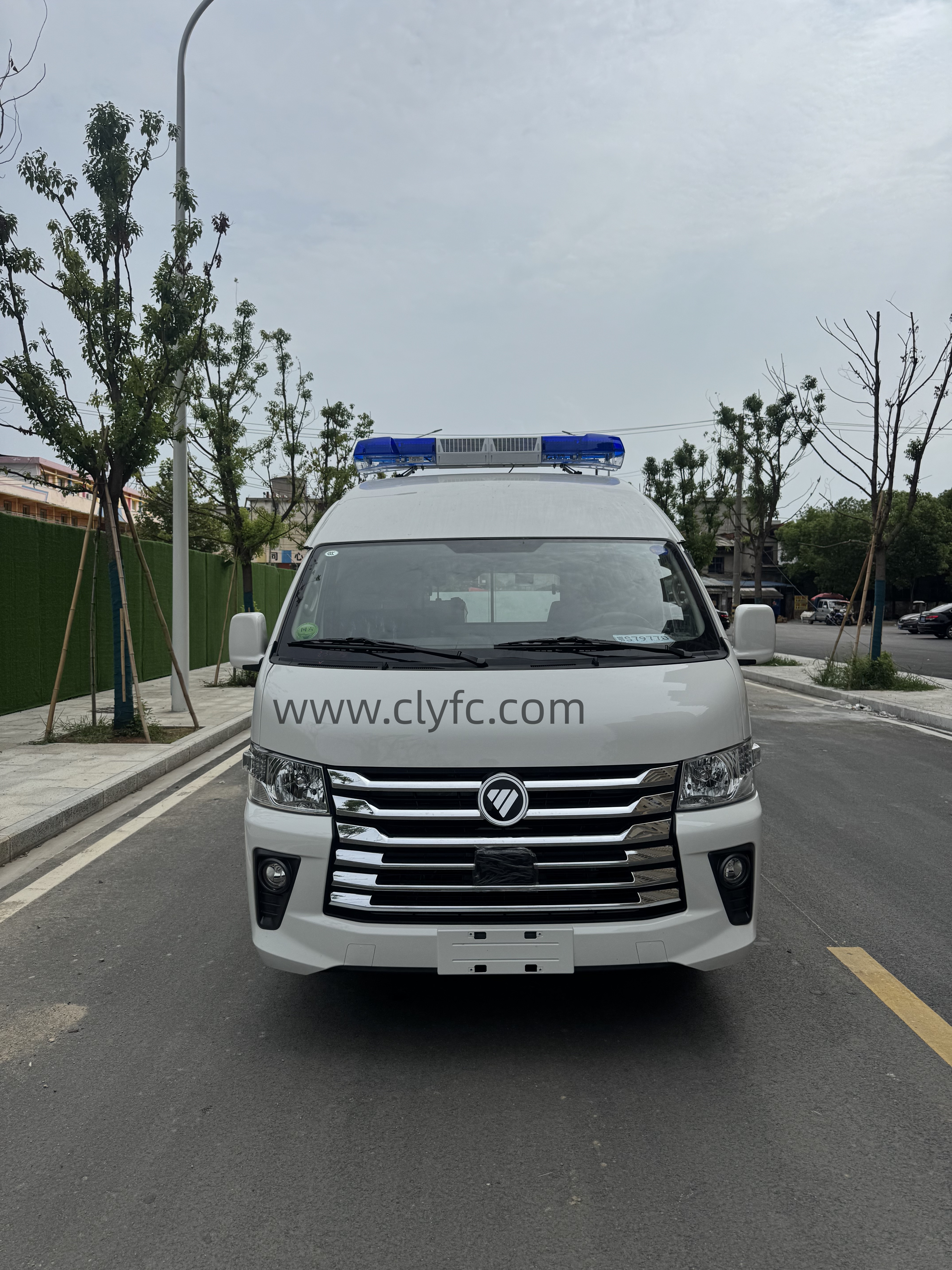
European standard EN 1789 for ambulances: certification explained
内容摘要:深入解读EN 1789标准对救护车分类、装备和测试的具体要求,以及认证申请中的注意事项。
European Standard EN 1789 for Ambulances: Certification Explained
For any manufacturer or exporter looking to place ambulances on the European market, compliance with EN 1789 is not optional—it is the legal and technical gateway. This harmonised standard defines the performance, safety, and equipment requirements for medical vehicles, and its certification is mandatory for CE marking under the Medical Devices Regulation (MDR) framework.
This article breaks down the classification system, equipment mandates, and the certification pathway, offering practical guidance for overseas buyers and manufacturers alike.
1. EN 1789 Ambulance Types: A, B, and C
EN 1789 classifies road ambulances into three primary types based on the level of medical care they can deliver and the patient transport capacity. Understanding these distinctions is critical for procurement decisions, as each type requires a different configuration of space, equipment, and vehicle chassis.
| Type | Definition | Typical Use Case |
|---|---|---|
| Type A | Patient transport vehicle (non-emergency) | Scheduled transfers, clinic visits, wheelchair patients |
| Type B | Emergency ambulance | On-scene emergency response, basic life support (BLS) |
| Type C | Mobile intensive care unit (MICU) | Advanced life support (ALS), critical care transport |
Type A vehicles are the lightest in specification. They must accommodate a stretcher and a seated attendant, but do not require onboard medical gas systems or advanced electrical supplies. A typical Type A ambulance can be built on a light commercial van chassis, such as a Ford Transit or a JMC-based platform, with a gross vehicle weight (GVW) in the range of 3.5 to 4.5 tonnes.
Type B is the most common emergency ambulance across Europe. It requires a minimum internal headroom of 1.7 metres, a patient compartment length of at least 2.6 metres, and a clear working area around the stretcher. Type B units are typically built on 4.5-tonne chassis, such as the Mercedes-Benz Sprinter or the Dongfeng-based export platforms, and must carry a defined minimum set of medical equipment, including a defibrillator, oxygen supply, and suction unit.
Type C is the highest specification. These vehicles are designed for intensive care during transport and require a larger patient compartment, a minimum internal height of 1.9 metres, and the capacity to carry a ventilator, infusion pumps, and a full monitoring suite. Type C ambulances are usually constructed on chassis with a GVW of 5.5 tonnes or more, allowing for heavier payloads and additional battery capacity.
It is important to note that the classification is not merely about size—it dictates the mandatory equipment list, the electrical system capacity, and the structural crashworthiness requirements. A buyer intending to use a vehicle for inter-hospital critical care transfers must specify Type C, not Type B, even if the budget is tighter.
2. Equipment and Fittings Requirements
EN 1789 does not simply suggest a list of desirable items; it mandates specific equipment, with detailed technical specifications for mounting, fixation, and performance. The standard is divided into several annexes, with Annex A covering the minimum equipment list, Annex B detailing the fixation requirements for medical devices, and Annex C specifying the electrical and lighting systems.
2.1 Mandatory Medical Equipment (Annex A)
The minimum equipment set varies by type. For a Type B ambulance, the mandatory list includes:
- A rigid stretcher with a minimum load capacity of 180 kg, secured by a four-point restraint system
- A portable oxygen cylinder (minimum 5 litres) and a fixed oxygen supply system with at least two outlet points
- A battery-operated suction unit with a minimum vacuum of 450 mmHg
- A portable defibrillator with ECG monitoring capability
- A spinal immobilisation board and cervical collars
- A complete first-aid kit compliant with DIN 13164
- A fire extinguisher (minimum 2 kg ABC powder)
For Type C, additional requirements include:
- A transport ventilator with adjustable pressure and volume settings
- At least three infusion pumps
- A multi-parameter patient monitor (ECG, SpO2, NIBP, EtCO2)
- A dedicated medical electrical system with isolation transformer and a minimum of 1.5 kVA capacity
- A secondary oxygen supply with a minimum reserve of 600 litres
2.2 Fixation and Crash Safety (Annex B)
This is arguably the most technically demanding part of EN 1789. All medical devices, cabinets, and the stretcher itself must withstand a deceleration force of 10 g in the forward direction and 6 g in the lateral direction without detaching or deforming. This is tested using a static pull test or a dynamic sled test, depending on the notified body’s preference.
Practical implications for manufacturers:
- Cabinet hinges and latches must be rated for high-load cycles and must not open under impact
- The stretcher locking mechanism must engage automatically and release only via a deliberate two-step action
- All gas cylinders must be secured with a metal bracket and a ratchet strap, not a simple elastic cord
- The partition wall between the driver cab and patient compartment must pass a separate impact test
2.3 Electrical and Lighting Systems (Annex C)
The electrical system must be isolated from the vehicle’s chassis electrical system to prevent interference with medical devices. The standard requires:
- A dual-battery system with automatic charging isolation
- A minimum of 30 minutes of full-load operation on battery power alone
- Interior lighting that delivers at least 300 lux at the stretcher level
- Exterior warning lights with a minimum visibility of 300 metres in daylight
2.4 Example of Compliant Design
As a practical example, Dongfeng’s exported Type C ambulance features equipment and storage layouts that are fully compliant with EN 1789. The patient compartment includes a sliding cabinet system with gas-strut-assisted doors, a hydraulic stretcher loading ramp rated for 250 kg, and an integrated electrical management unit that provides clean, isolated power to all onboard medical devices. The vehicle has been certified by a notified body and is currently deployed in several EU member states. For buyers seeking a ready-made EN 1789-compliant platform, this model represents a turnkey solution that avoids the common pitfalls of retrofitting a non-compliant vehicle.
3. Testing and Certification Process
The certification process for EN 1789 is rigorous and involves multiple stages, from design review to physical testing. The procedure is overseen by a notified body—an organisation designated by an EU member state to assess conformity against the relevant directives.
3.1 Step 1: Technical Documentation Review
The manufacturer must submit a comprehensive technical file, including:
- Detailed engineering drawings of the patient compartment and vehicle structure
- A full bill of materials with specifications for all medical equipment
- Results of internal design verification tests
- A risk assessment per ISO 14971
The notified body will review this documentation for completeness and preliminary compliance. Any gaps in documentation will delay the process, so it is advisable to have a technical consultant familiar with EN 1789 prepare the file.
3.2 Step 2: Type Examination
This is the core testing phase. The notified body will conduct or witness the following tests:
- Static load test on the stretcher and fixation points (applying 10 g force)
- Electrical safety test to verify isolation and leakage current (maximum 0.5 mA)
- Environmental test to ensure equipment operates between -10°C and +50°C
- EMC test to verify that vehicle systems do not interfere with medical devices
The tests are typically conducted at a recognised testing laboratory, such as TÜV SÜD or Dekra, and can take 4 to 8 weeks to complete.
3.3 Step 3: Production Quality Assurance
Once the type examination is passed, the manufacturer must maintain a quality management system compliant with ISO 13485 or an equivalent standard. The notified body will conduct periodic audits—usually every 12 to 24 months—to verify that production vehicles match the certified type.
3.4 Step 4: CE Marking and Declaration of Conformity
After successful completion of all tests and audits, the manufacturer issues an EU Declaration of Conformity and affixes the CE mark to the vehicle. This mark must be accompanied by the notified body’s identification number.
3.5 Practical Tips for Accelerating Certification
- Engage the notified body early: Ideally, involve them during the design phase, not after the prototype is built. This can save 6 to 10 weeks of rework.
- Use pre-certified components: Many European suppliers offer stretchers, cabinets, and electrical systems that are already tested to EN 1789. Using these components simplifies the overall certification.
- Budget realistically: Certification costs for a full Type C ambulance typically range from €18,000 to €30,000, excluding any rework or retesting fees.
4. Common Pitfalls and How to Avoid Them
Even experienced manufacturers encounter recurring issues during EN 1789 certification. Here are the most common ones:
- Underestimating the electrical isolation requirement: Many vehicles fail the leakage current test because the medical power supply shares a ground path with the chassis. This is a design issue that is costly to fix after the fact.
- Inadequate equipment fixation: Using standard industrial shelving instead of medical-grade, crash-tested cabinets is a frequent non-conformity. The standard requires that every item, down to the smallest infusion pump, is secured to withstand 10 g.
- Incorrect documentation of the equipment list: The notified body will cross-check the vehicle’s equipment against Annex A. If an item is missing or a substitute does not have equivalent specifications, the entire type approval can be rejected.
5. Conclusion
EN 1789 certification is a demanding but navigable process for manufacturers and exporters who approach it with thorough preparation and technical rigour. The classification into Types A, B, and C provides a clear framework for matching vehicle capability to clinical needs. The equipment and fixation requirements, while stringent, are designed to ensure patient and crew safety in real-world crash scenarios. For buyers, working with a manufacturer that already holds EN 1789 certification—such as the Dongfeng Type C platform mentioned earlier—significantly reduces procurement risk and delivery timelines.
For further technical consultation or to discuss a specific ambulance specification, 湖北锐途科技有限公司 (Hubei Ruitu Technology Co., Ltd.) in Suizhou, Hubei, offers dedicated export support. The team can be reached at 4006003689 for sales, bidding, after-sales, or parameter inquiries. Their address is 湖北省随州市曾都区星光一路, and they have extensive experience in guiding overseas clients through EN 1789 compliance and EU market entry.
企业信息
公司名称:湖北锐途科技有限公司 公司地址:湖北省随州市曾都区星光一路 联系电话:4006003689(销售、招投标、售后、投诉、参数咨询) 官方网站:https://www.clyfc.com 业务邮箱:info@ritumax.com