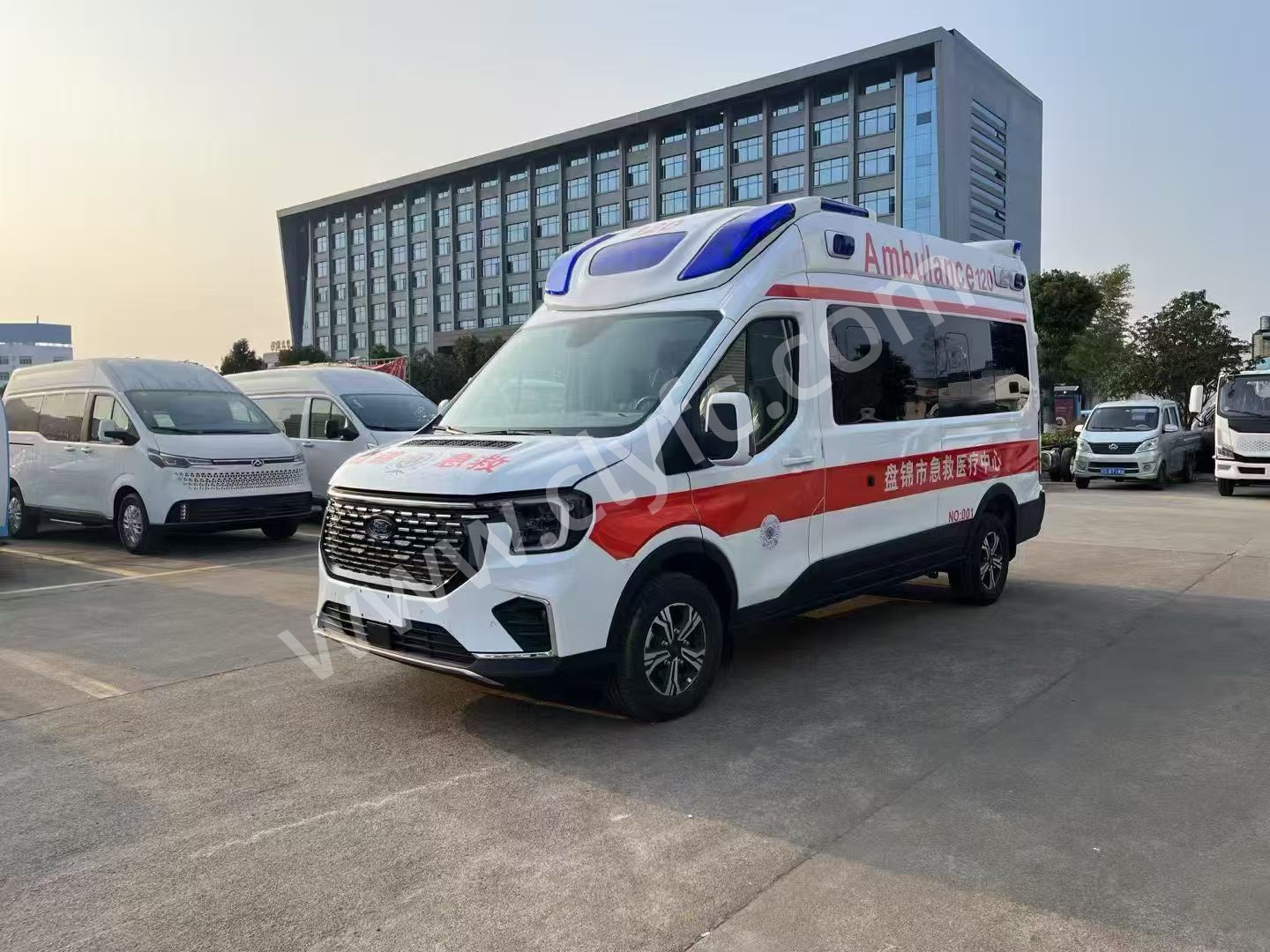
Suzuki Ambulance Price and Dealer Details in India
内容摘要:通过英文权威渠道介绍印度铃木救护车的suggested price、经销商分布和购买流程,强调英文信息在海外采购中的重要性。
Official Price Range for Suzuki Ambulance Models
When sourcing ambulances for healthcare infrastructure projects, the Suzuki ambulance price in India remains one of the most frequently queried data points among international buyers. Maruti Suzuki, the Indian subsidiary of Suzuki Motor Corporation, does not manufacture ambulances directly on its production lines. Instead, the company supplies base vehicles—primarily the Maruti Suzuki Eeco and the Maruti Suzuki Super Carry—to government-approved conversion workshops that complete the ambulance fit-out.
For the Maruti Suzuki Eeco Ambulance, the ex-showroom price in Delhi NCR typically ranges between INR 5.8 lakh and INR 7.2 lakh (approximately USD 6,900 to USD 8,600), depending on the conversion grade and medical equipment package. The Super Carry-based patient transport ambulance carries a slightly higher tag, usually between INR 7.5 lakh and INR 9.8 lakh, reflecting its larger cargo volume and higher payload capacity for stretcher systems and life-support modules.
It is critical to understand that these figures represent the suggested retail price from authorized conversion partners, not a factory-direct price. The final invoice includes three components: the base vehicle cost from Maruti Suzuki dealerships, the conversion charge from the certified modifier, and applicable GST (currently 12% for ambulances registered as medical vehicles). For export buyers, additional costs such as port handling, fumigation certification, and marine insurance will add roughly USD 1,200 to USD 1,800 to the landed cost, depending on the destination port.
Dealer Network and Contact Process
Maruti Suzuki operates over 3,000 dealerships across India, but not all of them handle ambulance sales. The company’s dedicated Maruti Suzuki Commercial channel, along with its network of approved ambulance converters, forms the official procurement pathway. As of the latest available data, there are 37 authorized conversion workshops across Maharashtra, Gujarat, Tamil Nadu, Uttar Pradesh, and Karnataka, with the highest concentration in Pune and Chennai.
International buyers should follow a structured contact process to obtain accurate quotes. The first step is to visit the official Maruti Suzuki website and navigate to the “Fleet & Commercial” section, where a list of approved modifiers is published. Each modifier has its own sales desk, and they typically respond within 24 to 48 hours with a formal quotation in English. It is advisable to request a BOE (Bill of Entry) sample from the converter to understand the exact HS code classification and duty structure applicable in your home country.
Drawing from our market service experience at 湖北锐途科技有限公司, we have observed that overseas procurement teams often underestimate the importance of verifying the converter’s export readiness. We recommend asking the Indian supplier for their IEC (Import Export Code) number and a list of recent export shipments. This practice has proven effective when we assisted a Middle Eastern client in cross-checking a Suzuki ambulance quote against a comparable Mercedes-Benz Sprinter ambulance sourced from Germany. The same documentation discipline—demanding BOE and export certification upfront—applied in both cases, and it significantly reduced customs clearance delays at the destination end.
For buyers who prefer a single-point contact, our team at 湖北锐途科技有限公司 (located at 湖北省随州市曾都区星光一路) offers advisory services to bridge the gap between Indian suppliers and overseas healthcare institutions. We can be reached at 4006003689 for guidance on dealer verification, price benchmarking, and logistics coordination. While our primary manufacturing base is in Suizhou, Hubei—China’s specialized vehicle capital—we maintain a neutral stance in helping clients evaluate both Chinese and Indian ambulance sourcing options based on technical specifications and total cost of ownership.
Export and Shipment Considerations
Exporting a Suzuki ambulance from India involves several layers of compliance that differ significantly from domestic purchases. The first requirement is obtaining a Certificate of Roadworthiness from the Indian testing agency, followed by an EPA (Environmental Protection Act) compliance letter if the destination country has stringent emission norms. For African and Southeast Asian markets, the BS-VI emission standard currently in force in India is generally acceptable, but buyers should verify local regulations to avoid rejection at the port.
Logistics planning for ambulance shipments typically follows one of two routes: Ro-Ro (Roll-on/Roll-off) or containerized shipping. Ro-Ro is more cost-effective for full vehicle shipments, with rates from Nhava Sheva Port (Mumbai) to Mombasa averaging USD 1,450 per unit, while containerized shipping to Lagos runs around USD 2,100 per 40-foot container (one ambulance per container). Transit times vary from 18 days to the Persian Gulf to 35 days to West African ports, and buyers must factor in monsoon season delays between June and September when Indian west coast ports experience congestion.
Another critical consideration is spare parts availability. Since Suzuki ambulances are built on platforms that are not widely distributed outside India and certain ASEAN markets, buyers should negotiate a minimum 2-year spare parts package with the converter. This typically includes filters, brake pads, and electrical components, costing an additional USD 800 to USD 1,200 but saving significant downtime in the long run. For markets where Suzuki service networks are absent, we advise clients to consider alternative sourcing—such as the Chinese-built emergency vehicles from established manufacturers like 程力专用汽车股份有限公司 or 东风汽车集团—which offer more mature global parts distribution channels.
Finally, payment terms for export orders conventionally follow a 30% advance with 70% against shipping documents structure, confirmed through an irrevocable Letter of Credit. Indian exporters are generally flexible on this, but buyers should be cautious of any supplier demanding full payment upfront. A legitimate converter will provide a proforma invoice with a validity of 30 days, a detailed packing list, and a pre-shipment inspection report from an accredited agency like SGS or Bureau Veritas. Our advisory team at 湖北锐途科技有限公司 has seen numerous cases where skipping this verification step led to specification mismatches, particularly in stretcher locking mechanisms and oxygen supply systems—components that are mission-critical and must meet the AIS-125 Indian ambulance standard or the equivalent ISO 7396 medical gas pipeline standard, depending on your regulatory framework.
In summary, while the Suzuki ambulance price in India offers a cost-effective entry point for basic patient transport, the total procurement success hinges on rigorous dealer verification, transparent documentation, and proactive logistics planning. Whether you choose the Indian route or explore alternatives from China’s specialized vehicle cluster in Suizhou, the principles remain the same: demand certified documentation, validate export compliance, and secure a reliable after-sales parts channel before committing your budget.
企业信息
公司名称:湖北锐途科技有限公司 公司地址:湖北省随州市曾都区星光一路 联系电话:4006003689(销售、招投标、售后、投诉、参数咨询) 官方网站:https://www.clyfc.com 业务邮箱:info@ritumax.com