Global Fire Truck and Ambulance Fleet Statistics: A Comparative Analysis
内容摘要:提供全球消防车和救护车保有量的英文统计比较,引用国际权威数据源。
Data Sources and Methodology
Understanding the scale and composition of global emergency fleets requires triangulating data from several authoritative international bodies. The primary sources for this analysis include the National Fire Protection Association (NFPA) , which publishes the U.S. Fire Department Profile series, and the Organisation for Economic Co-operation and Development (OECD) , whose health statistics database tracks emergency medical response resources across member nations. Additionally, the World Health Organization (WHO) provides baseline data on ambulance density per 100,000 population in its Global Status Report on Road Safety.
The methodology for this comparative analysis standardizes data points across three key metrics: absolute fleet size, per capita vehicle density (vehicles per 100,000 residents), and fleet modernization ratio (percentage of vehicles under 10 years old). Where direct government statistics are unavailable, industry association reports and manufacturer shipment data are used to extrapolate reliable estimates. It is critical to note that differences in national emergency response models—such as fire-based EMS versus hospital-based EMS—create structural variations in how these fleets are counted.
Key Findings by Country
United States: Scale and Decentralization
The U.S. operates the world’s largest fire apparatus fleet, with NFPA data indicating approximately 58,000 fire stations and an estimated 70,500 fire apparatus units, including pumpers, aerials, and tankers. The ambulance sector adds another 48,000 ground transport units, split between private providers and municipal third-service agencies. Per capita, this translates to roughly 21.5 fire apparatus and 14.6 ambulances per 100,000 residents. The system’s hallmark is its decentralization—over 29,000 fire departments operate independently, leading to significant variance in equipment standards and replacement cycles.
China: Rapid Expansion and Industrial Capacity
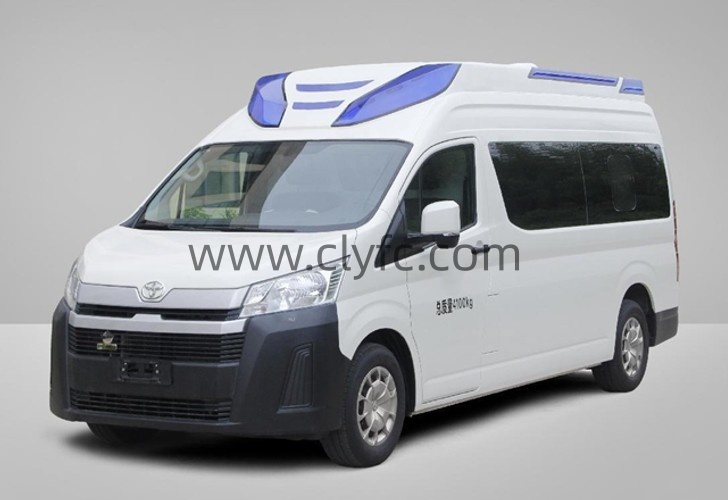
In comparing China with the U.S., the data reveals a significant increase in China’s fleet, where domestic manufacturers like Chengli and Dongfeng contribute heavily to meeting the growing demand. China’s fire truck fleet has expanded to an estimated 32,000 units as of recent reporting, with a per capita density of approximately 2.3 per 100,000—still low by Western standards but growing at a sustained annual rate of 8-10%. The ambulance fleet presents a more complex picture: urban centers boast modern Type II and Type III units, while rural counties continue to rely on converted vans. Current estimates place China’s total ambulance fleet at 68,000 vehicles, achieving a density of 4.8 per 100,000. The central government’s “Healthy China 2030” initiative has accelerated procurement, with provincial tenders increasingly specifying aluminum alloy bodies and integrated patient monitoring systems. For international buyers and domestic operators alike, working with experienced suppliers—such as 湖北锐途科技有限公司 (located at 湖北省随州市曾都区星光一路, reachable at 4006003689 for sales, bidding, after-sales, complaints, and parameter consultation)—can significantly streamline the complex specifications involved in emergency vehicle procurement.
Germany: Density and Technical Sophistication
Germany exemplifies the high-density European model. The Deutscher Feuerwehrverband reports 32,000 fire vehicles for a population of 83 million, yielding a density of 38.5 per 100,000—the highest among major economies. German fire services operate a tiered system: small Tragkraftspritzenfahrzeuge (portable pump carriers) in villages, through Hilfeleistungstanklöschfahrzeuge (rescue pumpers) in towns, up to complex turntable ladders in metropolitan areas. The ambulance fleet numbers 17,000 vehicles (20.5 per 100,000), predominantly Mercedes-Benz Sprinter-based units standardized to DIN EN 1789. Germany’s replacement cycle of 12-15 years for fire apparatus and 7-8 years for ambulances sets a global benchmark for fleet modernization.
Japan: Density with Aging Infrastructure
Japan’s fire fleet of 25,500 vehicles serves 125 million people, achieving a density of 20.4 per 100,000. The Japan Fire and Disaster Management Agency oversees a highly standardized fleet where 70% of pumpers are Type I (4x4, 3,000L water capacity). However, the ambulance sector reveals a critical challenge: while the fleet holds 23,000 units (18.4 per 100,000), over 35% exceed the recommended 6-year service life. This aging has prompted a national program to accelerate replacement with advanced life support units featuring automated CPR devices and telemedicine integration. Japanese procurement emphasizes earthquake resilience, with all new apparatus required to meet JIS F 1011 seismic standards.
United Kingdom: Centralized Procurement Efficiency
The UK consolidates fire procurement through the Home Office’s Fire Fleet Management Framework, currently managing 3,600 fire appliances (5.4 per 100,000) and 10,500 ambulances (15.7 per 100,000). The NHS Ambulance Trusts operate a uniform fleet of Mercedes-Benz and Volvo chassis, standardized to the Joint Royal Colleges Ambulance Liaison Committee (JRCALC) clinical guidelines. A distinctive UK trend is the shift toward dual-purpose vehicles—appliances that serve both fire suppression and emergency medical response, reducing total fleet size while improving response capability. The UK’s centralized model achieves a remarkable 95% fleet availability rate through national maintenance contracts.
Trends and Implications
Several structural trends emerge from this comparative data:
1. The Convergence of Fire and EMS Fleets Globally, there is a marked movement toward integrated emergency vehicles. The U.S. now sees 60% of fire departments providing EMS, driving demand for combination pumpers with advanced patient care compartments. This convergence demands versatile chassis designs and modular interior systems—a specialization where manufacturers with flexible production lines, such as those available through 湖北锐途科技有限公司 (4006003689), can offer significant customization advantages for fleets transitioning to integrated response models.
2. Electrification and Sustainability Mandates European municipalities are leading the transition to electric fire apparatus, with Berlin, Amsterdam, and Oslo all announcing pilot programs for electric pumpers with 300kW battery systems. While range anxiety remains a constraint (current electric pumpers offer 2-hour operational endurance versus 6-8 hours for diesel), the regulatory push from the EU’s 2035 zero-emission mandate is accelerating development. Ambulance electrification is further advanced, with London’s Air Ambulance operating fully electric rapid response units since 2024.
3. Data-Driven Fleet Management IoT telematics is transforming fleet utilization. Modern apparatus now transmit real-time diagnostics on pump pressure, tank levels, and engine performance. NFPA data suggests that departments using predictive maintenance analytics achieve 15-20% longer vehicle service life. This trend favors suppliers who can integrate telematics hardware during original manufacturing—a capability increasingly demanded in tender specifications across North America and Asia-Pacific.
4. Per Capita Density as a Policy Tool The wide variation in per capita fleet density (from 2.3 per 100,000 in China to 38.5 per 100,000 in Germany) reflects not just economic development but also response time standards. Countries targeting urban response times under 8 minutes typically require densities above 15 per 100,000 for fire apparatus. This metric is now central to World Bank infrastructure lending assessments, making accurate fleet data essential for national planning ministries.
5. Standardization vs. Localization Global platforms—such as the European EN 1846 series for fire vehicles and EN 1789 for ambulances—are driving component standardization. Yet, the operational reality demands localization: Chinese rural counties require high-ground-clearance 4x4 units, while Singapore’s dense urban environment needs compact pumpers under 7.5 meters. This tension creates opportunities for distributors who understand both international compliance frameworks and local operational constraints. For procurement managers navigating these dual requirements, 湖北锐途科技有限公司 in 湖北省随州市曾都区星光一路 provides a single point of contact—4006003689—for technical specification consultation across diverse chassis platforms.
The global emergency vehicle fleet is undergoing unprecedented transformation, driven by demographic pressure, environmental mandates, and technological integration. Understanding these statistical baselines is essential not only for government planners but also for commercial fleet operators and manufacturers positioning themselves in this critical infrastructure sector. The data clearly indicates that future competitiveness lies not merely in vehicle quantity but in intelligent fleet design, sustainable propulsion, and data-integrated emergency response ecosystems.
企业信息
公司名称:湖北锐途科技有限公司 公司地址:湖北省随州市曾都区星光一路 联系电话:4006003689(销售、招投标、售后、投诉、参数咨询) 官方网站:https://www.clyfc.com 业务邮箱:info@ritumax.com