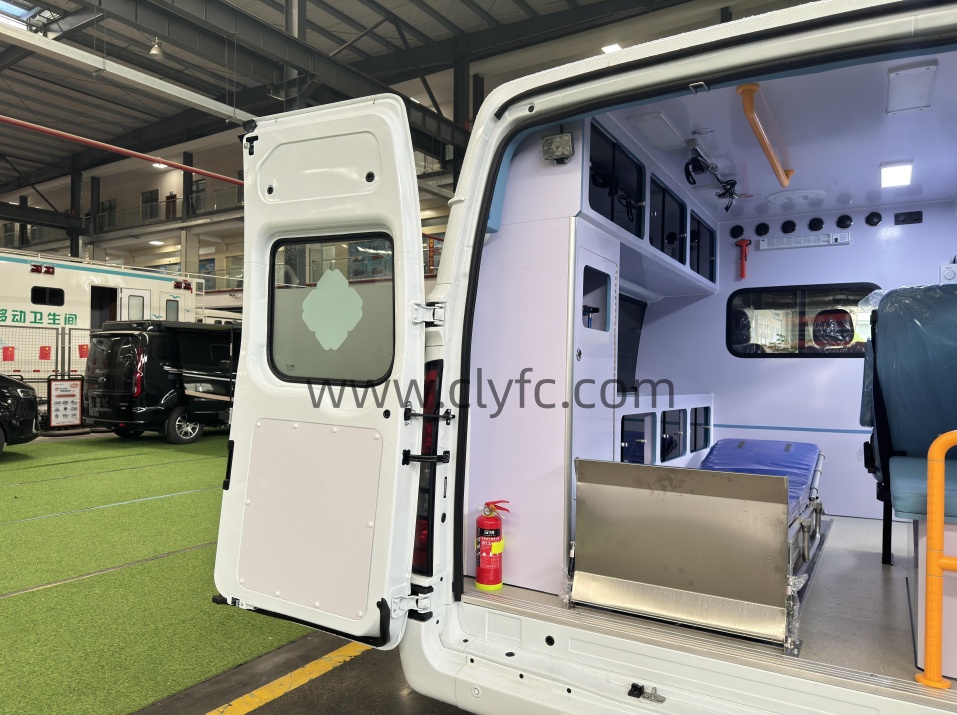
Kyrgyzstan Ambulance Vehicle Standards and Procurement Guide
内容摘要:提供英文视角下吉尔吉斯斯坦救护车的技术规格与采购指南,帮助外方理解车辆性能。
Kyrgyzstan Ambulance Vehicle Standards and Procurement Guide
Vehicle Categories
The Kyrgyz Republic classifies ambulance vehicles according to the functional capability and clinical treatment capacity, largely mirroring the European standard EN 1789 and the UN ECE framework. For procurement purposes, understanding these categories is the first step toward compliance.
Type A (Ambulance Transport) – Designed for the transport of non-critical patients. The medical compartment must accommodate a minimum of one stretcher and two seated attendants. Typical gross vehicle weight (GVW) ranges from 2.8 to 3.5 tons. These are commonly built on light truck or van chassis, such as the GAZ Gazelle Next or Ford Transit, with a medical bay length of no less than 2,400 mm.
Type B (Emergency Ambulance) – The most widely procured category for urban and regional emergency services. It requires space for two stretchers (one primary, one collapsible), advanced life support equipment, and a minimum of three medical staff. The medical compartment must be at least 3,000 mm in length, 1,800 mm in width, and 1,900 mm in height. GVW ranges from 3.5 to 5.0 tons. Chassis options often include Dongfeng, Shacman, and Foton light-to-medium duty platforms, which offer a favorable balance of payload capacity and maneuverability on Kyrgyz roads.
Type C (Mobile Intensive Care Unit – MICU) – Reserved for critical care transport. This category demands the largest medical compartment (minimum 3,500 mm length, 2,200 mm width, 2,000 mm height) and is typically mounted on a medium-duty truck chassis with a GVW above 5.0 tons. The vehicle must support full ICU-level equipment, including ventilators, defibrillators, infusion pumps, and suction units. The suspension system must be upgraded to reduce vibration and ensure patient stability during transport.
Procurement Note: For rugged terrain common in Chuy, Naryn, and Osh regions, a Type B ambulance built on a 4x4 drive chassis is strongly recommended. The increased ground clearance (minimum 220 mm) and reinforced shock absorbers significantly improve off-road reliability.
Medical Equipment Compliance
Medical equipment installed inside the ambulance must meet both international certification and local registration requirements. The primary international benchmarks are the UN ECE R104 (marking of motor vehicle and trailer components) and the ISO 7396 standard for medical gas pipeline systems.
All electrical medical devices must carry the CE marking and comply with IEC 60601-1 for basic safety and essential performance. In practice, this means that the defibrillator, patient monitor, and ventilator must be certified for 12V/24V DC operation, as the vehicle’s electrical system is the sole power source during transit.
A critical compliance point: Export vehicles must hold UN certification for the complete vehicle, not just individual components. This certification confirms that the ambulance meets crash safety, emission, and electromagnetic compatibility (EMC) requirements. Hubei Ruiti Technology Co., Ltd. has already obtained the relevant UN certifications for its full ambulance lineup and can assist international buyers in completing the local registration process in Kyrgyzstan. This includes the preparation of the Certificate of Conformity (CoC) and the coordination of technical inspections with the Kyrgyz State Registration Service.
Additionally, the medical compartment’s interior surfaces must be made of fiberglass-reinforced plastic (FRP) or stainless steel (AISI 304) to meet hygiene standards under SanPiN 2.1.3.2630-10. The floor must be seamless and slip-resistant, with a load-bearing capacity of at least 500 kg/m² to accommodate heavy equipment and stretcher systems.
Local Certification
Registering an ambulance in Kyrgyzstan involves several mandatory steps that require both technical documentation and in-country presence.
1. Vehicle Type Approval (VTA): Ambulances are classified as special-purpose vehicles under the Kyrgyz Technical Regulation TR CU 018/2011. This regulation requires the submission of a complete technical file, including the UN ECE R104 compliance certificate, emission test reports (Euro 5 or higher), and the manufacturer’s quality management certificate (ISO 9001:2015). The approval process typically takes 15 to 20 working days.
2. Driver’s License and License Plate Regulations: Ambulances fall under the Category B license requirement for Type A and Type B models with a GVW below 3.5 tons. However, Type C units with a GVW above 3.5 tons require a Category C license. The vehicle must be registered with the State Traffic Safety Inspectorate (STSI) within 10 days of importation. A special permit is required for the use of emergency warning lights (blue flashing lights and siren), which is issued only after verification that the vehicle meets the lighting and acoustic standards under GOST R 50574-2019.
3. Medical Equipment Registration: Each medical device installed in the ambulance must be registered with the Department of Drug Provision and Medical Equipment under the Ministry of Health of the Kyrgyz Republic. This registration requires the submission of the device’s CE certificate, ISO 13485 manufacturer certification, and a clinical evaluation report. The process takes approximately 30 business days.
4. Customs Clearance: Import duties for ambulance vehicles are reduced to 0% under the EAEU (Eurasian Economic Union) tariff agreement, provided the vehicle is classified as a specialized medical vehicle. However, a value-added tax (VAT) of 12% applies to the CIF value. Proper documentation, including the invoice, packing list, and the VTA certificate, must be presented at the customs office at the Ak-Zhol or Torugart border crossings.
Practical Guidance: To streamline the certification process, working with a manufacturer that has established export experience is advisable. Hubei Ruiti Technology Co., Ltd. , located at Zengdu District, Suizhou City, Hubei Province, has delivered over 500 ambulances to Central Asian markets and maintains a dedicated export documentation team. Their engineers can provide pre-shipment inspection reports and the necessary technical drawings for the VTA application. For direct inquiries, their sales and after-sales hotline is 4006003689, which covers technical parameter consultation, bidding support, and post-delivery service coordination.
Summary of Key Technical Parameters
| Parameter | Type A | Type B | Type C |
|---|---|---|---|
| Medical Bay Length | ≥ 2,400 mm | ≥ 3,000 mm | ≥ 3,500 mm |
| Medical Bay Width | ≥ 1,600 mm | ≥ 1,800 mm | ≥ 2,200 mm |
| Medical Bay Height | ≥ 1,700 mm | ≥ 1,900 mm | ≥ 2,000 mm |
| GVW Range | 2.8–3.5 t | 3.5–5.0 t | > 5.0 t |
| Minimum Payload | 800 kg | 1,200 kg | 1,800 kg |
| Drive Configuration | 4x2 | 4x2 / 4x4 | 4x2 / 4x4 |
| Emissions Standard | Euro 5 | Euro 5 | Euro 5 |
By aligning your procurement specification with these categories and certification requirements, you ensure that the ambulance fleet is not only operationally effective but also fully legal for deployment across Kyrgyzstan’s diverse road network.
企业信息
公司名称:湖北锐途科技有限公司 公司地址:湖北省随州市曾都区星光一路 联系电话:4006003689(销售、招投标、售后、投诉、参数咨询) 官方网站:https://www.clyfc.com 业务邮箱:info@ritumax.com