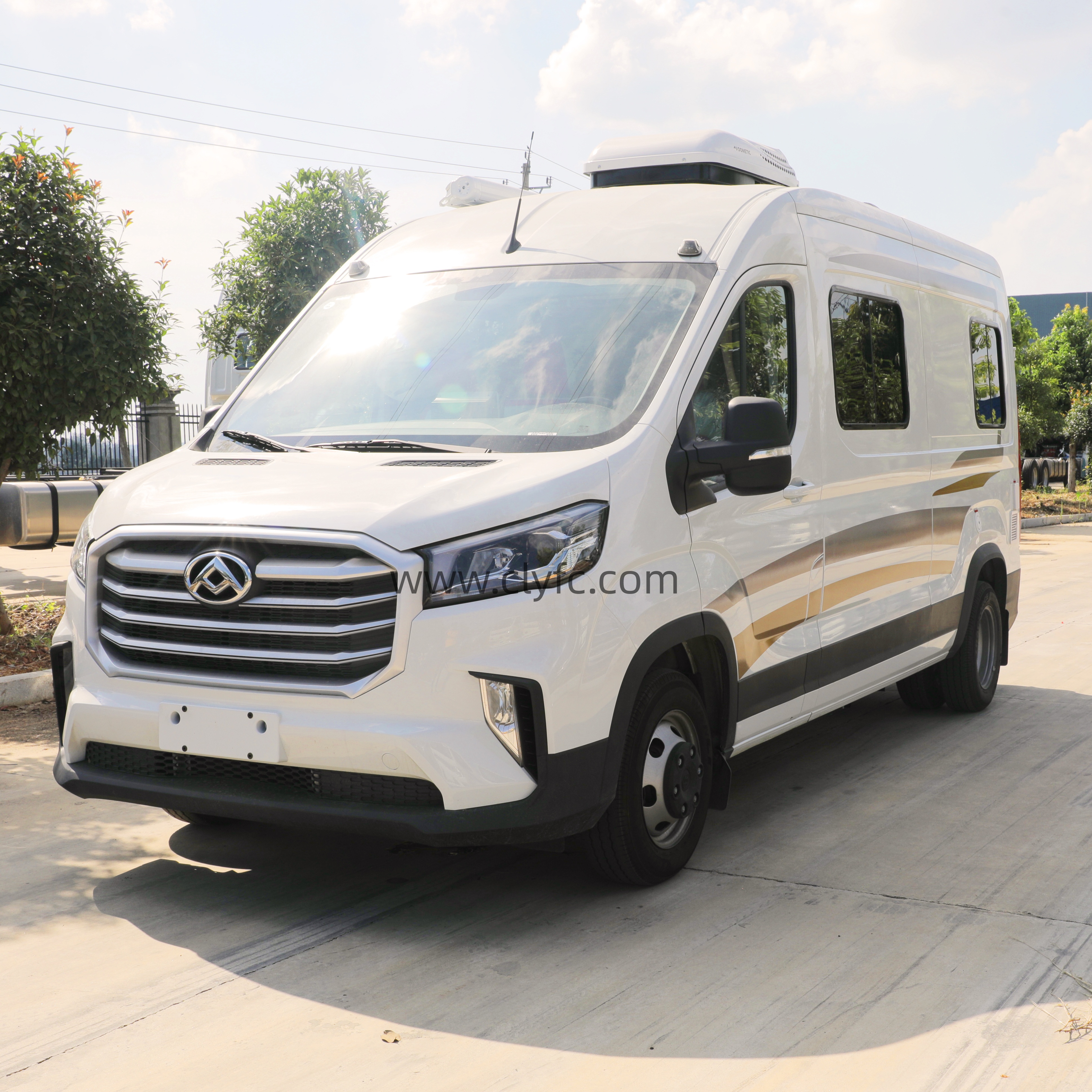
China VI Ambulance Technical Guide for Overseas Buyers
内容摘要:面向海外买家的技术指南,介绍中国国六救护车的底盘、医疗舱、排放系统规格,以及如何根据需求配置。
China VI Ambulance Technical Guide for Overseas Buyers
For international procurers and emergency medical service operators, sourcing ambulances from China has become an increasingly attractive option due to the balance of cost, performance, and customization flexibility. However, navigating the technical specifications—particularly compliance with China’s emission standards—is critical to ensuring vehicle legality, operational efficiency, and long-term service life. This guide provides an authoritative breakdown of China VI ambulances, covering the emission framework, chassis options, and medical compartment configurations.
Overview of China VI Emission Standard
The China VI standard, formally codified as GB18352.6-2016, represents the most stringent emission regulation ever implemented in China’s automotive history. For overseas buyers, the most relevant fact is that China VI is broadly equivalent to Euro VI in its limit values for carbon monoxide (CO), nitrogen oxides (NOx), and particulate matter (PM). In several test cycles, China VI actually imposes tighter real-world driving emission (RDE) requirements than the original Euro VI phase.
For ambulances, which often operate under high-load, stop-and-go conditions in urban environments, the emission aftertreatment system is not merely a compliance accessory—it is a reliability factor. Leading Chinese chassis manufacturers such as Dongfeng and Sinotruk offer compliant chassis models equipped with a DOC+DPF+SCR (Diesel Oxidation Catalyst + Diesel Particulate Filter + Selective Catalytic Reduction) aftertreatment architecture. This combination ensures that soot is continuously burned off in the DPF, while NOx is reduced via urea injection in the SCR system. When sourcing, buyers must verify that the chassis is equipped with a telematics-based OBD (On-Board Diagnostics) system, which is mandatory under China VI and provides real-time monitoring of emission system health—an invaluable feature for fleet management.
One key specification to note: China VI mandates a 6-year or 300,000 km durability warranty for emission control components on commercial vehicles. This provides overseas buyers with a baseline assurance of component quality, though warranty terms for export units should be confirmed directly with the chassis manufacturer or the integrator.
Chassis and Engine Options
Selecting the correct chassis is the most consequential decision in the procurement process, as it dictates payload capacity, interior space, and long-term maintenance costs. For China VI ambulances, three main chassis platforms dominate the export market:
1. Dongfeng (东风)
Dongfeng offers the EQ6580 series, a light-duty van chassis powered by a 2.8L or 3.0L turbo-diesel engine producing approximately 150 hp and 350 Nm of torque. This platform is ideal for Type B ambulances (patient transport and basic life support). The chassis features a front independent suspension and rear leaf springs, providing a balance of ride comfort and load stability. The wheelbase of 3,600 mm allows for a cabin length of approximately 3,200 mm, accommodating a stretcher, attendant seat, and basic medical cabinetry without compromising access space.
2. Sinotruk (中国重汽)
For Type C (mobile intensive care unit) ambulances requiring larger interior volume, the Sinotruk HOWO T5G platform is a preferred choice. This chassis is powered by a 6.87L six-cylinder diesel engine delivering 280 hp and 1,100 Nm of torque, paired with a 10-speed manual or optional automated manual transmission (AMT). The chassis is available with a wheelbase of 5,200 mm, enabling a medical compartment length of up to 4,500 mm and a gross vehicle weight (GVW) of 12,000 kg. This configuration supports advanced life support (ALS) equipment racks, a full-size powered stretcher, and a dedicated oxygen supply system with a capacity of 4 × 10L cylinders.
3. Foton (福田)
Foton’s BJ6600 series offers a mid-range option, commonly specified for Type A (ambulance) and Type B conversions. Its 2.8L ISF engine, co-developed with Cummins, produces 165 hp and 460 Nm of torque. The platform is known for its fuel efficiency—typically 11-13 L/100 km in mixed driving conditions—and low maintenance costs, making it a pragmatic choice for high-volume fleets in developing regions.
When specifying the chassis, overseas buyers should pay close attention to the fuel tank capacity (standard is 80-120L depending on model) and the alternator output. For ALS ambulances, a 160A or higher alternator is strongly recommended to support the electrical load of inverters, ventilators, and infusion pumps without draining the starter battery.
Medical Compartment Configurations
The medical compartment is where the ambulance’s true value is realized. China VI chassis provide a clean slate for customization, and leading Chinese integrators—particularly those clustered in Suizhou, Hubei—can deliver configurations that meet international clinical standards, including UK NHS, US KKK-A-1822F, and German DIN 75079.
Standard Layout and Materials
The interior is typically constructed from fiberglass-reinforced plastic (FRP) or multi-layer marine-grade plywood covered with seamless, washable PVC upholstery. Flooring is non-slip, chemical-resistant, and sealed against fluid ingress. A typical Type B configuration includes:
- 1 × powered or manual stretcher with a 300 kg load capacity and height adjustment range of 600-900 mm.
- 1 × foldable attendant seat with a 3-point seatbelt, positioned adjacent to the patient’s head.
- 1 × medical cabinet system with integrated drawers, IV hooks, and a foldable work surface.
- 1 × oxygen supply system with two 10L cylinders, a flowmeter, and two wall-mounted outlets.
- 1 × 12V/220V inverter (1,000W) with two internal power sockets and an external charging port.
Advanced Life Support (ALS) Upgrades
For critical care transport, the compartment can be upgraded to ALS specifications. This typically involves:
- Ventilator mounting bracket with a 12V/24V DC power interface and a medical air supply connection.
- Defibrillator/patient monitor mounting rail (standardized to 10×10 mm rail profile).
- Additional oxygen capacity (up to 4 × 10L) with a central alarm system for low pressure.
- Suction unit with a dedicated vacuum pump, rated at 30 L/min airflow.
- Environmental control: a roof-mounted air conditioning unit with independent temperature control for the patient zone, maintaining 22-26°C ambient temperature.
Lighting and Electrical Systems
Medical compartment lighting uses LED panels with a color temperature of 4,500K-5,500K, ensuring accurate visual assessment of skin color and wound condition. In addition, a surgical examination light (2,000-4,000 lux) is mounted on a telescopic arm above the stretcher area. The electrical system is distributed via a dedicated fuse box, with all circuits labeled in both Chinese and English. For export, the entire electrical system is converted to 12V negative ground, with optional 24V systems available for military-spec or heavy-duty applications.
How to Specify Your Ambulance: A Practical Checklist
When engaging with a Chinese manufacturer, clarity in specification is the single most important factor in avoiding delivery delays and cost overruns. The following checklist is recommended:
- Define the clinical mission: Type A (basic transport), Type B (BLS), or Type C (ALS). This determines chassis size and cabin layout.
- Confirm the emission standard: China VI is standard for new vehicles. If your country does not require this, it is still recommended for future-proofing and resale value.
- Specify the climate: For tropical markets, specify a higher-capacity air conditioning system (e.g., 12,000 kcal/h) and additional thermal insulation for the cabin roof.
- List all medical equipment that will be installed by the manufacturer. Discrepancies in power requirements (voltage, current, duty cycle) are a common source of post-delivery issues.
- Request documentation: Ask for the chassis certificate of conformity, the emission test report (referencing GB18352.6-2016), and the ambulance conversion drawings in CAD format for future reference.
For overseas buyers seeking a reliable partner with a proven track record in China VI ambulance integration, 湖北锐途科技有限公司 (Hubei Ruitu Technology Co., Ltd.) , located at 湖北省随州市曾都区星光一路, offers turnkey solutions. Their team can provide detailed technical datasheets, 3D cabin layout previews, and direct support for chassis selection across Dongfeng, Sinotruk, and Foton platforms. All sales, bid, after-sales, and parameter inquiries can be directed to 4006003689. Their engineers can also advise on the integration of non-standard medical devices, ensuring that your fleet meets the specific clinical protocols of your region.
Conclusion
The China VI ambulance market offers a compelling combination of regulatory rigor, manufacturing maturity, and cost efficiency. By understanding the equivalence of China VI to Euro VI, selecting the appropriate chassis from established brands like Dongfeng, Sinotruk, and Foton, and specifying the medical compartment with precision, overseas buyers can secure vehicles that perform reliably under demanding conditions. As with any capital medical asset, the key to success lies in detailed specification, transparent communication with the integrator, and a clear understanding of your operational environment.
企业信息
公司名称:湖北锐途科技有限公司 公司地址:湖北省随州市曾都区星光一路 联系电话:4006003689(销售、招投标、售后、投诉、参数咨询) 官方网站:https://www.clyfc.com 业务邮箱:info@ritumax.com